Showing posts with label 1982. Show all posts

Wednesday, August 01, 2018

Chapel Hill Daze: Pictures of Another Gone World: Internationalist Books

It's like the book title, All That Is Solid Melts Into Air. Elegiac America. Chapel Hill Daze. Since I first scampered around Franklin Street as a kid till now, a lot of melting. 

Life must go on,
And the dead be forgotten;
Life must go on,
Though good men die;
Anne, eat your breakfast;
Dan, take your medicine;
Life must go on;
I forget just why.


~ from Edna St. Vincent Millay's "Lament" (1921)
Internationalist Books is gone! It had, believe it or not, four locations before vanishing into the ether of Saṃsāra. Perhaps it'll cycle through again. The four locations were:
Chapel Hill. 108 Henderson Street (upstairs, above Henderson Street Bar & Grill; aka Linda's Bar & Grill; now Imbibe), by the Continental Café/Hector's (now gone) and across the street from the US Post Office (still there). It was tiny. (Notice in Daily Tar Heel, February 3, 1982). Call 942-REDS. Early 1982 (late 1981)-1984.
Chapel Hill. 408 West Rosemary Street, 1984-1991+. Part of a spacious former house. This allowed plenty of room for meeting, reading, discussing, organizing. I worked at this location as a volunteer. The house is still standing and serves as Mama Dip's Kitchen, which used to be at a nearby location (405 West Rosemary).  

Chapel Hill. 405 West Franklin Street, circa 1995-2014. I took the photo at top on November 24, 2012.  

Carrboro. 101 Lloyd Street, 2014-September 2016. Final stand.
International Books founder Bob Sheldon (April 17, 1950--February 22, 1991) was murdered during the opening phase of the Gulf War, which he opposed. The case remains unsolved. Originally from Colorado, he graduated from Temple University, Philadelphia, and worked as a nurse at UNC, as well as being an organizer and book store founder. He is buried in Colorado Springs (see "Find A Grave"). 

I am really happy to see that his papers are held at the David M. Rubenstein Rare Book & Manuscript Library, Duke University. Here's a link to the Guide to the Bob Sheldon Papers, 1968-1991.  

Today's Rune: Possessions. 

Tuesday, July 17, 2018

Gloria Naylor: 'The Women of Brewster Place' (1982)

The Women of Brewster Place: A Novel in Seven Stories (New York: Viking Penguin, 1982), Gloria Naylor's first book, was adapted into a mini-series in 1989 that was filmed in Chicago. The setting for the novel is vaguer -- maybe Cleveland, or maybe a smaller Midwestern or "Northern" city.  

In the course of the novel, Naylor (1950-2016) follows several interconnected women in their tatty neighborhood, an effective organizing principle that combines place, time and character. How did they get there? How do they live? What will happen to them? About most of the main characters, we learn the answers by the end of the book.

What is more important in determining a person's arc -- gender, race, class, sexual orientation, geography, or time period? The Women of Brewster Place posits that all are important, and all have some variability. Also, existential choice plays a role regardless of one's station in life, not to mention chance, or luck of the draw. Some give up, some go with the flow, some become casualties, some organize, some try somewhere or something else.
The main characters are: Mattie Michael, Etta Mae Johnson, Lucielia "Ciel" Turner, Melanie "Kiswana" Browne, Cora Lee, Theresa and Lorraine. 

"Sometimes being a friend means mastering the art of timing. There is a time for silence. A time to let go and allow people to hurl themselves into their own destiny. And a time to prepare to pick up the pieces when it's all over. Mattie realized that this moment called for all three." (page 70).

A couple of expressions I particularly like: "She smiled warmly into Cora Lee's eyes." And: "She sincerely liked Mattie because unlike the others, Mattie never found the time to do jury duty on other people's lives." (page 123).

The novel earned a National Book Award for Naylor in 1983.

Today's Rune: Gateway. 

Monday, July 02, 2018

Chapel Hill Daze: Pictures of Another Gone World: University Square

Lawrence Ferlinghetti, Pictures of the Gone World (The Pocket Poet Series, Number One). San Francisco: City Lights, 1955.  A salute to Ferlinghetti, who is ninety-nine years old -- born on March 24, 1919. Graduated from the University of North Carolina at Chapel Hill in 1941. I saw him give a reading in Chapel Hill in the 1980s, when he was but a young lad in his sixties. Afterwards, he signed my copy of Jack's Book. (I also remember when Harlan Ellison came to town to write a story based on a given first line -- but that's another story). 

And now it's time to turn to pictures of another gone world, a University Square of the Mind, as it were. University Square was an entry point for me, I liked the area for parking, sitting with cups of coffee, writing in journals. And now it's gone, gone, gone, transmogrified into "Carolina Square." The buildings and entire complex that comprised University Square were demolished in 2015. 

So let's do the Proust thing and bring back some of the names of that lost world. 

In the 1980s, let's say around 1983, you could walk from Columbia Street along Franklin Street on the "north" side, going toward Carrboro, and you'd pass Logo's Book Store (Christian books?), Mr. Gatti's Pizza, the Yogurt Pump, a jewelry store, an electronics store, the entrance pathway to He's Not Here (which always made me think of the Alamo - lots of stories to go with He's Not Here); a Pizza Hut, a sporting goods shop, the Pump House, a funeral home, McFarling's Exxon, Hunam's Restaurant, and a parking lot that ended with Church Street. If you kept going, you'd pass another parking lot, a telephone building, Peppi's Pizza, Woofer & Tweeter, a Gulf station; Fowler's Food (giant deli type meat place), McFarling's garage, Chapel Hill Rare Books, Martin Keith Book Shop, a florist, Phoenicia Restaurant, Village Pharmacy and Noel's Sub Machine. 

The only place left standing from the previous paragraph is He's Not Here.
Let's walk back to the intersection of Columbia and Franklin and cross the street to the "south" side.

Just at the corner is a large Baptist Church (still). Back around 1983, there was next a beauty salon (Scissorium) of which I remember nothing except that maybe it was a small single story stand alone. 

University Square was divided into three large sections: University Square East, University Square, and University Square West. The anchor for East was a CCB (Central Carolina Bank) Bank with ATM designed to trick students into overdrafts (or so it seemed to students). East included Kemp Jewelers: Circle Travel (anyone wonder about travel agencies?  This was one and I went in there occasionally); the Chapel Hill barbershop; Aesthetic Styling Salon; Cabana Tanning Center; Monkey Business -- never went in that one and have no idea what it was pitching.
University Square [Central]. Time-Out Restaurant was a 24-hour place with biscuits and salty kinds of college student food. The aroma of fresh buttered biscuits perpetually hovered about.

There were green and white awnings that fringed the roof edges, and cool passageways that let you cross through to the back side of the complex, one of my favorite design features that I often took advantage of -- built-in desire paths.

Time-Out still exists but has moved to where Hector's once stood, at 201 East Franklin at Henderson, across Henderson Street from the US Post Office.

Swensen's Ice Cream was one of the those old-fashioned places that left me bewildered -- a lot like Mayberry's. There are three Swensen's left in the entire USA, as of this post. Mayberry Ice Cream is down to a couple left in North Carolina, I think.

Other places in the middle section: Ken's Quickie Mart; Knit-A-Bit; Second Sole (shoe repairs, I think); Cameron Craft. The Painted Bird had various types of cool little things, arts type goodies. I think they had stationary and cards, too. 

And there was my favorite University Square hangout of all, on the side facing away from Franklin Street: The Looking Glass Café. More on this at some point, I suspect. The scent of fresh coffee permeated. There's a place with the same name now open in nearby Carrboro, at 601 West Main Street. I'll have to inquire to see if they are connected in some direct way, or even indirectly by inspiration. 
University Square West. Little Professor Book Center. I frequently ducked into this and many of the other Chapel Hill book and record stores. At its peak, there were more than one hundred Little Professor book stores around the USA; there are now (in July of 2018), as far as I can determine, three left.

Other stuff: Tyndall's Formal Wear (rentals, mostly); Shoe Doctor; University Opticians; Fine Feathers - clothes; and T'Boli Imports. The last one had lots of wine, if memory serves.

I have no idea what was in the upper floors of the main buildings: offices, apartments, condos?  

University Square: gone but not forgotten. Anyone who has any idea of what the above is about, please add details, memories, observations. And if not about here, how about somewhere that you once knew that's now part of another gone world?

Photos: "Downtown Chapel Hill" website; University Gazette (2008); Wiki Commons (July 28, 2008). 

Invaluable resource to cross-check memories, places:  OCCUPANTS AND STRUCTURES OF FRANKLIN STREET, CHAPEL HILL, NORTH CAROLINA AT 5-YEAR INTERVALS, 1793-1998, by Bernard Lee Bryant, Jr. Chapel Hill Historical Society, printed out by J.D. Eyre in 1999. Link here.

Today's Rune: Breakthrough. 

Tuesday, August 22, 2017

Maya Lin: A Strong Clear Vision

Maya Lin: A Strong Clear Vision.

The story of the Vietnam Veterans Memorial and its creator is movingly charted by Freida Lee Mock in her Academy Award winning documentary film, Maya Lin: A Strong Clear Vision (1995), available in digital format. 

The scenes of veterans and vet families at the wall can't help but elicit sympathy and sadness; interviews with various vets involved in the creation of the memorial are also indicative of how deep the wounds left by the Vietnam War remain. Though there is much talk about healing, it's clear from viewing this film that for many involved, the wounds will never heal in this lifetime. Maya Lin's achievement is to have created a place where people can weep and release some of their grief, at least for a time.

Maya Lin (born October 5, 1959) was a Yale undergrad when she entered a 1980 competition to design the memorial, and almost miraculously, her radically brilliant but controversial design won. She was 21 years old at the time. At Yale, she had studied funereal architecture and wondered, as she says on film, "What is a memorial's purpose?" How has the world shifted since the great World War One memorials were designed and erected? How did they relate to their natural setting? In support of her very simple but powerful vision, she spent two months composing an essay explaining how it "focused on the individual losses" of war and steered away from the overtly political. It was to be neither a glorification of war and nation, nor a barbed condemnation of flawed policies. Still, some took it the latter way and fought ferociously to change the design from sunken, low and black to raised, above ground and white, with a giant U.S. flag at its apex. Some called it a "boomerang" design and read that as a critique of U.S. foreign policy. She imagined the concept as "taking a knife and cutting into the Earth," whereas one vet fumes on film that it is "a black scar" on all who served.

Maya Lin was attacked for being a woman, for being Chinese American (her parents, born in China, were professors at the University of Ohio in Athens, Ohio), and for being too young. But, after a pragmatic compromise was reached, her vision prevailed. The main monument area was constructed as she intended, and a more traditional "combat figures" statue was set to one side, with a large flag at the side entrance.

The result, unveiled in 1982, is stunning. It is worth the journey to Washington, DC to see and experience in person. It is very much a living memorial. People leave notes, photographs, letters, posies, dog tags, uniforms, teddy bears, and anything else you might imagine there every day.
The film follows Maya Lin's success after the Vietnam memorial, too. We see her Memphis civil rights memorial and her peace chapel at Juniata College.

Maya Lin also designed the Wave Field swales pictured above at the University of Michigan. She is very attuned to natural setting and context, and was a selection jurist for the World Trade Center Site Memorial competition. She owns and runs a studio in New York City and has a retreat in Colorado. I read somewhere that she loves the energies of Manhattan but also needs a remote place for more relaxed contemplation. Seems like the best of both worlds.

Near the end of the film, she raises the interesting question of whether there is a significant gender difference between what she calls the male eye and the female eye, and concludes, "we can only wait and see." Architecture, like engineering, has long been a male-dominated field, but as in most fields, women are making significant inroads over time, however slowly it seems.

Freida Lee Mock is to be commended for this fine documentary. She subsequently produced the excellent 1999 documentary Bird by Bird: A Film Portrait of Writer Anne Lamott.

[Note: This post was originally published on May 15, 2006.]

Today's Rune: Partnership.  

Monday, May 04, 2015

Sean Egan's 'The Clash: The Only Band That Mattered' (2015) - Take Two

Sean Egan's The Clash: The Only Band That Mattered (Lanham: Rowman & Littlefield,2015).

Let's get into some of the nitty gritty. First, the links between reggae and punk. As Egan points out, reggae began to expand globally in the late 1960s and 1970s. One of the big watershed moments of broad consciousness-raising about the style came with The Harder They Come (1972), Perry Henzell's low-budget, mesmerizing Jamaican film starring Jimmy Cliff. "[R]eggae was sometimes a big influence on British punk bands either by osmosis (Johnny Rotten of The Sex Pistols had a long-standing love of the genre) or imitation . . . 'Police & Thieves . . . was The Clash's first foray into the medium, and an unexpected triumph" (pages 35-36).

Next, links with rap, starting in 1980: "'The Magnificent Seven' wasn't quite the first-ever rap recording by a white artist: Blondie's punningly titled 'Rapture' appeared . . . a month before the release of Sandinista!" Egon argues that "'The Magnificent Seven' was the first example of rap being used for social commentary. As it preceded . . . Grandmaster Flash's 'The Message' by two years, it could even be suggested that without [its example], hip-hop would not have embraced the political content from which it is now indivisible" (pages 146-147).

Backtrack, Mr. Egan. Let's not forget James Brown and tracks such as "Say It Loud – I'm Black and I'm Proud" (1968), "Make it Funky" (1971), "Funky President (People It's Bad)" (1974) and so on. How about Sly & the Family Stone's "Thank You (Falettinme Be Mice Elf Agin)" (1969) and Gil-Scott Heron's "The Revolution Will Not Be Televised" (1970-1971)? And back through reggae channels again. Toss in tracks from The Rolling Stones ("Miss You," 1978), Kurtis Blow (1979) and The Sugarhill Gang (1979) and I'd say there's plenty of interplay to spread around, with political content ranging from broad to specific. (Most of these live on through sampling).

What's cool is how memory works: I can remember most of these songs without even playing them again, including virtually every track put out by The Clash. The only true challenge comes when recalling a small bit of music or lyrics, then trying to piece together the origin -- a sort of mix and match endeavor. Can you dig?

Onward!

Today's Rune: Separation (Reversed).

Friday, May 01, 2015

Sean Egan's 'The Clash: The Only Band That Mattered' (2015) - Take One


Sean Egan's The Clash: The Only Band That Mattered (2015) takes an energetic look at the band and its arc. As in another one of my all-time favorites for this kind of book --England's Dreaming, Revised Edition: Anarchy, Sex Pistols, Punk Rock, and Beyond by Jon Savage (St. Martin's, 2002) -- The Clash advances its primary subject across a very comprehensible historical setting. There is thoughtful discussion of the band, its music, paramours, technology, market shifts, vinyl record types and changes in attitudes and reception. It's all in. 

Now that we've been rambling through the first bits of the 21st century, in the USA you can hear music of The Clash being played in supermarkets, bars, restaurants, drugstores, shoe stores, and on digital radio (as I have recently noticed in all these types of venues). Chances are, you will have heard or will hear one of the following tracks: 

"London Calling"
"Rock the Casbah"
"Should I Stay or Should I Go?" (performed live on Saturday Night Live at one point)
"Train in Vain" 

Chances are, you are not hearing one of the following rather more incendiary tracks in public market places:

"Clampdown"
"I'm So Bored with the USA"
"London's Burning"
"Lost in the Supermarket"
"Police on My Back"
"Spanish Bombs"
"White Riot" 

In England, there will be a different public set list, though since the internet came of age, such national market differences have become at least a little less distinctive.


(To be continued . . .)

Today's Rune: Wholeness.  

Monday, March 02, 2015

Ron Mann's 'Poetry in Motion II' (1982)

The Poetry in Motion dvd contains a whole alternate set of performances and interview clips under the rubric Poetry in Motion II: a mixture of dithyrambic proto-slam poetry and reflective poetic observation. 

Poets in this order:

Anne Waldman
Amiri Baraka including a chat with Anne Waldman
Jim Carroll chat with Ed Sanders and John Giorno re: following John O'Hara, support from Patti Smith
Michael Ondaatje
Allen Ginsberg with bells and electric guitarist: "the older you are, the better you relate"
Peter Orlovsky on acoustic guitar doing weird, awful mimicry
Diane DiPrima re: Revolutionary Letters
Helen Adam "Apartment on Twin Peaks" - energetic and strange 
Spalding Gray (d. 2004) -- mentions suicide
Jerome Rothenberg "For Hugo Ball" 
Ted Berrigan
Charles Bukowski (see below) 
Robert Creeley
Gary Snyder "the joys of Dharma scholarship," calmness, fixing a pickup truck with help, "tough-handed men of the past"
John Giorno "you spent most of your life just trying to stay afloat"
Michael McClure "Everything lives . . ."

A snippet of Bukowski's observations:

I've always felt embarrassed walking to a movie house because I kind of make my own movies: I meet bad women, I have fights, I go to jail, I go crazy, I drink. I make my own movies . . . 

I improve upon life a little bit. Life needs improving upon. It's not as interesting as what I write. Because it's condensed and it's visible . . . so fiction is an improvement upon life. It jazzes it up a little, it puts it together, it makes it sensible, even if it's horrible it makes it logical . . . it makes something you can see. You can light up something, you can drink something that's there . . . I'm as valuable as a good plummer. 
Amiri Baraka in Poetry in Motion (1982)
Today's Rune: Initiation. 

Saturday, February 28, 2015

Ron Mann's 'Poetry in Motion' (1982)

Ron Mann's Poetry in Motion is a fun documentary sampler of poets, poetry, readings and music. As one might suspect, it's a mixed bag -- I fast forwarded through a couple performances  -- but overall a groovy experience (no joke).

Bukowski opens the ball, drinking, smoking and musing at home: 

Reading the poets has been the dullest of things. Even reading the great novelists . . . I said Tolstoy is supposed to be special? . . . I really try to understand. I mean, and many of the great poets of the past, I've read their stuff, I've read it -- all's I get is a goddamned headache and boredom; I really feel sickness in the pit of my stomach. I say, there's some trick going on here . . . this is not true; this is not real; it's not good.

Bukowski's quips are interwoven throughout the film, providing comic relief.

The performers:

Amiri Baraka (who just died in 2014) with sax and drums
Anne Waldman 
Ted Berrigan (who died in 1983)
Kenward Elmslie
Ed Sanders (also of The Fugs)
Helen Adam (utterly strange and interesting)
Tom Waits (early on)
William S. Burroughs
Christopher Dewdney
Michael Mcclure (who co-wrote "Mercedes Benz" with Janis Joplin and Bob Neuwirth)
Ted Milton
Robert Creeley (died in 2005)
John Cage
Four Horseman (a poem made of noises)
Michael Ondaatje
Jayne Cortez (died in 2012) with  guitar, bass and drums
Diane DiPrima with piano and slides
John Giorno
Ntozake Shange with piano and dancers
Gary Snyder
Allen Ginsberg with Canadian band The Ceedees (guitar, bass and drums)
Jim Carroll (died in 2009)
Miguel Algarin
One of the surprising highlights is Ginsberg singing, off-key, an outraged and joyous punk-like catalog of global injustices that feels completely contemporary. Let's just say that he would not have been too surprised by recent developments.

DVD extras include an interview with the director and Poetry in Motion II (more on the latter soon).

Today's Rune: Protection. 
  

Saturday, March 29, 2014

Jean-Luc Godard: Passion (1982)

In addition to sheer wackiness -- even moments of slapstick -- what jumps out from Jean-Luc Godard's Passion (1982) is the repeated appearance of tableaux vivants, staged recreations of master paintings by, among others, Francisco Goya (1746-1828). These are stunning, especially amid the tumult of other activities swirling around them.  
Passion's cast includes heavy hitters like Isabelle Huppert, Hanna Schygulla and Michel Piccoli. Their characters have noticeable features or tics ranging from stuttering to sucking on what looks like a cross between a flower and a lollipop, to deaf-muteness and harmonica playing, not to mention short hair.  One can see this kind of strangeness in all sorts of movies and series, anywhere from a Sergio Leone Spaghetti Western to David Lynch's Twin Peaks.  
Tableaux vivants convey an ancient tradition. In more recent times, they have been used to circumvent censorship, starting with photographic images. In daguerreotypes in the 19th century, they were often painted to add yet another effect while (seemingly) bringing them back in line with the original paintings. 
Contemporary photographer Cindy Sherman has done a lot with the tableau vivant, carrying its uses even further by "recreating" sometimes fictional images that nonetheless feel as familiar as a moment of Déjà vu.   
Add excellent music and some semblance of traditional plot and what've you got? Another pensive, interesting and somewhat esoteric Godard film. Colorful dreams follow.  

Today's Rune: Protection. 


Thursday, January 30, 2014

Jeremy Marre's 'Tex-Mex: Music of the Texas Mexican Borderlands' (1982)

Jeremy Marre's Tex-Mex: Music of the Texas Mexican Borderlands (1982), as in the other Beats of the Heart documentaries, gives us glimpses into the historical and socio-economic context of music in time and place, with plenty of riveting sights and sounds. In this case, mostly Mexican-themed music, with tinges of various influences as wide-ranging as German immigrant polka and the blues.   
Tex-Mex: Music of the Texas Mexican Borderlands includes footage dating back to the Mexican Revolution (1910-1920) and through the 1970s. Lydia Mendoza (1916-2007) is one of several standouts. In the USA, you may have seen a postal stamp commemorating her life and work. 
In Tex-Mex: Music of the Texas Mexican Borderlands, Little Joe (aka José Hernández, b. 1940) is another standout. 
Tex-Mex: Music of the Texas Mexican Borderlands is well-worth checking out for its music, history and cultural backdrop. It's not sugarcoated -- there are scenes of pulling cow and bull tails, bullfighting, tales of border violence, economic struggle, language battles and gender differences -- set to music. All absorbing details.

Today's Rune: The Self.  


Sunday, February 03, 2013

Run Like a Villain to the Sugar Bowl!


Given the Super Bowl and its New Orleans setting, here are a few photos snapped during a not-too-distant voltigeur sortie into the Vieux Carré, the French and Spanish old city with its most excellent architecture and landscape design.


For the record, the Baltimore Ravens defeated the San Francisco 49ers 34-31, barely, after a strange power outage in the third quarter.  


From a cherished courtyard at the Place d'Armes.

Today's Rune: Joy.  

Monday, August 06, 2012

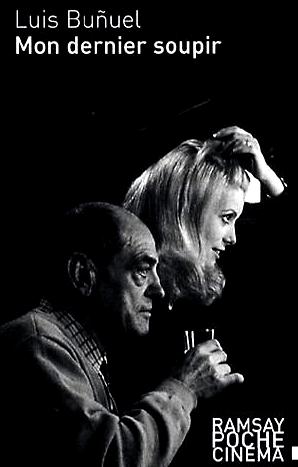
Luis Buñuel: Mon dernier soupir


Thorougly enjoying Luis Buñuel's Mon dernier soupir (1982) / My Last Sigh (1983). The version I'm now reading is the University of Minnesota Press edition, Abigail Israel translation, 2003. "Jean-Claude Carrière . . . An attentive listener and scrupulous recorder during our many long coversations . . . helped me write this book" -- from the preliminaries. 

Buñuel (1900-1983) comes at things from an interesting perspective. He was born in a Spanish village that retained Medieval rhythms for many centuries. He experienced that lifestyle, followed by the bulk and tumult of the 20th century, starting with the Great War of 1914-1918, proceeding through the Spanish Civil War, the Second World War and the Cold War. He was a boy at the dawn of the cinema and eventually became a master at making movies right into the 1970s, stopping just long enough for this "last sigh" of a memoir. The things he saw and the changes he lived through must have been astonishing -- luckily he goes into some of them here.  

Another thing that becomes clearer from Buñuel's description is how much the Spanish Civil War seems remarkably like the Greek Civil War and the Russian Revolutions and Civil War, how like the Mexican Revolution, the Irish Civil War and also how like today's Syrian Civil War. People like to divide and fight. We're digital people with analog dreams. Buñuel gets at this also in La mort en ce jardin / Death in the Garden (1956) and Jean-Luc Godard does it in Les Carabiniers / The Carabineers (1963). Beyond the artists, though, as George Santayana put it, "Only the dead have seen the end of war" (1922).  

Today's Rune: Protection.    

Saturday, November 05, 2011

Lindsay Anderson: Britannia Hospital


This, my friends, is what a crazy anarchist movie looks like. Take the Marx Brothers' Duck Soup (1933) -- shot during the Great Depression -- and mix in Jean-Luc Godard's Tout va bien / Everything's Fine (1972) with Luis Buñuel's Le Fantôme de la liberté / The Phantom of Liberty (1974) and class-conscious British sitcoms of the 1970s, with an added dash of horror, fantasy and science fiction, plus Robert Altman and voilà, presto -- there you have it.

Hotel Britannia (1982) is neither good for casual entertainment, nor is it the first Lindsay Anderson film to check out. As Anderson himself put it (quoted in the twelve-minute extra featuring Malcolm McDowell): "you need a strong sense of humor to understand the satire in Britannia Hospital." That said, it's very relevant for a sharper understanding of the dramatic global happenings of 2011.

The initial release of Britannia Hospital fared well in France, but it suffered from terrible timing on its release in the UK (thanks to the nationalistic, jingoistic and xenophobic enthusiasm of the Falklands/Malvinas War managed by Margaret Thatcher). In the USA, Ronald Reagan was in power, gearing up with his own foreign adventures. Today's underlying economic inequities were reinforced just then, as Anderson clearly observed. But Anderson's critique, along with others, largely fell on deaf ears thanks to the draw of unleashed greed and the pursuit of power. It's quite an interesting film, albeit with an ick factor and a slapstick feel, not too far off from the Pink Panther films. Its themes go deep, and its critique of class, power and the human condition cuts deep, as well.


Snippets of Britannia Hospital such as this brief one may be more evocative than the film as a whole. This one's very telling as to Lindsay's Anderson's worldview.   

Today's Rune: Movement.

Saturday, October 22, 2011

Mike Leigh: Home Sweet Home


Home Sweet Home (1982), Mike Leigh's grim serio-comic situational "slice of life,"  follows the sporadic antics of three postal workers (Stan, Gordon and Harold), two postal workers' wives (Hazel and June), Stan's daughter Tina (who is living under the auspices of social services, as "Mum" took off eight years before the story begins), and two social workers.

Leigh's often intense, offbeat films stick to memory because they deal with things that most "big" films do not. Home Sweet Home is immersed in daily details and habits of the English working class, and social relationships -- including marriage.  Paul Schrader's Blue Collar (1978), set in Detroit, does this, too, for the American working class, but adds crime and intrigue -- as does Schrader's excellent film Affliction (1997), which however adds alcoholism and crime. 

The chracters in Home Sweet Home are neither criminals nor alcoholics though June Fish, who is having a lazy affair with Stan, is turning to an abundance of wine for comfort, and Gordon Leach, constantly berated by his semi-dieting wife Hazel -- who is being wooed by Stan, one of the gloomiest, chain-smoking ladies' men imaginable -- turns to significant quantities of beer to numb his existence. Stan's daughter, now fourteen, seems even gloomier than her father, suggesting more of the same for the next generation. 

Set in the early 1980s, Home Sweet Home provides a portal into daily English working class life at the time that transcends the interesting but ultimately unresolved storyline. There is a lot of dipping of biscuits in tea and excruciatingly oblique chat. As for living like these characters do: don't -- the way they choose to continue on is, for all of them, frustrating, alienating and not in the least self-reflective.  

Today's Rune:  Warrior.  

Monday, June 20, 2011

And We Just Can't Wait For Them Unicorn


When I was a little kid, all sorts of music came rushing in, everything from the James Bond and Batman themes to "Winchester Cathedral," Johnny Cash, The Doors and this one by The Irish Rovers, "The Unicorn" (1967) -- adapted from Shel Silverstein's poem of the same name. It's half whimsical and half pitiful. Here's a snippet of the lyric:

Then the ark started movin,' and it drifted with the tide,
and the Unicorns looked up from the rock and cried.
And the water came up and sort of floated them away--
that's why you've never seen a Unicorn to this day.


The Irish Rovers are still roving. Incidentally, they had another hit in 1982 with their version of "Grandma Got Run Over by a Reindeer."

Today's Rune: Initiation.

Wednesday, June 08, 2011

The Little Bighorn


The Battle of the Little Bighorn in 1876 was quick and efficient, the last of the great tribal victories over US forces, in this case by Northern Cheyenne, Lakota Sioux and Arapaho fighters. It's probably the most famous -- and also most infamous -- of all such battles because it was one of the last (Wounded Knee in 1890 also resonates, of course, in reverse) and because of the marketing genius of Elizabeth Bacon Custer. As with most legend-tinged stories transmitted down the ages, its actual historical details and context were mostly simplified and culturally distorted, in this case for nearly a century.

Many knew at the time of the battle and more and more informed people realize once again that General George Armstrong Custer was an ass, not a hero.

Beyond that, I wonder if his having grown up in Monroe, Michigan, influenced his attitude about "Indian fighting," or if it was just a coincidence that Monroe was the site of the 1813 Battle of the River Raisin, where another US military force was wiped out by an enemy force largely made up of tribal fighters (in this case, Potawatomi, siding with Anglo-Canadians)?

The Little Bighorn battleground is an eerie place, far from the madding crowd. I remember journeying far through the Crow Nation to get there with my sister Linda many moons ago and being astonished by the entire experience. As for the Michigan connection, I'm hoping to return to the River Raisin battleground before or by January 2013, the bicentennial.

Later this year will be the 200th anniversary of Tippecanoe. Already! 

Today's Rune: Fertility.