Showing posts with label Iggy Pop. Show all posts

Tuesday, May 08, 2018

Jim Jarmusch: 'Dead Man' (1995)

Jim Jarmusch, Dead Man (1995). Stars Johnny Depp and Gary Farmer with appearances by Iggy Pop, Billy Bob Thornton and Jared Harris, among several other notables. 

A frontier rite of passage in which the West is Truly Wild. Close attention is paid to period detail, and the setting is more Northwest than West, defamiliarizing the familiar. Jarmusch's use of fade to black fade-ins and fade-outs gives the film an episodic feel, like coming in and out of consciousness. 
William Blake, Depp's character, is a fish out of water everywhere he goes. When he goes West, young man, from Cleveland to Machine, a terrible place to which he's conveyed by coal-burning rail, the end seems nigh. Along the way, brutish fellows shoot at bison and anything else that moves outside the cars. In Machine, avaricious frontier capitalists forge deals with the Devil in a Hellish World. To quote William Blake the poet from "And did those feet in ancient time"  (circa 1804):

And did the Countenance Divine,
Shine forth upon our clouded hills?
And was Jerusalem builded here,
Among these dark Satanic Mills?

Bring me my Bow of burning gold:
Bring me my arrows of desire:
Bring me my Spear: O clouds unfold!
Bring me my Chariot of fire!
The hero of Dead Man is "Nobody," played by Gary Farmer. Cast out of his own homeland and left to wander, he is Blake's spirit guide and moral compass. Blake, with a bullet lodged near his heart, is pursued by psychopathic bounty hunters to the Ends of the Earth. 

From Blake's "Auguries of Innocence" (circa 1803); 


Every night and every morn
Some to misery are born,
Every morn and every night
Some are born to sweet delight.

Some are born to sweet delight,
Some are born to endless night.

We are led to believe a lie
When we see not thro' the eye,
Which was born in a night to perish in a night,
When the soul slept in beams of light.

God appears, and God is light,
To those poor souls who dwell in night;
But does a human form display
To those who dwell in realms of day.
Nobody and William Blake arrive at the Makah village, on the edge of the Pacific Ocean, at the Edge of the World.   

Today's Rune: Initiation. 

Monday, May 07, 2018

Karel Zeman: 'Baron Prášil' / 'The Fabulous Baron Munchausen' (1962)

Karel Zeman's Baron Prášil / The Fabulous Baron Munchausen / The Outrageous Baron Munchausen (1962), a strangely smooth film that may help put you in an altered state, stars the fabulous Miloš Kopecký (1922-1996) as Baron Munchausen, and the also fabulous Jana Brejchova (born 1940) as Princess Bianca. Tonik / Tony (aka Moonman) is played by Rudolf Jelínek (born 1935). 
Which reminds me of: "They've got a moonman on the telephone / Project X, hey Houston control . . .."  ~ Iggy Pop, "Houston is Hot Tonight" (1981)
Nothing quite like The Fabulous Baron Munchausen. Go where the magic ink flows . . . 
Princess Bianca writes a letter. Hey kids, do you know what a letter is? Do you know what writing is? 

Today's Rune: Wholeness.

Thursday, April 26, 2018

'I, Tonya' (2017)

I, Tonya, directed by Craig Gillespie and winner of an Academy Award, focuses on the life and times of skater Tonya Harding (born, 1970; as an adult, played by Margot Robbie in the movie, with her mother played by Allison Janney), including her inescapable links to fellow skater Nancy Kerrigan. 
Тоня против всех ("Tonya Against All"), as fashioned in Russian.
Music bolsters the I, Tonya story, which is set mostly in the 1970s, 1980s and 1990s. Most importantly, the Siouxise & the Banshees version of Iggy Pop's classic sing-along tune "The Passenger" accompanies archival footage of the real Harding and crew at the end of the movie. Impressive!
I, Tonya shares a spiritual kinship with Gus Van Sant's 1995 film To Die For, which stars Nicole Kidman, abetted by Matt Dillon, Joaquin Phoenix, Illeana Douglas and Casey Affleck, among others. Male sidekicks are absurd buffoons in both movies; music adds significant flavor to both (Donovan's "Season of the Witch" takes the cake in To Die For); and both proceed with a jaunty tone that's both satirical and sometimes touching. Put that on ice. Cult classics.

Today's Rune: Breakthrough. 

Monday, September 25, 2017

"That's Like Hypnotizing Chickens"

"In North America alone there are 10 billion chickens, compared to 4 billion wild birds." Jim Robbins, The Wonder of Birds: What They Tell Us About Ourselves, the World, and a Better Future. New York: Spiegel & Grau, 2017, page 81.

In the USA: "Until the 1940s, chickens were raised primarily for their eggs. Chickens themselves assumed a starring role in the American diet during World War II because chicken, unlike beef and pork, wasn't rationed . . . The chicken [now, as of this post] is the most industrialized animal in the history of the world." Ibid. page 83.
"Chickens can solve problems and display an ability to think about the future." They also have a sense of object permanence (when they see something go out of line of sight, said thing does not go out of mind -- they remember). Ibid., page 88.  
Interested people are attempting to save enough wild chickens to prevent the collapse of all but genetically stunted industrialized populations. "Experts liken the loss of these genes for survival to the destruction of a library without knowing what's in it. That's why the Livestock Conservancy searches out genetic diversity in chickens, ducks, turkeys, and geese before these local breeds blink out, and it encourages farmers to raise those birds." Ibid., page 91. 

"Oh love love love
That's like hypnotizing chickens
Well I am just a modern guy
Of course I've had it in the ear before
'Cause of a lust for life!"


"Lust for Life" (1977) Iggy Pop and David Bowie


Images

Saul bij de heks van Endor / Saul and the Witch of Endor by Jacob Cornelisz van Oostsanen (1525/1526), Rijksmuseum, Amsterdam. Close-up by Erik Donald France, June 2017.

In the field, Brugge / Bruges, Belgium, EDF, June 2017.

Gustav Klimt, Gartenweg mit Hühnern / Garden Path with Chickens (1916). Klimt died during the Great Influenza Pandemic of 1918; the original of this World War One era painting was destroyed near the end of World War Two, in 1945.

Today's Rune: Breakthrough. 

Tuesday, April 11, 2017

Jim Jarmusch: 'Gimme Danger' (2016)

I remember being at a mid-1990s house party for teachers and artists in Newport News, Virginia. It was during my first full-time gig as a librarian and I was serving informally as dj. With the idea of livening things up a little, I put on a vinyl copy of The Stooges’ Funhouse and cued up “Loose” and “TV Eye,” turning up the volume.

In the middle of this grand sonic gesture, a history instructor -- who was deaf in one ear -- turned his working ear into the nearest blasting speaker. Within the first minute, he was jumping back with amazement: “Oh my God! That’s the greatest thing I EVER heard in my WHOLE LIFE!!!!!” He was floored.

Though not everyone would have agreed at the time, this was a perfect response. 

And now, after the induction of The Stooges into the Rock & Roll Hall of Fame in 2010, after the deaths of several of the members of the band, out comes Gimme Danger (2016), “a film by Jim Jarmusch,” “story of the stooges,” Gimme Danger: La historia de The Stooges, Gimme Danger. История Игги и The Stooges, a highly entertaining documentary featuring Iggy Pop, the various (then-)surviving band members, and Michigan.

Some notes are in order. “There goes Iggy into the crowd.” 

Outside of Ann Arbor, he was living in a trailer with his parents (his father was a high school English teacher).

With parental support, he practiced on his drum kit for hours on end. “I was so lucky to live close to my parents.”

He picked up performance ideas from The Howdy Doody Show, Clarabell the Clown (played at one time by Captain Kangaroo), and Soupy Sales (who often had highly influential musicians perform live – including Billie Holiday and Miles Davis).

Soupy would invite fans to write letters, but asked that they keep them to twenty-five words or less each. This impressed Iggy (“real” name Jim Osterberg, Jr. -- born April 21, 1947). When he wrote or co-wrote Stooges songs, he kept them to twenty-five words or less. “I didn’t feel I was Bob Dylan.”

He was also impressed by the industrial sounds at Ford’s River Rouge plant, which he first visited on a school field trip. “I liked the mega-clang.” 
Iggy played drums and did various things, worked in a record store, attended the University of Michigan for a semester. Headed to Chicago for additional hands-on learning in the mid-1960s. “I saw a glimpse of a deeper life,” he notes on film, but also: “I realized I was not black.”

Back in Michigan, Iggy taught Scott Asheton how to pound out the drums. Some of the band members were sons of World War II vets and had that in common. The Asheton brothers took off for an adventure in London and immersed themselves into the Marquee Club until they ran out of money.

After the 1967 riots in Detroit, Iggy decided to move into the city. “I’m going to prepare a house where we can live” as “true communists.” He had very little idea of what he was doing, but somehow it worked (eventually). In Detroit, they gestated.

“Michigan was a key crossroads between San Francisco and New York.” The members of the band tried various altered states and listened to Harry Partch records that highlighted the sounds and noises of various handmade, found or modified instruments.

They became The Psychedelic Stooges, had a gig at the Grand Ballroom featuring Iggy playing a vacuum cleaner. They exhibited the energy and antics of “chimps and baboons.”

Iggy: “In the Asheton brothers I found primitive man.”
The MC5, Fred Sonic Smith and all, took them in. “We joined their circus in many ways.”

Iggy preferred not to become overtly political in the way John Sinclair wanted. He did somersaults and wiggled around as a protest.

The MC5 said to Elektra Records scouts, “Check out our little brother band.” Danny Fields loved them, first hearing their mesmerizing sounds coming from the University of Michigan Student Union. Both bands signed with Elktra on September 22, 1968. The Psychedelic Stooges became “The Stooges plain and simple.”

The droning simplicity of The Velvet Underground thrilled Iggy. John Cale came to help them record their first album, followed by Nico: “Morticia and Gomez.” 

Jac Holzman (who also worked with The Doors) was there and helped make it happen. There weren’t enough songs for an album to begin with, so Iggy and the rest of the band went to the Hotel Chelsea and hurriedly came up with additional songs – twenty-five worlds or less.

Skipping forward a little, The Stooges are sent to Los Angeles to record 1970. Iggy, being interviewed, notes that much of the “California sound” that came out in the 1970s was manufactured under the guidance of record executives. “It still smells,” he notes, true to his Michigan-style phrasing. “Cultural treason” is what it was.

For 1970, Iggy brings in Steve Mackay to lay down some saxophone. He had in mind Miles Davis and James Brown. “Play like Maceo Parker on acid!” Big aural space is there.

Iggy walks by a pet store and notices a beautiful dog collar. He buys it and adds it to his persona.

The Stooges play the Whiskey a Go Go and blow the mellow minds of Californians. “Theatre of the moment.” The band plays deadpan and still in Bill Wyman style while Iggy prances around, dives into the crowd and acts like James Brown and Mick Jagger on speed. Inspired by the Egyptian pharaohs, he performs shirtless.

I could go on, but why?  You can dig it for yourself! Gimme Danger. Raw Power

“All we cared about was what we liked!” 

Iggy gets the final say: “I just wanna be.” Amen, brother.

Today's Rune: Wholeness. 


Thursday, May 26, 2016

The Inferno of Dante (Pinsky Verse Translation): Response II

The Inferno of Dante: A New Verse Translation by Robert Pinsky, Bilingual Edition, Illustrated by Michael Mazur with Notes by Nicole Pinsky and Foreword by John Freccero. New York: Farrar, Straus and Giroux, 1994, 1995 printing.

Let's run down a few more touchstones from Dante's Disco Inferno, shall we?

From Canto XIV (page 141): 

". . . All over the sand
Distended flakes of fire drifted from aloft
Slowly as mountain snow without a wind." 

Compare a snippet from the devilish 1969 Stooges song, "I Wanna Be Your Dog:"

"And now I'm ready to close my mind
And now I'm ready to feel your hand
And lose my heart on the burning sand
And now I want to be your dog . . ."
Dante Running from the Three Beasts by William Blake, 1820s
Tales of Brave Ulysses (Odysseus).

Canto XXVI (page 277):  

"You were not born to live as a mere brute does . . .

Turning our stern toward the morning light,
We made wings of our oars, in an insane
Flight . . ." 

Moonlight Mile

Canto XXIX (page 305):

"'. . . And already the moon
Is under our feet: the time we are allowed
Has now grown short, and more is to be seen

Than you see here. . .'"

Down in the Bottom / The Wishing Well.

Canto XXXII (page 341):

"It is not jokingly that one begins
To describe the bottom of the universe --
Not a task suited for a tongue that whines

Mamma and Dadda . . ."*

The Cooling Board.

Canto XXXII (page 347):

"'. . . down where the sinners are put
To cool . . .'"

The Stooges, "Real Cool Time" (1969):

"We will have a real cool time tonight,
Tonight . . ."

*"Mamma o babbo" in the original Italian (page 340). Bottom Line: the influence of Dante on fellow artists during the past 700 years is demonstrably effervescent and plentiful.  

Today's Rune: The Mystery Rune.

Monday, April 04, 2016

Kirby Dick and Amy Ziering Kofman: 'Derrida' (2002)

Deconstructing Kirby Dick and Amy Ziering Kofman's Derrida (2002). 

In this documentary, we can see layers of Jackie Élie "Jacques" Derrida (1930-2004) over time - sometimes he looks refreshed and relaxed, at other times pensive and taciturn.

Overall, Derrida thinks through words and ideas carefully. 

At times in certain frames he looks like Norman Mailer, then Richard Burton, then Ralph Nader, then Peter Falk -- like a human kaleidoscope.
Derrida was born in Algeria. He was of Sephardic lineage with Jewish-Spanish origins dating back to before the 1492 and later expulsions of Jews and Muslims from Spain. As a boy, Derrida was expelled along with other Jewish students and teachers from "normal" Algerian schools, but he survived the Second World War. This background shaped his outlook as a philosopher. Increasingly, he became attuned to the power of words in discourse and their link to social action. 

In this desultory, entertaining documentary, Derrida speaks about biography, autobiography, history, texts, recording devices, archives, memory, reconstruction, deconstruction, mirrors.

He speaks of the "eye" of the spectator and audience: "between fiction and reality, a phantom eye." (Eg., Facebook)

Seeing his own portrait at one point, he quips: "It's uncanny. It's bizarre." (Iggy Pop expresses similar thoughts in "Success:" upon seeing someone wearing a t-shirt with his face on it approaching him, Iggy sings: "Here comes my face . . . It's plain bizarre . . .")

Derrida speaks of historical dots: "These are facts. Raw facts."

The Story of One's Life: facts vs. autobiography or a biography "in the mode of a story . . . I don't write a narrative. . . I'd love to tell stories, but I don't know how to tell them . . ."

Jackie and Marguerite Aucouturier Derrida, his spouse of many years, decline to say much about their relationship beyond the "raw facts." 

Upon being asked to speak of certain things, he replies, "You need to pose a question."

Of love: "Fidelity is threatened between the who and the what." Initially, one may be seduced by certain of a person's qualities, and later become disillusioned (or as a former brother-in-law once put it: "Love is blind; Marriage is an eye-opener). Or, one loves the "singularity" of another person beyond their most charming traits. 

During a visit to South Africa, after seeing Nelson Mandela's small jail cell when he'd been confined for eighteen years of his life, Derrida speaks of different types of forgiveness and reconciliation.

He delivers general observations and advice: "I am blind to myself . . . It's for others to see. To speak is not to see."

And to the intellectually lazy: "Do your homework and read."
On his archives: "urns in a graveyard . . . An archive is . . . a question for the future."

Of other philosohers: "I'd love to hear something about what they refuse to talk about."

On editing this film, to the directors: "Editing will be your signature, your autobiography."

Fun stuff for a Sagittarian. This post is in honor of Jeron Jackson, RIP. 

Today's Rune: The Self. 
  

Saturday, March 26, 2016

"Look Out Honey, 'Cause I'm Using Technology!" (Part 1 of 2)

Here's a fun book and guide: Douglas Brode's Fantastic Planets, Forbidden Zones, and Lost Continents: The 100 Greatest Science-Fiction Films (Austin: University of Texas Press, 2015). By doubling and tripling up some rankings and providing no fewer than ten appendixes, Brode squeezes in a lot more than a hundred films. I love it!

I have been very glad to read in here about many more than the usual suspects. Brode explores several science fiction movies that have seriously stuck with me from an early age, such as: 

Colossus: The Forbin Project  (1970)
La Planète sauvage / Fantastic Planet (1973)
Invaders from Mars (1953)
Robinson Crusoe on Mars (1964)

Also happy to see Andre Tarkovsky's Solaris
Солярис / Solyaris (1972), a more recent favorite.
Just Imagine (1930)
Was surprised to see some I've overlooked or hadn't known about, all of which look intriguing, such as:

a 1956 version of 1984
The Last Man on Earth (1964)
The Satan Bug (1965)
Just Imagine (1930)
Capricorn One (1977) with O.J. Simpson as an astronaut landing on Mars (or is he?)
Frau Im Mond / Woman in the Moon (1929)

If you've seen any of these, what do you think?

In terms of science fiction turned reality, I could hardly believe my ears when I first heard the new Audi advertisements spotlighting Iggy & The Stooges' way-ahead-of-its time "Search & Destroy"(1973, remixed in 1997).  And here we are now. Can you grok?

Today's Rune: Flow. 

Monday, January 11, 2016

David Bowie, Where Art Thou?


David Bowie, Where Art Thou? [Originally posted in 2006 -- ten years ago!]

David Bowie (1/8/1947-) is one cool dude. I've been lucky enough to have seen him in various venues over the years, but the last time was by far the best -- at the relatively small Detroit State Theater on September 21, 1997. He was in perfect pitch and riding the catchy Earthling album with its techno overtones ("I'm Afraid of Americans" is hilariously cool). He spryly moved around the stage, sometimes barefoot, seeming both very earthly and very much a Cosmonaut at the same time.

What's especially heartening about Bowie is that, yes, he can do the "I'm a millionaire pop star" thing as well as anyone, but he's chosen -- much like Prince -- to stick to his own guns over the long march. He remains true to form, and very much in touch with technology and its cross-genre artistic possibilities. I adore his music and like many of his movie appearances (must see again The Man Who Fell to Earth for one trippy example, an ultimately sad 1976 tale of a fallen alien stuck on Earth while his home planet slowly dies), but have my favorites.

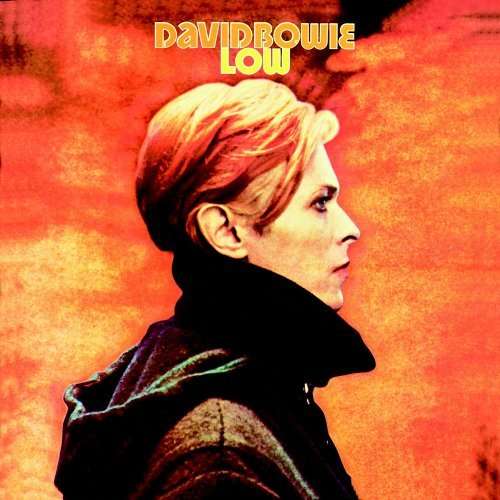
It's hard to beat the dazzling concept album, The Rise and Fall of Ziggy Stardust and the Spiders from Mars (1972), which was so at odds with the waning hippy ideals of the time, so perfectly attuned to undercurrents of global social changes and the explosion of punk and New Wave on the horizon. Then there's the electric shocker Aladdin Sane (1973), featuring "Panic in Detroit" and a sonic romp through the Rolling Stones' "Let's Spend the Night Together," among other treats. Ramble on through the eerie Diamond Dogs (1974) to the groovy plastic pop of Young Americans (1975), the lyrical and occasionally overarching Station to Station (1976), and the revolutionary "Berlin trilogy," Low (1977), "Heroes" (1977), and Lodger (1979). Bowie had already done some fine work with Lou Reed and Iggy Pop to everyone's benefit, as well. Next, there's another wild and sometimes campy romp via Scary Monsters (and Super Creeps), followed by another bid for mainstream pop stardom in Let's Dance (1983). Throw in always entertaining and sometimes bizarre videos, and presto, this period would have been enough successful output for any "normal" artist's entire career.

Bowie continued, though he slowed down the pace a bit. Here's where he and Prince again moved on parallel lines, though Bowie never took the drastic step of calling himself "The Artist Formerly Known as David Bowie."

During his Reality Tour in 2004, he suffered chest pains and underwent a sudden angioplasty, and has been understandably taking it relatively easy since then. Based in New York City, he continues working; his recent comings and goings can be found on his buzzing website, complete with alien-tinged motifs, at: www.davidbowie.com Check out the BowieNet for a little adventure in cyberworld.

Viva David Bowie! May the man who shares Elvis' birthday rise again.  

[RIP David Bowie, 1947-2016]

Monday, November 09, 2015

A Reading of Proust: Take II

Wallace Fowlie (1908-1998), A Reading of Proust (London: Dennis Dobson, 1967; originally published in 1964).

There's so much to cover here that I'll compress these ideas into three snippets, with brief responses.

"[W]hat is communicated between two individuals is at best fragmentary and usually susceptible of radical misunderstanding." (p. 100). 

This reality is both comic and tragic. Anyone can know -- even from social media alone -- how often glancing is our actual communication, usually coming down to Iggy Pop's cartoon news watcher, reducing most responses to either "Approval" or "Frown." (Social media time is like a roadrunner). One's immediate circle will understood much more, but such deeper understanding will still be incomplete -- while our self-understanding will probably also remain incomplete and subject to change. 

“[W]riting is not a transcription but a reordering of life . . . [O]bjective reality is never fully knowable. All that we can hope to have from it is illusions, and the artist’s work is the record of these illusions.” (p. 109).

This is true regardless of genre, format, or intention. We simply cannot transcribe real (or fictional) lives -- even our own -- or events -- with anything close to full accuracy in the sense of chronicle or diary. If we tried, we'd be spending more time writing about one day than in having lived it in the first place. (See James Joyce, Ulysses, 1918-1920). 

“The artist looks at the world freshly and does not see it in the same way as others, trained by habit and custom, see it. . .”  (p. 109).

This is the best part of artistic impulse, no doubt. Even if there may very well be a lag time (if ever, except for the sporadic and blessed peregrine) before this freshness is understood by anyone else beyond a small coterie, it's worth the effort of trying.

Today's Rune: Signals.   

Wednesday, August 12, 2015

Loose (Take 28)

Tuesday, August 11, 2015

Lisboa: Down on the Street Where the Faces Shine

Darkness and light in Lisbon. People. 
Lisbon: "Down on the street where the faces shine" ~ Stooges (1970). Same spot, different light. 


Today's Rune: Movement. 

Friday, March 06, 2015

Nik Sheehan: FLicKeR (2008)

FLicKeR (2008), a trippy Canadian documentary directed by Nik Sheehan, delivers a good, eclectic soundtrack via Edmund Eagan, a mix of colorful visuals (archival included) and thoughtful interviews. Plenty of intense, interesting stuff to mull over. 

Watching FLicKeR or a Dream Machine directly, it's hard to escape the occasional bombardment of light -- you may need to close your eyes at times, or feel nauseous. Those who peer directly into the Dream Machine are said in the film to have about a one in four thousand chance of being thrown into a seizure -- especially if prone to epilepsy. Best to keep one's eyes closed in front of the spinning lights and colors. And: unless you want to go blind, don't stare into the Sun. Or so it is said. 
DJ Spooky / That Subliminal Kid
Included:

Kenneth Anger
William S. Burroughs (archival)
Cybernetic Tortoise (1950)
Dream Machine
John Dunbar
Sophie Duplaix
Marianne Faithfull
John G. Geiger (book: Chapel of Extreme Experience: A Short History of Stroboscopic Light and the Dream Machine
John Giorno
Brion Gysin (archival)
Brian Jones’ spirit energy
Jean-Jaques Lebel
Genesis P-Orridge & Psychic TV
Iggy Pop
Lee Renaldo
Floria Sigismondi (The Runaways
Ian Sommerville (archival)
DJ Spooky aka That Subliminal Kid
Stooges
And others! 

Today's Rune: Wholeness. 

Saturday, January 03, 2015

Twenty Fifteen of the Common Era

Into Year 2015
MMXV 
14 Nivôse CCXXIII

New Year's, a wedding of Space and Time, requires: 

Something Olde
Something New
Something Borrowed
Something Blue . . .
A Sixpence in your Shoe

All such elements are jammed into my newly vamped gym jukebox iPod mix. Before last year lurched into this one, I purposely deleted my entire playlist and began a new one. It was high time.

The new stripped down core-first-round playlist, to be expanded during this year  -- already fondly known as Twenty Fifteen -- goes like this . . . playback is in random order, and sometimes I switch earphones or headphones to highlight different aspects of each track for the benefit of both the other ear and the other side of the mind . . . a good way to keep it fresh, keeping it reel-to-reel.

Open Up Like a French 75 -- drink or artillery, take your pick:

Breaking Glass  (David Bowie)
Chinese Rock (Ramones)
Editions of You (Roxy Music)
Feeling Good (Nina Simone)
Get Up Offa That Thing (James Brown)
I'm a King Bee (Slim Harpo)
The 'In' Crowd (Bryan Ferry)
Lust for Life (Iggy Pop)
See-Line Woman (Nina Simone)
Shake Your Hips (Slim Harpo)
Sound & Vision (David Bowie)
Super Bad, Parts 1 and 2 (James Brown)
Tweedle Dee & Tweedle Dum (Bob Dylan)
What in the World (David Bowie with Iggy Pop)
You Know I'm No Good (Amy Winehouse)

This stuff works for me. Specifically for the time blocks spent on things like the stationary bike, moon walk or regular treadmill. 

I've picked up a whole new appreciation for "Get Up Offa That Thing" (1976) -- can listen to it, the extended version, dozens of times and hear something new. For now, it's the side track electric funk guitar parts and embedded mutter-rapped words such as "Melvin Parker [on drums] . . . North Carolina . . ."   

2015: The adventure continues . . .

Today's Rune: Initiation.