Showing posts with label 1976. Show all posts

Sunday, June 03, 2018

Michael Schultz: 'Car Wash' (1976)

Car Wash (1976). Director, Michael Schultz (born 1938), African American director of Waiting for Godot (1966), Cooley High (1975) and Black-ish (2015-2017). Writing credit (with Schultz helping refine the script): Joel Schumacher (born 1939), director of St. Elmo's Fire (1985), The Lost Boys (1987), Batman Forever (1995) and House of Cards (2013).

Car Wash is a workers' movie, a kind we ought to see more of, a kind that had a strong showing in the rough and tumble 1970s. In many ways, the decade of the 1970s was a high water mark for positive change aspirations, certainly a peak period for introspection and multicultural expression. 

Spanish subtitle: Un Mundo Aparte / "A World Apart." It's a Marxian delectable: follow the money trail. Who owns the means of production? 

Speaking of money, Richard Pryor plays Daddy Rich of the Church of Divine Economic Spirituality, certainly not a caricature when you consider that even today, in 2018, Jesse Duplantis, "televangelist and prosperity gospel preacher," wants his followers to supply him with a new fifty-four million dollar jet. (See Tim Morris, "Jesse Duplantis just wants a jet for Jesus," Nola.com and Times-Picayune, June 3, 2018. Link here).
Other characters (all of them memorable) include Antonio Fargas (Huggy Bear in Starsky & Hutch, 1975-1979) as cross-dressing and apparently gay Lindy; T.C., "The Fly" (Franklin Ajaye); Lauren Jones as Marleen, a hooker; George Carlin as "the Taxi Driver;" Ivan Dixon as the gruff-voiced, cigar-smoking Lonnie; and Bill Duke as Abdullah Mohamed Akbar. The last two characters provide moral gravity for the film, which largely through them transcends itself from light commentary into incisive, still way too pertinent social commentary.


Abdullah: "I don't know, man, I don't know. I know I'm not crazy. But every day I have to come here and watch this clown show, man. Sometimes . . . just can't take it."
Lonnie: "I know."
Abdullah has these lines, too, which seem to have been cut from the version I saw: "[to camera] If you are watching this in the future, know that time has had its way with us, and that we knew it would. And it will with you. There is no escaping this. In a strange way, it's what makes life so beautiful and strange, that nothing alive stays the same."  (See IMDB link here).

Today's Rune: Possessions. 


Thursday, March 23, 2017

'Network' (1976)

Network (1976). Paddy Chayefsky, screenplay; Sidney Lumet, director. Starring Faye Dunaway, William Holden, Peter Finch and Robert Duvall. Winner of four academy awards.

Network hasn't saved us from having to endure the first all-television buffoon president, but it sure sets him in the right context: outrageous behavior, roller coaster ratings, demented intensity of approval seeking, zero intellectual curiosity or empathy, total immersion narcissism. 

Welcome to 2017, already so well grasped in 1976.
The most charismatic stars of Network are Faye Dunaway and Peter Finch. The latter's character is having a breakdown, while the former's is on the way up with ferocious vigor. Though not quite as horrible as the soulless ghouls and fools of DJ Trump's inner circle, she's moving in that direction.   
Network: then and now. Sequel: the internet.

Today's Rune: Fertility. 

Tuesday, January 24, 2017

'I, Claudius' (1976)

I, Claudius  (1976) is one of those grand BBC mini-series, in this case historically-based through the scrim of novels written by Robert Graves. It's streamlined and impressive, almost like a filmed theatrical production in that the sets are more suggestive than exhaustive. The actors are superb.

I, Claudius feels like a a mix of Mobster, Game of Thrones, Horror and Intrigue tales: surprise and mayhem mixed with scheming and back-stabbing. It has induced some very strange dreams, indeed. 

Like some of our more dramatic world leaders of 2017, the Caesars of 2000 years ago were either demented criminal buffoons (Caligula and Nero), morose and dark schemers (Tiberius), or criminal but capable rulers (Augustus and Claudius). Take them or kill them, those were the choices. 

Expect more antics from these types in the Year of the Fire Rooster, which begins at the end of this week. 
In I, Claudius, after one Caesar promotes the stability of marriage, his wife quietly poisons him. But at least he makes it into his seventies, unlike most of them. 

In I, Claudius, power rarely changes hands by rational choice. If poison is the preferred method of moving on, stabbing and other methods work, too. 

Every Caesar has opponents, and every opponent has a Caesar. The rich men of the Senate provide some buffer from complete entropy, depending on factions, the Army, the fickle mood of the Masses. On the perimeters of the Empire, enemies probe for openings to exploit and stray people to slaughter. 
Here: Patrick Stewart as Sejanus, with Patricia Quinn as Livilla (Claudia Livia Julia), both of them devious and power-mad -- far too clever for their own good.

I, Claudius is both highly interesting and a cautionary tale. Without proper checks and balances, those at the top tend to go off the deep end, then, now, soon to come. 

Today's Rune: Breakthrough.  

Tuesday, August 18, 2015

Volker Schlöndorff's 'Der Fangschuß' / 'Coup de grâce' (1976): Take II

Volker Schlöndorff's Der Fangschuß / Coup de grâce (1976) works on several levels. Visually, it's strong yet low-key, shot in black and white. Dramatically, conflict drives plot, albeit in a somewhat eerie way because it seems so matter-of-fact. There is intense but shifting tension between German Freikorps officer Erich von Lhomond (Matthias Habich) and Sophie de Reval (Margarethe von Trotta); and there are matters of war and revolution. The latter combo is starkly brought out by showing the German-Latvian "nationalists" based in a fortified estate vs. their Latvian-Bolshevik-allied challengers, traditionally the poorer workers and crafts-people based in and around Kratovice, the nearby village. The estate or chateau compound seems much like a Mexican or Spanish villa, with an almost Medieval social system being rent apart at the time of the story, post the Great War of 1914-1918 and into the 1920s.
Coup de grâce is based on a 1939 novel by Franco-Belgian writer Marguerite Yourcenar (1903-1987), but the movie is considerably more detailed in its depiction of warfare and daily life. 

What we see is a strange and disconcerting mix of protocol, decorum, regimentation, and gallows humor punctuated by bursts of emotion and violence -- the latter, however, is often carried out with what seems like no emotion at all, such as the routine killing of prisoners on both sides.
Valeska Gert as Tante Praskovia -- a bizarre character, as you may imagine by this image. Gert actually performed in the 1920s, so the time period covered by the film is something she'd personally experienced. Her role is as a sort of Cassandra, or slightly barmy yet keen observer.
The fate of Sophie's dog "Texas." 
Schlöndorff has made a series of intense, heavy-hitting films, ranging from Die Blechtrommel / The Tin Drum (1979) to Un amour de Swann / Swann in Love (1984), The Handmaid's Tale (1990) to Diplomatie / Diplomacy (2014). 

Today's Rune: Breakthrough.   

Saturday, January 03, 2015

Twenty Fifteen of the Common Era

Into Year 2015
MMXV 
14 Nivôse CCXXIII

New Year's, a wedding of Space and Time, requires: 

Something Olde
Something New
Something Borrowed
Something Blue . . .
A Sixpence in your Shoe

All such elements are jammed into my newly vamped gym jukebox iPod mix. Before last year lurched into this one, I purposely deleted my entire playlist and began a new one. It was high time.

The new stripped down core-first-round playlist, to be expanded during this year  -- already fondly known as Twenty Fifteen -- goes like this . . . playback is in random order, and sometimes I switch earphones or headphones to highlight different aspects of each track for the benefit of both the other ear and the other side of the mind . . . a good way to keep it fresh, keeping it reel-to-reel.

Open Up Like a French 75 -- drink or artillery, take your pick:

Breaking Glass  (David Bowie)
Chinese Rock (Ramones)
Editions of You (Roxy Music)
Feeling Good (Nina Simone)
Get Up Offa That Thing (James Brown)
I'm a King Bee (Slim Harpo)
The 'In' Crowd (Bryan Ferry)
Lust for Life (Iggy Pop)
See-Line Woman (Nina Simone)
Shake Your Hips (Slim Harpo)
Sound & Vision (David Bowie)
Super Bad, Parts 1 and 2 (James Brown)
Tweedle Dee & Tweedle Dum (Bob Dylan)
What in the World (David Bowie with Iggy Pop)
You Know I'm No Good (Amy Winehouse)

This stuff works for me. Specifically for the time blocks spent on things like the stationary bike, moon walk or regular treadmill. 

I've picked up a whole new appreciation for "Get Up Offa That Thing" (1976) -- can listen to it, the extended version, dozens of times and hear something new. For now, it's the side track electric funk guitar parts and embedded mutter-rapped words such as "Melvin Parker [on drums] . . . North Carolina . . ."   

2015: The adventure continues . . .

Today's Rune: Initiation. 

Wednesday, October 29, 2014

Shadowplay: The Elusive Origins of a 'Jungian' Quip, Part II

"What you resist, persists." ~ Attributed to Carl Jung. As noted in the previous post, I've been seeking the origin of this phrase, thought and idea, and have found it in many places, but without further documentation.

Synchronicity -- an idea Jung definitely espoused -- has converged, thanks to: recent conversations; an article I'm writing about Edward William Johnston (1799-1867); and Barry Miles' epic tome, Call Me Burroughs: A Life (New York: Twelve, 2014), which I finished reading a couple of weeks ago.


Johnston, because of his pertinent essay "Genealogy of Ideas Southern Literary Messenger: Devoted to Every Department of Literature and the Fine Arts. Volume VIII, No.  9 (September 1842): pages 548-555. Richmond, Virginia: T.W. White. Link here. Ideas have a traceable "genealogy," Johnston posits. They rarely appear out of the blue, except for in their first incarnation.

Burroughs, because of his idea of the "word virus:" that words and ideas spread through time and space as a virus.

Which reminds me that Ebola has been around since 1976 -- and was widely covered in the news at the time.

In turn, AIDS is now traced back to the Belgian Congo in the 1920s. (See James Gallaher's "Aids: Origin of pandemic 'was 1920s Kinshasa,'" BBC News (2 October 2014). Link here.

So how about the "resist, persists" quip (and its variations) attributed to Carl Jung? Where can it be traced back to?

In the previous post, I left off with this, from Robert J. and Alex W. Fraser's As Others See Us: Scots of the Seaway Valley (Ontario: Beamsville Express, 1959):

What you resist, Persists

All though [thought] is energy
All things are in Motion
. . . . .

And I earlier noted the widespread use -- either with no attribution or with uncited attribution pointing to Jung -- of this "word virus," especially in the last ten to twenty years. 

Here's a latter-day repetition of both elements that occurs after the 1959 book, As Others See Us:

"What you resist, persists." ~ Neale Donald Walsch, Conversations with God: An Uncommon Dialogue, Book 1 (Charlottesville, Va.: Hampton Roads Publishing Company, 1996), page 100.  


"1. All thought is energy.

2. All things are in motion.
3. All time is now."

Neale Donald Walsch, Conversations with God: An Uncommon Dialogue, Book 3 (Charlottesville, Va.: Hampton Roads Publishing Company, 1998), page 114.


Walsch gives no citations.

Which leads me to believe, for now, that all three of these texts are drawing from older sources, perhaps via back channels, such as ideas from earlier "New Thought" and "Power of Positive Thinking" texts. In other words, these same words are used in the same order, but neither As Others See Us (1959) nor Conversations with God (1996, 1998) are their originators, rather they are transmitters, "infected" by earlier "carriers" of statements they spell out verbatim.

The true origins of these statements will either eventually come to light, or they will remain hidden in mystery.  Digitization of older texts will continue to be useful in figuring out these kinds of genealogies of ideas and word viruses -- helping us "get to the bottom of things." 

Today's Rune: Flow. 
 Illustration at top from Thought-forms by Annie Besant and Charles Webster Leadbeater (London: Theosophical Publishing Society, 1905).  

Thursday, February 14, 2013

Sparkle (1976)


On Susan Farris' recommendation, I finally saw the original Sparkle (1976), directed by Sam O'Steen, who is better known as a film editor (Cool Hand Luke, The Graduate, Rosemary's Baby). I'm glad I did -- it puts the new Sparkle (2012) in better perspective. Both versions compliment each other because of their overlapping but competing realities.


The original Sparkle features most of the same characters as the new one, but they are all somewhat different, and the plot differs in certain key details, too. The setting is New York City (particularly Harlem), a little bit earlier in time than the newer version, which is set in Detroit in the 1960s. It's a little on the grittier side, also. Screenplay co-written by Joel Schumacher (The Lost Boys) and Howard Rosenman, music by Curtis Mayfield (Super Fly). Lonette McKee plays Sister and Mary Alice plays Effie, her mother.  

Today's Rune: Joy.  

Thursday, January 10, 2013

Salim Akil: Sparkle


Salim Akil's Sparkle (2012), set in Detroit, begins in 1968. It's about a family system (a mother, three daughters and two male cousins not related to the primary group) within a historical framework, during the US-Vietnam War, after the '67 Riot, when music is central to the lives of many people during their coming of age.  It's also Whitney Houston's last film. Emma, the protective (and controlling) mother (Houston), would prefer her daughters to stay close to home and involved in church matters, but all three feel the pull of the greater world. One of them wants to go to medical school, but they all love music.

Several of Detroit's cultural treasures are showcased in Sparkle, ranging from Lafayette Coney Island (next to American Coney downtown), various downtown music venues like Cliff Bells and the Fillmore Detroit (the former Palms-State Theatre), The Painted Lady Lounge (formerly Lili's 21 Club) in Hamtramck, and one of my perennially favorite intimate cultural spots anywhere in the world, Baker's Keyboard Lounge.

Sparkle is a reimagined version (in different place and time) of the original 1976 version, which I haven't seen but have heard is pretty feeble compared to the new one.  

Today's Rune: Journey.      

Monday, September 10, 2012

Next Stop, Greenwich Village


Paul Mazursky's Next Stop, Greenwich Village (1976) plays like a laid-back version of Saturday Night Fever (1977). I like both films for their ambience and ensemble chracters. From the perspective of 2012, they are of fascinating historical interest regarding New York City and environs in the 1970s (the latter) and in 1953 (the former). 

There are plenty of fun things to look for in Next Stop, Greenwich Village. Here are three: Bill Murray at a rent party (briefly), Jeff Goldblum as an aspiring, eccentric actor (somewhat briefly) and Christopher Walken as Robert, a sharp-minded dandy poet. Walken is terrific, in fact. But wait: there's more! Antonio "Huggy Bear" Vargas plays a gay dandy, Shelley Winters a dramatic, smothering Jewish mother. Then there's the sad-faced character actor Mike Kellin as her husband, Lenny Baker as their son and lead character, Ellen Greene as the absorbingly interesting Sarah Roth, Dori Brenner as friend Connie and Lois Smith plays the often suicidally depressed Anita. And there's more!

Overall, Next Stop, Greenwich Village renders a low-key take on the Bohemian scene in the Village. The dual fate of Julius and Ethel Rosenberg hangs in the background. The main characters are fairly avant-garde for 1953: socially integrated, pro-Choice, alcohol- art- and gay-friendly, literate and open-minded. In 2012, they could be elder statesmen for the Democratic Party. Can you dig?

Today's Rune: Flow.   

Wednesday, August 01, 2012

Lina Wertmüller: Pasqualino Settebellezze / Seven Beauties


Lina Wertmüller's Seven Beauties (1975) brims over with frenetic and dazzling energy. It presents the years of Mussolini and Hitler and the Holocaust with a crisp originality. Not coincidentally, Wertmüller was the first female director to ever receive a nomination for an Academy Award for Best Director. (Kathryn Bigelow was the first woman to actually win Best Director, and that in 2009 for The Hurt Locker -- more than three decades after Seven Beauties).

What's the story arc? First we see a stunning montage of archival footage from the Second World War synchronized with a strange sing-song punctuated with "Oh yeah's." Then, a blending of flashbacks and chronological jumps that are done with remarkable deftness. We follow the main character (Pasqualino Seven Beauties), an absurd popinjay and petty player, on a rollercoaster ride of personal decisions mixed with grand luck or fate, good and bad, played out. We see him having deserted from Stalingrad* and fleeing for his life, but also in an insane asylum and a concentration camp. Will he survive, and what will become of his mother and sisters whether he does or not? Horrifying situations enlivened by dark humor.

*Not widely known in the West, the Italian 8th Army lost about 21,000 killed at Stalingrad; perhaps 45,000 escaped alive from the great Soviet strategic trap.

Today's Rune: Defense.    

Friday, April 20, 2012

Woody Allen: Annie Hall in Draft Form, Take One


On the way to San Antonio, I had the great delight of stopping in at the Harry Ransom Center at the University of Texas at Austin. My original intention was to examine some casual photographs revolving around American poet Anne Sexton (1928-1974) and Nigerian writer Amos Tutuola (1920-1997), but I became so absorbed in reading an entire untitled script for what evolved into Woody Allen and Marshall Brickman's shooting script for Annie Hall (1977) that I'll have to save the first two treats for a return visit.

First, the Harry Ransom Center has a beautiful interior that showcases a lot of interesting things around its spaces, items ranging from a photograph of Turkish horse cavalry in the snow by David Douglas Duncan to a manual typewriter employed by novelist John Fowles. I looked around while a courteous member of the staff retrieved a box from the Woody Allen collection acquired in 2005. (For more on its Scope and Contents, here's a link: http://research.hrc.utexas.edu/fasearch/allen.woody.film.html)

Once the items were delivered for pickup, I devoted my time to reading and taking notes and, much of the time I'll admit, quietly laughing in response to the dialogue. Officially, I was exploring "UNTITLED FILM SCRIPT" dated April 15, 1976. It includes 120 typescript pages with two appended scenes, white and light Carolina blue sheets of paper bound in red leather. Fascinating. It would appear as if certain pages were updated and inserted. And there are some fun inconsistencies. At times, Alvy's (the Woody Allen character) friend Rob (played by Tony Roberts in the completed film) is named Rob, and at other points, Roberts. Usually, Rob/Roberts calls Alvy by a nickname (Max, as in the movie), but at least at one point (page 53), Alvy refers to Rob as Max. This is just a small taste -- there's a whole lot more to underscore about the creative process. Once I sort through my notes, I'll post a bit more on my findings.

In thanks to the staff of the Harry Ransom Center; also in appreciation of Woody Allen and Marshall Birckman; and, of course, for the joy of Annie Hall

Today's Rune: Partnership.           

Monday, March 19, 2012

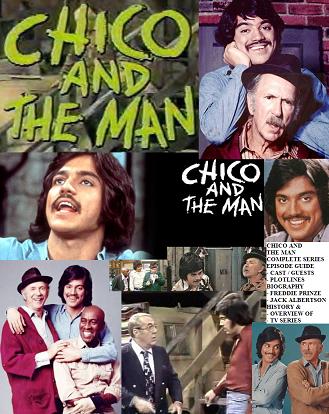
The 1970s: Chico and the Man/All That Glitters


So by the early-to-mid 1970s, there were all these mass-culture TV shows exploring socio-economic class, race, ethnicity, and gender. In the wake of the US-Vietnam War and the upheavals of the 1960s, this was a pensive time, with a mix of experimentation and philosophizing. Could people get along beyond the confines of their culturally driven self-identities?

Two shows I caught but didn't watch religiously: Chico and the Man (1974-1978), starring Freddie Prinze (1954-1977) and Jack Albertson (1907-1981); and All That Glitters (1977).  The first was a spiritual cousin to All in the Family, Sanford and Son, and early Sesame Street (1969-present), only with a young Latino dude building a connection with an older dispeptic Anglo in East L.A., supplemented by various other antics. By about fifteen years, it prefigured the Rodney King plea, "Can't we all just get along?"  All That Glitters was a soap opera-ish romp that inverted maintstream gender roles, so that it was a Woman's Woman's Woman's World. In other words, a mix of science fiction, fantasy and satire. The idea was to point out how generally patriarchal and one-sided the accepted status quo was up to that time -- the "double standard."

What's the legacy today? Apparently Rick Santorum, Newt Gingrich and Mitt Romney -- among others who might have been aware of these series -- missed the boat, the train, the car and the plane. Apparently they've rejected all of it. On the other hand, Clint Eastwood brought a sort of updated version of these 70s cultural awakenings back to market in 2008, with Gran Torino. And thanks to the 2008 election in the USA, Barack Obama is president and Hillary Clinton, Secretary of State. Where there's a will, there's a way; where there's no will, no way.

Today's Rune: Signals.      

Monday, February 13, 2012

Julien Temple: The Filth and the Fury


FanTAstic and liberating . . . Julien Temple's The Filth and the Fury: A Sex Pistols Film (2000). Yet as I'm posting this, Athens, one of the great world epicenters of democracy, is burning. A sad day among many.

Flashback to 1976. "The working class . . . didn't even understand what working class meant anymore . . . The germ, the seed, the Sex Pistols generated from that . . . a state of social upheaval." -- John Lydon aka Johnny Rotten.

"The Sex Pistols should have happened and did." -- Ditto.


Back in school, "You're supposed to just accept [received judgment about Shakespeare's work]: it's great, you're not." -- Ditto.

"I wanted the Sex Pistols to compete with the Bay City Rollers. . ." -- Ditto.

On Sid Vicious: "He just laughed at everything. He was a genius in that way." -- Ditto.

On Punk: " . . . absorbed back into the System . . ." -- Ditto.

Today's Rune: Fertility.

Thursday, October 27, 2011

Mike Leigh: Abigail's Party


Mike Leigh's Abigail's Party (1977) is scarier than any Halloween horror movie I've ever seen. Leigh again impresses with his masterly ability to cut to the bone of awkward social situations, in this case a house party, with great economy. There is only one primary setting, a living room in a suburban house outside of London; and there are only five on-screen characters: two married couples and Sue, a divorcée, whose teenaged daughter Abigail is having a party back at her very nearby house. We can hear the thumping music of the teen event in the background, while in the foreground the unhappy adults drink, smoke, drink some more, nibble, gossip, compare material values, bicker, dance and speculate about Abigail and her guests.

Abigail's Party delivers grim satire and even grimmer exploration of social relationships, psychology and class conciousness. Brutal -- but beautifully executed, sort of like Jean-Paul Sartre's No Exit blending into Luis Buñuel's El ángel exterminador / The Exterminating Angel. Here's what truly happens when a domineering host -- in this case Beverly, played perfectly by Alison Steadman, who also plays Candice Marie, a character who is as mousy as Beverly is brash, in Leigh's Nuts in May -- wreaks havoc at a social gathering and no one seems able to stop her.

Today's Rune: Journey.

Wednesday, October 26, 2011

Mike Leigh: Nuts in May


What's remarkable about Mike Leigh is how he can do so much with so little. His Nuts in May (1976), mixing two main and three secondary characters in an English campground (in Dorset), manages to cleverly produce themes more saliently found in, say, Lord of the Flies or The Sopranos. It's mostly about how people relate, or fail to, when fate dictates they must in order to avoid some level of catastrophe.

First we see how fussy and control freaky Keith and Candice Marie (the main characters) are even left to their own devices. Then we see them thrown for one loop after another by the others, even while occasionally making efforts to socialize and compromise. Given their rigidity, just about everything drives them batshit. One might say literally, but that wouldn't make any sense, now, would it?

After seeing this, I made sure to round up a lunch of bangers and mash the next day. It certainly triggered fond memories of hiking around England.

Today's Rune: Initiation.    

Saturday, October 01, 2011

The Spirit of '76: Blondie


Blondie (1976). Blondie live in Dallas, Texas, USA, October 1, 2011 at the Granada Theatre. Nico Vega opens. I am thrilled! 


Today's Rune: The Mystery Rune.

Sunday, February 06, 2011

Just the Night for a Conquering Tribe: Super Bowl Sunday, 2011


Getting in touch with my inner barbarian, my limbic system is lighting up already . . . This is one of those rare sporting events where I like both tribes about equally even though with the exception of Pittsburgh I usually go for the NFC team. All we need are some big scores from the Packers and Steelers both and I'll be happy. 

The Packers led by Bart Starr won Super Bowl I in 1967 and the Steelers beat the Dallas Cowboys bespangled with Bicentennial patches in Super Bowl X.  And all those other championship victories. Laissez les bons temps rouler . . .


Though lucrative in the short run, professional sports are not particularly kind to the participants. A longitudinal study might indicate a lot of health problems for these kinds of pseudo-ersatz-gladiatorial athletes. I remember seeing Cowboys QB Roger Staubach, now 69, up close and noticed his hands, mangled from wear and tear. Boxers and football players take a lot of punishment over the years.


But it's grand theatre, and otherwise rational folks can go crazy for a while like English friends on holiday. Or at a football match. Except for the sacking and burning of the loser's city, it's the Trojan War all over again!

Today's Rune:  Breakthrough.

Saturday, January 08, 2011

David Bowie: The Man Who Fell to Earth

David Bowie, who is 64 as of today's post, began his big screen career with Nicolas Roeg's The Man Who Fell to Earth (1976). Based on Walter Tevis' bleak 1963 novel of the same name, the movie is eerie but worth contemplation. Bowie seems ideal as a displaced and alienated alien (ha!) lost and far away from his dying home planet, which is fast running out of water. Cheery stuff. Roeg's weird little touches make it all the more interesting -- scenes with banks of televisions watched by the Bowie character as he guzzles booze, scenes in which he can see things transgressing back in time as he traverses the same modern ground in a limousine. Probably not a good film to see if you're feeling depressed or suicidal, however.  


Today's Rune: Defense. Happy Birthday Mr. Bowie, and Elvis!

Monday, August 16, 2010

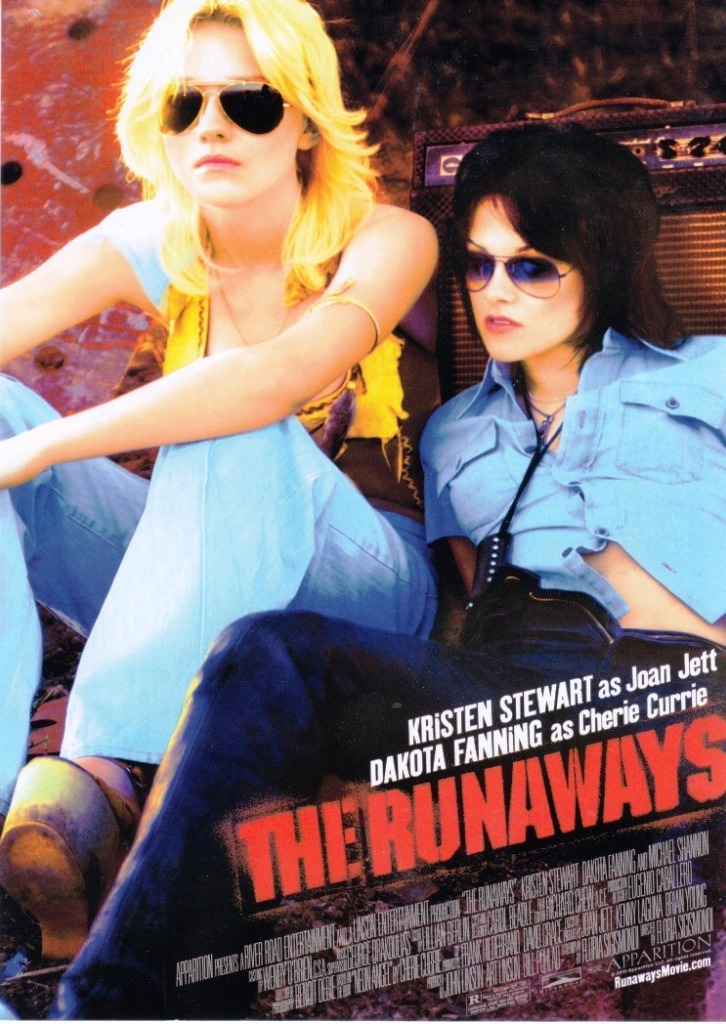
Floria Sigismondi: The Runaways


Floria Sigismondi's The Runaways (2010) makes for an ideal companion film in a double feature showing with Chus Gutiérrez's El Calentito (2005). I've thoroughly enjoyed both movies, both about all-women bands, the one set in the mid-to-late 1970s in the USA and Japan, the other set in Spain in the very early 80s.

The story line for The Runaways, based on Cherie Currie's Neon Angel: A Memoir of a Runaway (2010) and fleshed out by Sigismondi, follows the formation of The Runaways, Currie's various conflicts (family dysfunction and guilt, substance challenges, psychological and emotional issues), producer Kim Fowley's machinations, and Joan Jett's tenacious strength.  The whole cast is memorable, including Riley Keough (Elvis and Priscilla's grandaughter, Lisa Marie's daughter) as Marie Currie, Cherie Currie's twin sister. Dakota Fanning is glittery as Cherie, Michael Shannon nails the eccentric Fowley down, and Kristen Stewart is so good channeling Joan Jett I am still amazed, having seen Jett rock out in Charlotte around 1981. 

The soundtrack is hip and effective and includes a salute to Detroit via Iggy and the Stooges, the MC5 and Suzi Quatro.  Let's not forget David Bowie. the actual Runaways and Joan Jett and the Blackhearts.  If you dig the 1970s milieu at all, you will have a real cool time checking out The Runaways.


Florida Sigismondi (b. ca. September-October 1965), the strikingly visual director pictured here, seems to have more than a dash of Joan Jett's sensibility and drive herself.

Today's Rune: Strength.

Tuesday, March 16, 2010

The Runaways: Coming March 19


By the time I got to the early free screening of The Runaways, it was already booked to capacity. In fact, for a 7:30 p.m. showing, people had already camped out by Noon. The above image is of a movie card a security guard let me take at the perimeter. Instead, ended up seeing An Education, which is excellent. More on that soon, as well as The Runaways, which I now aim to see at the weekend.  Looks really good.

Today's Rune:  Joy.