Showing posts with label Tennessee Williams. Show all posts

Friday, May 04, 2018

Jan Němec: 'A Report on the Party and the Guests' (1966)

Jan Němec's O slavnosti a hostech  / A Report on the Party and [the] Guests / The Party and the Guests (1966).  Banned in Czechoslovakia! Director exiled! Such facts make this film all the more compelling. In 2018, brutish leaders are in style again, randomness rules, and all bets are off. In short, this film breathes surrealism with a touch of parable concerning social expectations, management, fear and control. 
A small group of friends are enjoying a picnic in the country. They see a wedding party pass by. Then, a group of men led by an apparent psychopath arrive and make them do absurd things, until a higher up appears and next directs them to a lakeside celebration. However, one of the guests prefers not to stay. He escapes, and is then hunted by a mob while some guests remain at table, putting out candles. 

There's an eerie, unsettling feeling watching this film, the kind you might get reading Flannery O'Connor's "A Good Man Is Hard to Find." Jan Klusák as Rudolf (pictured above) is the most effective actor, projecting volatile menace through buffoonery. He reminds me of the Rip Torn character in Sweet Bird of Youth (1962), an adaption of the Tennessee Williams play, as well as "The Misfit."

Today's Rune: The Self. 

Thursday, February 26, 2015

Jennifer Baichwal's 'Let It Come Down: The Life of Paul Bowles' (1998)

"Other people's indifference is the only horror." -- Paul Bowles (1948). 

Paul Bowles (1910-1999) and Jane (Auer) Bowles (1917-1973) led, by mainstream standards, bizarre lives. Jennifer Baichwal's Let It Come Down: The Life of Paul Bowles (1998) helps us catch glimpses, hear echoes and, particularly in the DVD extras, hear directly from Paul Bowles through a series of Baichwal's questions and Bowles' answers. The latter reminds me of Gore Vidal (1925-2012) in a way -- maybe it's the wry sense of humor.


Jane Bowles wrote fiction, letters and a play. A good place to start might be My Sister's Hand in Mine: The Collected Works of Jane Bowles, 2005. In Bernardo Bertolucci's The Sheltering Sky (1990), she's played memorably by Debra Winger; John Malkovich stands in for Paul Bowles, whose 1949 novel the movie is (more or less) based upon.

Paul Bowles had distinct periods in his life. Just to hit a few: in Paris with Gertrude Stein and Alice B. Toklas, where one of his assigned responsibilities was to watch their pets. Still bitter about the pet-watching in his eighties, he quips: "I hate poodles anyway. I think they're revolting animals."

He was, too, a musician and composer, associated with Aaron Copeland and Tennessee Williams.

Then he settled permanently in Morocco, where he wrote several books and also did translation work. 

Jane Bowles was somewhat like Joan (Vollmer) Burroughs, whose second and final husband was William S. Burroughs -- both drank prodigiously and both died young (the latter at 28 years old, the former at 40).  

p.s. Caution: Artists on Board. 

Today's Rune: Separation (Reversed). 

Wednesday, September 25, 2013

The Roman Spring of Mrs. Stone

José Quintero's The Roman Spring of Mrs. Stone, a 1961 movie adaptation of Tennessee Williams' 1951 novella, stars Vivien Leigh a half dozen years before her death, Warren Beatty on the upswing, Jill St. John, Coral Browne and Lotte Lenya, among others. This provides a field day for fans of Tennessee Williams, the ambience of Rome or any of the actors.   
Vivien Leigh's Karen Stone stands in for herself and also for Tennessee Williams. Not only is she (and they) trying to overcome loneliness and a sense of  mortality through "a geographic;" so, too, there's an eerie, haunted-looking stalker always just out of reach, a specter, a momento mori or reminder of limited years in which to live.  Many reading this will have at least some inkling of Vivien Leigh as Scarlett O'Hara in Gone with the Wind (1939) and as Blanche DuBois in A Streetcar Named Desire (1951).    
Other actors featured in The Roman Spring of Mrs. Stone have greater contexts, as well. Two of them feature prominently in James Bond films, one apiece -- think From Russia, With Love (1963) and Diamonds Are Forever (1971) to dig the connections.

This was José Quintero's only outing as a movie director -- he normally stuck with stage productions. 

Finally, there was a remake in 2003, but that's for another time and another place. 

Today's Rune: Harvest.

Sunday, March 17, 2013

Society to Stamp Out "You're *Very* Welcome"


"Attention must be paid" -- Arthur Miller (and Tennessee Williams, too, maybe).

The Buddha (paraphrase): Be mindfully aware before you leave this place and time.

Larry David, Curb Your Enthusiasm (paraphrase):  Be mindful of some rules, or anarchy will prevail.

Today's guilty phrase, most hideous foul: "You're very welcome."

I've been noticing this popping up more and more. First I thought it was just in Texas, then I heard it in Arkansas, and now I'm supposing it's spread everywhere, like alien pods from Invasion of the Body Snatchers.

There's no hope for social graces if this contagion continues to spread.

When I was interning in London a while back, whenever someone bumped into another person, they'd quickly whisper, in a faux sincere tone, "Sorry!"

"Sorry," as in: I meant no deliberate insult, harm or provocation by my seeming clumsiness. We need not fight now.  

"Sorry," as in, from a darkly British war movie: "Sorry, sir, I didn't see the white flag," said by a sergeant in Libya during World War Two, after he guns down surrendering weaponless Germans. (The twist: they're actually British soldiers who'd escaped through German lines after a secret mission -- shot by their own comrades).

In any case, what exactly does "You're very welcome" mean?

What, indeed, is the difference between saying "You're welcome" and "You're very welcome?"

Nothing, except for the unnecessary addition of the adjective "very," possibly intended as a (lame) intensifier.

Again, what does "You're very welcome" mean?

A. Nothing; or

B. Nothing on a literal level, but rather it serves as an implicit acknowledgement of some kind of social interaction (favor, gift given) or socioeconomic exchange (service for money, including perhaps a tip).

C. The person who says this really means it this time! Usually, without using adding "very," he or she is not being in the least sincere.

Verily, what say ye, dear readers?  Meanwhile, You're very thank you!

Today's Irish-themed Rune: Signals.  

Tuesday, January 15, 2013

Jill Sprecher: 13 Conversations About One Thing


Jill Sprecher's Thirteen / 13 Conversations About One Thing (2001) dovetails nicely with the work of existentialist writers like Søren Kierkegaard, Fyodor Dostoyevsky, Albert Camus and Hanna Arendt. On the one hand, we can do certain things, make certain choices; on the other, we take our chances anytime we wake up and get moving. Besides that, there's an uncertain amount of randomness and entropy at play in the universe.

A snippet of the Roxy Music song "Editions of You" (1973) covers the gist of it:

They say love's a gamble, hard to win, easy lose
And while sun shines you'd better make hay
So if life is your table and fate is the wheel
Then let the chips fall where they may
In modern times the modern way . . .

And the rejoinder:

Love me, leave me
Do what you will
Who knows what tomorrow will bring?

When somebody came a knockin' at her door, Dorothy Parker would occasionally mutter, "What fresh hell can this be?"

In any case, the film makes clear that kindness is rarely a bad thing, certainly preferable to cruelty, violence or indifference. As Tennessee Williams put it, attention must be paid.  
 
Thirteen Conversations About One Thing is not a documentary. It's a dramatic film structured around statements made by characters, unspooled in nonlinear form. The disjointed structure invites a second look, once the basic contours of the storyline are better understood. 
 
The one thing?  That state of being/perceiving called Happiness.
 
Jill and her sister Karen Sprecher have here woven together a meditative, sometimes brooding film, but physical events do occur, significant ones in the lives of the characters played by heavy hitter actors, including Alan Arkin and Clea DuVall (both now in Argo), Amy Irving, Matthew McConaughey and John Turturro. The last named reminds me that Thirteen Conversatons has a similar sort of take on life as the Coen Brothers' A Serious Man (2009).
 
Today's Rune: Joy.   

Saturday, January 21, 2012

Richard C. Sarafian: Vanishing Point


Richard C. Sarafian's masterful road movie Vanishing Point (1971) brings many attributes to the screen, including primal excitement. It plays out like something from ancient mythology, with cerebral, mystical and existential touches featuring a souped up Dodge Challenger driven by Kowalski (Barry Newman), a Vietnam vet and ex-cop on a speed-fueled working joy ride pursued by highway patrolmen in three Western states. It's beautifully shot and an exuberent trip. 


The UK version includes Charlotte Rampling as a hitchhiker and harbinger of death.

The name Kowalski brings to mind Clint Eastwood's character, a Korean War vet also named Kowalski, in Gran Torino (2008), and Stanley Kowalski in Tennessee Williams' A Streetcar Named Desire (1947).

Today's Rune: Fertility.

Friday, January 21, 2011

Walk on the Wild Side: La Gata Negra


Despite an absurd plot, ridiculous conflict, little character development and stilted acting with horrible attempts at Southern accents, Edward Dmytryk's Walk on the Wild Side (1962) can be fun to watch. It could have been a lot better. 

Part of the problem in its creation was the lingering Motion Picture Production Code that had lasted from the early 1930s and would not be dropped (via the "rating system") until 1968. Walk on the Wild Side takes a few puzzle pieces from the gritty 1956 novel by Detroit-born Nelson Algren and leaves the rest out; these pieces are rearranged to fit a lame formula, focusing on Texan Dove Linkhorn's (played by Laurence Harvey) attempt to find and woo back an old flame, Hallie Gerard (Capucine), who is now working in a New Orleans French Quarter bordello compound centered around "The Doll House," the compound's bar and meeting area. That would be okay given different actors -- but these two don't work. Capucine's movements are glacial, and Harvey's Dove seems more like a naive simpleton than, say, if Clint Eastwood retroactively had gotten the role (similar to Walt "Tex" Coogan, the character he plays in Coogan's Bluff, 1968).

On the other hand, in Walk on the Wild Side Jane Fonda plays hot pepper Kitty Twist with charisma, Anne Baxter hams it up well as Teresina Vidaverri, a Mexican café owner, and Barbara Stanwyck seems delighted playing mean lesbian mama bordello owner Jo. A nice lurid touch has Jo's legless husband Schmidt (Karl Swenson) scooting himself around on some kind of low-to-the-ground homemade device, throwing punches at one point.

The whole thing comes across like a B movie version of a short Tennessee Williams play -- it reminds me a little of This Property Is Condemned (1966), come to think of it, only that one feautures a vibrant Natalie Wood in the wooden Capucine slot. Overall, nowadays the Coen brothers could make something much better out of it -- they'd probably stay truer to the novel.


Still from the opening sequence, featuring a sauntering black cat (hence the Spanish version title, La Gata Negra).


I can imagine the corniness/camp angle brought Walk on the Wild Side to Andy Warhol's attention. The Factory, it so happens, began operations the same year the movie came out, a nifty linkage that may segue into the next post.

Monday, September 15, 2008

Wall Street Unplugged


Oliver Stone strikes again. Wall Street (aka Greed, 1987) . . . And now in 2008 the real Wall Street is stricken again, one more time for the back seats . . . Add it to the list of disasters suffered since 2000 . . . As Obama put it recently, this is "trickle up" economics, the pain spreading from down below up to the predatory greed meisters at the top. As Bill Clinton used to say, "I feel your pain." I do.

By the way, are you "better off" than you were four years ago? Personally, I am -- but in spite of W., not thanks to him and his odious ilk. Or perhaps it's more accurate to say, we can learn as much from disasters as we can from successes, maybe more so. As Tennessee Williams put it for this to work, "attention must be paid."

On a Palin note, has anyone seen any comparisons with Huey "Kingfish" Long (8/30/1893-9/10/1935), or Robert Penn Warren's classic novel, All the King's Men (1946)? The similarities with Palin are apt, and I'm guessing she'll have had her own form of rise and fall by the time it's all over, as well.

After the fall of Kwame, Detroit officially gets its new mayor Friday. Yeahdawg! Interesting times, indeed. This movie is running overlong though -- can't we have an intermission and a drink in the lobby?

Today's Rune: Journey. Harvest Moon/Ides of September.

Tuesday, May 06, 2008

Another Girl, Another Planet


John Huston's The Night of the Iguana (1964) movie version of Tennessee Williams' play features Richard Burton as a hard drinking ex-Episcopal priest alternately stirred and buoyed by a rebellious young crush (Sue Lyon, Lolita); an itinerant artist (Deborah Kerr, From Here to Eternity, An Affair to Remember, Bonjour tristesse) travelling with her grandfather, the "oldest living poet;" and a widowed innkeeper (Ava Gardner) in Jalisco, Mexico.


The result, in black and white, seems quaint and innocent by today's standards. A better story was on the actual film set, with Elizabeth Taylor hovering around her paramour Richard Burton, blocking any lusty liaisons between him and Ava Gardner or anyone else, if not from fortifying drinks. The cast and crew were near wrapping up in November 1963 when the news came of JFK's assassination back in the States.

Given the rendered star power, this is worth a languid watch at least for the visuals and occasionally fun dialogue.


Backstage photo by Weegee, New York City, back in the day. Whereas the dudes seem dated, she'd fit right in today's fashion scene sixty odd years later.

Today's Rune: Breakthrough.

Monday, March 26, 2007

Back in Noir


I absorbed as much as I could during my flying circus visit to New Orleans, spoke to a lot of people, only just glimpsed the devastation outside of the French Quarter. Even so, my main hope is that people from other parts of the world will chance a post-Katrina visit. I've been wanting to get back for a while and am happy I went.

In fact, there were people from everywhere. New Orleans is, I discovered, a place where being from Detroit holds some fascination. If you're comfortable in one part of old "New France," you'll be comfortable in the other, only New Orleans has a lot more to do concentrated in relatively smaller areas than Metro Detroit. Aside from some blues guys, a bartender who told with numb detachment of his friend getting shot while looting, a woman originally from Adrian, Michigan who drives a mule, and a bunch of miscelleneous people on street corners, I learned a lot in particular from an Indian shop keeper and a Hungarian woman who's lived in New Orleans since the 1960s. I sucked in a heap of culture, damned good food, and much weirdness like watching the immediate aftermath of a woman bartender stabbing a frat boy in the hand for some unexplained reason (I'm guessing he may have provoked it).

The Quarter, according to some of the entrepreneurs there, say things are picking up again though mostly just in the past couple of months.

The layers of law enforcement were interesting -- armored cars decked out for the Iraq War on the fringes (I saw one roll by the Projects next to St. Louis Cemetery Number 1 where there had been an exchange of gunfire); Louisiana State Police; volunteers from other precincts; and New Orleans cops on motorcycles, on horses and in squad cars. They seemed to be there mostly to quell violence; minor infractions like selling beer and pot out of the backs of pickup trucks were openly ignored (I've never seen so many people drinking or smoking so brazenly in front of the law). The idea of widespread graft and corruption was widely acknowledged. One thing is sure: never a dull moment.

Today's Rune: Breakthrough.

Today's Birthdays: Tennessee Williams, Erica Jong, Robert Frost .

Ciao!

Monday, January 01, 2007

Living Without A Net: 2007


Given that we're in the year 2-007, I suppose it's fitting to be posting from a remote undisclosed location.

Looking back, I know the wisdom of seclusion during this annual transition. I've seen many a trainwreck on New Year's Eves in the past: outright breakups; the end of long (and sometimes tedious) friendships; couples cancerously doomed to distintegration within the year by exposure to the wrong elements (usually involving other couples on the rocks or on the make or worse, involving various loyalty tests, failed royally, often miserable mismatches obvious to all but the couples in question to begin with); grown men and women brought low by wormy tequila, weeping, puking and passing out face down; idiotic people doing incredibly stupid things. And poor Hank Williams died on New Year's Eve.

But sometimes, magical things happen on New Year's Eve and I've experienced some of those moments, too.

For instance, when I was a boy of about seven, I lived in transit with my family in an apartment building in Justice, Illinois, an "eclectic suburb" at the edge of Southside Chicago. Never a dull moment there, I saw riots, a building fire a few units over, the aftermath of a tornado that flattened a school and dozens of houses for several blocks on end, brick fights that ended with a cop raid and screeching ambulances, a kid run over by a VW Beetle with blood running out of his nose and mouth, and a lot of crazy people acting out; but there, too, I remember like yesterday an eerie little twin from the apartment above us named Misty coming down and introducing us to her Tennessee hill tradition of fetchin' a penny from a cup of hot black-eyed peas for good luck on the New Year, her with hilly twang and greasy shiny hair and flashing eyes all proud to show us.

Heads up -- good luck. Heads down -- flip it for the next draw and get good luck that way, too. And don't do any laundry on New Year's Day -- it's bad luck.

Good luck to all those clingy couples who fit the bill last night on the eve of their destruction. May they rest in peace by next New Year's Eve.

Today's Rune: Protection.

Amen.

Thursday, November 02, 2006

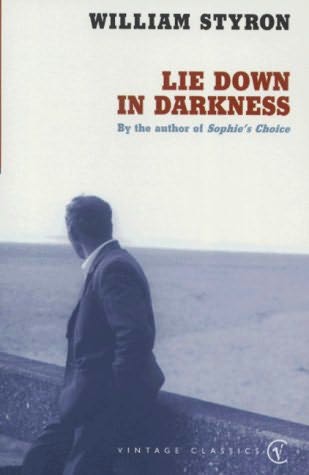
William Styron: Lie Down in Darkness


The death of William Styron (b. Newport News, Virginia, 6/11/1925-d. 11/1/2006, Martha's Vineyard, Massachusetts) throws my mind back to my high school years in Durham, North Carolina.

Given that every English teacher I've ever taken classes with has ranged from eccentric to outlandish and sometimes outrageous, Mrs. V. stands out as a moody mix of them all, only with a very Southern twist. Hailing from Mississippi, she taught an outstanding class called "Southern Writers." Mrs. V. loved her people and championed their work, had met Faulkner, the master, and had us read his novels, plus Tennessee Williams' plays, Flannery O'Connor's writings, Carson McCullers, Walker Percy, and also her friends Eudora Welty and Reynolds Price (who came to class once). Anne Tyler was in the mix somehow, too. For a special research paper, I was given William Styron's The Confessions of Nat Turner (1967), which I found alternately absorbing and nauseating, and certainly memorable.

Styron was an intense guy, masking depression with various addictions I suppose, but also, perhaps, because of his sensitivity, perceptiveness and depth. After attending Davidson College, he graduated from Duke, with stints in the Marine Corps before and after. Before he died yesterday, he completed five novels (including Sophie's Choice, 1979) and three other books, including Darkness Visible: A Memoir of Madness (1990).

I thank Mrs. V for making me read Styron early. I don't remember a Mr. V, but she had a son who suffered from a wasting disease. In class, she alternated between fussy propriety to whispered enthusiasm at "Freudian symbolism" like cigars, hot lava, Cat on a Hot Tin Roof.

Mrs V. refused to ever mention General William Tecumseh Sherman's name ("that awful man") because of Vicksburg and Atlanta, and always referred to the American Civil War as "The War of Northern Aggression" or "The War for Southern Independence." Since I was born in Yankee Pennsylvania, I found her observations highly entertaining and a bit Mississippi crazy. In her mind, very little of importance happened in the world since "The Night They Drove Old Dixie Down." Except, of course, for Southern writers -- America's saving grace in the twentieth century.

Today's Rune: Journey.

Adieu, William Styron.

Wednesday, September 27, 2006

Ye-eeees, the moon a-risin' and the sun is sinking low


The Moon reflects sunlight. It’s cooler than the Sun. The Sun is too direct, too hot and too bright. The Moon remains mysterious.

A sampling of Moon songs:

Moondance -- Van Morrison
Song About the Moon -- Paul Simon
Half Moon – Janis Joplin
Havana Moon – Santana
Moon Is Rising – John Lee Hooker
Moon Rise Blues -- Lightning Hopkins
There’s A Moon in the Sky (Called The Moon) -- B-52’s
Harvest Moon -- Neil Young
Bad Moon Risin’ -- Creedence Clearwater Revival
Full Moon – The Kinks
The Killing Moon -- Echo and the Bunnymen
Blondie – Dancing Down the Moon
Alabama Song (Whiskey Bar) – Brecht/Weil – The Doors
Fly Me To The Moon -- Tony Bennett, everybody
Drunk on the Moon -- Tom Waits
Howling At The Moon -- Hank Williams
Howling At The Moon (Sha-La-La) -- Ramones
Blue Moon – Louis Armstrong, Elvis
Blue Moon of Kentucky – Bill Moore
Under a Tennessee Moon – Neil Diamond
It’s Only a Paper Moon – Ella Fitzgerald
Moonlight Mile -- The Rolling Stones
Shine On Harvest Moon -- Leon Redbone
Marquee Moon -- Television
Man on the Moon -- REM
And The Moon Pulls The Tides Gently, Gently Away -- Jimi Hendrix
Walking on the Moon -- The Police
New Moon on Monday -- Duran Duran
Moon Over Marin -- Dead Kennedys
Holiday on the Moon -- Love and Rockets
Moon River -- Johnny Mercer/Henry Mancini
Moonlight Drive -- The Doors
Moonage Daydream -- David Bowie
Child of the Moon -- The Rolling Stones
Moon Over Bourbon Street -- Sting
Claire de Lune -- Claude Debussy
Song to the Moon -- Antonin Dvorak
Moonlight Sonata -- Ludwig van Beethoven

You can walk in moonlight and not worry about getting moonburned.

You don’t need moonglasses or moontan lotion and don’t need to wear a hat in a moonlit sky.

You won’t get leathery, patchy skin from moonlight, nor risk skin cancer from too much Moon exposure.

If you set your controls for the heart of the Sun, you will burn up; but you can land on the Moon, leave a flag behind, and come back to Earth alive.

You can look directly at the Moon. If you look at the Sun you go blind.

The Sun is always the Sun, but the Moon has phases, it waxes and wanes. Full Moon, Half Moon, New Moon, Harvest Moon, Blue Moon.

The lunar calendar can be divided into 28-day months; the solar calendar varies with each month.

Finally, the Moon was created from the Earth; the Sun will destroy the Earth.

Today's Rune: Movement.

Ciao!

Friday, September 08, 2006

The Hotel Chelsea


Along with Leonard Cohen, first we’ll take Manhattan. Set up headquarters at The Hotel Chelsea, otherwise known as The Chelsea Hotel.

For anyone who really loves the arts and wants easy access to a large culturally-packed chunk of the city at a reasonable price, it’s worth checking out their website. This is not a luxury hotel, but it is a working one, with long-term residents and reasonable amenities (like a refrigerator and coffee maker). I love it for its low-key ambience, excellent location and intense history, among other things.

Here’s a sampling of people who’ve stayed (and created) in The Chelsea time-space intersection:

Sarah Bernhardt; Mark Twain; Edgar Lee Masters; Hart Crane; Henri Chopin; Thomas Wolfe; Édith Piaf; Frida Kahlo; Diego Rivera; Dylan Thomas (until the end); Nelson Algren; Henri Cartier-Bresson; Julius Robert Oppenheimer; Charles Jackson (The Lost Weekend); Jean-Paul Sartre; Simone de Beauvoir; Willem de Kooning; Jasper Johns; Vladimir Nabokov; Arthur C. Clark (drafting 2001: A Space Odyssey); Stanley Kubrick; Shirley Clarke; Arthur Miller (After the Fall); Rebecca Miller; Tennessee Williams; Gore Vidal; Brenda Behan; Brion Gysin; William S. Burroughs (Naked Lunch); Jack Kerouac (On the Road); Bob Dylan (Blonde on Blonde); Bob Neuwirth; Edie Sedgwick; Mary Woronov; Brigid Berlin; Nico; Janis Joplin, Jimi Hendrix; Grace Slick and The Jefferson Airplane; Leonard Cohen; Joni Mitchell (“Chelsea Morning”); Kris Kristofferson; Jane Fonda; Donald Sutherland; Dennis Hopper; John Cale; Sam Shepard; Patti Smith; Robert Mapplethorpe; Iggy and the Stooges (“We Will Fall” – Room 121); Sid Vicious; Nancy Spungen; Dee Dee Ramone; Grace Jones; Miloš Forman; Uma Thurman; Ethan Hawke (Chelsea Walls); Gaby Hoffman.

Though no comprehensive history of the place and its guests has yet been published, there's Chelsea Horror Hotel (2001) by Dee Dee Ramone and the upcoming Chelsea Hotel Manhattan by Joe Ambrose, to be made available on February 1, 2007 (cover pictured above).

Don’t confuse this Hotel Chelsea with the London version or with Elvis Costello’s bitingly great song, “(I Don’t Want to Go to) Chelsea.”

I most certainly do want to go back to The Chelsea.

Hotel Chelsea
222 W 23rd St
New York NY 10011
Telephone: (212) 243-3700
Fax: (212) 675-5531

Today's Rune: Growth.

Bon voyage!

Friday, April 21, 2006


The Star Attraction

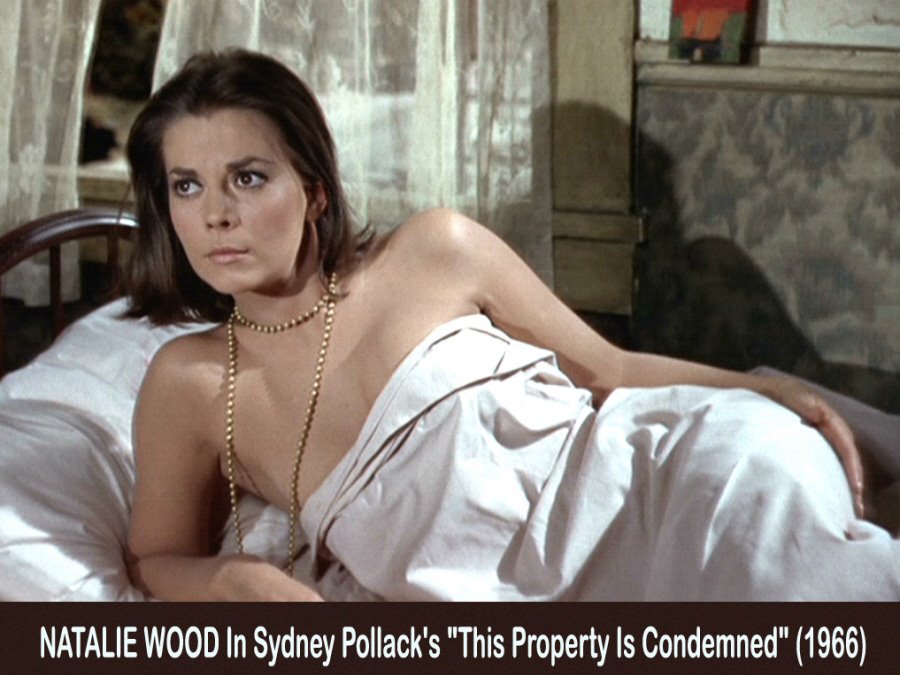
At first look, the setup for the 1966 film This Property is Condemned seems like a heroic fantasy. Stranger comes to town, assesses the situation, liberates wounded damsel in distress and turns the rest of the town upside down. But this is no Clint Eastwood Western, no James Bond tale. This is an adaption from Tennessee Williams. Hence, the story is more complicated and involves larger socio-economic forces, ties of blood, primal human nature. In this as in Diane Arbus vistas, the freakish is ordinary and the ordinary seems freakish.

Overall, this is an interesting B movie. The talent pool would suggest the possibility of something beautiful and sad like The Last Picture Show (1971), but it doesn't quite add up that way. Still, it's got a lot to make it worth seeing -- starting with Natalie Wood in the juicy role of Alva Starr. Then there's Kate Reid as Hazel, her manipulative mother. Reid looks at times like Shelley Winters in Alfie -- maybe it's the mid-1960s fashions and similar hairdos -- even though This Property is set during the Great Depression -- and she acts like her, too. Alva's little tomboyish sister Willie is played by Mary Badham of To Kill a Mockingbird fame. Then there are the male stars.

Robert Redford gives a solid performance as Owen Legate, the stranger who arrives in town to deliver layoff notices to the railroad workers who comprise most of its laborers; he also becomes Alva's key romantic interest, eliciting all sorts of conflict. Legate discovers a rather twisted if understandable setup. Hazel, who runs a hotel/boarding house, essentially pimps Alva out to the highest bidder to keep things going; her husband has abandoned the family and left them to their own devices. Legate is the primary change agent in the story.

The secondary male characters also give solid performances. It's entertaining to see the nervous Robert Blake as Sidney and Charles Bronson as a brutish J.J., both of them railroad workers with a torch for Alva. J.J. is sleeping with Hazel so he can get close to her daughter. These guys are pure Tennessee Williams. Bronson was already a rising tough guy star, and Blake would break out with his charismatic In Cold Blood performance the following year. John Harding plays Mr. Johnson, a "lonely" older married man who wants to make Alva his kept mistress in Memphis. Dabney Coleman has a minor role as a salesman.

Then there's the director, Sydney Pollack. This was an early effort, and though I'm not a big fan of his movie directing, he is terrific as an actor in Husbands and Wives (1992). The primary screenwriting credit goes to Francis Ford Coppola, also an early effort for him -- before he began producing movies of his own.

The most compelling aspect of the story is the weird Starr family dynamic. Hazel constantly intrudes upon Alva's privacy and tends to trample social boundaries. She has good lines like "I can only be nice to one person at a time;" and, of Alva and Legate, "My, what a handsome couple." But Alva has some good (if cheesy) lines, too. At one point, when she confronts her mother in front of some of her male admirers, Hazel notes that she's "loaded," and Alva fires back: "Yeah, like a pistol." Legate also gets to banter, mostly with little sister Willie, to whom he says, "I suspect your sister is a mighty potent force." And he is right.

Also: Natalie Wood had a lifelong fear and dread of water, and in the course of the film, has to shout "Let's go skinny-dipping!" You can see the fear in her face in a scene that must have influenced Cybill Shepherd's similar pool scene in The Last Picture Show. Of course, the tragic and beautiful Natalie died by drowning in 1981.

Thanks to my big sister Vickie for recommending this movie some time ago. Glad to have finally found it in DVD format.

Today's the traditional date for the founding of Rome by Romulus. And as for England's dreamin', God Save the Queen and her fascist regime. It's her 80th birthday and poor Charles is still waiting in the wings for his turn. And lest we forget, happy birthday Iggy Pop!

Ciao for now. Off to do some nighclubbing. . . . .

Sunday, March 26, 2006

Behind Closed Doors

Today is the birthdate of Tennessee Williams and Erica Jong, two people whose works remind us of the broad spectrum of activities that go on behind closed doors. Judging from the popularity of such shows as Desperate Housewives, American society has a scandalized fascination with this spectrum, and seems particularly interested in love affairs and their attendant effects.

Not that sex and adultery or their entertainment value is a new thing. Some people have always read the Bible for fun as much as for moral instruction. In American society, less fun by comparison is Hawthorne's The Scarlet Letter or any number of tortured Victorian and Edwardian era writings that tried to get realistic. Since the Second World War, there has been a plethora of stories, novels, novellas, plays, poems, songs, memoirs, movies, and tabloids that have mined our social and sexual mores, exploring the stressors and fissures between attitude and practice, that spotlight the hypocrisy of an always shifting status quo. The Man in the Gray Flannel Suit, Peyton Place, the Kinsey reports, Valley of the Dolls, "Harper Valley PTA," and much of John Updike's work are random but telling examples of such. These cultural outpourings eventually migrated to television via such heavily viewed series (and we love our continuous narratives -- they are ritualistic and deeply comforting) as daily soap operas, Dallas, Melrose Place, etc., and more recently by way of probingly less censored cable/satellite tv series like Sex & the City, Six Feet Under, The Sopranos, Deadwood, Rome, and lately Big Love. And, of course, this is ripe territory for stand-up comics of all types and backgrounds.

These are interesting cultural strides, but one must continue to wonder about the collective sanity or maturity level of a society at large that is still far more willing to tolerate or even glorify violence than it is to discuss sexuality in a qualitative way. Even in 2006, advertisers obviously aim at the clueless herd mentality of teenaged boys, using this as their associative norm, exploiting sexual innuendo with all the subtlety and classiness of pornography. And a plurality of voters have recently shown far more tolerance and support for an outright liar and warmonger who condones torture and wiretapping than they ever did for a married president who merely allowed an enthusiastic intern to fellate him a few times in the White House. For that terrible crime, they would have impeached him and, perhaps, stoned him to death -- much like our enlightened "friends" in Afghanistan would now like to cut the head off a man for converting to Christianity.

Cultural mediation of sexual mores is helpful. As for me, after seeing the movie Kinsey (2004), I concur with two of its conclusions: within or without the framework of marriage, civil union, or any other arrangement, polyamorous behavior -- anywhere from fantasizing to flirting to actual sex -- is "normal" and not an apocalyptic disaster; but so, too, is human jealousy natural. Both polyamory and jealousy are probably hardwired within the human psyche. Still, aside from biological drives, hormones, and genetics, there are obviously traditional ethical and moral dimensions to contend with. Jimmy Carter caught a lot of heat for his merely honest admission to Playboy that he felt "adultery in his heart." The poor man. Life is not a card game -- adultery is nothing if not adult, and the emotionally-charged label "cheating" is a ridiculous euphemism for multiple love and/or sex interests, regardless of whether they're latent or consummated.

I've been dubbed by some as "European" in my outlook, and perhaps I can afford such a tolerant stance because I am divorced, employed, have no children, and live in my own space. I don't know the specific answers for the rest of society, but clearly there is a huge interest in exploring our social options. We have been in the process of trying to reach civil agreements about a variety of new legal partnerships, care of children, care of adults, sexual orientation, and any number of such complicated social matters -- for some time. Let's hope that civil society can become more civilized -- rather than less so -- and be able to agree to disagree without killing ourselves in the meantime. If there is one big thing we should learn from the violence practiced by extemist zealots of all religions and sects, it is that we must maintain a clear separation between church and state in the USA.