Showing posts with label 1983. Show all posts

Monday, July 02, 2018

Chapel Hill Daze: Pictures of Another Gone World: University Square

Lawrence Ferlinghetti, Pictures of the Gone World (The Pocket Poet Series, Number One). San Francisco: City Lights, 1955.  A salute to Ferlinghetti, who is ninety-nine years old -- born on March 24, 1919. Graduated from the University of North Carolina at Chapel Hill in 1941. I saw him give a reading in Chapel Hill in the 1980s, when he was but a young lad in his sixties. Afterwards, he signed my copy of Jack's Book. (I also remember when Harlan Ellison came to town to write a story based on a given first line -- but that's another story). 

And now it's time to turn to pictures of another gone world, a University Square of the Mind, as it were. University Square was an entry point for me, I liked the area for parking, sitting with cups of coffee, writing in journals. And now it's gone, gone, gone, transmogrified into "Carolina Square." The buildings and entire complex that comprised University Square were demolished in 2015. 

So let's do the Proust thing and bring back some of the names of that lost world. 

In the 1980s, let's say around 1983, you could walk from Columbia Street along Franklin Street on the "north" side, going toward Carrboro, and you'd pass Logo's Book Store (Christian books?), Mr. Gatti's Pizza, the Yogurt Pump, a jewelry store, an electronics store, the entrance pathway to He's Not Here (which always made me think of the Alamo - lots of stories to go with He's Not Here); a Pizza Hut, a sporting goods shop, the Pump House, a funeral home, McFarling's Exxon, Hunam's Restaurant, and a parking lot that ended with Church Street. If you kept going, you'd pass another parking lot, a telephone building, Peppi's Pizza, Woofer & Tweeter, a Gulf station; Fowler's Food (giant deli type meat place), McFarling's garage, Chapel Hill Rare Books, Martin Keith Book Shop, a florist, Phoenicia Restaurant, Village Pharmacy and Noel's Sub Machine. 

The only place left standing from the previous paragraph is He's Not Here.
Let's walk back to the intersection of Columbia and Franklin and cross the street to the "south" side.

Just at the corner is a large Baptist Church (still). Back around 1983, there was next a beauty salon (Scissorium) of which I remember nothing except that maybe it was a small single story stand alone. 

University Square was divided into three large sections: University Square East, University Square, and University Square West. The anchor for East was a CCB (Central Carolina Bank) Bank with ATM designed to trick students into overdrafts (or so it seemed to students). East included Kemp Jewelers: Circle Travel (anyone wonder about travel agencies?  This was one and I went in there occasionally); the Chapel Hill barbershop; Aesthetic Styling Salon; Cabana Tanning Center; Monkey Business -- never went in that one and have no idea what it was pitching.
University Square [Central]. Time-Out Restaurant was a 24-hour place with biscuits and salty kinds of college student food. The aroma of fresh buttered biscuits perpetually hovered about.

There were green and white awnings that fringed the roof edges, and cool passageways that let you cross through to the back side of the complex, one of my favorite design features that I often took advantage of -- built-in desire paths.

Time-Out still exists but has moved to where Hector's once stood, at 201 East Franklin at Henderson, across Henderson Street from the US Post Office.

Swensen's Ice Cream was one of the those old-fashioned places that left me bewildered -- a lot like Mayberry's. There are three Swensen's left in the entire USA, as of this post. Mayberry Ice Cream is down to a couple left in North Carolina, I think.

Other places in the middle section: Ken's Quickie Mart; Knit-A-Bit; Second Sole (shoe repairs, I think); Cameron Craft. The Painted Bird had various types of cool little things, arts type goodies. I think they had stationary and cards, too. 

And there was my favorite University Square hangout of all, on the side facing away from Franklin Street: The Looking Glass Café. More on this at some point, I suspect. The scent of fresh coffee permeated. There's a place with the same name now open in nearby Carrboro, at 601 West Main Street. I'll have to inquire to see if they are connected in some direct way, or even indirectly by inspiration. 
University Square West. Little Professor Book Center. I frequently ducked into this and many of the other Chapel Hill book and record stores. At its peak, there were more than one hundred Little Professor book stores around the USA; there are now (in July of 2018), as far as I can determine, three left.

Other stuff: Tyndall's Formal Wear (rentals, mostly); Shoe Doctor; University Opticians; Fine Feathers - clothes; and T'Boli Imports. The last one had lots of wine, if memory serves.

I have no idea what was in the upper floors of the main buildings: offices, apartments, condos?  

University Square: gone but not forgotten. Anyone who has any idea of what the above is about, please add details, memories, observations. And if not about here, how about somewhere that you once knew that's now part of another gone world?

Photos: "Downtown Chapel Hill" website; University Gazette (2008); Wiki Commons (July 28, 2008). 

Invaluable resource to cross-check memories, places:  OCCUPANTS AND STRUCTURES OF FRANKLIN STREET, CHAPEL HILL, NORTH CAROLINA AT 5-YEAR INTERVALS, 1793-1998, by Bernard Lee Bryant, Jr. Chapel Hill Historical Society, printed out by J.D. Eyre in 1999. Link here.

Today's Rune: Breakthrough. 

Saturday, April 21, 2018

Amsterdam Then and Now: The Melkweg

Amsterdam: The Melkweg. Summer of 1983. Time regained through the power of photography -- and memory.   
Same frontage, summer of 2017, on a rainy night. 

Melkweg:  Lijnbaansgracht 234a
1017 PH Amsterdam                                                   Telefoon: 020-5318181
Link here  
Front of the Melkweg in daylight. Summer 2017.  All photos by Erik Donald France. 

I've written about the Melkweg for years. Here's a post from quite a little while ago. Amsterdam forever! 

Today's Rune: Partnership.

Tuesday, April 03, 2018

'Wild Wild Country" (2018): One Wild Nutty Ride

Wild Wild Country (2018): "A Netflix Original Documentary Series" in six parts (so far). Set mostly in the 1980s and the nearer past, it's a dazzling, freaky kaleidoscope swirling with the cult of personality, tipped elections, conspiracy, challenges to the separation of church and state, surveillance, immigration themes, homeless people, cuisine, religion, G-men and semi-automatic weapons. What a show -- and how pertinent to our current Trump show!  Imagine the Branch Davidians and Jonestown on a large, international scale, making it successfully. Are you ready? Think Jim and Tammy Faye Bakker, the 700 Club and the PTL -- Praise the Lord aka "Pass the Loot" -- Club, armed to the teeth and ready to rumble.     
Wild Wild Country: the Eyes of Texas are Upon You. Or more accurately, the Eyes of Oregon and India are Upon Each Other. "You can't make this shite up."
For all these years I've had this snapshot of a restaurant sign in Copenhagen, Denmark, loving its name: "Zorba the Buddha."  Not until I saw Wild Wild Country did I realize that this was part of the Rajneesh movement -- even though it clearly reads just below the name: "RAJNEESH RESTAURANT." Location in 1983: Strøget, Frederiksberggade 15, København 1459. Suggesting once again that everything is connected to everything else in the grand scheme of things.

Today's Rune: Breakthrough. 

Monday, January 01, 2018

Amsterdam: Now and Then

Six images from trips to Amsterdam for comparison: three shots from the Summer of 2017, and two from the Summer of 1983, plus a scanned receipt.  

Above: Museumplein. Unaltered HTC mobile phone shot. You can click on it for a larger image. The Irish green jumps off the page. Do you know the pointillist work of the French painter Georges Seurat (1859-1891)? Check out his Un dimanche après-midi à l'Île de la Grande Jatte / A Sunday Afternoon on the Island of La Grande Jatte (1884-1886) for comparison. It's like you've entered into the scene, except without the water. Here's a link to the Art Institute of Chicago's image of it. 
Leidseplein: a busy place day and night. Unaltered HTC mobile phone shot. You can click on it for a larger image.
Stadsschouwburg, also on the Leidseplein. This one's with a Nikon Coolpix B500, compressed. 

Scanned receipt from Bob's Youth Hostel, July 1983. If I remember correctly, the cost was $3 per night at the time, in a dorm room -- equivalent to about $7.50 now. Same address: Nieuwezijds voorburgwal 92, 1012 SG, Amsterdam. Even the Telefoon number is mostly the same, with some additional prefix numbers added on for international calls. Then: 230063. Now: +31 (0) 20-6230063. The relative cost is higher now, but so are the options, including your own room.
This was probably somewhere along the way between Bob's Youth Hostel and the Melkweg. When one experiences something in an altered state, some memory details seem to float off into space. Probably Leidesgracht, Spruitstraat or Herengracht. Someone could identify this from the bell tower in the left background. Parts of Amsterdam were seedier (and "patchier," as my Londoner landlord once put it) in the Summer of 1983 than they were in 2017.
In the Summer of 1983, the 't Cafe with the Rolling Stones logo was facing the Leidseplein at or about Leidseplein 18. Later it was called the 't Cafe Black and White and seems to have since relocated. There have also been the Café Mokum and Café De Waard at the same address. So who knows anymore? There is only this image to go by. I remember that God-awful hairstyle that some people wore then. I also remember sitting on a bench and first seeing this logo during the daytime, when a dog came up to me to be petted, a Labrador mix retriever. 

Amsterdam forever! It's good to take pictures of places where you hang out because before you know it, some of them are gone! But if they're still there, all the better. 

Today's Rune: Joy.


Monday, July 20, 2015

Frederick Wiseman: 'The Store' (1983)

On the one hand (the rich or pretend rich hand): Prada, Saks Fifth Avenue, Escada, Vera Wang, Oscar de la Renta, Dolce & Gabbana, Georgio Armani, Nordstrom, Barneys New York, Bloomingdale's, Net-A-Porter, A'maree's, Bottega Veneta®, Morris & Sons -- Neiman Marcus, and so forth (see also El Corte Inglés in Madrid and Lisbon).

On the other hand (the poor or working class not pretending hand): The Dollar Store, Dollar Tree, Dollar General.

In between, you name it.

All of the above share being stores or product lines, their owners desiring and needing to sell merchandise. All share having customers who in turn desire, want or need to buy stuff with cash money or credit. 

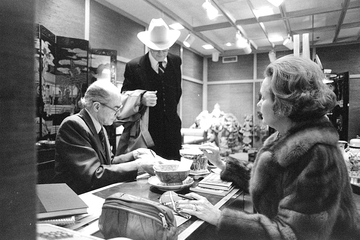
Given this, Frederick Wiseman's in color "observational cinema" documentary The Store (1983) serves as a microcosmic look at all such stores, from the most expensive to the least. 
The Store, along with numerous other Wiseman films, plus a couple of books, is available directly from Zipporah Films -- which is where I acquired a DVD version. Link here: http://www.zipporah.com/

Zipporah's description of The Store

'THE STORE is a film about the main Neiman-Marcus store and corporate headquarters in Dallas. The sequences in the film include the selection, presentation, marketing, pricing, advertising and selling of a vast array of consumer products including designer clothes and furs, jewelry, perfumes, shoes, electronic products, sportswear, china and porcelain and many other goods. The internal management and organizational aspects of a large corporation are shown, i.e., sales meetings, development of marketing and advertising strategies, training, personnel practices and sales techniques.'

Let me add: The Store is also about the architecture and design of massive department stores (rarer now in smaller cities) vs. those of other retailers; anxiety; identity; conspicuous consumption; ennui; desolation; labor; weird, prissy shoppers; changing mores (smoking allowed inside) and fashions (including hideous 1980s outfits, then "the cutting edge" of fashion); depressing store lighting and flooring (the lap of luxury?); the battle for hearts, minds and moolah; and let's not forget The Zodiac® restaurant. 

With no overarching narration and no clear "heroes" to follow, The Store is all the more fascinating to behold.

Today's Rune: The Mystery Rune.  

Sunday, August 10, 2014

Pedro Almodóvar: Entre Tinieblas / Dark Habits (1983)

Zooming in to the goings on inside a small convent, Pedro Almodóvar's Entre Tinieblas / Dark Habits (1983) shows that people often opt to become (or remain) more interesting than the limitations of their social functions. In other words, nuns may be rebels, artists, romantics, gardeners or addicts as well as servants to their order -- just like anyone else. 
I tend to enjoy movies (and any other kind of stories) about nuns and priests and so forth, and I dig Almodóvar, so this one works well for me. As a Catholic, I don't find Entre Tinieblas sacrilegious at all. So what if the Mother Superior is a romantic with a fondness for drugs and "bad girls?" If you substitute good food and drink or sports or smoking or whatever else you wish into the equation, doesn't everybody who can enjoy such pleasures?

Dark Habits isn't a comedy, exactly, nor is it a satire, nor a drama -- though it has touches of all; nor does it have wacky pacing. Rather, we have time to meet all the main characters, discovering what drives them but also what keeps them in place. Above all, though, change is in the air coming from multiple directions, so none of them can remain in their present station forever. Life is exactly like that, over time.
Here's my attempt to chart out the various social connections embedded in the Dark Habits storyline. Three of the characters are spectral presences only (Yolanda's boyfriend, the Marquis and Virginia, his daughter). Three types of written documents tighten the plot: a diary, a letter and several popular fact-based novels ghost-written by one of the nuns. 
Today's Rune: Wholeness. 

Thursday, April 03, 2014

Jean-Luc Godard: Prénom Carmen (1983)

With Prénom Carmen / First Name: Carmen (1983), Jean-Luc Godard strikes again with another memorable, offbeat flick. This one is colorfully shot by master cinematographer Raoul Coutard (with Jean-Bernard Menoud); it's broadly  based on Georges Bizet's four-part opera Carmen (1975), adapted by Anne-Marie Miéville. 

There's almost too much to be said about Prénom Carmen, so I'll keep it short. Screen time seems to develop along at least four converging or interlinking tracks: the uncle, Godard's eccentric doppelgänger (played by Godard);  the ocean and its relentless wave action; a string quartet trying to optimize their interpretation of Ludwig van Beethoven in a grand hotel; and, centrally, Carmen X (Maruschka Detmers) in her various movements. 
Throw in a bank robbery, a poorly planned "terrorist" kidnapping plot and brazen displays of nudity, and  -- presto -- you've got yourself quite a heady mix.
As with most of Godard's films, cherchez la femme -- look for the woman.  Seek and ye shall find. 

Today's Rune: Partnership. 

Wednesday, December 18, 2013

Jeremy Marre's Chase the Devil: Religious Music of the Appalachians

Jeremy Marre's Chase the Devil: Religious Music of the Appalachians (Beats of the Heart, 1983) gives us a glimpse of various interrelated religious, music and social scenes circa 1980. Like others in the Beats of the Heart series, it's got a lot of raw and exciting up-close footage set within the broader contexts of place and cultural outlook.     

In Chase the Devil, one can see the inflow and outflow of musical ideas, with Nashville as a sort of Mecca to some and "Devil's shrine" to others residing in proximate mountain pockets. There's gospel, bluegrass, folk blues, country and holy roller types of music, and mixtures of them all. You want coal miner protest songs? They're there. Snake handlers and poison drinkers and those drunk in the fruits of the holy ghost, speaking in tongues? They're there.  Well worth checking out?  Why, a big YES! Can I get a witness?  Amen, brothers and sisters!

Today's Rune: Opening. 

Tuesday, October 02, 2012

Sonia Johnson: From Housewife to Heretic


The recent death of environmental thinker and activist Barry Commoner (1917-2012) at ninety-five reminded me of several things. One, that Commoner ran for president of the USA on the Citizens Party ticket in 1980, the election that Ronald Reagan won (boo!). Two, that the next -- and last -- Citizens Party candidate to run for president was Sonia Johnson (b. 1936). That was in 1984, the same year Garaldine Ferraro (1935-2011) was chosen as Democratic Party vice presidential candidate backing Walter Mondale (Reagan-Bush won again -- double boo). Three, that not too long before Ferraro and Johnson, Shirley Chisolm (1924-2005) had aimed for the presidency as a Democrat in 1972 -- when Richard Nixon was elected to a second term (boo -- but at least that second term didn't last long thanks to the Watergate scandal).

Before she ran for president, Sonia (Harris) Johnson came through Chapel Hill, North Carolina, in the early 1980s, to speak about her then new book, From Housewife to Heretic (Doubleday, 1981), which sometimes is given a subtitle (derived from the 1983 paperback cover, I suppose): One Woman's Struggle for Equal Rights and Her Excommunication from the Mormon Church. She was energetic and fiery, still furious with the status quo of The Church of Jesus Christ of Latter-day Saints (Mormon Church) because of what she saw as its backward patriarchal ways, particularly the way gender roles and expectations were seemingly set in stone from on high. I wonder how Johnson, assuming she's still alive and cognizant, feels about Mitt and Ann Romney in 2012?

Today's Rune: Growth.

Monday, August 06, 2012

Luis Buñuel: Mon dernier soupir


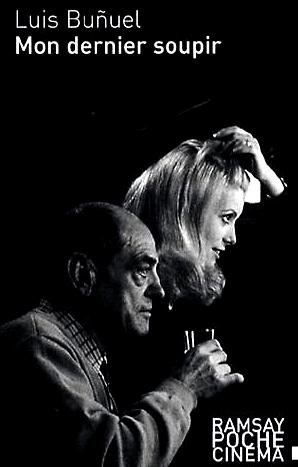
Thorougly enjoying Luis Buñuel's Mon dernier soupir (1982) / My Last Sigh (1983). The version I'm now reading is the University of Minnesota Press edition, Abigail Israel translation, 2003. "Jean-Claude Carrière . . . An attentive listener and scrupulous recorder during our many long coversations . . . helped me write this book" -- from the preliminaries. 

Buñuel (1900-1983) comes at things from an interesting perspective. He was born in a Spanish village that retained Medieval rhythms for many centuries. He experienced that lifestyle, followed by the bulk and tumult of the 20th century, starting with the Great War of 1914-1918, proceeding through the Spanish Civil War, the Second World War and the Cold War. He was a boy at the dawn of the cinema and eventually became a master at making movies right into the 1970s, stopping just long enough for this "last sigh" of a memoir. The things he saw and the changes he lived through must have been astonishing -- luckily he goes into some of them here.  

Another thing that becomes clearer from Buñuel's description is how much the Spanish Civil War seems remarkably like the Greek Civil War and the Russian Revolutions and Civil War, how like the Mexican Revolution, the Irish Civil War and also how like today's Syrian Civil War. People like to divide and fight. We're digital people with analog dreams. Buñuel gets at this also in La mort en ce jardin / Death in the Garden (1956) and Jean-Luc Godard does it in Les Carabiniers / The Carabineers (1963). Beyond the artists, though, as George Santayana put it, "Only the dead have seen the end of war" (1922).  

Today's Rune: Protection.    

Thursday, July 19, 2012

First Stop on the 'War' Tour, USA: U2 Plays Chapel Hill, North Carolina, April 23, 1983


A wise saying has it that we make our luck. If it's good luck at least, this is sometimes demonstrably true. Back in 1983 when I was just a "lad," my sister Linda wanted to see Todd Rundgren and we both shared an excited curiosity about U2. I'd just bought the War record album in March and here they were now, a last minute addition to "The Carolina Concert for Children," a benefit for UNICEF. Tickets were easily available. I knew people at both WXYC 89.3 FM and WUNC 91.5 FM and secured complimentary tickets; I must have also made a donation to receive an extra ticket with a face value of $11 -- that went unused because, for no apparent reason except general indifference, Kenan Stadium at the University of North Carolina at Chapel Hill did not sell out. And, it being a rainy and thunderous day, only a smattering of people (i.e. less than a thousand in a stadium that holds more than 60,000) stayed for the whole event, which before all was said and done included The Producers, a New Wave pop band from Atlanta; Grandmaster Flash and the Furious Five -- riding high on the critical success of their perennially powerful 1982 song, "The Message" but soon thereafter to break up; U2, on their first North American show of the War Tour; and the nominal headliner, Todd Rundgren.


U2 performed majestic renditions of "New Year's Day" and "Sunday, Bloody Sunday." They soared from the get-go with "Gloria" and ended with a rousing "I Will Follow." Other songs in between included "I Threw a Brick Through a Window," "I Fall Down" and haunting versions of "October" and "Tomorrow." Just about halfway through their set, it was raining steadily and there was thunder and lightning, but the show went on with an impromptu segue from "Electric Company" to "Singing in the Rain" with Bono as crazy man, having scrambled up the stage and high into the scaffolding, chancing a lightning strike. He scrabbled onto the piping and then, after "Singing in the Rain," finally made his way down again. The sort of thing Jim Morrison or Iggy Pop might do, I thought at the time -- and still do. Holy moly. I almost felt sorry for Todd Rundgren to have to follow that act. His was pretty low-key by comparison, but we stayed through the end.

For me, this intimate concert in Chapel Hill was the acme for U2, their zenith. They were fresh and wild, exciting and risk-taking. I saw them once again, at a much larger and more crowded show in Atlanta, but how could they possibly have ever surpassed the magic of this one?

Today's Rune: Movement.    
 

Thursday, June 21, 2012

Promenade des Alyscamps

Les Alyscamps (Arles)


I was wandering around Europe and made it down to Arles, among other things a Roman city for more than 500 years. Loved it instantly. Knew that painters such as Vincent Van Gogh and Paul Gaugin had worked there. Roman ruins, medieval sites, cafés. Walked to the beautiful tree-lined remains of a necropolis, or city of the dead, called Les Alyscamps, a 1700-year-old cemetery -- as in one thousand seven hundred years old. Only hallowed ground remotely like this in the States in terms of antiquity? Indian mound complexes. Nothing else. Mind-blowing. Haunting. Gorgeous. And eerie. Stone sarcophagi. 

While exploring the Église Saint-Honorat des Alyscamps (a medieval church on the grounds), I saw countless bone fragments scattered in corners and swept into little piles mixed with dust. Not. In. Kansas. Anymore. Put me in a Champs-Élysées state of mind, musing about the ways of the living, the way of the dead.

Today's Rune: Wholeness.

Sunday, June 10, 2012

Theatre of the Absurd


This scan of a clipping advertising Slava Tsukerman's Liquid Sky (1982) triggers memories that had been buried under the sediment of later experiences. Liquid Sky really took off in 1983, right around the time I began working in the small offices of Algonquin Books of Chapel Hill, attached to the building in which was housed the Chapel Hill Newspaper -- published by the tyrannical Orville Campbell and his fretful crew.

Oddball characters were always coming and going from Algonquin Books, anything from authors, editors and publishers to art designers, book jobbers and friends of the main instigator of the whole enterprise, Louis Rubin, Jr., a volatile man who, in between shouting matches or dictated letters asking for more money from the board of directors, dramatically took naps on a cot in the back office. Whenever he threw tantrums -- which was fairly often -- I imagined him morphing into a rabid owl until he scrambled off for another nap.    

Every once in a while, an English professor named Dougald MacMillan flitted in with some madcap idea. He ran his own independent publishing outfit called Signal Books in nearby Carrboro, and one idea he bandied about was a book of poetry and artwork created by children dying of cancer. Sounded awfully depressing to me, but what did I know? Another time he asked me to pack up a stack of British pound notes along with a mansucript he was shipping to someone in Scotland, for what reason I didn't know, or ask. Finally, with a mischievous gleam in his eye, he scrawled "PHOTOS" on the outside packaging, then added with a flourish, "DO NOT BEND." Dougald, though he was originally from Arkansas, was mad about Irish literary folks, particularly James Joyce and Samuel Waiting for Godot Beckett. One day I had to deliver some materials to the Signal Books office, which was tucked along the railroad tracks behind The Station, an old Carrboro train station converted into a bar-eatery where bands like R.E.M. cut their teeth; in this case as in some of his Chapel Hill visitations, he was accompanied by another Beckett enthusiast, Martha Fehsenfeld, who had intense, almost bulbous eyes. 

All that from a Liquid Sky artifact!  

Today's Rune: Signals.      

Saturday, June 09, 2012

Coffee 'Round Midnight


When I lived in Chapel Hill, the music scene was very eclectic. Talking Heads in October, Sonny Rollins in November, indie bands at local clubs in between. Always choices, always some new experience. As a permanent state of mind, this dynamic was well established in those moments. 


Sonny Rollins was -- and still is at 81 -- a prodigious jazz sax player, composer and innovator. He's played with Charlie Parker, Miles Davis, Max Roach and Coleman Hawkins, among others. He did the Alfie soundtrack (the 1966 original with Michael Caine) and he backed the Rolling Stones on "Waiting for a Friend" and other Tattoo You (1981) tracks. Cool guy.

Today's Rune: Joy.  

Tuesday, May 10, 2011

Artifacts, Memory, Ace of Heart


It's funny, that which survives. Is it random, is it luck of the draw? 

Above is a scan of a simple postcard bag -- or, as Texans say, little sack -- made of crinkly paper. I'm glad I kept it, but how did it make it intact through so many physical and psychic moves?  Now that it's been scanned, why keep the original? Objet de mémoire.  

As de cœur -- literally, ace of heart. Albi, a UNESCO treasure, let's not forget the Albigensian Crusade against Cathari "heretics." Albi, beautiful little city in the south of France.


This one seems like from another epoch, pre-internet. This could have been in currency a century ago. A beautiful object now especially because of its scarcity. Memory gold.

Bickleigh Cottage Country Hotel. Nr. Tiverton, Devon.  Bickleigh 230. Mr. & Mrs. S. Cochrane. Room No. 4. Name Mr. France. Date 15-6-88.  Room & Breakfast 29.00
Deposit £ 10.00   £ 19.00 due

Tracking this down now on the internet, let's add a tighter location: "Whitnage, near Sampford Peverell."  "16th Century Cottage Bed and Breakfast." South West England, near Cornwall. Inland from the Scilly Isles.  Different women, different planet.


Today's Rune: Separation (Reversed).

Saturday, February 05, 2011

Interzone: Lost and Found in the Cosmos


Now might be a good time to round up a copy of Walker Percy's Lost In The Cosmos: The Last Self-Help Book (1983). I used to have one, but gave it away to someone who wanted a crash course in Existentialism. I barely remember the details, though I do recall enjoying its contents more than any particular Percy novel. One thing that stuck was how people -- we humans -- can't help but be mesmerized by disasters and epic events, especially if they are far away. There but for the Grace of God go I.  When you're in the middle of such things, on the other hand, you have to deal with them directly and immediatetely. By the Grace of God or by simple twist of fate, here I am and how do I get outta here as fast as possible? I swear I'll be good!

Also, happy birthday to William S. Burroughs (1914-1997);  a new documentary is in the pipeline (William S. Burroughs: A Man Within, 2010). And finally, RIP to Reynolds Price (2/1/1933-1/20/2011), who died in Durham, North Carolina.  He was a favorite of my high school "Southern Writers" English teacher, Mrs. Vick, who dared not utter the name of Union General William Tecumseh Sherman (she was originally from Mississippi and was also a big Faulkner and Shelby Foote fan; we read Walker Percy's 1961 novel The Moviegoer in her class). She cracked me up every time. 

Today's Rune: Breakthrough.  

Wednesday, October 13, 2010

X


In praise of X words: this one's a little more challenging than the post on V words and names. Please feel free to add!

Xenophobia
Xenophile
Malcolm X
Xavier
Xerxes
Xenophon
Xerox
Xanax
Xanadu
Xenia
Xinjiang
Xylograph
Xylophone
X-ray
X (the band)*
Xmas - Christmas
XOXO = hugs and kisses
XLNT = excellent!
X = 10
X = multiplier
X = independent variable
X = Partnership (Nordic Rune)
Generation X
X marks the spot
X fills in for a signature
Abraxas or Abrasax
Saxophone
Oxygen


Today's Rune: Initiation.   *More Fun in the New World, 1983/2002 pictured above; video clip from Urgh! A Music War, 1982.

Tuesday, April 27, 2010

Remain in Light


Talking Heads peaked in the early 1980s and this is exactly when I got to see them do a show in Chapel Hill, North Carolina. Problem is, I can't remember the year they played, let alone the month or day. There seems to be no internet trace yet, nor lipstick traces. This will have to suffice. JC remembers being there, too -- I think. In any case, Remain in Light is powerful and different. It holds up very well these brief thirty years later. Been listening to it over and over again for days, on shuffle.  In trying to recount the Carmichael show, it came to me that Tom-Tom Club opened, right?  Well, it definitely is true that Talking Heads had a syncopated slide show going, tossing up words and images for association; that was way cool.  As for anything else, I'll have to rake through various journals from the early 80s and hope for the best . . . Has anyone else reading this seen Talking Heads or any of the associated spinoffs?


Verdict: Remain in Light remains hip and groovy, even more so now. It features the globalized Talking Heads crew plus the ambient coolness of Eno and Adrian Belew, two dudes interesting in their own right.

Today's Rune: Partnership.

Thursday, February 18, 2010

Grandmaster Flash & the Furious Five: The Message


It was the strangest thing: Grandmaster Flash and the Furious Five playing before U2 and the then headliner, Todd Rundgren: Chapel Hill, North Carolina, April 1983. GF and TFF were excellent, riding a wave on their powerful early (and deliberately paced) hip-hop song, "The Message" (1982). There are many remixes, but it's hard to beat the original.

Today's Rune: Fertility. 

p.s. One man pushed over the edge did a Kamikaze dive today into a federal building in Austin, Texas. My motto is, better to enjoy a Kamikaze drink with friends than to commit a crazy Kamikaze act alone. More, no doubt, will be revealed.  My sympathies to the workers.  

Friday, January 22, 2010

Paris: At the Grave of Jim Morrison


I've mentioned visiting the Cimetière du Père-Lachaise in Paris before, and paying homage to Jim Morrison and others there. Three times is a charm. Here are two shots of the second visit, on July 8, 1983. At that point, everything was intact: a bust of Morrison, his grave, and a lot of graffiti.  The dude on  the left is Heinz, from Germany.


Graffiti is on adjacent headstones. Heinz on left, Marina from Italy on right. Met them  then and there, with great conversation in broken English. I could speak a little German and no Italian phrases, so English worked better for all of us. They wanted to know more about certain lyrics on live albums, and about the USA.  I don't remember the guy crouching by Morrison's bust at all -- maybe he's a ghost.


These shots remind me of my old pal Wallace Fowlie (1908-1998), who was hip about Morrison despite having earned a Ph.D in 1936. In the 1980s, he began giving lectures about French poet Arthur Rimbaud and made clear connections to Bob Dylan and Morrison; I first met him at the Durham Public Library when he himself was nearly eighty years old. He polished these lectures and turned them into an interesting book: Rimbaud and Jim Morrison: The Rebel As Poet (A Memoir) (1993/1994). At some point, a lot more to say on all that jazz. 

Père-Lachaise is a sprawling, spectacular cemetery worth exploring if ever in Paris: just don't mind the free-floating spirits and feral cats.

Today's Rune: The Mystery Rune.