Showing posts with label Hiroshima. Show all posts

Saturday, April 15, 2017

Mystic Chords of Memory: Scholey Pitcher and Yoko Akiba

They never knew each other, but they were connected. Scholey Pitcher was a publisher at Algonquin Books of Chapel Hill; Yoko Akiba was a wizard with maps, a librarian, who worked in the Public Documents and Maps Department at Duke University's Perkins Library. For a few years in my twenties, I worked at both places and came to know them both.

When I knew him, Scholey (whose muted first name was Charles) was often smoking one of his beloved tobacco pipes and talking in a courtly manner. He was from Charleston, South Carolina, had been a stock broker. I remember one of his stories about World War II. He was an R.O.T.C. (Reserve Officer's Training School) cadet at The Citadel in Charleston at the time of Pearl Harbor, just shy of age eighteen. With the US hurled into the war, The Citadel accelerated graduation, turning out second lieutenants for military service. As a neophyte lieutenant, Scholey was quickly trained and sent to the War in the Pacific. He vividly remembered being crammed into an amphibious assault vehicle heading for the shoreline, under fire from Japanese defenders. The images and feelings had stuck with him like it was yesterday. If I remember right (and it's quite possible that I am mis-remembering this detail of his story), Scholey was with a company of Marines and the battle he described was Tarawa, November 1943, when he was just shy of age twenty. 

Not only was Yoko Akiba a master of the maps, she was also edgy and often cracked me up with her quips. Two of her favorites: "Never tell" and "I'm sick of their faces." The first meant she was going to make a pithy or catty observation, which she herself would proceed to repeat along and down the line, selectively. The second statement was usually aimed at any dull-minded or overly bureaucratic person that annoyed her sense of fairness. She was very much about social fairness and had been a socialist in Japan. Yoko was just shy of six years old at the time of Pearl Harbor, and nine and a half years old when the atomic bombs were dropped on Hiroshima and Nagasaki. She remembered them well, and the widespread firebombings beforehand. Late in the war, she and hundreds of thousands of other children were evacuated to the countryside. If I remember right, Akiba was placed in an area near Hiroshima. As a little kid, she had to learn to quickly identify incoming American planes, high-flying bombers and low-flying fighters: B-29s, Wildcats, Hellcats, P-38s, P-51 Mustangs and others as they bombed, strafed, scouted or escorted.  

Scholey Pitcher and Yoko Akiba both experienced the nightmare hell of the War in the Pacific. As adults, both were really cool people who carried a certain sadness with them, masked in part by their playful sense of humor. Scholey died 1998 at the age of seventy-four. Yoko died early in 2004 just shy of age sixty-nine. 

I will always think of Scholey smoking a fine pipe and of Yoko carefully arranging her beautiful maps.  Before she died, Yoko went on to work at the Library of Congress, her field of dreams, which is where she still roams in mine. 

Today's Rune: Wholeness. 

Wednesday, September 11, 2013

Ground Zero Nevermore Six, 1913-2013

"We look forward to a world founded upon four essential human freedoms. The first is freedom of speech and expression — everywhere in the world."
"The second is freedom of every person to worship God [or gods or no God] in his [or her] own way — everywhere in the world."
"The third is freedom from want — which, translated into world terms, means economic understandings which will secure to every nation a healthy peacetime life for its inhabitants - everywhere in the world."
"The fourth is freedom from fear — which, translated into world terms, means a world-wide reduction of armaments to such a point and in such a thorough fashion that no nation will be in a position to commit an act of physical aggression against any neighbor — anywhere in the world."
"Basic things . . . must never be lost sight of in the turmoil and unbelievable complexity of our modern world. The inner and abiding strength of our economic and political systems is dependent upon the degree to which they fulfill these expectations.
Many subjects connected with our social economy call for immediate improvement. As examples: We should bring more citizens under the coverage of old-age pensions and unemployment insurance."
"We should widen the opportunities for adequate medical care."
"We should plan a better system by which persons deserving or needing gainful employment may obtain it."
From: U.S. President Franklin Delano Roosevelt (FDR) to the U.S. Congress, January 6, 1941. 

How's the U.S., and the world, holding up to this vision, delineated 72 years ago? 

Today's Rune: Breakthrough.  

Tuesday, August 06, 2013

Hiroshima Mon Amour


Marguerite Duras was no stranger to tragedy and complexity. Born in Saigon (April 4, 1914) as Marguerite Donnadieu just before the onset of the First World War, she lost both parents at a young age and subsequently became a writer; she changed her name to Duras while living in Nazi-dominated France during the Second World War. Her writing changed from a formulaic traditional style to more probing and deeper approaches, using flashback and memory sequences. Given that today is Hiroshima remembrance day, it's worth mentioning her screenwriting role in the 1959 black and white film, Hiroshima Mon Amour, directed by Alain Resnais.

Hiroshima Mon Amour [aka Hiroshima, mon amour] has a haunting tone and look, and tells the complicated stories of two people (played well by Emmanuelle Riva and Eiji Okada) who fall in love in Hiroshima after the Atomic attack; both have survived the atrocities of war, and much is revealed about their pasts and the universally sorrowful human plight.


Marguerite Duras wrote 34 books (mostly novels), directed or co-directed some fifteen independent films, and died on March 3, 1996.

Today's Rune: Journey. 

Au revoir. . . . .

Sunday, July 10, 2011

Jean-Luc Godard: 2 ou 3 choses que je sais d'elle


A few things about 2 Or 3 Things I Know About Her (1967). Godard whispers ideas and observations, people think and say things. "Language is the house man lives in . . . a landscape is like a face . . ." For modern people, it's like "living in a giant comic
strip . . ." Pop Art, pop culture abounds. But despite colorful advertising and tantalizing travel posters, life is deadening to many, and the real story includes construction cranes, dump trucks, bridge maintainence, pinball machines, traffic noises, prostitution. Unlike typical films, Godard incorporates the real world into his visuals and soundtrack. Some things have changed since 1966-1967: then, everyone seems to be smoking cigarettes like a nervous habit; there are full service gas stations; one can manually roll up a car window; instead of Iraq, Afghanistan and Libya, there's the US-Vietnam War to contend with.


Chapter headings give an idea of setting: Terrace; Kitchen Table; Bed; Gérard's Apartment; Clothes Shop; Café; Room; Salon; Garage; Hotel Room; Café; High-Rise; Stairwell; Apartment.


I remember these style travel bags, from airlines no longer around: Pan Am (defunct since 1991) and TWA (merged with American in 2001).


Let's not forget the coffee and how its market price is rising. 

Before fading out to colorful commodities, in a whisper toward FIN: "I listen to commercials on my transistor [radio]. Thanks to ESSO, I serenely take the road to dreams and forget all else. I forget Hiroshima and Auschwitz . . . I forget Vietnam and minimum wages. I forget the housing crisis. I forget the famine in India. I've forgotten it all, except that it takes me back to zero, I have to start over from there."

Today's Rune: The Warrior.   

Monday, May 30, 2011

Sing the Blues on Every Decoration Day


Many layers of meaning attach themselves to Memorial Day and its worldwide equivalents. Soldiers, military veterans, wars -- of course. Mortality and contemplation. The meaning of life and the worth of a life. Loss. Remembrance.

In the past century, the technology of war has become increasingly sophisticated, greatly expanding in possibility through air power, advanced communications, high exposive armaments, submarines, tanks, laser-guided munitions, remotely piloted attack drones, poison gas, atomic weapons, mass electronic propaganda and mediated filtering. And, when nations coalesce together to fight "Total War" or "assymetrical war," everything is brought to bear against perceived enemies, including children, animals, woman and men together, not to mention their combined social spaces. 

Given mass killing realities like the 9/11/2001 attacks, the Holocaust, Nagasaki, Hiroshima, Nanking, the Armenian Genocide, indiscriminate firebombings of great cities, the Great War, and the U.S.-Vietnam War -- just to recall a handful of grisly atrocities perpetrated by human societies or tribes or groups in the past century -- it may be wise to expand the official scope and acknowldgement of Decoration Day, of Memorial Day, to include all societies touched by war and massacre, to think beyond the uniformed.

But hell, what do I know?  In the spirit of John Lee Hooker, "I sing the blues every Decoration Day." 

Today's Rune: The Mystery Rune.   

Tuesday, April 26, 2011

Dr. Strangelove, Meet 2011


Chernobyl plus twenty-five. Above: Original trailer for Stanley Kubrick's Dr. Strangelove or: How I Learned to Stop Worrying and Love the Bomb (1964).

Today's Rune: Defense.   

Tuesday, March 29, 2011

Alain Resnais: L'Année dernière à Marienbad


Alain Resnais' L'Année dernière à Marienbad / Last Year at Marienbad (1961) won't seem particularly bizarre to anyone even tangentially familiar with Surrealism, Existentialism, Theatre of the Absurd, The Twilight Zone (1959-1965) or David Lynch films. 

If you are not in an altered state at the beginning of this flick yet stick with it, you probably will be by the time it's done.

As Joyce Carol Oates posed the question also in the 1960s, where are you going, where have you been? Where are we now? Who are we? Where is here? Were we here before at Marienbad?  Who is the man with the Italian accent?  What does it mean if some things cast shadows and others don't?  Who is Godot and why are we waiting for him? Makes perfect sense that these kinds of questions might be inspired by the War, the Holocaust, Hiroshima and Nagasaki. We need to be asking the same kinds of questions in 2011, too.


If nothing else, enjoy the visuals.


Sunday, March 27, 2011

Chernobyl, Harrisburg, Sellafield, Fukushima


Чорнобильська зона. 
Chornobyl's'ka zona.
Restricted Zone.  
Tschernobyl.
福島
 

Energy matrix. Choices.  Nuclear? Coal-burning? Petroleum? Solar? Wind Power?  Hydropower? Geothermal?  Mass suicide by collective poisoning? Spontaneous combustion? 

What's your favorite form of energy?  Locomotion?  Walk, run, ride, crawl, drive, fly, float, swim, dream, beam, imagine, project? 
福島


Kraftwerk, ""Radioaktivität / Radioactivity," The Mix (1991) version reduxe:  Chernobyl, Harrisburg, Sellafield, Hiroshima . . . And let's not forget yet another notable mix, by Franco-Armenian-American François K (François Kevorkian).


Today's Rune: Journey. [The core of this post was originally dated April 26, 2010].


Saturday, September 18, 2010

Futureworld Revisited: Fifty Years On


Fifty years on, I'd say we're situated somewhere between The Flintstones (1960-1966) and The Jetsons (1962-1963).  How about you?

This 1959 advertisement promises a future as easy and lazy as the one depicted on The Jetsons. We're not exactly there yet half a century later.  (The Jetsons takes place around 2062, so we still have time to catch up). 

Except in dreams, this part of the ad is nowhere near right: "YOUR PERSONAL 'FLYING CARPET' . . . Take off and land anywhere; no parking problems."  As if.  But we do have the internet, so kids can indeed "dial a library book, a lecture or a classroom demonstration right into your home -- with sound." As if they would, the ingrates!  


At least there have been no more atomic or nuclear attacks since the Hiroshima-Nagasaki nightmares of sixty-five years ago, just underground and above ground atomic tests and nuclear accidents, such as at Chernobyl, chemical accidents like the one at Bhopal and petroleum diasasters such as in the Gulf of Mexico. 

Despite the Cuban Missile Crisis specifically (1962) and the Cold War umbrella in general (Холо́дная война́ circa 1944-1991), despite nuclear-tipped saber rattling over Iran and North Korea today, the "whole shithouse" has not gone "up in flames" yet, as Jim Morrison once put it (-- mulling over civilization's chances from the vantage point of forty years ago.)  At the very least, that's fortunate; or as Martha Stewart would say, "it's a good thing." Almost anything is still possible, good and bad.

So we've got central air conditioning, big TVs, sensors everywhere, mobile phones, internet, digital pictures and music downloads, fast-paced social networks and scanners.  What next?  What would you like to see come next?

Today's Rune: Wholeness.  

Thursday, August 06, 2009

The Clintons Bounce Back -- Again


I. Bill Clinton went to North Korea, met with Kim Jong-il, secured the release of journalists Laura Ling and Euna Lee and then brought them back to the USA -- Bill Clinton as diplomatic pop star.

Meanwhile, US Secretary of State Hillary Clinton met with Somalia's Sheik Sharif Sheik Ahmed (previously, commander of the Islamic Courts Union) in an effort to shore up his moderate Islamic government against the more fundamentalist Hizbul Shabaab / Al-Shabaab insurgency. Overall, a much wiser approach than the Bush one, which was to give a green light to Ethiopian invasion in 2006 (the Ethiopians withdrew in ultimate failure earlier this year). The ever-resilient Clintons are back in the limelight!


II. On the way to Austin, Texas, in late December, 1992, I drove through Little Rock and Hope, Arkansas: after the election, but before the Clintons moved into the White House. It was an exciting time, and there was a lot of hubbub around the Governor's mansion in Little Rock. Bill Clinton signs had already sprouted in "a Town called Hope," which if memory serves, had a Pizza Hut and a few other amenities at the time.

III. Obama has obviously learned from the Clintons' experiences, and he's been smart enough to call on them for service. The Republican opposition once again tries to block a progressive agenda, only this time, Republicans are weaker and more fragmented. The so-called Rainbow Coalition is larger now, with more college youth, African Americans and Latinos registered and voting Democratic than ever before. Good! This time around, health care reform has a much better chance of becoming a reality, perhaps by October 2009.

Today's Rune: Joy.

Monday, August 06, 2007

Forever Eight Fifteen


To the people of Hiroshima and all victims of war and violence, remembrance and prayers.

To Catherine Currier, my last surviving grandparent, a birthday salute. She was four when the Great War to End All Wars ended, when her father died of the Spanish Influenza; turned thirty-one when Little Boy destroyed Hiroshima. Fifty during the Tonkin Gulf incident. Sixty when Nixon resigned. Seventy when Reagan was elected to a second term. Ninety when G.W. Bush was elected to a second term. Today she turns ninety-three in Vancouver, Washington, with Mount St. Helens visible on the horizon.


"Bond Girl" Michelle Yeoh. Her birthday, too.

Today's Rune: Wholeness.

Birthdays: Louise Françoise de La Baume Le Blanc, duchesse de la Vallière, Alfred Tennyson, Paul Claudel, Dutch Schultz (b. Arthur Flegenheimer), Richard Hofstadter, Robert Mitchum, Norman Wexler, Andy Warhol, Piers Anthony Dillingham Jacob, Michelle Yeoh, Melissa George.

Thursday, April 26, 2007

SOS: Chernobyl/Tschernobyl


It was probably not good luck to have a wedding day on April 26, 1986, and then fly to Europe for a honeymoon -- all on the first day of the Chernobyl/Tschernobyl nuclear disaster. Talk about timing. By the time we touched down in London, it was too late to turn back. We divorced, however, in 1992.

On the other hand, during this same period Kraftwerk reshaped their song "Radioactovity" into a powerful artistic statement, with pulsing SOS signals and repeated naming:

.-. .- -.. .. --- .- -.-. - .. ...- .. - -..--

Tschernobyl, Harrisburg, Sellafield, Hiroshima.


I saw them play this track with a starkly effective neon backdrop at the Brixton Academy, London, in July 1991, and again in an almost identical, near-perfect performance at the State Theatre in Detroit on June 11, 1998. As long as this song exists, people will be reminded of the perils of radioactive fallout. Of course, it also always reminds me of my aborted anniversary. All in all a reflective kind of day.


Today's Rune: Partnership.

Birthdays: Marcus Aurelius, Muhammad (Shi’ite tradition), Eugène Delacroix, Frederick Law Olmsted, Ma Rainey, Anita Loos, Ludwig Wittgenstein, Bernard Malamud, Morris West, Carol Burnett, Giorgio Moroder, Joan Chen (b. Chén Chōng).


Prosh-chavay!

Guernica/Gernika in Memory


Guernica/Gernika represents all violent attacks on primarily civilian targets -- that is why it's so important and lasting as a symbol. It was also a real incident (April 26, 1937) in the Spanish Civil War (1936-1939), a conflict that helped spark the Second World War. But it was not the first such incident. The German Condor Legion bombed the Basque town of Durango on March 31, April 2 and April 4, 1937, killing some three hundred people -- including at least fourteen nuns and a priest giving communion.

At Guernica, perhaps another two hundred civilians were killed. Most of the townspeople were able to run for their lives after the first bombs fell, though Guernica itself burned. In 2007, some 200 survivors of that attack still live and remember.

After Durango and Guernica, air forces on all sides ramped up the scale and scope of such attacks, so that by 1945, the world experienced hundreds of such mass atrocities ranging from the London Blitz to attacks on Warsaw and Dresden, Tokyo, Hiroshima and Nagasaki. Civilians killed en masse. It's happening today in Mogadishu and around the world, and it is perpetuated by suicide bombers and Stealth bombers alike.


"Guernica was not bombed by my air force . . . it was destroyed with fire and gasoline by the Basques themselves." Generalissimo Francisco Franco, May 5, 1937.

"Guernica can offer nothing of interest to anyone concerned with its past, nor is ther any value in discussing what happened then with anyone here." Gervasio Guezurago, mayor of Guernica under fascist dictatorship, 1974.

Sources:

Gordon Thomas and Max Morgan Witts, Guernica: The Crucible of World War II (1975).

Paul Haven, "70 Years Later, Guernica Holds Secrets" (Associated Press, April 22, 2007).

Wednesday, March 28, 2007

We're Professionals! Reservoir Dogs at Fifteen


I recently watched Quentin Tarantino's Reservoir Dogs (1992) again, for the first time since 9/11/2001. It holds up well. It's not one of my favorites in the macho film department, but it's really good. And its influences, references and homages are more apparent than ever -- including nods to Sergio Leone's Il Buono, il brutto, il cattivo / The Good, the Bad and the Ugly (1966/1967), which is my favorite macho/existential movie (and reportedly also Tarantino's favorite film).

Violent with only secondary (at best) female roles? Yes. Disturbing? Not really, given that these are celluloid fantasies. Hiroshima and Nagasaki are disturbing. Abu Ghraib and the torture, rape and/or murder/mutiliation of real life prisoners and defenseless men, women and children are disturbing. Stylized adult warrior-type male vs. adult warrior-type male violence, even with pools of red blood as seen in Reservoir Dogs, is not particularly. A movie like Boys Don't Cry (1999, based on real life incidents) is the kind that truly disturbs, to the point that I don't want to ever see it again even though it's also very good. Once was enough.

Reservoir Dogs is effective across the board. Tarantino took a traditional setup (highly dangerous plan to get rich quick or die trying) and, with very limited budget, spins a compelling story that includes double-crossing, edgy moments and snappy dialogue. In Leone's case, he had a comparatively much larger budget and used it to set his story against the backdrop of the American Civil War and the American West. With Leone, two of the three main characters -- Tuco (Eli Wallach) and Blondie (Clint Eastwood), as opposed to the sadistic Angel Eyes (Lee Van Cleef) are fleshed out in some detail and it's evident that these three hombres have crossed paths before, plenty of mystery nonetheless left intact. In Reservoir Dogs, we see the same kind of "Mexican standoffs" as in Leone's epic but at much closer range, without the grand buildup. Blood, though, runs more profusely from Tarantino's characters.

Another comparable film is Joseph Sargent's The Taking of Pelham One Two Three (1974), set in New York City. In this story, Mr. Blue (Robert Shaw), disgruntled ex-transit worker Mr. Green (Martin Balsam), Mr. Brown and Mr. Gray hijack a subway train and demand ransom in an hour or else. In Reservoir Dogs, we see men dressed in trademark black suits operate under monikers Mr. White (Harvey Keitel), Mr. Orange (Tim Roth), Mr. Pink (Steve Buscemi), Mr. Blonde (Michael Madsen), Mr. Brown (Tarantino), and Mr. Blue (Eddie Bunker) under the aegis of Joe Cabot (Lawrence Tierney of film noir fame) and his son, "Nice Guy" Eddie (Sean Penn's brother Chris, now deceased).

Last snap comparison of these three films: use of music. Ennio Morricone's original score for Sergio Leone's stands out (he won a career Oscar this year), as does David Shire's hip soundtrack for Pelham. Tarantino, though, uses "found" music -- mostly pop songs he likes that mordantly fit certain scenes, like "Stuck In The Middle With You," Joe Egan and Gerry Rafferty's 1972 hit, during Mr. Blonde's sadistic treatment of a police prisoner.

Today's Rune: Strength.

Birthdays: Maxim Gorky, Dirk Bogarde.

Hasta La Vista!

Wednesday, March 21, 2007

Troy Was Golden Once And Now Is Only Dust


The legendary Trojan War remains even in 2007 A.D. the near-perfect metaphor for all lengthy conflicts. It's existential, with heroes and villains on all sides. But, a combination of fate and luck -- the interplay of supernatural forces (we are the sport of the gods) -- determines more than human hopes, plans and actions in actual outcomes, and unintended side consequences. The impact is felt for generations, even centuries. Human nature evolves very little in the grand scheme of things.

The Trojan War also has a very modern character -- Helen of Troy, the face that launched a thousand ships. Unlike most "uppity" women characterized in art and literature right up through most of the twentieth century, Helen gets to do pretty much whatever she wants and is not punished. In fact, she lives more happly ever after than probably any other character male, female, god or goddess, in the Trojan War epics, plays and fragmentary tales. She is Aphrodite's darling, survives the destruction of much of the Greek invasion force, the capture and sack of Troy, and the dispersal of the surviving Trojan women.


Besides Homer's epics, one of my favorite takes on the Trojan War and its aftermath is Euripides' The Trojan Women (415 B.C.). It can be read in one sitting and very quickly, or watched in movie or play versions. I just finished an English translation by Nicholas Rudall, which is simple, straightforward, and powerful. A lamentation on the squander of war and the fate of Troy's survivors, it is timeless and universal. Who, it asks simply, can justify with any moral certainty the killing or enslavement of noncombatant women, children, invalids? And in our world, who can justify the mass bombings of civilians and cities -- even in World War II -- without citing the "ends justify the means" rationalization? And once the precedents of Hiroshima and Nagasaki are established, who has the right to claim a moral high ground in today's warscapes?

Today's Rune: Wholeness.

Happy Spring!

Monday, February 05, 2007

Burroughs Cut-Up Word Virus Towers Open Fire


Catherine Currier, my mother's mother, was born in 1914. My grandmother's father, hale and hearty and in his thirties, died in 1918 thanks to the Spanish Influenza. On her thirty-first birthday, the crew of the Enola Gay dropped an A-Bomb -- flippantly named Little Boy -- on Hiroshima.

On today's date, February 5, also in 1914, William Seward Burroughs was born, making him six months older than my grandmother. She's now on the verge of turning ninety-three; Burroughs has been gone nearly ten years, the length of the legendary Trojan War and the length of time I've spent living in the Detroit area.

I don't know if it's because they were both born in 1914, the year The Great War started, or what, but both Burroughs and my grandmother seemed to share a similarly mordant sense of the world. Even their way of talking sounds the same. It's weird. I love hearing their voices, their delivery.

One of my favorite Burroughs novels is Junky, which was orginally released in 1953 as Junkie under the pen name William Lee. It's straightforward, deceptively simple, droll, noirish and at times really funny, especially as read aloud by Burroughs.

A snippet from the Prologue:

I went to a progressive school with the future solid citizens, the lawyers, doctors and businessmen of a large Midwest town. I was timid with the other children and afraid of physical violence. One aggressive little lesbian would pull my hair whenever she saw me. I would like to shove her face in right now, but she fell off a horse and broke her neck years ago.
When I visited my grandmother (with my parents) on her 90th birthday, she wanted to have some pizza and beer, so that's one of the things we did with her. When the current president came on her TV, she quipped: "Every time I see his little rat-like face, I want to bite it." Instead, though, she turned off the tube, sipped her beer, and mischievously smiled, something Burroughs might have done, too.

Today's Rune: Breakthrough.

Viva Catherine J. Currier and William S. Burroughs!

Thursday, December 07, 2006

Fight the Good Fight


Pearl Harbor must seem like yesterday to those who lived through it. The Japanese precision surprise military attack will always excite people's imagination. By contrast, Hiroshima, Nagasaki, Dresden, Tokyo, Hamburg, or the 9/11/2001 attacks are too horrible to absorb or comprehend. When civilians are tageted en masse from the air, a line has been crossed. Or has it? The Japanese confined their December 7 Pearl Harbor attacks to the naval forces; of 2,403 Americans killed, 63 were civilians, and most of them, from what I've read, were accidentally killed by American counter-fire against Japanese warplanes. All the other named air attacks intentionally sought to kill men, women and children outright. And they succeeded. Way to go, human race! We can do better -- or can we?

December 7 is also Tom Waits' birthday (1949). He rivals Marianne Faithfull in the gravelly voice department. A crafty English instructor in Chapel Hill played an early Tom Waits record in the one composition class I ever took at UNC. "Now that's poetry, man," he said. I liked it. We had to write a response after a few songs. He also made us look up the roots of words in the massive Oxford English Dictionary (OED), another clever "activity" designed to torment static thinking and apathy. Fomenting cognitive dissonance, as it were. Now I teach composition and history using the same kinds of tactics. Orphans: Brawlers, Bawlers and Bastards, Tom's new 3-CD anthology, was released in November 2006.

Other birthdays today include:

Willa Cather (1873-1947): "There are only two or three human stories, and they go on repeating themselves as fiercely as if they had never happened before."

Eli Wallach (b. 1915): "One bastard goes in and another bastard comes out." (as Tuco)

Noam Chomsky (b.1928): "If the Nuremberg laws were applied, then every post-war American president would have been hanged."

Ellen Burstyn (b. Detroit, 1932, as Edna Rae Gillooly): "Just remember, beautiful, everything gets old if you do it often enough. So if you wanna find out about monotony real quick, marry Duane." (as Lois Farrow)

Today's Rune: Separation (Reversed).

Hasta La Vista!

Wednesday, August 09, 2006

Siouxsie and the Banshees: Cities in Dust


Nagasaki remembrance day. Oh, the things we people have done to each other through the years.

But every good story requires conflict, yes?

I've always loved the eerie Siouxsie and the Banshees song, "Cities in Dust," from Tinderbox, the 1986 album. They were dark horses, all right, that band, but they had the pulse of the world. Siouxsie Sioux (b. May 27, 1957) left England and lives in France with her husband, Budgie; she's working on a new solo album aiming for a 2007 release.

"Cities in Dust" reminds us that nothing is permanent, that either war or nature or bad luck takes everything out eventually.


We found you hiding, we found you lying
Choking on the dirt and sand
Your former glories and all the stories
Dragged and washed with eager hands

But ohh oh your city lies in dust, my friend
ohh oh your city lies in dust, my friend
your city lies in dust


Things large and small: Babylon, Pompeii, Hiroshima, Nagasaki, Cahokia, Mexico-Tenochtitlan, the Inca Empire, the Alexandria Library, the Roman Empire, the Ottoman Empire, the Twin Towers, New Orleans, Beirut, and on and on and on. What next in this Best of All Possible Worlds?

Sunday, August 06, 2006

Hiroshima Mon Amour


Marguerite Duras was no stranger to tragedy and complexity. Born in Saigon (4/4/1914) as Marguerite Donnadieu just before the onset of the First World War, she lost both parents at a young age and subsequently became a writer; she changed her name to Duras while living in Nazi-dominated France during the Second World War. Her writing changed from a formulaic traditional style to more probing and deeper approaches, using flashback and memory sequences. Given that today is Hiroshima remembrance day, it's worth mentioning her screenwriting role in the 1959 black and white film, Hiroshima Mon Amour, directed by Alain Resnais.

Hiroshima Mon Amour has a haunting tone and look, and tells the complicated stories of two people who fall in love in Hiroshima (played well by Emmanuelle Riva and Eiji Okada) after the Atomic attack; both have survived the atrocities of war, and much is revealed about their pasts and the universally sorrowful human plight.

Marguerite Duras wrote 34 books (mostly novels), directed or co-directed some fifteen independent films, and died on March 3, 1996.


Today's Runes: Defense; Flow.

Au revoir. . . . .

Friday, June 09, 2006


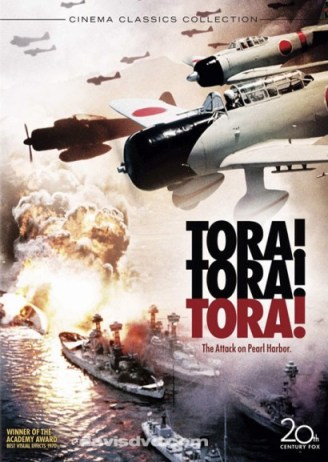
Kamikaze! Banzai! Tora! Tora! Tora!

People do a lot of wild things, and who knows why? We could just ask, like Kid Rock, what ever happened to just plain old crazy?

Throw in religion and salt with wartime desperation, and you might see something truly different from the "usual" social norms.

Or, ever-lasting fame. When King Leonidas marched to the pass of Thermopylae in 480 BCE, he and his men knew they were on a suicide mission. Sure, there was a pragmatic reason: hold off a massive Persian invasion for a few days, long enough for Athens to be evacuated and a strategy developed to save the rest of the Greeks from the onslaught. But was bravery, honor, discipline and death worth the posthumous fame and glory? Who knows, but the Spartan story continues to be told. I loved The 300 Spartans (1962) as a kid and even today, find it interesting. I used to watch it about as much as I did The Wizard of Oz, and probably for the same reasons. Others must find it just as compelling, since next year we'll see the tale retold in 300, featuring Dominic West of HBO's The Wire as Xerxes.

At Masada in 73 CE, near the Dead Sea, an entire Jewish garrison, including their families, committed mass suicide rather than be captured alive by the Romans besieging them.

Fast forward to the Texas Revolution. Remember the "Come and Take It" cannon? Even that phrase came from King Leonidas, who when asked to give up the Spartans' weapons, told the Persian envoy, "Come and take them." The Texas Revolution had its moment of triumphant disaster at the Alamo (1836). Like Thermopylae, it bought time for the other rebels to face the enemy, in this case the Mexcian army coming to reclaim Mexican territory.

Back to the Japanese. By the time 1945 came around, the Asia-Pacific War was in full-fledged killing mode, and Japan was losing and desperate to stave off the end. Cities burning, most of their merchant fleet destroyed, the end was inevitable, even before Hiroshima and Nagasaki. Suicide missions like the kamikaze death squadrons aiming planes and themselves at Allied warships seemed to be a good idea at the time, anyway. And they did do significant damage, after all. Still didn't change the overall outcome.

Today's world: Islamic suicide bombers, the jumbo-sized variation of Kamikaze attacks on 9/11/01, what next?

As for other religious groups, war is not even necessary for extreme final acts, though something triggers the end. Jonestown (1978), under attack ("White Nights!") from the outside; MOVE, Philadelphia (1985) -- attacked; Branch Davidians near Waco -- attacked (1993); Heaven's Gate (1997) -- arrival of the Hale-Bopp Comet. In each of these strange cases, the attackers cited provocations by those attacked to justify their own actions.

"Everyone has to die sooner or later, whether they be killed by germs, crushed by a collapsing house, or blown to smithereens by an atom bomb. Anyway, one way or another everyone ends up dead." -- Chairman Mao. So is it better to die a hero or a saint? Or quietly slip away into the night? If Werner Herzog is right, it's every man for himself and God against all.

But who else believes that? Go ask the Spartans.