Showing posts with label 1977. Show all posts

Friday, December 08, 2017

Robert M. Young: '¡Alambrista!' (1977, 2004, 2012)

Robert M. Young's ¡Alambrista! ["tightrope walker" aka "The Illegal"] (1977, 2004, 2012), originally shot on a shoestring budget and later re-edited by the director, follows young and inexperienced Alberto (Domingo Ambriz) as he crosses into the USA from Mexico, seeking work in order to help provide for his wife and new child back home. His adventures, sometimes humorous, are more often harrowing, for all the while he is being hunted.

¡Alambrista! is similar to Vittorio De Sica's Ladri di biciclette / Bicycle Thieves (1948), but the issues at hand are more open-ended. 

Very little, it seems, has changed in the American desire for migrant labor as of the early 21st century, nor in rough, chaotic conditions for those who are able to make the initial crossing to fill demand.  
"Much like the Italian neorealists, Young discovered the effectiveness of using documentary techniques to tell fictional stories. But the Italians—De Sica, Rossellini, and Visconti, for instance—were experienced narrative filmmakers who appropriated documentary techniques to lend a sense of authenticity and immediacy to their contemporary tales of ordinary people. Young was coming from the opposite end of the filmmaking spectrum.
Steeped in the documentary tradition of journalistic objectivity, he wrestled with a paradox then slowly dawning on him: fiction could be truer than reportage."  

Charles Ramírez Berg, "¡Alambrista!: Inside the Undocumented Experience," The Criterion Collection (2012). Here's a link to Berg's full essay.

Another great film, proving yet again that a big budget is not necessary to make effective movies.

Today's Rune: The Mystery Rune.   

Thursday, November 30, 2017

Michael Cacoyannis: 'Iphigenia' (1977)

Michael Cacoyannis' Iphigenia (1977) is a sharp film adaptation of Iphigenia in Aulis, the circa 407 B.C. play by Euripides (circa 480-406 B.C.). Chock full of psychological and existential crossroads, it has the additional benefit of having Irene Papas (born in 1926 -- now 91 years old) in the role of Clytemnestra -- the mother of Iphigenia and Orestes, wife of Agamemnon, and sister-in-law of Menelaus and Helen of Troy.   
In Iphigenia, so many things converge and collide, with just a handful of characters carrying the core drama. 

The thousand (small) ships of the Greeks are beached at Aulis, ready to carry the army across the Aegean Sea to attack Troy. The winds are listless and the army is restless and hungry. Agamemnon, the man they chose to lead them as overall king, orders food to be collected from the surrounding area. An archer kills a deer sacred to the goddess Artemis, who becomes pissed off and demands, according to augur-seer Calchas, the sacrifice of Agamemnon's oldest daughter, Iphigenia, before she'll kick the winds up again and let the army set sail for Troy.

Agamemnon is appalled, and considers, among other options, dissolving the army rather than going through with it. His brother Menelaus argues with him, back and forth. They are both portrayed with empathy, unlike Odysseus who is depicted as concerned only with getting the army to war against the Trojans as quickly as possible and at whatever cost. 

Eventually, Agamemnon has to trick Clytemnestra into bringing Iphigenia from, presumably, Mycenae to Aulis, so that she can be married to Achilles, commander of the Myrmidons. All hell breaks out when everyone learns the truth.

Some of the themes that jump loose include: the fickle nature of the gods, and fate, and life; the instability of power; the sacrifices demanded for "success;" the wildness of men primed for war and bloodlust (it's noted in the film that had Agamemnon not ordered the sacrifice as required by Artemis, the army might very well have turned on him and killed his whole family); and individual choice vs. fate. All of these themes convey a sense of urgency to the story, ensuring its continued popularity right into the 21st century. Plus, it's so damned absorbing, everything related to the Trojan War.

Today's Rune: Partnership.   

Monday, September 25, 2017

"That's Like Hypnotizing Chickens"

"In North America alone there are 10 billion chickens, compared to 4 billion wild birds." Jim Robbins, The Wonder of Birds: What They Tell Us About Ourselves, the World, and a Better Future. New York: Spiegel & Grau, 2017, page 81.

In the USA: "Until the 1940s, chickens were raised primarily for their eggs. Chickens themselves assumed a starring role in the American diet during World War II because chicken, unlike beef and pork, wasn't rationed . . . The chicken [now, as of this post] is the most industrialized animal in the history of the world." Ibid. page 83.
"Chickens can solve problems and display an ability to think about the future." They also have a sense of object permanence (when they see something go out of line of sight, said thing does not go out of mind -- they remember). Ibid., page 88.  
Interested people are attempting to save enough wild chickens to prevent the collapse of all but genetically stunted industrialized populations. "Experts liken the loss of these genes for survival to the destruction of a library without knowing what's in it. That's why the Livestock Conservancy searches out genetic diversity in chickens, ducks, turkeys, and geese before these local breeds blink out, and it encourages farmers to raise those birds." Ibid., page 91. 

"Oh love love love
That's like hypnotizing chickens
Well I am just a modern guy
Of course I've had it in the ear before
'Cause of a lust for life!"


"Lust for Life" (1977) Iggy Pop and David Bowie


Images

Saul bij de heks van Endor / Saul and the Witch of Endor by Jacob Cornelisz van Oostsanen (1525/1526), Rijksmuseum, Amsterdam. Close-up by Erik Donald France, June 2017.

In the field, Brugge / Bruges, Belgium, EDF, June 2017.

Gustav Klimt, Gartenweg mit Hühnern / Garden Path with Chickens (1916). Klimt died during the Great Influenza Pandemic of 1918; the original of this World War One era painting was destroyed near the end of World War Two, in 1945.

Today's Rune: Breakthrough. 

Monday, May 04, 2015

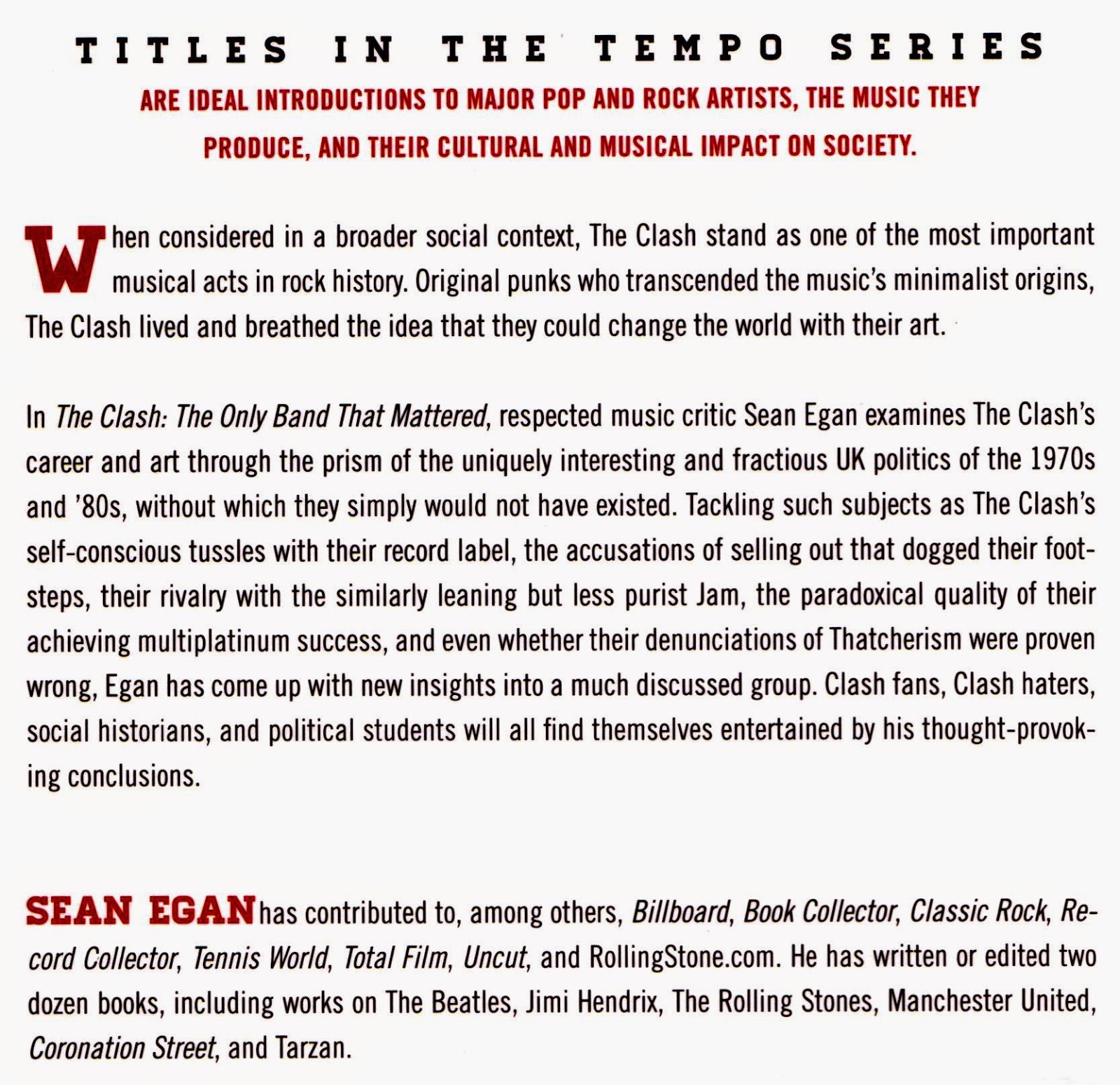
Sean Egan's 'The Clash: The Only Band That Mattered' (2015) - Take Two

Sean Egan's The Clash: The Only Band That Mattered (Lanham: Rowman & Littlefield,2015).

Let's get into some of the nitty gritty. First, the links between reggae and punk. As Egan points out, reggae began to expand globally in the late 1960s and 1970s. One of the big watershed moments of broad consciousness-raising about the style came with The Harder They Come (1972), Perry Henzell's low-budget, mesmerizing Jamaican film starring Jimmy Cliff. "[R]eggae was sometimes a big influence on British punk bands either by osmosis (Johnny Rotten of The Sex Pistols had a long-standing love of the genre) or imitation . . . 'Police & Thieves . . . was The Clash's first foray into the medium, and an unexpected triumph" (pages 35-36).

Next, links with rap, starting in 1980: "'The Magnificent Seven' wasn't quite the first-ever rap recording by a white artist: Blondie's punningly titled 'Rapture' appeared . . . a month before the release of Sandinista!" Egon argues that "'The Magnificent Seven' was the first example of rap being used for social commentary. As it preceded . . . Grandmaster Flash's 'The Message' by two years, it could even be suggested that without [its example], hip-hop would not have embraced the political content from which it is now indivisible" (pages 146-147).

Backtrack, Mr. Egan. Let's not forget James Brown and tracks such as "Say It Loud – I'm Black and I'm Proud" (1968), "Make it Funky" (1971), "Funky President (People It's Bad)" (1974) and so on. How about Sly & the Family Stone's "Thank You (Falettinme Be Mice Elf Agin)" (1969) and Gil-Scott Heron's "The Revolution Will Not Be Televised" (1970-1971)? And back through reggae channels again. Toss in tracks from The Rolling Stones ("Miss You," 1978), Kurtis Blow (1979) and The Sugarhill Gang (1979) and I'd say there's plenty of interplay to spread around, with political content ranging from broad to specific. (Most of these live on through sampling).

What's cool is how memory works: I can remember most of these songs without even playing them again, including virtually every track put out by The Clash. The only true challenge comes when recalling a small bit of music or lyrics, then trying to piece together the origin -- a sort of mix and match endeavor. Can you dig?

Onward!

Today's Rune: Separation (Reversed).

Friday, May 01, 2015

Sean Egan's 'The Clash: The Only Band That Mattered' (2015) - Take One


Sean Egan's The Clash: The Only Band That Mattered (2015) takes an energetic look at the band and its arc. As in another one of my all-time favorites for this kind of book --England's Dreaming, Revised Edition: Anarchy, Sex Pistols, Punk Rock, and Beyond by Jon Savage (St. Martin's, 2002) -- The Clash advances its primary subject across a very comprehensible historical setting. There is thoughtful discussion of the band, its music, paramours, technology, market shifts, vinyl record types and changes in attitudes and reception. It's all in. 

Now that we've been rambling through the first bits of the 21st century, in the USA you can hear music of The Clash being played in supermarkets, bars, restaurants, drugstores, shoe stores, and on digital radio (as I have recently noticed in all these types of venues). Chances are, you will have heard or will hear one of the following tracks: 

"London Calling"
"Rock the Casbah"
"Should I Stay or Should I Go?" (performed live on Saturday Night Live at one point)
"Train in Vain" 

Chances are, you are not hearing one of the following rather more incendiary tracks in public market places:

"Clampdown"
"I'm So Bored with the USA"
"London's Burning"
"Lost in the Supermarket"
"Police on My Back"
"Spanish Bombs"
"White Riot" 

In England, there will be a different public set list, though since the internet came of age, such national market differences have become at least a little less distinctive.


(To be continued . . .)

Today's Rune: Wholeness.  

Saturday, March 23, 2013

Michelangelo Antonioni: The Passenger (Take II)


Antonioni's The Passenger (1975) is an odd sort of road movie that takes its main character (played by Jack Nicholson) on a journey dicated largely by a dead man's day planner. Why does he do it? Having assumed another's identitity, why does he insist on walking in the other man's shoes? Therein lies one mystery.

The ambience that permeates The Passenger feels like fate, like myth, like an inevitable time and place and outcome. What we see are detailed (and often beautiful) shots of people and buildings, vehicles, landscapes and skies set in, around and above North Africa, London, Germany and Spain.

The Passenger sticks with me like the memory of some strong dream; somewhere down the line it eventually conjured up in my comparative memory what could be seen as a companion film: Wim Wenders' Der Amerikanische Freund / The American Friend (1977), starring Dennis Hopper and Bruno Ganz. Both delve into identity and coincidence, fate and the big picture, and there be Germans.

Today's Rune: The Mystery Rune.        

Sunday, February 24, 2013

Ridley Scott: The Duellists


The Duellists (1977), Ridley Scott's first movie, follows two French cavalrymen (hussars) on a long duelling arc that spans the life of Napoleon's empire and beyond. Beautiful film with meticulous attention to detail. As for the duelling, it's pure macho madness, the two men acting like popinjays at first, grim fighters as they become more experienced. Their long-running quarrel is more hubris-fueled than substantive, with Feraud (the Harvey Keitel character) refusing to let it go and d'Hubert (the Keith Carradine character) feeling like a stalked man who must keep spinning around for another fight.


A few additional notes. One, that The Duellists is based on Joseph Conrad's "The Duel: A Military Story" (1908), aka "The Point of Honor." Two, we come to understand a lot more about d'Hubert than we do about Feraud. Before their final duel, we see how much d'Hubert has come to treasure life, made manifest as he joyfully observes his surroundings. And: there are women involved at nearly every turn, so this can unabashedly be watched by just about anyone, even those who usually don't like anything that smacks of an "old war movie."

Today's Rune: Signals.            

Friday, May 18, 2012

Roofball and Other Improvised Activities


Kids and teens would seem to be good at improvising activities, some of them improbable, outlandish, clever or plain silly -- at least to fully formed adults. Some activities that I thought to myself as of "no interest at all to me" even while growing up -- and still do -- have included B-boying aka breakdancing, skateboarding and "advanced frisbee." Add since reaching 21: skiing, rollerblading, skydiving and bungee jumping.

Still, it's amazing how little can entertain, or at least could before electronics took over. Kick the Can was and is simple, and can involve kids of all ages. Another, at least when I was a kid, was always called "German Guard:" a post-World War II version of Hide & Seek possibly inspired by Hogan's Heroes but maybe also The Great Escape. This was very similar to Kick the Can, too, come to think of it. Both used "Ally ally in come free," "olly olly oxen free" or whatnot to signal a turnover or end of game. You may have had a variation of one of these in your geographical locale(s) -- did you?

In school, we also embraced roofball, which was simple. Any number of people, usually guys, could assemble quickly outside any building with a sloped or angled roof, the higher the better. Only other thing needed was a tennis ball. Either in teams or everyone for themselves, one person batted the ball onto the roof and then someone else tried to either hit it on its return gravity drop, or variably, after one bounce, batted it back up to the roof. This continued until someone missed, which resulted in either a score or "sudden death." Sometimes, roofball was driven underground because considered "hazardous" or "disruptive." When that happened, we simply moved from the gym building to a field house down by the track and tenns courts. Here, roofball morphed into "tennis hand ball" -- tennis without rackets, with brutish punching or smacking the tennis ball across the net and back and forth, so long as no "real" tennis players were around to hog the courts.

How about your way? Have you ever played such ludicrous, wildly entertaining games or participated in any comparably improvised activities?  Did you stop such happy foolishness as an adult, or continue?

Today's Rune: Joy.
       

Friday, April 20, 2012

Woody Allen: Annie Hall in Draft Form, Take One


On the way to San Antonio, I had the great delight of stopping in at the Harry Ransom Center at the University of Texas at Austin. My original intention was to examine some casual photographs revolving around American poet Anne Sexton (1928-1974) and Nigerian writer Amos Tutuola (1920-1997), but I became so absorbed in reading an entire untitled script for what evolved into Woody Allen and Marshall Brickman's shooting script for Annie Hall (1977) that I'll have to save the first two treats for a return visit.

First, the Harry Ransom Center has a beautiful interior that showcases a lot of interesting things around its spaces, items ranging from a photograph of Turkish horse cavalry in the snow by David Douglas Duncan to a manual typewriter employed by novelist John Fowles. I looked around while a courteous member of the staff retrieved a box from the Woody Allen collection acquired in 2005. (For more on its Scope and Contents, here's a link: http://research.hrc.utexas.edu/fasearch/allen.woody.film.html)

Once the items were delivered for pickup, I devoted my time to reading and taking notes and, much of the time I'll admit, quietly laughing in response to the dialogue. Officially, I was exploring "UNTITLED FILM SCRIPT" dated April 15, 1976. It includes 120 typescript pages with two appended scenes, white and light Carolina blue sheets of paper bound in red leather. Fascinating. It would appear as if certain pages were updated and inserted. And there are some fun inconsistencies. At times, Alvy's (the Woody Allen character) friend Rob (played by Tony Roberts in the completed film) is named Rob, and at other points, Roberts. Usually, Rob/Roberts calls Alvy by a nickname (Max, as in the movie), but at least at one point (page 53), Alvy refers to Rob as Max. This is just a small taste -- there's a whole lot more to underscore about the creative process. Once I sort through my notes, I'll post a bit more on my findings.

In thanks to the staff of the Harry Ransom Center; also in appreciation of Woody Allen and Marshall Birckman; and, of course, for the joy of Annie Hall

Today's Rune: Partnership.           

Monday, March 19, 2012

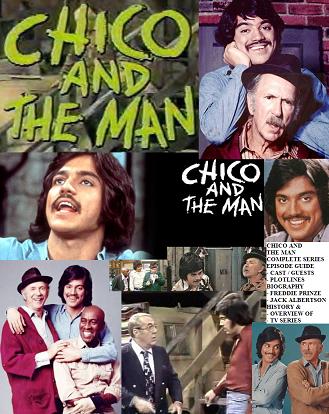
The 1970s: Chico and the Man/All That Glitters


So by the early-to-mid 1970s, there were all these mass-culture TV shows exploring socio-economic class, race, ethnicity, and gender. In the wake of the US-Vietnam War and the upheavals of the 1960s, this was a pensive time, with a mix of experimentation and philosophizing. Could people get along beyond the confines of their culturally driven self-identities?

Two shows I caught but didn't watch religiously: Chico and the Man (1974-1978), starring Freddie Prinze (1954-1977) and Jack Albertson (1907-1981); and All That Glitters (1977).  The first was a spiritual cousin to All in the Family, Sanford and Son, and early Sesame Street (1969-present), only with a young Latino dude building a connection with an older dispeptic Anglo in East L.A., supplemented by various other antics. By about fifteen years, it prefigured the Rodney King plea, "Can't we all just get along?"  All That Glitters was a soap opera-ish romp that inverted maintstream gender roles, so that it was a Woman's Woman's Woman's World. In other words, a mix of science fiction, fantasy and satire. The idea was to point out how generally patriarchal and one-sided the accepted status quo was up to that time -- the "double standard."

What's the legacy today? Apparently Rick Santorum, Newt Gingrich and Mitt Romney -- among others who might have been aware of these series -- missed the boat, the train, the car and the plane. Apparently they've rejected all of it. On the other hand, Clint Eastwood brought a sort of updated version of these 70s cultural awakenings back to market in 2008, with Gran Torino. And thanks to the 2008 election in the USA, Barack Obama is president and Hillary Clinton, Secretary of State. Where there's a will, there's a way; where there's no will, no way.

Today's Rune: Signals.      

Tuesday, February 14, 2012

Vinyl Daze 1984 and 2012


No cellphones, no internet, no digital for the general populace. It's 1984 and these are artifacts for 2012.  In Chapel Hill in '84, you can get a fair deal on used records. 8 Track tapes ("Stereo 8") are dead, cassette mixes are raging. CDs are in the pipeline -- dressed in long boxes resembling thin caskets. People are afraid to shell out big bucks for such little products without the extra dressing. Shops include Schoolkids Records, Record Bar and Sam Goody. Pictured above is a 1984 snapshot of my records, with two Iggy Pop albums out front and center -- The Idiot (1977) and Lust for Life (1977).


The Relics, one of the bands that in 1984 plays the Cat's Cradle.

THE RELICS will debut at the Cradle on Thursday, March 29th [1984]. . . They cite their musical influences as Kenny Randall, John Lennon, Iggy Pop, and all their musical peers . . . The Relics are: Tom Scheft on drums, Russell Proops on vocals, Jeff Biddell on bass and vocals . . . Mike Evans on keyboards, Jim Choong on guitar, and Jim Carleton on guitar . . .

Today's Rune: The  Mystery Rune.

Monday, February 13, 2012

Julien Temple: The Filth and the Fury


FanTAstic and liberating . . . Julien Temple's The Filth and the Fury: A Sex Pistols Film (2000). Yet as I'm posting this, Athens, one of the great world epicenters of democracy, is burning. A sad day among many.

Flashback to 1976. "The working class . . . didn't even understand what working class meant anymore . . . The germ, the seed, the Sex Pistols generated from that . . . a state of social upheaval." -- John Lydon aka Johnny Rotten.

"The Sex Pistols should have happened and did." -- Ditto.


Back in school, "You're supposed to just accept [received judgment about Shakespeare's work]: it's great, you're not." -- Ditto.

"I wanted the Sex Pistols to compete with the Bay City Rollers. . ." -- Ditto.

On Sid Vicious: "He just laughed at everything. He was a genius in that way." -- Ditto.

On Punk: " . . . absorbed back into the System . . ." -- Ditto.

Today's Rune: Fertility.

Thursday, October 27, 2011

Mike Leigh: Abigail's Party


Mike Leigh's Abigail's Party (1977) is scarier than any Halloween horror movie I've ever seen. Leigh again impresses with his masterly ability to cut to the bone of awkward social situations, in this case a house party, with great economy. There is only one primary setting, a living room in a suburban house outside of London; and there are only five on-screen characters: two married couples and Sue, a divorcée, whose teenaged daughter Abigail is having a party back at her very nearby house. We can hear the thumping music of the teen event in the background, while in the foreground the unhappy adults drink, smoke, drink some more, nibble, gossip, compare material values, bicker, dance and speculate about Abigail and her guests.

Abigail's Party delivers grim satire and even grimmer exploration of social relationships, psychology and class conciousness. Brutal -- but beautifully executed, sort of like Jean-Paul Sartre's No Exit blending into Luis Buñuel's El ángel exterminador / The Exterminating Angel. Here's what truly happens when a domineering host -- in this case Beverly, played perfectly by Alison Steadman, who also plays Candice Marie, a character who is as mousy as Beverly is brash, in Leigh's Nuts in May -- wreaks havoc at a social gathering and no one seems able to stop her.

Today's Rune: Journey.

Thursday, October 20, 2011

Attack of the Killer Tomatoes


John De Bello, Attack of the Killer Tomatoes (1978): one of the worst movies I've ever seen, and yet -- I liked it.  This crazy flick has long since achieved cult status for good reason. Every scene featuring a tomato, small, medium or large, rolling, flying or splatting, is precious. And you learn some important things about the irreverent Zeitgeist of the mid-1970s, even if it's mostly like an episode of Benny Hill gone awry -- if that's even possible. 

Attack of the Killer Tomatoes Inspires tracking down at least the first sequel: Return of the Killer Tomatoes! (1988), starring none other than John Astin and George Clooney.

Today's Rune: Protection.   

Tuesday, July 12, 2011

Tomorrow Show with Tom Snyder: Once More Into the Mix


Ah, what a treat! Joan Jett, then of the Runaways, sparkles among the talking heads (though Kim Fowley is sharp, as well) during a fraught 1977 discussion about how to receive "Punk and New Wave." In shows from 1981, these three guests come off as erudite and charming: Elvis Costello, Iggy Pop and Wendy O. Williams (Plasmatics). Tom, despite his hangups and preconceptions, gives them their due, and all perform live. Elvis' appearance comes just a couple of weeks after he played in Chapel Hill. Iggy has a tooth missing and a cut lip, drinks a little wine and schools Tom about Apollonian and Dionysian energies. That is, in between frenetic performances of "Dog Food" and "Five Foot One." The show ends with "TV Eye."

Today's Rune: Strength.  

Saturday, May 28, 2011

The Cassette Tape, Part II


Yet another commercial cassette tape, a copy of the sleeve for David Bowie's Low (1977).  It -- the format not the content -- is now an obsolete artifact. The little symbol just behind Bowie is for "Dolby sound."  The full throttle transition to CDs came in the 1990s, when sales began dropping from hundreds of millions of individual tapes sold annually to a tiny fraction, in the thousands, by 2010, a collapse as dramatic as that of the American Bison in the 1880s. The Sony Walkman for cassettes is now on the verge of extinction, too.  It was fun while it lasted. However, vinyl records are cooler, and remain in limited production. It's worth noting the American Bison has made a slight comeback in the past century.

Today's Rune: Movement.  

Wednesday, April 27, 2011

Less Than Zero or: Waiting for the End of the World


Do you believe the End Times are here? According to Harold Camping and other folks, "we're almost there." His stated belief: The Rapture will occur on Armed Forces Day of this year (May 21st, 2011). A Saturday. One should either a) quit their church or other place of worship before that hour arrives or b) party hard and hope for the best. The End of the World is to come on October 21st, 2011 (the 150th anniversary of the Battle of Ball's Bluff).

I believe it's all bullshit -- though anything is possible, I suppose.  (Photo by EDF, yesterday at lunchtime, Seminary Drive, Fort Worth, Texas, USA).


From Elvis Costello's "Less Than Zero" (1977):

A pistol was still smoking, a man lay on the floor
Mr. Oswald said he had an understanding with the law
He said he heard about a couple living in the USA
He said they traded in their baby for a Chevrolet
Let's talk about the future, now we've put the past away . . .


What happens when prophecy fails?

a) Cognitive dissonance (fear, trembling, anxiety and confusion)

or:

b) Dissembling, such as "Oops, I made a(nother) mathematical miscalculation" or had a "wardrobe malfunction?"

What happens when half of registered Republicans in Iowa, USA, believe -- now, in 2011 -- that President Barack Obama is an alien? What happens in a democracy when millions of voters show no respect for provable facts?

As for the Rapture on May 21st, report back here on the 22nd if you've been "Left Behind." I'll buy you a drink.

Today's Rune: Partnership.  

Monday, August 16, 2010

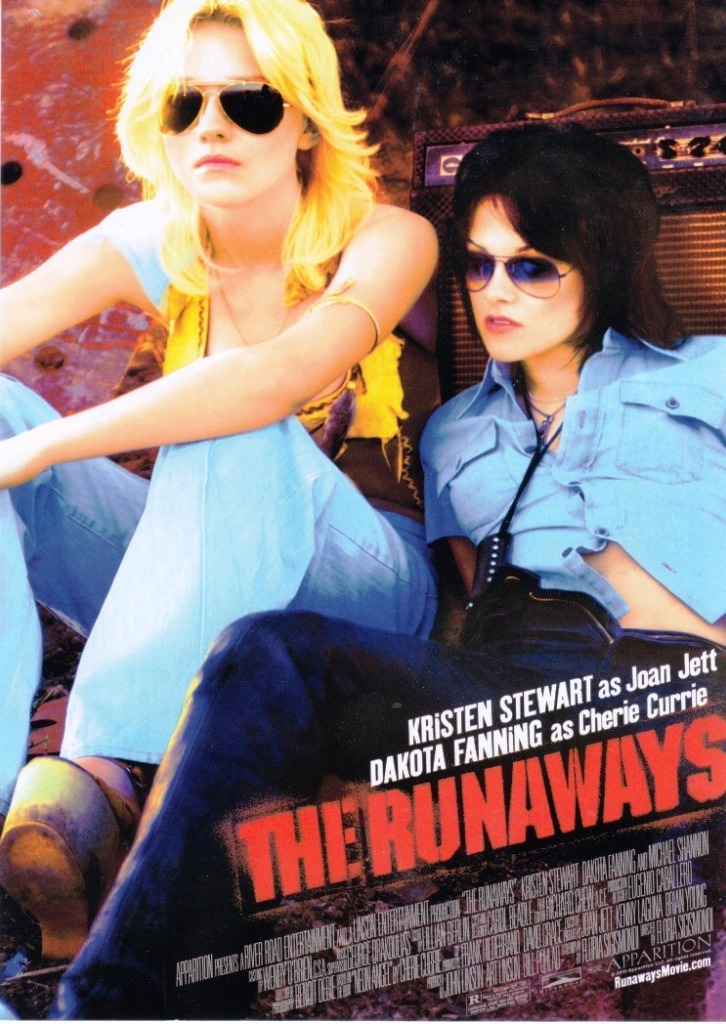
Floria Sigismondi: The Runaways


Floria Sigismondi's The Runaways (2010) makes for an ideal companion film in a double feature showing with Chus Gutiérrez's El Calentito (2005). I've thoroughly enjoyed both movies, both about all-women bands, the one set in the mid-to-late 1970s in the USA and Japan, the other set in Spain in the very early 80s.

The story line for The Runaways, based on Cherie Currie's Neon Angel: A Memoir of a Runaway (2010) and fleshed out by Sigismondi, follows the formation of The Runaways, Currie's various conflicts (family dysfunction and guilt, substance challenges, psychological and emotional issues), producer Kim Fowley's machinations, and Joan Jett's tenacious strength.  The whole cast is memorable, including Riley Keough (Elvis and Priscilla's grandaughter, Lisa Marie's daughter) as Marie Currie, Cherie Currie's twin sister. Dakota Fanning is glittery as Cherie, Michael Shannon nails the eccentric Fowley down, and Kristen Stewart is so good channeling Joan Jett I am still amazed, having seen Jett rock out in Charlotte around 1981. 

The soundtrack is hip and effective and includes a salute to Detroit via Iggy and the Stooges, the MC5 and Suzi Quatro.  Let's not forget David Bowie. the actual Runaways and Joan Jett and the Blackhearts.  If you dig the 1970s milieu at all, you will have a real cool time checking out The Runaways.


Florida Sigismondi (b. ca. September-October 1965), the strikingly visual director pictured here, seems to have more than a dash of Joan Jett's sensibility and drive herself.

Today's Rune: Strength.

Monday, July 05, 2010

Well gather 'round people and listen to this . . .


During the Great Depression, an aging Tennessee hermit decides to come to town and hold a living funeral for himself. Things proceed from there. That's the premise of Aaron Schneider's Get Low (2009), set for limited American release at the end of this month.

From the press kit:

For years, townsfolk have been terrified of the backwoods recluse known as Felix Bush (Robert Duvall). People say he‘s done all manner of unspeakable things -- that he‘s killed in cold blood; that he‘s in league with the Devil; that he has strange powers -- and they avoid him like the plague. Then, one day, Felix rides to town with a shotgun and a wad of cash, saying he wants to buy a funeral. It‘s not your usual funeral for the dead Felix wants. On the contrary, he wants a "living funeral," in which anyone who ever had heard a story about him will come to tell it, while he takes it all in. (For more, see http://www.sonyclassics.com/getlow/)

Add Sissy Spacek, Bill Murray, Lucas Black and others, actors who've turned in many a strong performance.  Will it work?  More will be revealed . . .

Reminds me of two things right off. First, "Play Guitar Play," one of Conway Twitty's best songs penned by the man himself, a number one Country and Western hit in 1977; and Iggy Pop's "The Ballad of Cookie McBride," from which today's header derives, orginally from  "Zombie Birdhouse" (1982).   Iggy's song is so bad it's become a real favorite -- that's how bad it is!  Where he got the idea, God knows. But it makes me chuckle every time. Jack London?  Sample lyric:

Well gather 'round people and listen to this
I am a hermit of burial ridge
Once I was shaven and worked every day
But the call of the wild just lured me away . . .

And onward, complete with "bears in the area and wolves at the door" . . .

This odd and darkling ditty may have inspired John Waters to cast Iggy as Belvedere Rickettes in Cry-Baby (1990) alongside Johnny Depp.  Who knows?

Today's Rune: Fertility.  

Saturday, July 03, 2010

Wim Wenders: Der Amerikanische Freund


Dennis Hopper, RIP. On a related note, another favorite from the 1970s: Wim Wenders' Der Amerikanische Freund / The American Friend / L'ami américain / El amigo americano (1977).

The "American friend" of the title is a character derived from Fort Worth-born writer Patricia Highsmith's Ripliad novels. In Wenders' version, we're not quite sure what motivates the "talented" Mr. Ripley or his German anti-buddy, Jonathan Zimmermann (Bruno Ganz): money, mortality, kinship? Or is it chance and opportunity? Is Zimmermann dying fast, or is he being hoodwinked into becoming a de facto hitman? What is self-reflection, projection on others, what is real and what is forgery? As art forger Derwatt (Nicholas Ray, director of Rebel Without a Cause) quips, "A little older, a little more confused. . ." At one point, Tom Ripley admits to a tape player: "I know less and less about who I am, or who anybody else is."

What makes the plot work is the added tension created by Jonathan's wife Marianne Zimmermann (Lisa Kreuzer), their son Daniel (Andreas Dedecke), and mystery man Raoul Minot (Gérard Blain). Sam Fuller (the director) adds more as Der Amerikaner, a gangster -- Fuller who said, "Van Gogh was a great inspiration for me, a guy for whom life was work and work was life. I wanted to be like him, except I didn't want to go nuts and cut off my ear."

A beautifully crafted film.  Like Sorcerer alluded to in the past two posts (also from 1977), not for the Disney and Hallmark crowd nor the easily distracted, my friends . . . but oh, what a movie! 


The Kinks play a subtle reinforcing role for the pensive Mr. Zimmerman: He mumble-hums and listens to The Kinks' Face to Face, specifically "Too Much on My Mind;" when Marianne suspects he's involved in shady business, another Kinks song -- "Nothin' in the World Can Stop Me Worryin' 'Bout That Girl" from Kinda Kinks -- plays in the background.

Mr. Ripley has appeared in more recent movies, as well, but this one's his best showing.

Today's Rune: The Self.