Showing posts with label 2006. Show all posts

Tuesday, March 08, 2016

Sofia Coppola: 'Marie Antoinette' (2006)

Kirsten Dunst is so good as Peggy Blumquist in the latest season of FX's Fargo that I finally got around to seeing her play the lead role in Sofia Coppola's Marie Antoinette (2006).  

What to make of the movie overall? Visually, it's a knockout. Coppola plunges us into the fashions and elaborate protocols of the Ancien Régime of France. But we know the end is nigh. We don't actually see any guillotines, but we know they're somewhere over the rainbow.
Besides the dazzle and pop of its visuals, Marie Antoinette departs from the more common earnest approach to costume drama in its choice of music. There is period music, but Coppola links the life and times of Marie Antoinette to the 1980s with songs by such dark luminaries as Gang of Four, Siouxsie and the Banshees, New Order, The Cure, Bow Wow Wow and Adam & the Ants. This keeps things lively, certainly, with a modern sense of urgency behind the supremely foolish and decadent One Percenter lifestyle depicted throughout Marie Antoinette

Sofia Coppola also seems to be suggesting of Marie and her attendant choices, "Don't hate the playa, hate the game." 
Love the choice of casting in Marie Antoinette. The most endearing to me are Rip Torn as Louis XV and Asia Argento as Madame du Barry; they have a genuine affection for each other, yet Madame du Barry is looked down upon as something less than legitimate.

Lots of great players: Steve Coogan as Florimond Claude, Comte de Mercy-Argenteau; Marianne Faithfull as Empress Maria Theresa; Judy Davis, Danny Huston, Molly Shannon and so forth. Jason Schwartzman is so convincing in making Louis XVI a hapless buffoon that it seems natural to him. 

Overall, what you get with Marie Antoinette is ambiance, helping us empathize with the character Marie Antoinette as played by Kirsten Dunst, though it's also easy to see why in reality the status quo will be destroyed by the French Revolution.

Today's Rune: Joy. 

Monday, January 11, 2016

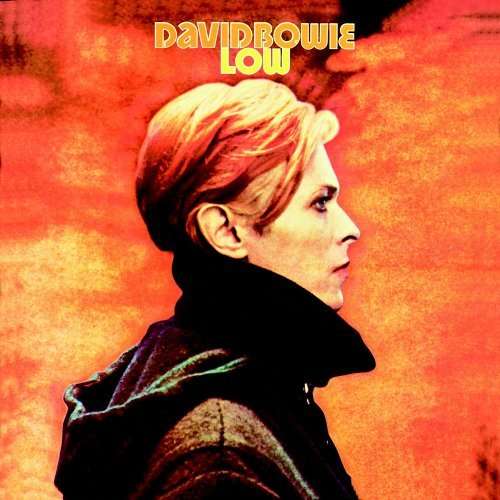
David Bowie, Where Art Thou?


David Bowie, Where Art Thou? [Originally posted in 2006 -- ten years ago!]

David Bowie (1/8/1947-) is one cool dude. I've been lucky enough to have seen him in various venues over the years, but the last time was by far the best -- at the relatively small Detroit State Theater on September 21, 1997. He was in perfect pitch and riding the catchy Earthling album with its techno overtones ("I'm Afraid of Americans" is hilariously cool). He spryly moved around the stage, sometimes barefoot, seeming both very earthly and very much a Cosmonaut at the same time.

What's especially heartening about Bowie is that, yes, he can do the "I'm a millionaire pop star" thing as well as anyone, but he's chosen -- much like Prince -- to stick to his own guns over the long march. He remains true to form, and very much in touch with technology and its cross-genre artistic possibilities. I adore his music and like many of his movie appearances (must see again The Man Who Fell to Earth for one trippy example, an ultimately sad 1976 tale of a fallen alien stuck on Earth while his home planet slowly dies), but have my favorites.

It's hard to beat the dazzling concept album, The Rise and Fall of Ziggy Stardust and the Spiders from Mars (1972), which was so at odds with the waning hippy ideals of the time, so perfectly attuned to undercurrents of global social changes and the explosion of punk and New Wave on the horizon. Then there's the electric shocker Aladdin Sane (1973), featuring "Panic in Detroit" and a sonic romp through the Rolling Stones' "Let's Spend the Night Together," among other treats. Ramble on through the eerie Diamond Dogs (1974) to the groovy plastic pop of Young Americans (1975), the lyrical and occasionally overarching Station to Station (1976), and the revolutionary "Berlin trilogy," Low (1977), "Heroes" (1977), and Lodger (1979). Bowie had already done some fine work with Lou Reed and Iggy Pop to everyone's benefit, as well. Next, there's another wild and sometimes campy romp via Scary Monsters (and Super Creeps), followed by another bid for mainstream pop stardom in Let's Dance (1983). Throw in always entertaining and sometimes bizarre videos, and presto, this period would have been enough successful output for any "normal" artist's entire career.

Bowie continued, though he slowed down the pace a bit. Here's where he and Prince again moved on parallel lines, though Bowie never took the drastic step of calling himself "The Artist Formerly Known as David Bowie."

During his Reality Tour in 2004, he suffered chest pains and underwent a sudden angioplasty, and has been understandably taking it relatively easy since then. Based in New York City, he continues working; his recent comings and goings can be found on his buzzing website, complete with alien-tinged motifs, at: www.davidbowie.com Check out the BowieNet for a little adventure in cyberworld.

Viva David Bowie! May the man who shares Elvis' birthday rise again.  

[RIP David Bowie, 1947-2016]

Wednesday, July 22, 2015

E.L. Doctorow: 'The March' (2005)


RIP, E.L. Doctorow (1931-2015). An earlier version of this post was published in 2009.

The March (Random House, 2005, 2006).

Ingredients: Take Gore Vidal, John Steinbeck, Walt Whitman, and Toni Morrison. Add freedmen and women, common soldiers (some of them deserters and some of them prisoners), a clinical doctor and his assistants, a photographer and his assistant, an English journalist, plantation owners, some colorful generals, and Abe Lincoln. Blend. Pour into a narrative flow.

Follow Sherman's March from Atlanta to the Sea, through Milledgeville to Savannah (November and December 1864), into South Carolina (February 1865), through Aiken and Columbia and on into North Carolina (March and April 1865) , through Monroe's Crossroads and Fayetteville, Averasboro and Bentonville, Goldsboro and Smithfield, and finally to Raleigh and Durham. Absorb and digest.

The March is divided into three parts: Georgia, South Carolina and North Carolina. The swiftness of the campaign, with refueling rests, is remarkable. Confederate resistance in the first two parts is haphazard until North Carolina, when Sherman's columns are challenged by "the regrouped Rebel forces under General Joe Johnston, the one capable general they had." Doctorow's depiction of "Old Joe" Johnston is glowing. I enjoyed that, because he's the main focus of my doctoral dissertation. William Tecumseh Sherman comes off as a man tortured not so much by the war as by life. He spares Savannah, but is not particularly upset when Columbia, South Carolina burns (because South Carolina started the war). He goes out of his way to protect Raleigh, North Carolina, in the wake of Lincoln's assassination. Historically sound assessments and Doctorow deftly emphasizes them. Overall, The March describes tumult well, the madness and also the magnifying lenses of war, specifically the American Civil War, with its enduring social and cultural legacies.


As an aside, Union Major General Hugh Judson Kilpatrick, head of Sherman's cavalry, plays a ready made rogue in the novel, to some comic relief. He also happens to be journalist Anderson Cooper's great-great-grandfather.

Homer & Langley: A Novel (Random House, 2009), Doctorow's revolves around the Collyer brothers, who in "real life" died in 1947 as a direct result of their disposophobic hoarding.


Today's Rune: The Self. 

Tuesday, October 28, 2014

Shadowplay: The Elusive Origins of a 'Jungian' Quip, Part I


You may have heard or read this quip, widely attributed to Carl Jung:

"What you resist, persists." Or, alternately, "What you resist persists."

This could have to do with procrastination: when you have a toothache and put off going to the dentist, the toothache will not go away.  You have to deal with it sooner or later.  

Among other things, Jung discussed the need to understand oneself, to integrate different dimensions of the personality, including submerged or "shadow" aspects. Those that are ignored (resisted), will continue to pose a challenge to one's conscious being until explored and absorbed. More or less.

I'm fascinated by the origins of quips and quotes (or quotations, if you prefer) and interested in Jung's ideas. Hence my question: did Carl Jung really write or say "what you resist, persists?"

Searching Google Books and general internet search engines, one can see this Jungian quip fairly well spread around in texts and via the internet through the past ten to twenty years, a sort of meme. In the massive global best-seller, for instance, Rhonda Byrne's The Secret (Atria Books, 2006) -- based on Byrne's documentary film of the same name -- we can find on page 142:

"'What you resist persists.'  Carl Jung (1875-1961)."

However, here and elsewhere, no more specific citation is given. Perhaps the attribution to Jung is made up out of thin air?

I kept digging, going as far back in time as I could easily search. The earliest usage of the quip that I have been able to locate so far is from this unlikely sounding source: As Others See Us: Scots of the Seaway Valley (Ontario: Beamsville Express, 1959).  

I've only been able to pull this pertinent scrap from a digitized preview, without specific context, but here it is, rendered as:

"What you resist, Persists" - followed by a couple of other intriguing lines that led me to additional findings. Meanwhile, if anyone knows more about any of this, please add to the comments section.  All comments are welcomed, of course -- not resisted.

Part II will continue this thread through the shadowplay -- in search of their origins.


Today's Rune: Flow.  Illustration at top from Thought-forms by Annie Besant and Charles Webster Leadbeater (London: Theosophical Publishing Society, 1905). 


Thursday, October 23, 2014

Frederick Forsyth: The Afghan, 2006 (Part II)

The Afghan, Frederick Forsyth's 2006 novel, delivers a wild ride, filtered through the very evident scrim of the author's patriarchal, Anglocentric, conservative outlook.

It's very much a man's world that Forsyth focuses on. There are no major female characters in the book. In general terms, it's sexist, but there's no sex. It's James Bond or Clint Eastwood without their "social interests" -- certainly, there are no Bond girls on either side of this rather austere novel.

While reading, I had a strong impression that, via the near-totally omniscient narrator, Forsyth wants nothing more than a quiet return to the height of the British Empire, say between 1860 and 1900. Women seem of little importance in his grand scheme of manly things. Protesters, the general public, news outlets and international organizations are considered annoying nuisances bent on fools' errands. The most important thing to the narrator is security of country -- the United Kingdom above all -- as represented by security agencies and military and police forces.    

Back in 1997, Forsyth admitted: "These days I care only about six things. They are: belief in the Almighty, my country’s sovereignty, parliamentary democracy, the monarchy, preservation of the countryside, and protection of my family." (SagaDecember 1997).

Islamic "Sword Verse" extremists, the villains of The Afghan, dream of a return to the imagined heights of Islamic empire and culture. Turn the clock back a thousand years or more. 

So in The Afghan there are two preferences pitted against each other: go back 100 years (good) or go back 1000 years (bad). In both cases, this is the nature of deep conservatism -- a nostalgia for a past that never was quite as delightful as imagined.*

Finally, the idea of universal entropy or friction: 

"Anyone who has ever been involved in what Kipling called 'the Great Game,' and what James Jesus Angleton of the CIA referred to as the 'wilderness of mirrors,' will surely agree the greatest enemy is the UCU. . . The Unforeseen Cock-Up has probably wrecked more covert missions than treachery or brilliant counterintelligence by the other side. . ." (page 223).

Today's Rune: Possessions. 

*In reverse, the nature of progressive liberalism seems more like nostalgia for an enlightened future that may never come to full fruition. How It Never Was vs. How It Never Will Be, perhaps. 

Wednesday, October 22, 2014

Frederick Forsyth: The Afghan, 2006 (Part I)

Given the similarly-themed events unfolding in Canada these past few days, the happenings depicted in Frederick Forsyth's The Afghan (2006) carry a very contemporary and ongoing feel. The novel is filled with details about hunters and hunted, ships and jets, couriers and satellite surveillance, infiltrators and fanatics, terrorism and counter-terrorism, attack and counterattack, interception and evasion. It ranges around the world, so there's a lot of geographical detail, and historical: things such as the destruction of Halifax, Nova Scotia, during the Great War of 1914-1918, due to the explosion of an ammo ship (in 1917), to counterinsurgency in Northern Ireland, the Falklands/Malvinas War (1982), Afghanistan (1980s-present), the "West Side Boys" in Sierra Leone (2000), pirates of the Pacific, a CIA prison nestled in the Rockies of the USA, and commandeered fuel ships in the Atlantic.

Observations along the way are fully relevant in 2014 and will continue to be so. Of the Taliban, Forsyth reminds us that under their rule, women could not [and cannot] move in public without being fully veiled and having a male relative as escort, "[a]ll singing, dancing, the playing of music, sports and kite flying . . . was forbidden . . . Beards on men were compulsory. The enforcers were often teenage fanatics in their black turbans, taught only the Sword Verses, cruelty and war" (page 105). (Just what everyone wants -- violent, aggressive and narrow-minded young males in charge of one's day to day life).

This is the modern world: "For terrorism, the Internet and cyberspace have become must-have propaganda weapons. Every atrocity that can be broadcast . . . is good; every atrocity that can be seen by millions of Muslim youths in seventy countries is gold dust. This is where the recruits come from -- actually seeing it happen and lusting to imitate" (page 305). 

Note: several of Forsyth's novels have been made into movies. Consider his first three novels, for instance: The Day of the Jackal (1971), The Odessa File (1972) and The Dogs of War (1974). 

Today's Rune: Partnership.

Saturday, February 22, 2014

The Great Happiness Space: Tale of an Osaka Love Thief (2006)

Jake Clennell's documentary The Great Happiness Space: Tale of an Osaka Love Thief (2006) gives us a vivid glimpse into host (and implicitly, hostess) clubs in Japan. It's compelling and not as strange as it first appears.

On the one hand, The Great Happiness Space is about human psychology and the need for connection. Here, women with means go to interact with male hosts, drink champagne and create soap operas for themselves. They flirt, sometimes have deeper conversations, and slowly develop dramatic feelings for their hosts, often focusing on one host in particular. 

On the other hand, The Great Happiness Space is about the great wheel of monetary exchange.  A demographic of well-heeled men work to the point of exhaustion, and then go to hostess clubs to "heal" (a term several people in the documentary employ). Hostesses make enough excess cash from these men to in turn -- between work cycles -- go to host clubs so that they can "heal." At the host clubs, the host "boys" take the "girls'" money (hundreds or thousands of dollars per night) and, some of them, end up earning well over $100,000 per year, which they in turn spend on maintaining their fashion appeal and life style.

I suppose that if you substitute work activity A for "healing" activity B, this is a not atypical response to perceived or actual stress. Activity B may be doing yoga, attending creative workshops, shooting guns, fishing, running, going to a "health spa" or traveling, for instance. In that sense, beyond psychology and economics, The Great Happiness Space makes one think about the patterns and processes of living as a human being in a highly developed society in the 21st century.

Today's Rune: Breakthrough.  

Wednesday, October 09, 2013

Friday Night Lights

Checking out the 2006-2011 Texas-based TV series Friday Night Lights. It seems warm and familiar like The Last Picture Show (1971) or Dazed and Confused (1993) but also fresh and new, luxuriating in longer term character development, extensive moral dilemmas and the annual cycle of American football seasons. Very good stuff.

You can look at this from multiple angles. For instance: change versus tradition, sort of like Shirley Jackson's "The Lottery" (1948).  The cool thing is that Friday Night Lights lets you see change as both a good thing and a sad thing; same for tradition. What is football, anyway? What does football -- or any popular social ritual -- mean to people, and why? Is it important, or whimsical, or both? Is it healthy, or damaging, or both? Is it life-affirming, or life-denying, or both? 

One can empathize with all the main characters, no matter where they're coming from or going. I like that. It's a fun, thoughtful and engaging series.  Clear eyes, full hearts, can't lose.  

Today's Rune: Partnership.    

Saturday, September 07, 2013

Jean-Pierre Melville: L'armée des ombres / Army of Shadows

Jean-Pierre Melville's L'armée des ombres / Army of Shadows. Here's a 1969 film set during wartime (that which we call the Second World War) not released in the USA until 2006. Why? It's excellent, but grim. Gangsters are one thing, but a bleak recounting of the French Resistance is another. Sure, there are cat-and-mouse games, infiltration, betrayals, torture and killings in cops-and-robbers films, but now we have to think about such things among the common citizenry, too? Movies are about escapism, aren't they? Not this one! A harrowing, existentialist film, in which members of the underground are reminded to keep a cyanide tablet on their person at all times. Better suicide than falling into the hands of occupying myrmidons. And don't you know it.
Today's Rune: The Mystery Rune. 

Monday, February 04, 2013

Dreamgirls


With Beyoncé, Jamie Foxx and Jennifer Hudson all sittin' pretty in Schaefer City these days, and fresh from checking out the Barack Obama 2.0 Inauguration and Super Bowl XLVII celebrations, I finally came around to watching Dreamgirls (2006) -- and liked it. Here in Bill Condon's adaptation of the 1981 Broadway show, the setting is moved from Chicago to Detroit. This fits well with its alternative universe take on Motown and the rise of a "girl group," in this case the transformation of the Dreamettes into the Dreams, with a few attendant nightmares thrown in to keep things spicy. There is a firm sense of historical backdrop, things like Martin Luther King, Jr.'s early tryout of the "I Have a Dream" refrain at Detroit's Cobo Hall during the "Great March to Freedom" of June 23, 1963 (distributed on vinyl by Motown) and the 1967 Detroit riot. 


The full story of Motown is a hundred times more compelling than the streamlined refraction of it depicted in Dreamgirls, but for legal reasons, we'll have to wait for the mini-series with the real music. Maybe by the year 2060 or so, somebody will get to see it. Still, in Dreamgirls, Eddie Murphy is good as an amalgam of singers, Jamie Foxx stands in deftly for Berry Gordy, Beyoncé equates with Diana Ross, Jennifer Hudson with Florence Ballard and the Dreams with the Supremes. Let's not forget Danny Glover as an old school manager, plus Anika Noni Rose as the third main Dreamette-to-Dream singer.

Today's Rune: Journey.        

Monday, January 07, 2013

World Karma Comic-Comedian Russell Peters


When performing, stand-up comics have to be sharp and on their toes, prepared yet flexible. This line of work is not easy, and even less easy is financial success, wide recognition and influence.

I love a good comic-comedian as much as anyone, to laugh and be amazed at quick-thinking jabs and responses, to empathize. And to be enlightened into thinking about things from different angles.


Lately I checked out a fair sampling of comedy feauturing Indo-Canadian wordsmith-mimic-joker-observer Russell Peters.

This dude is a true world comic.

He can (and does) make references to the cultural peculiarities and foibles of all sorts of social groups. He can mimic formal language, local inflections and slang from Iraq to India to Indiana and beyond.

Funny guy. It seems as if his immediate audiences love him. Most do not take particular offense because he is coming at people and social groups from a global perspective, and with a seasoned Indo-Canadian understanding of how things work.

He enjoys close consideration of sounds, wording, names and the quirks of language, attitudes and stereotyping, all of it leading to a greater appreciation of the way things are.

Today's Rune: Wholeness.         

Wednesday, September 26, 2012

Go Tell the Spartans

Ted Post's Go Tell the Spartans (1978), adapted from Incident at Muc Wa, a 1967 novel by Daniel Ford, is from those I've seen the most thoughtful American feature film yet made about the US-Vietnam War. Its strong script overcomes a relatively low budget and production values that look more like something from a 1970s TV series such as M*A*S*H than a big-budget blockbuster like Francis Ford Coppola's Apocalypse Now (1979). In fact, the latter's budget was twenty times higher, yet Apocalypse Now is nowhere near as coherent and down-to-earth as Go Tell the Spartans.   
                                                                                                                                                             
Burt Lancaster stars in Go Tell the Spartans, and he's on top of his game as a crusty Korean War veteran charged with sending a motley Vietnamese and American detachment into the middle of nowhere to reoccupy an old French outpost last fought over in 1953, all on a whim of the high command. It's now 1964, well before the major US troop buildups, but the story arc serves as a microcosm of the larger war to come. And it includes Vietnamese soldiers and civilians as important characters, key to understanding the conflict -- doh!  Multiple perspectives -- something I love to see in a war movie. Go Tell the Spartans is the closest in US-Vietnam War movies to the best World War II movies, ones like Oliver Hirschbiegel's Der Untergang / Downfall (2004) and Clint Eastwood's Letters from Iwo Jima (2006).   
                                                                                                                                                                   
Craig Wesson and Burt Lancaster as American soldiers, two of the strongest characters in Go Tell the Spartans


In Go Tell the Spartans, American GIs refer to the Vietnamese -- friend and foe alike -- as "dinks," "gooks," "Charlie" and "slopes." From the Viet Cong point of view, sticks and stones may break my bones but names can never hurt me. ARVN (South Vietnamese Army) soldiers are depicted as capable, though "Cowboy," their interpreter and de facto squad leader, "gets his jollies" torturing suspected VC and, in one instance, beheading a wounded enemy. Militiamen are poorly armed and remain in civilian clothes, but are seen as doing the best they can regardless. The only real foolishness, beyond a certain naïveté shared by several of the American GIs about the nature of the war unfolding, comes with the higher ups, both South Vietnamese and American. Unfortunately, Go Tell the Spartans could easily be updated to include the current Afghanistan War, with drones added. The more things change . . .

Today's Rune: Partnership.       

Thursday, September 20, 2012

Henri Cartier-Bresson: Biographie eines Blicks / The Impassioned Eye


Heinz Bütler’s documentary Henri Cartier-Bresson: Biographie eines Blicks / The Impassioned Eye (2003; DVD 2006) takes a non-linear look at the 20th photographer-artist, who makes several "gimlet-eyed" quips. Judging from this film, Cartier-Bresson (1908-2004) was still mischievous right to the end. It'd be helpful to read at least a summary of his life before watching this, I think.
My notes follow. Most of the phrases come from Cartier-Bresson himself, as translated into English in the original.  
“What patience – that’s what you need. Actually it’s impatience.”
2nd asst. to Jean Renoir – he showed up and gave Renoir some photos, asked for a job – and Renoir gave him one
Interaction of people with their surroundings
To be a good photographer you just to have live, then life will give you pictures . . .
You have to take pictures because it fills you with life . . .
That’s photography – you have to seize the moment . . . that’s the joy of taking pictures
People in settings


Music and outings, roaming, ever roaming
Simple observation – look
Another photographer says: “a single instant can reveal all the ambiguity of the visible"
Isabelle Huppert – a great photo has a musical feel to
it . . . it’s a little like theatre, in fact . . . I think he’s telling us about himself when he’s telling us about the world
Mexico, China, India, Harlem, Mississippi, civil rights
Arthur Miller: America is a place of extremes
There’s a natural geometry in what we see . . . You feel, you see, the surprised eye responds
Do you see the pigs? They’re interested in everything . . .
Isabelle: He was everywhere
Henri:  eye, mind and heart had to be aligned
Patterns – geometry is the foundation
On Calder: I liked him a lot . . . you couldn’t understand a word he was saying . . .
Isabelle: a moment of truth
Henri: Portraits are the most difficult. Everything is fleeting . . . (example of brief flashing smile on Coco Chanel’s face before she went hard as nails again)
Take care of your [camera] eye
Truman Capote
This moment that comes out of movement
Get close enough to feel something but [remain] detached enough not to get too involved
There’s no law – no rule
Reading Rimbaud as POW during WW2, perennially escaped prisoner in his psyche (and he did finally escape)
Someone notes: he had an innate feeling for politics and international events
Miller: fundamentally a tragic vision
You never know what you’re getting into
Drawing, other art forms into his 90s
Looks at a painting in a museum – he asks, what can you do after this? Get good and drunk


Martine Franck (1938-2012) – her legs attracted his camera eye, among other things
Surrealists, interaction over the years
Memory is so strange. Proust had a lot to say about that
Everything lives on . . .
Today's Rune: Fertility.

Tuesday, April 10, 2012

Breakfast at the Exit Café: Take 2


In Breakfast at the Exit Café: Travels Through America (Vancouver, B.C.: Greystone Books, 2010, 2011), Wayne Grady and Merilyn Simonds take their readers across the USA in the months spanning 2006 and 2007. Their West-to-East road trip was so eerily similar to one I'd taken in my twenties that reading it brought me great joy. Here were two Canadians looking at some of the same highways and byways, but with an international slant. I'm still learning much from their perspective, even when wanting to set the record straight from time to time.

For starters, let's take up distinctions between Canadian English and American English: they are sometimes subtle but always there. This I find fascinating. For example, after a restaurant meal, Wayne goes to "the cash," which had me wonder, what do Americans call that motion? "I'm going up to pay," "I'll settle the bill," "I'll be up at the cash register," "Check, please"?  Cash register sounds so ancient, maybe because it goes back to the 1870s, if not earlier.

Another example. The authors describe traveling along highways like "the I-40;" most Americans, I think, would call it taking or driving on "I-40," dropping the article. 

And another observation. Grady and Simonds note how signs and actual latter day names for places in the USA tend to have dropped little things like apostrophes. I first noticed this phenomenon myself at Harpers Ferry -- formerly Harper's Ferry -- West Virginia.

On the other hand, sometimes they go too far, as in remarking that Americans call all sodas "Cokes." While it's true that some do call sodas Coke, it's equally true that some call soda soda, and some call it pop, and some call it soft drink. Another thing they're mistaken about: regional dialects are not being effaced by TV and radio. There is still plenty of variation and, if one listens carefully enough, you can usually figure out where a person hails from, has lived, or even where their parents came from (depending on age and time of arrival to new geographic point). Philadelphia speak is distinct from Boston speak, Atlanta speak is distinct from Charleston, South Carolina speak. And so on. Maybe not as distinct as, say, between French-speaking Québec and an English as first language neighborhood in Toronto, but certainly variations endure and evolve. 

Finally, is it fair or accurate to make this statement, as Wayne does? "Americans don't seem all that interested in anything but themselves" (page 313). This may be true of some, even many, but certainly not all or even most Americans. To be fair in turn, he says this to Merilyn after hurtfully noting also near the end of their two-month journey across the USA: "I can't remember anyone who asked us about Canada."

Today's Rune: Protection.   

Thursday, March 29, 2012

Breakfast at the Exit Café: First Take


Thoroughly enjoying Breakfast at the Exit Café: Travels Through America (Vancouver, B.C.: Greystone Books, 2010, 2011), an on-the-road memoir by Wayne Grady and Merilyn Simonds, two Canadians roaming highways and byways in the post-9/11 USA.

Here's how the accompanying website markets it:
'Put two writers in a car for a couple of months and what do you get? Breakfast at the Exit Café, the story of a trip around the rim of America, against the tide of history and literature, on roads travelled by Steinbeck, Kerouac, Trollope, and Simone de Beauvoir."  http://breakfastattheexitcafe.com/

This husband and wife team alternate sections, which livens things up.  Their observations are pointed, often snarky and therefore hilarious -- even (especially?) when they're wrong about certain details. This is a case study in trying  to figure out how things work from the outside: they hit some nail heads right on, miss the mark on others. Either way, makes you think. That's part of the fun.   

Today's Rune: Journey.

Thursday, January 26, 2012

Heddy Honigmann: Forever


Père Lachaise Cemetery/Le cimetière du Père-Lachaise in Paris becomes the nexus for Heddy Honigmann's superb documentary Forever (2006), drawing together for communion the living and the dead.

Deep emotional connections abound in this film. There are people tending to specific graves and sections, watering plants and cleaning burial sites. There are international visitations, people paying respects to a beloved someone, usually a poet, artist, writer or musician of some kind. We see the graves of Yves Montand and Simone Signoret and we also see three blind people (at home) listening raptly to Simone Signoret in Les Diaboliques (1955).

People from France, Spain, Korea, Japan, Iran and elsewhere speak about lost loved ones, or about Marcel Proust, Apollinaire, Ingres, Chopin, Jim Morrison (tangentially), Oscar Wilde, Modigliani, Sadegh Hedayat and others.

It would be hard to watch this film and not come away at least a little more thoughtful about life, death, art and spirit, about where we've been and where we're going, and perhaps more thankful for artists and dreamers.

For more, please see: http://www.heddy-honigmann.nl/hhonigmann/films/forever/index.php

Today's Rune: Wholeness.

Wednesday, August 31, 2011

Another Film, Another Planet


Continuing from the previous post, I'm happy to report that Alex Gibney promotes not just El ángel exterminador / The Exterminating Angel (1962), but also Luis Buñuel in general, including another one of my all-time faves, his Le charme discret de la bourgeoisie / The Discrete Charm of the Bourgeoisie (1972).

Gibney is primarily known for making thought-provoking documentaries ranging from Enron: The Smartest Guys in the Room (2005) and Taxi to the Dark Side (2007) to a study of Hunter S. Thompson, to Casino Jack and the United States of Money (2010) and Magic Trip (2011).

A sampling of Gibney on Buñuel's Exterminating Angel: "things happen that are so mysterious and embrace the contradictions of everyday life. You didn't know whether to laugh or cry or get really angry. There was a tremendous sense of irony and mystery, and also the sense of a mischievous filmmaker behind all of this . . . It was a sense of humor that appealed to me, even within this world that was very harshly critical of these seemingly civilized people, who are in fact, in some ways, no better than animals. And animals are always appearing in the film. . ."  From Robert K. Elder, ed., The Film That Changed My Life: 30 Directors On Their Epiphanies in the Dark (Chicago Review Press, 2011), pages 95-96.


Still from Le charme discret de la bourgeoisie which, as a full-length motion picture, is in color.

Today's Rune: Movement.  

Saturday, August 20, 2011

Blood and Oil: The Middle East in World War I


Blood and Oil: The Middle East in World War I: A Film by Marty Callaghan (The Minutes of History Series, 2006) gives a rare and helpful overview of the catastrophic human disaster called variously the Great War, the First World War and World War I -- from the perspective of the "Middle East" and "Near East." With so much ground to cover, it focuses on the Turkish Ottoman Empire and its regrouping as modern Turkey; the British Empire; the Russian Empire; the Arab revolt; the geo-strategic fight over resources (Suez Canal, Dardanelles, Persian Gulf, fresh water sources, petroleum); and to a lesser extent, the French Empire, the German Empire, Persia-Iran, the Kurds, Greeks, Italians, Armenians, Jews and Indian troops.


Even a cursory watch will help viewers trace the connection of 1914-1918 and continued warring into the 1920s as set-up for today's turmoil in Iraq, Iran, Syria, Israel, Gaza, Libya, Egypt and so on, including Kurdish guerilla activity. Blood and Oil does a fine job showing why Turkey remains an important regional power, though it never directly deals with the Armenian Genocide, and it might have been expanded to include North African fighting in places like Libya. 

Today's Rune: Possessions.  


Monday, July 11, 2011

Yesterday's Tomorrow Show with Tom Snyder


Especially since a teen and starting with Johnny Carson, I've occasionally watched late night talk shows most of my life. In the late 1970s and early 80s, I'd come across Tom Snyder's Tomorrow. Now as a little treat, I've been catching some of his interviews with musicians from those years compiled on a two-disc set released in 2006. Snyder sits back with his seventies' vibe, smoking cigarettes and coaxing his guests. The set is intimate, cameras drawn close and tight -- nothing like the glitz of the bigger programs then or now; Shatner's Raw Nerve is the only really comparable venue like it that I can think of, though Charlie Rose and Tavis Smiley take a similar approach. 

So far, Patti Smith (in 1978) has described Johnny Carson as a "human parachute," landing safely on his feet after gaffes and missteps. She is strange and adorable with Tom, who likes her. Then on another night, in an interview I remember having seen at the time in Chapel Hill: Snyder in 1980 sparring with John Lydon (Johnny Rotten) and Keith Levene of Public Image Ltd., which they describe as "a company," not a band. Finally, guest host Kelly Lange (now a novelist) interviews the Ramones -- and they also play a few songs. Great stuff -- raw and entertaining. Iggy Pop and more still to watch. 

Today's Rune: Joy.