Showing posts with label Woody Allen. Show all posts

Thursday, August 13, 2015

Woody Allen: 'Irrational Man' (2015)

Through the scrim of an entertaining little story, Woody Allen's Irrational Man (2015) covers the basics of existentialist philosophy. This movie is more dramatic than comedic, but given its setting in academia (specifically here, a fictional college in Rhode Island), there's plenty of fun to be made on that score. There always is.
Enter the Nutty Visiting Philosophy Professor (played with some restraint by Joaquin Phoenix, though seeing him in action often inspires chuckles no matter what he does or says). Take his ennui, combine with a yearning for Spain in another professor (Parker Posey, also smile-inducing), add a curiosity-driven student (Emma Stone), connect with a Dostoyevsky-inspired triggering moment, and presto -- that's the basic set-up. Let the fun begin. 
 Wanna get existential? You betcha!
An added bonus: connect cleverly embedded references in Woody Allen's Irrational Man with William Barrett's nonfiction work, Irrational Man: A Study in Existential Philosophy (Anchor Books, 1990; originally published by Doubleday in 1958). 

By the way, I still have a fifth avatar of this book, having given away four other copies over the years.
The beautiful thing about existentialism is that -- like the concept of karma -- it works with or without a religious framework. That is to say, you can be an agnostic, a Catholic, an atheist or whatever else, and its ideas still apply, so long as one believes in the core ideas of free will and choice. 

Today's Rune: Partnership. 

Tuesday, April 07, 2015

Jean-Pierre Melville: 'Deux hommes dans Manhattan' (1959)

I finally took in Jean-Pierre Melville's Deux hommes dans Manhattan / Two Men in Manhattan (1959), a nifty noirish film with exterior shots taken on location and interior scenes shot in France. The shot sequencing drives the film a little off-kilter, giving it an interesting split personality throughout.

The plot is simple. Moreau (Jean-Pierre Melville), a French news reporter, is assigned to find out what happened to a French official who was discovered missing from a United Nations vote. Moreau rustles up Delmas (Pierre Grasset), his boozy paparazzo pal, to see if together they can get the scoop before law enforcement or anyone else.  

Where to look first? As a courtesan in the film says matter-of-factly: "Cherchez la femme" -- look for the woman. 

At his apartment, Delmas has a few photos of the missing man. Taken while the latter was roaming around New York City, in each picture he's accompanied by a different woman. The two "investigators" go around to various venues high and low, seeking answers and trying to locate people of interest (all women): an assistant, a jazz singer, an actress, a dancer, a prostitute, a wife and a daughter. Most of the investigation takes place at night.
The beauty of the movie is not so much in the story as in the atmosphere, aptly established through the medium of black and white film. 

Sweeping pans and montages of Manhattan are a joy to see -- compare with the wonderful opening sequence in Woody Allen's Manhattan (1979) -- all set to music that's crackling with jolts of "bright lights, big city" excitement. 

Melville's Manhattan, like Allen's, is informed (apparently) as much by imagination and idealized desire as by realism, and so Two Men in Manhattan serves as both a cool social document and a testimony to the artist's eye. 

I have two more Melville films to see in order to cover his entire ouvre. He made a baker's dozen in all before dying of a heart attack at age fifty-five.

Today's Rune: Journey.       

Saturday, August 16, 2014

Woody Allen: Magic in the Moonlight (2014)

Woody Allen's Magic in the Moonlight (2014) takes place in 1928. Why 1928?  It's a brief wondrous moment, far enough off from the Great War of 1914-1918 to allow our characters not to have to dwell on it, even while they remain innocent of the Great Depression and next world war right around time's corner. And so our characters can look grand, banter, and drive around in cool cars between séances and magic tricks while discussing philosophy and mysticism, science and luminous beauty. Places visited include a Berlin theatre and a London mansion, but most luscious of all, the South of France in peacetime -- an artist's paradise.
Emma Stone as Sophie Baker of Kalamazoo, Michigan, with Colin Firth as Stanley, aka the Great Wei Ling Soo.
Magic in the Moonlight -- here, magic in the sunlight. Unlike virtually every other take on this film, I will not make a comparison with other Woody Allen movies. "Why they do that?"

1928 was quite a year. My apartment in Michigan was of that vintage, replete with subtle art deco touches -- fantastic construction, with Detroit in an ascendant economic position. But elsewhere in 1928, the Japanese Imperial Army committed atrocities in China, Benito Mussolini stalked Italy with an "iron fist" and London endured a great flood. Prohibition reigned in the USA, and people along the Mississippi River were still recovering from the Great Flood of 1927. Enjoy life's magic when and where you can.  

Today's Rune: Breakthrough. 

Tuesday, September 17, 2013

The Moviegoer

Last time I read -- and then wrote about -- Walker Percy's The Moviegoer (1961) was about two years ago. Before that, I hadn't read it since high school. In between the first two reads, Katrina struck. What I see now is  how much I've taken to heart Percy's existentialist idea of "the search." The search is about funding the now with meaning -- "significant moments," as San Antonio Bill would say, "energy exchanges." Social media conveys these sporadically, theatrically maybe. Theatre of the Absurd much of the time.

I should point out that I'm a Catholic convert, and very much dig Pope Francis for telling it like it is. Percy was a Catholic convert, too. You don't have to be Catholic to be an existentialist, though; you don't have to be religious at all. It's more like karma -- it's there and it works. The search. Not "finding oneself," more an active, open-ended, open-minded seeking, and finding of significant moments, exchanging "real" energy, not flagging half-ass energy. This can be done in solace, alone, or with another person or with other people -- strangers, friends, frenemies, guests, enemies, acquaintances, immediate family, extended family -- the quantity and specifics are less important than the momentous quality.

Percy: "The search is what anyone would undertake if . . . not sunk in the everydayness of [one's] own life . . . To become aware of the possibility of the search is to be onto something. Not to be onto something is to be in despair" (page 13). 

One must be watchful of complacency and laziness, of losing one's sense of curiosity and wonder, of sinking or slumping into what Percy calls "everydayness" (a sort of "vegetable torpor," as Woody Allen once put it).

And so Binx Bolling notes later in Percy's novel:

"But, good as it gets, my old place is used up . . . and when I awake, I awake in the grip of everydayness. Everydayness is the enemy. No search is possible. Perhaps there was a time when everydayness was not too strong and one could break its grip by brute strength. Now nothing breaks it -- but disaster. Only once in my life was the grip of everydayness broken: when I lay bleeding in a ditch" (page 145).

The key is to keep searching, not for "the one key" but for (adopting a Stevie Wonder idea) "songs in the key of life." 

Today's Rune: Wholeness.  

Saturday, August 24, 2013

Woody Allen: Blue Jasmine (Take IV)

On seeing Woody Allen's Blue Jasmine (2013) a second time, in a separate venue, what drew me in this time was the character of Ginger, Jasmine's sister, impeccably played by Sally Hawkins. Every nuance seems effortless for this British actor, yet her dialogue, quips and movements go a long way toward infusing Blue Jasmine with needed warmth. Even when she mutters a response under her breath, she moves things along, reveals aspects of the social fabric, retains cohesion, even while Jasmine (Cate Blanchett, also wonderful, speaking with high society inflection -- is that an echo of Katharine Hepburn I'm hearing?) battles it out with or about Ginger's "loser" men  Augie (Andrew Dice Clay), Chili (Bobby Cannavale) and Al (Louis C. K.), while trying to find her own way in the world. 

I would never have guessed that Hawkins is British if I hadn't seen her in other films. In An Education (2009), for instance, she plays the wife of the Peter Sarsgaard character, which is especially pertinent here because Sarsgaard pops up again, too, in Blue Jasmine.

In sum, Sally Hawkins serves up a beautiful performance as Ginger, not the easiest job in the world, for sure. As for the details of sisterly dynamics (and sibling connections in general), I'll save that for a future post. 

Today's Rune: Fertility.      

Tuesday, August 20, 2013

Woody Allen: Blue Jasmine (Take III)

Work and its nature. What is it? How much is it worth to you? How much are you worth to it? Who's counting and why? What kind of cards have you been dealt? Is change a desire? A possibility? How about stability? Working alone or with others? Helping or harming yourself, or others? how about satisfaction? Enjoyment? Or scraping by?

Woody Allen's Blue Jasmine (2013) delves into the existential nature of work and station in life. Jasmine (Cate Blanchett), having lost her temporary (in the grand scheme of things) status quo lifestyle of operating inside a "magical" realm of serious wealth, must try to figure out what to do with her life in the aftermath of this loss. She says she has no interest, no aptitude for "menial" work. What is "menial" work? How much is your labor "worth" in terms of cash, benefits, health, intangibles? 

Key discussions in Blue Jasmine -- some of them heated -- drive along the divide between wealthy class and working class lifestyles. These are epitomized by pithy banter moving back and forth between Jasmine and Chili (Bobby Cannavale), Augie (Andrew Dice Clay) and Jasmine, and Ginger (Sally Hawkins) and Jasmine. Other "haves" find voice in Hal Francis (Alec Baldwin), Dwight (Peter Sarsgaard), and to a lesser extent, Dr. Flicker (Michael Stuhlbarg).

Probably the wisest approach to most people and their work comes from the XIVth Dalai Lama: 

"Any love or compassion which entails looking down on the other is not genuine compassion. To be genuine, compassion must be based on respect for the other, and on the realization that others have the right to be happy and overcome suffering, just as much as you. On this basis, since you can see that others are suffering, you develop a genuine sense of concern for them."

In Blue Jasmine, Woody Allen follows this logic pretty closely. 

Today's Rune: Wholeness.          

Monday, August 19, 2013

Woody Allen: Blue Jasmine (Take II)

The thoughts keep bubbling, heated up lately by Woody Allen's Blue Jasmine (2013). For today, another aspect or way of seeing Cate Blanchett's title character. 

Note: I'll place quotation marks around phrases that float around in common cultural consciousness, "if you know what I mean." 

"At one level," you could say, Jasmine presents us with an allegory of the Great Recession, 2008 before and after. She and her Ponzi-scheming husband Hal (Alec Baldwin). "Living the high life," they were, until it abruptly collapsed. Yet, as the movie begins, Jasmine's "sense of entitlement" let's her feel disconnected from her changed (crumpled) situation -- actually she is "split," in shock, suspended or going back and forth between the self that "treats herself because she deserves it" and the bedraggled self that must "reinvent" or "pivot" -- "going forward" while also looking backward. The split is represented by a "geographic" -- New York City (up to the crash), San Francisco (after the crash). And the contrast is depicted in the changes time has wrought, contrasted against her sister Ginger (Sally Hawkins) and their different socio-economic realities.  The allegory part is this: there are millions of people in Jasmine's predicament, pre-collapse and post-collapse.  

That's enough for one post!

Today's Rune: Possessions.   

Sunday, August 18, 2013

Woody Allen: Blue Jasmine (Take I)

I really dig Blue Jasmine (2013), Woody Allen's latest flick, and plan to see it again. This is essentially a drama, not a comedy, though there are plenty of eclectic elements like satire and touches of dark humor included. Lots to muse about with Blue Jasmine. You might compare it generally to Husbands and Wives (1992) or Hannah and Her Sisters (1986) -- in this case, the spotlight is on Jasmine/Jeanette (Cate Blanchett) and her sister Ginger (Sally Hawkins), both adopted, in changed circumstances.


Blue Jasmine has: an excellent ensemble cast; class consciousness; a superb soundtrack; fish out of water (role reversal) elements; satire; social commentary; San Francisco and New York City.

Today's Rune: Joy.  

Wednesday, July 17, 2013

Snoop (Take II)


Another post inspired by Sam Gosling's Snoop: What Your Stuff Says About You (2008, 2009). Let's take the Big Five personality test. These help one focus on personality, with refining features. What is not clear to me initially is the variability of cultural impact on personality. Are there universal traits, across time and space? Yes and no. But we'll leave that for another time, in another space.

The Big Five:
Open to experiences.
Conscientiousness.
Extraversion-introversion.
Agreeableness-disagreeability.
Neurotic factor.

Two that jump out from personal observations: open to experience (vs. not). I'm off the charts with that one, but I also know or have known people who were absolutely opposed to new experiences. One (now deceased) was a historian-writer always to be seen at the same eatery at the same time, six to seven days per week, for most of his adult life.

The second one is a neurotic element that Gosling nicknames "The Woody Allen Factor." I know people saturated with this personality aspect. "What they might do: Think again and again and again what his friend really meant by that remark." The other ones are pretty easy to figure out, too, at least in a general way.

In any case, here's a link to a Big Five inventory at the Personality Test Center for anyone interested. How can you resist?

Today's Rune: Wholeness.  


Sunday, May 12, 2013

Federico Fellini: Lo sceicco bianco / The White Sheik


As a fair amount of people know, the term "Felliniesque" conjures up weird, strange, grandiose types of characters, often mixed together in the same scene. And so it should come as no great surprise that Lo sceicco bianco / The White Sheik (1952), Federico Fellini's first feature film as solo director, includes a fair number of weird, strange, grandiose types of characters. It's fairly absurd and the stakes are not particularly high, but it's got mucho gusto. 

Ivan (Leopoldo Trieste) brings Wanda (Brunella Bovo) to Rome for their honeymoon. He has everything tightly scheduled to the point that says control freak, to the point that she even has to "ask permission" to take a bath. But in fact, Wanda (having assumed the ludicrous pen name "Passionate Dolly") has a huge celebrity crush on "The White Sheik," (Alberto Sordi) a pop culture star in picture books (fotoromanzi / fumetti), and she wants to see him (the actor portraying The White Sheik) in person. So, while she's supposed to be taking a long bath, one wacky thing leads to another, and there's your basic set-up.

And so . . . Will the newlyweds manage to remain married for more than a few days in the early 1950s? Will the neophyte husband "fail" his constantly propinquitous relatives? Will they all get to meet the pope, as planned? And for God's sake, what the hell is going to happen next? 


And so again, nothing earth-shattering outside of the arc of a marriage or two. But: Fellini fans will delight in all the little flourishes, shot in black and white. Even an open-minded "general" audience might enjoy it. Who knows? Crazier things have been known to happen.


You can see the influence of The White Sheik on just about any surrealist-tinged director ever since, including American directors ranging from Woody Allen (see To Rome with Love, 2012, for instance) to David Lynch. And there's a clear connection to another Italian director I've written a fair amount about, too -- Michelangelo Antonioni. That's because he came up with the original story idea and first draft for The White Sheik.

Today's Rune: Journey.   
  

Wednesday, February 13, 2013

Four Banana, Three Banana, Two Banana, One


Just finished checking out "Electrical Bananas," a chapter in John McMillian's Smoking Typewriters: The Sixties Underground Press and the Rise of Alternative Media in America (Oxford University Press, 2011).

McMillian starts off the chapter with Sara Davidson's observant coverage of New York City in mid-1967: " . . . especially noteworthy for Davidson was the sight of a young hippie in a wizard hat selling bananas on an East Village corner. They were going for ten cents each, with a three-cent deposit on the skins" (page 66).


Reports were circulating at the time, describing the hallucinatory effects of smoking dried banana peels. . .

As in: Gone fishing, gone bananas . . .  


McMillian follows various leads as to the origin of the idea of smoking banana peels, and looks at contributions ranging from a 1963 article through Country Joe & the Fish, and Donovan, with even a footnote about The Velvet Underground and Nico (including Andy Warhol's banana cover), all circa 1966-1967. 

But how did this notion spread from there? The subtitle for "Electrical Bananas" suggests an answer with "The Underground Press and the Great Banana Hoax of 1967."


Beyond that, semiotic bananas must have been part of the Zeitgeist, the spirit-ghost of the high-time. Because there are other examples, even beyond the main scope of McMillian's study, moving from 1967 into 1968 (The Banana Splits TV series, Juanita Banana) right into 1971 (Woody Allen's Bananas) and probably right into the
21st century . . . 


If this theme song for The Banana Splits doesn't sound trippy, I'm not sure what does:

Tra la la, la la la la.
Four banana, three banana, two banana, one.
All bananas playing in the bright blue sun.
Flippin' like a pancake, poppin' like a cork
Fleagle, Bingo, Drooper and Snork. . .

Today's Rune: Signals.     

Monday, December 24, 2012

Julie Delpy: 2 Days in New York


Whereas The Boy Kings of Texas: A Memoir by Domingo Rodrigez (2012) ranges over many years, Julie Delpy's independent film 2 Days in New York (2012) telescopes time via a brief visit from her father, sister and ex-boyfriend to New York City to see Delpy's character Marion, her current boyfriend Mingus (Chris Rock) and their kids by other parents, yet they achieve the same results: insight into family dynamics and social situations via mismatched culture and manners. Both have ribald and raunchy moments. Both are entertaining and revealing.

2 Days in New York is a natural sequel to Delpy's 2 Days in Paris (2007), with cultural-linguistic misunderstandings highlighted in both films. Both of these movies are energetic and fresh in all senses of the word. In 2 Days in New York, Marion has a photography exhibit and plans a special conceptual happening: salling her soul to the highest bidder. Chris Rock's character is an intellectual jazz-dude writer for the Village Voice, a modest and moderate hepcat who is shocked and roiled by the wild behavior of Marion's French visitors.

As Chris Rock puts it in an interview extra on the Magnolia DVD, Julie Delpy's father Albert Delpy (playing Marion's father Jeannot) carries several scenes like a comic Tasmanian Devil. Rock also notes that 2 Days in New York may be as close to a Woody Allen film as he will be able to get. (Hopefully, he will be cast in an actual Woody Allen film, too -- a perfect fit).  

Both 2 Days in New York and 2 Days in Paris are thoughtfully fun indie films tailor-made for open-minded, cosmopolitan adults. I dig 'em both.

Today's Rune: Joy.

Saturday, August 25, 2012

Ernst Lubitsch: Design for Living / Sérénade à trois


In Design for Living (aka Sérénade à trois, 1933), Ernst Lubitsch, through the scrim of Ben Hecht's screenplay, rearranges Noel Coward's 1932 stage play of the same title. I haven't seen the stage version, but the film is highly entertaining and even in 2012 remains subversive in the realm of sexual politics. Such creative, unconventional ways of living are rarely depicted, though François Truffaut's Jules et Jim (1962), Woody Allen's Vicky Cristina Barcelona (2008) and the HBO series Big Love (2005-2011) dare to explore similar themes.

Design for Living stars Miriam Hopkins (Gilda), Gary Cooper (George), Fredric March (Tom) and Edward Everett Horton (Max) -- all excellent. Gilda is the strongest character and has the best lines, such as: "It's true we had a gentleman's agreement, but unfortunately, I am no gentleman." Ha! A true "Bohemian rhapsody."
 
Today's Rune: Strength.        

Tuesday, August 07, 2012

The Court Jester and the Talking Horse


Have you heard the one about the court jester and the talking horse?

One day a court jester told one joke too many for the King's liking and was sentenced to death by the end of the next day. The jester immediatley pleaded for his life.

"Your Majesty," he cajoled, "if you spare my life for a year, I'll make your favorite horse talk."

The king scratched his head and replied, "You'll make my favorite horse talk?"

"Your majesty, You will not be disappointed!"

The jester's wife later asked him, "How could you promise such an impossible thing to the King?"

"Well," the jester said, "it gained me a year's reprieve. In a year, the king could be dead. We could escape. Or, who knows? Maybe the horse will talk!"

Haha.

In my mind's ears I'm imagining Woody Allen telling this. But, the fact of true memory is, I don't remember where I heard it first -- only that it was several years ago. I also don't remember the exact details, just the final line. Does anyone know the origin or provenance?

Thanks to the internet, I've found two recent variations. I'm 99.9% sure that neither is the original version. 

http://stpaulsfmc.com/christ-the-king-of-the-ragamuffins-ben-wayman/ (Posted November 20, [2011?]).

http://roberthartley.naiwe.com/2012/06/20/the-emperors-horse-yes-i-am-a-little-crazy-in-the-head/  (Posted June 20, 2012).

Today's Rune: Wholeness.  

Saturday, July 07, 2012

Woody Allen: To Rome With Love, Take Two

Second day, second venue for the Woody Allen tour of To Rome With Love (2012). I liked it both times, but better at the Magnolia at the Modern Art Museum of Fort Worth for $6.50. Why, I'm not entirely sure. Too many variables. I was sitting closer to the screen. The sound quality was superior. The audience was more responsive. There were negative ions from a passing thunder storm. I knew the plot and now could look at other aspects of the film. Maybe all of the above. How about you? How many times can you watch a movie? Does it matter where, or how? Have you ever seen a movie on a tiny TV screen and then later at a movie house and been blown away? I have. This is why I believe in the cinema. It's not about money at all: one can always find a good deal. It's about choice and preference. Oh yeah, and effort.
Alessandro Tiberi and Penélope Cruz in To Rome With Love (2012) 


It's weird because typically one can easily listen to an album or music download over and over, maybe playing the same tracks immediately in a row or maybe over several weeks or months. We might read the same book two or more times. And here I am watching the same film two days in a row in two different places. In the words of someone I overheard the other day, "Why you do that?" Free country. Better Woody Allen than a shopping mall or Wal*Mart. None-your-business, really. My life, my choice. Now, get out my way and remember this -- to thine own self be true and the devil chase the rest.   

Today's Rune: Separation (Reversed).  

Friday, July 06, 2012

Woody Allen: To Rome With Love, Take One


Italy and Woody Allen. A languid pace, relaxed and low-key. Music, color and people interacting. A touch of magic, a hint of surrealism; gentle, knowing humor. The power of seduction.  

"Opportunity makes a thief" -- one of several traditional aphorisms you might pluck from Woody Allen's To Rome With Love / TO ROME WITH LOVE aka  De ROMA Con AMOR (note the ROMA/AMOR anagram in the Italian poster version).

What does any one person find seductive? Food, drink, sex, money, power, control, authority, celebrity, art, fame, love, beauty, influence, attention, intimate connection, understanding, talent, wit, competition, danger, jealousy, violence, renunciation, fashion, luxury, comfort? One of the above, none of the above, all of the above, some of the above? You tell me.

Today's Rune: Warrior.
   

Thursday, May 03, 2012

Sergei Prokofiev: Alexander Nevsky


Sergei Prokofiev scored Sergei Eisenstein's Alexander Nevsky (1938) in a way that strengthens and enhances the film. He synchronized each passage to fit a particular scene's mood and context. The Teutonic Knights and their "religious" collaborators are given a sinister theme, while the people of Rus rally to a more folksy and mystical aural backdrop. This not particularly subtle pattern has been repeated in numerous other movies ever since, to varying degrees of effectiveness. Here it works.

Off the top of my head, I can think of several scores that inextricably tie film with soundtrack as with Prokofiev's for Alexander Nevsky: in that when one thinks of a certain film, the associated music is also recalled, and when the music soundtrack is heard out of context, one immediately summons memories of its cinematic source.

For instance: David Lynch's Blue Velvet (Angelo Badalamenti, 1986); Mike Nichols' The Graduate (Dave Grusin, Simon & Garfunkel, 1967); the Sergio Leone epics (Ennio Morricone); the James Bond theme (Monty Norman) and also the title songs for most of the 007 series; Woody Allen's Manhattan (George Gershwin selections, 1979). Let me not forget several works by the Coen Brothers, plus Werner Herzog.  

Cable TV series have been underscoring the importance of music selections and soundtracks for quite a while, HBO and its rivals included. Their music archivists and editors have done impressive and sometimes quite subtle synchronization to enhance mood and meaning.

Now, dear reader, aside from musicals and music documentaries, what are some of your favorite movie soundtracks?

Today's Rune: Defense.      

Friday, April 20, 2012

Woody Allen: Annie Hall in Draft Form, Take One


On the way to San Antonio, I had the great delight of stopping in at the Harry Ransom Center at the University of Texas at Austin. My original intention was to examine some casual photographs revolving around American poet Anne Sexton (1928-1974) and Nigerian writer Amos Tutuola (1920-1997), but I became so absorbed in reading an entire untitled script for what evolved into Woody Allen and Marshall Brickman's shooting script for Annie Hall (1977) that I'll have to save the first two treats for a return visit.

First, the Harry Ransom Center has a beautiful interior that showcases a lot of interesting things around its spaces, items ranging from a photograph of Turkish horse cavalry in the snow by David Douglas Duncan to a manual typewriter employed by novelist John Fowles. I looked around while a courteous member of the staff retrieved a box from the Woody Allen collection acquired in 2005. (For more on its Scope and Contents, here's a link: http://research.hrc.utexas.edu/fasearch/allen.woody.film.html)

Once the items were delivered for pickup, I devoted my time to reading and taking notes and, much of the time I'll admit, quietly laughing in response to the dialogue. Officially, I was exploring "UNTITLED FILM SCRIPT" dated April 15, 1976. It includes 120 typescript pages with two appended scenes, white and light Carolina blue sheets of paper bound in red leather. Fascinating. It would appear as if certain pages were updated and inserted. And there are some fun inconsistencies. At times, Alvy's (the Woody Allen character) friend Rob (played by Tony Roberts in the completed film) is named Rob, and at other points, Roberts. Usually, Rob/Roberts calls Alvy by a nickname (Max, as in the movie), but at least at one point (page 53), Alvy refers to Rob as Max. This is just a small taste -- there's a whole lot more to underscore about the creative process. Once I sort through my notes, I'll post a bit more on my findings.

In thanks to the staff of the Harry Ransom Center; also in appreciation of Woody Allen and Marshall Birckman; and, of course, for the joy of Annie Hall

Today's Rune: Partnership.           

Thursday, January 19, 2012

1968: Turn On & Tune In


Bill Cosby of Philadelphia was big in 1968, here via his To Russell, My Brother, Whom I Slept With album. We had some of his records, and I still remember whole sections of his routines decades later.


Gore Vidal's anarcho-satirical novel Myra Breckinridge has sold more than two million copies since its debut in 1968. I've only seen bits from the 1970 movie version starring Raquel Welch -- atrociously bad ones.  


Alien life, life on Earth, space travel, computers: it's all in Arthur C. Clarke and Stanley Kubrick's 2001: A Space Odyssey/l'Odyssée de l'espace. Clarke worked on the text version at the Hotel Chelsea in Manhattan.


A seriously grim future is glimpsed in Philip K. Dick's 1968 novel Do Androids Dream of Electric Sheep? The movie variation, directed by Ridley Scott, came out in 1982 as Blade Runner, and has since become a classic, especially with the Final Cut version released in 2007.  


Among others, Bill Cosby covers the Rolling Stones in Bill Cosby Sings Hooray for the Salvation Army Band! (1968).  Let's not forget his rendition of "Funky North Philadelphia."


Among other things, Woody Allen tells moose jokes in the 1968 Standup Comic compilation, which was orginally released as three records. Nowadays, after a huge international hit with his 2011 film Midnight in Paris, he's working to bring out Nero Fiddled in 2012.   


Let's not forget Janis Joplin. Not only is January 19th her birthday, but 1968 was her heyday. By 1970 she was gone.

Today's Rune: Strength.  

Friday, December 23, 2011

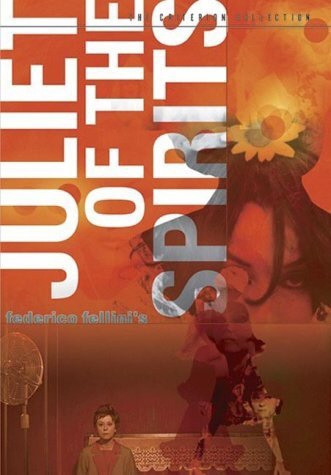
Fellini: Giulietta degli Spiriti


Giulietta Masina married Frederico Fellini near the end of the Second World War and remained in that interesting social compact (unconventionally) for fifty years, at which point Fellini died; Masina died five months later. Giulietta degli Spiriti/Juliet of the Spirits (1965) takes an indirect look at their relationship near its halfway point, or so it would seem. As one character states in the movie: "The interpretation is up to you. What can we say?"

Masina plays Giulietta/Juliet, a mostly self-contained middle-aged woman with a strong Catholic background; when confronted with her husband's infidelity, she falls through a metaphorical rabbit hole. This is Fellini's first color movie, and all its heightened effects work together to radiate a world of the spirits. Colors are wild and vivid; sounds echo; the camera moves and all is in motion. The sharp images, incandescent hues and frequent use of shadow create a dreamy, sometimes hallucinatory feel for Giulietta's derangement of the senses. The characters are, well,
Felliniesque . . . Diane Arbus in color. It's a luxurious and unrushed ride.

What I see immediately after viewing Juliet of the Spirits are a series of artistic "hyperlinks" to other movies: back through time to The Wizard of Oz and Fritz Lang; over the rainbow to Ingmar Bergman's The Seventh Seal; and coming our way through such visually stunning films made between 1965 and 1986 as Rosemary's Baby, Barbarella, The Exorcist, Aguirre: The Wrath of God, Carrie, The Shining, Stardust Memories, and Blue Velvet; and even closer, to the great HBO series of recent years. Interesting company, indeed; with, however, almost no violence at all in Juliet of the Spirits. The music at times reminds me of Woody Allen, for sure; the Italian dialogue is beautiful to listen to, even while keeping up with the subtitles.

To me, the coolest thing in the movie is the furiously fluttering artificial fire that surrounds Juliet as she is being (pretend) burned to death in her childhood school play rendition of a Catholic martyr, a striking image that visits her from time to time.

Today's Rune: Harvest.