Showing posts with label 1974. Show all posts

Wednesday, May 27, 2015

Bille August: Night Train to Lisbon (2013)

Bille August's Night Train to Lisbon (2013) takes on the difficult task of translating Pascal Mercier's densely packed novel Nachtzug nach Lissabon into a 111-minute movie. The result is good, if not great: good enough for me, at any rate. From this film, I learned something about modern Portuguese history, particularly about the effects of the Estado Novo, or de facto dictatorship under António de Oliveira Salazar (1889-1970) and Marcello José das Neves Alves Caetano (1906-1980), an oppressive status quo that was dismantled by the Revolução dos Cravos or Carnation Revolution beginning on April 25, 1974 (Freedom Day in Portugal).
The catalyst for the film's plot arrives quickly when a woman looks about to jump from a bridge in Switzerland; soon the Jeremy Irons character, who "saves" her, walks out of the middle of a class he's teaching and, before you know it, takes the night train to Lisbon. An exhilarating idea for many people, no doubt -- in that way, not unlike John Updike's 1960 novel Rabbit, Run.  

The strong international cast of Night Train to Lisbon ranges from Jeremy Irons as a sort of Mr. Chips professor to Christopher Lee as a hoary priest; from Mélanie Laurent as a tough resistance coordinator to Charlotte Rampling as Amadeu do Prado's slightly barmy sister; from Jack Huston as Dr. Amadeu do Prado to Bruno Ganz as his grizzled friend looking back; from Martina Gedeck as a sharply observant and sympatico eye doctor to Lena Olin as Estefânia in the present. Flashback is utilized as a connecting thread, so many characters have double actors playing them.

Finally, Lisbon provides a colorful, light-suffused backdrop for much of the film. 

Today's Rune: Harvest.

Tuesday, June 10, 2014

Blondie Greatest Hits Deluxe Redux

Music packaging goes back and forth across a spectrum of formatting styles: record albums, CDs, downloads and anything else you might imagine or remember. It's probably a good idea -- and a fun one -- to change things up in such a present (or absent) age of digital fragmentation.  Sampling (or re-sampling) vinyl and CD sets, for instance. There's something inherently coherent in a container or vessel of related tracks reinforced with related text and images -- and man does this take me back. 

With Blondie's latest release (at least the version I received in the physical mail via online ordering) -- if you decide to check it out -- you'll be treated to a generous three-disc package: Greatest Hits Deluxe Redux, Ghosts of Download and a DVD, Blondie Live at CBGB 1977.  

I gave all a quick look and listen and am now settling in on a multiple re-listening experience with Greatest Hits Deluxe Redux, feeling like The Man Who Fell Into a Slightly Different Universe. Why? Blondie re-recorded ten out of eleven of their most salient tracks -- in the studio. A nifty-fifty idea, and it works. "Why they do that?" No idea -- but I love it!  This is smashing for the neural passageways -- listening for slight variations in beloved songs, and digging them all over again. 
Trust me, you "might well could" sleep better while dreaming big to this groovy new Blondie synthesis. 

More on the rest of it at some point soon, I suspect.
Today's Rune: Breakthrough.  
    

Friday, April 18, 2014

Pilgrimage to Memphis: Done Gone to Graceland

O seasons, O castles, 
What soul is without flaws? 

(Arthur Rimbaud, circa 1871)

Life is the farce we are all forced to endure.

(Rimbaud, A Season in Hell, 1873).
I believe I am in Hell, and so I am there.

(Rimbaud, A Season in Hell, 1873).
"I say one must be a seer, make oneself a visionary. The poet makes himself a seer by an immense, long, deliberate derangement of all the senses."

(Rimbaud letter, 1871)
Once, I remember well, my life was a feast where all hearts opened and all wines flowed.

(Rimbaud, 1873).

Elvis Presley (1935-1977), RIP.

Today's Rune: Movement.  

Note: English translations of Rimbaud (1854-1891) derived from Wikiquote (open source). I changed a translated word in one instance, from "seer" to "visionary."

Sunday, September 09, 2012

Lina Wertmüller: Swept Away by an Unusual Destiny in the Blue Sea of August


"And this is for not paying taxes and taking your money to Switzerland!"

A line that jumps right off the 1974 screen and into the 2012 US presidential election. 

And so it goes with much of Lina Wertmüller's Travolti da un insolito destino nell'azzurro mare d'agosto / Swept Away by an Unusual Destiny in the Blue Sea of August. 

Despite the fact that no person is killed for the duration, it's an edgy film, filled with Italian language obscenities characteristic of the tumultuous interaction between wealthy industrialist Raffaella Pavone Lanzetti (Mariangela Melato) and working class schlub Gennarino Carunchio (Giancarlo Giannini) -- especially after they're separated from the rest of the workers and passengers of the yacht they've been traveling on.

For comparison? Imagine a blend of Robinson Crusoe and Gilligan's Island, only it's two Italian people of different socio-economic classes and regions stranded on a wayward island. Far beyond Crusoe and Gilligan, though, imagine a tale of Marxian survival that inexorably stumbles into sometimes savage conflict-ridden sex.

"Every dog has his day, every servant his pay!"

In brief, Swept Away is a sharp and pithy comedy dealing with serious underlying issues.

Today's Rune: The Mystery Rune.

[Warning: This Swept Away mustn't be confused with the sad 2002 remake directed by Guy Ritchie and starring Madonna. God, no. Or as Gennarino cries in desperation in the original: "Madonna! Santa Rosalia!" Heaven forbid! Lina Wertmüller's original or bust!]         

Tuesday, July 24, 2012

Lenny: A Film by Bob Fosse


Initial response to Luis Buñuel's L’Âge d’or / The Golden Age (1930) included physical attacks in movie theatres by fascists and other "right wing" types offended by its subversive freedom of expression and satire of "traditional values." The film was pulled from general circulation -- globally. It wasn't even widely available in the United States until 1979 and after!

Move the clock forward from 1930 through the rest of the 20th century. The use of napalm, atomic weapons and poison gas on the one hand, the freedom to use words on the other, and civil rights, human rights in general. It seems that even now in the early 21st century, many people in the US are far more concerned about Second Amendment (especially gun rights) than First Amendment rights -- i.e. freedom of speech, writing, publishing and assembly. Between the time of Buñuel's early work and the 1960s, the imposition of Hollywood Codes and various "official" policies around the US chilled serious and comedic exercise of freedom.

The situation changed only when people challenged the new status quo. As Frederick Douglass framed it in 1857, "power concedes nothing without a demand." He also observed this: "If there is no struggle there is no progress. Those who profess to favor freedom and yet deprecate agitation are men who want crops without plowing up the ground; they want rain without thunder and lightning. They want the ocean without the awful roar of its many waters."

In free speech matters during the mush years, Lenny Bruce (1925-1966) became one of the demanders. He pushed and pushed, using "blue language," spotlighting hypocrisy in social mores, questioning American society's tolerance of violence vs. its treating sex like a "dirty shameful thing." He challenged the status quo directly and helped liberate the use of language in the USA.

Bob Fosse's Lenny (1974) is a good place to see how events played out. Lenny Bruce was arrested, charged, fined, banned and convicted along the way. He died of a drug overdose in 1966 and, at least in New York State, was only officially "pardoned" in 2003!

Even while he was alive, Lenny Bruce's influence was immediate and not just among the ranks of comics (George Carlin et alia). Take Jim Morrison, for example, and go from there. Even now Home Box Office (HBO) has the spirit, for instance.

Today's Rune: Warrior.     


Monday, March 19, 2012

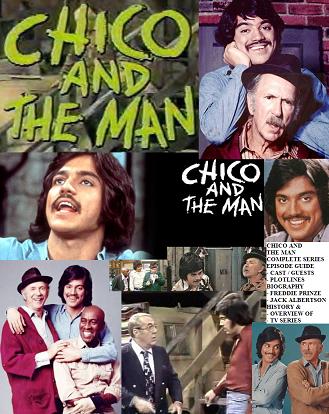
The 1970s: Chico and the Man/All That Glitters


So by the early-to-mid 1970s, there were all these mass-culture TV shows exploring socio-economic class, race, ethnicity, and gender. In the wake of the US-Vietnam War and the upheavals of the 1960s, this was a pensive time, with a mix of experimentation and philosophizing. Could people get along beyond the confines of their culturally driven self-identities?

Two shows I caught but didn't watch religiously: Chico and the Man (1974-1978), starring Freddie Prinze (1954-1977) and Jack Albertson (1907-1981); and All That Glitters (1977).  The first was a spiritual cousin to All in the Family, Sanford and Son, and early Sesame Street (1969-present), only with a young Latino dude building a connection with an older dispeptic Anglo in East L.A., supplemented by various other antics. By about fifteen years, it prefigured the Rodney King plea, "Can't we all just get along?"  All That Glitters was a soap opera-ish romp that inverted maintstream gender roles, so that it was a Woman's Woman's Woman's World. In other words, a mix of science fiction, fantasy and satire. The idea was to point out how generally patriarchal and one-sided the accepted status quo was up to that time -- the "double standard."

What's the legacy today? Apparently Rick Santorum, Newt Gingrich and Mitt Romney -- among others who might have been aware of these series -- missed the boat, the train, the car and the plane. Apparently they've rejected all of it. On the other hand, Clint Eastwood brought a sort of updated version of these 70s cultural awakenings back to market in 2008, with Gran Torino. And thanks to the 2008 election in the USA, Barack Obama is president and Hillary Clinton, Secretary of State. Where there's a will, there's a way; where there's no will, no way.

Today's Rune: Signals.      

Friday, February 03, 2012

Comes and Goes in Threes


Fare thee well of three to tell: Ben Gazzara (1930-2012) -- pictured above left in a still from John Cassavetes' Opening Night (1977), with Gena Rowlands and Cassavetes; Don Cornelius (1936-2012); and Mike Kelley (1954-2012).  


Here's one of my favorite moments in all of Soul Train: after Don Cornelius speaks with James Brown, he introduces Al Sharpton,"an astouding young brother" -- then 19 going on 39 -- who's there to give a presentation as National Director of the National Youth Movement, Incorporated. "And what do we have here?" Cornelius asks of Sharpton, who proceeds to award Brown a "Black Record" for his gold record, "The Payback." Sharpton observes, "We feel 'The Payback' is sort of like the theme song for young black America in 1974."


Mike Kelley, Detroit-connected member of Destroy All Monsters and independent artist, went out with a bang within 24 hours of Don Cornelius. Kind of extra eerie when you consider the cover of the Destroy All Monsters CD, November 22 1963 (2007 import). When I see samples of his installation work, I'm reminded of Detroit's Tyree Guyton and the Heidelberg Project.

Today's Rune: Harvest.

Thursday, December 29, 2011

Sam Peckinpah: Bring Me the Head of Alfredo Garcia


A lot of foreboding, death leaping out of the shadows, tragic existentialism and the excitement of long-shot possibilities on the road: that's some of what comes to mind watching Sam Peckinpah's Bring Me the Head of Alfredo Garcia (1974). If you're thinking of a Mexican vacation, best to skip this one until after your return -- it's visceral, unpredictable and wild, just like the Mexico of my memories surrounding the events witnessed while visiting my grandmother, great uncle, uncle and cousin in the late 1970s.

Let me add that Warren Oates and Isela Vega are great. Somehow I'm reminded of Deadwood, Taxi Driver, Once Upon a Time in the West, Bonnie & Clyde and God knows what else.

Today's Rune: The Mystery Rune.

Friday, September 02, 2011

Buñuel: The Phantom of Liberty, Part 2


Taking Liberties. Many times, one may be free to choose suicide, but once the choice is carried through, liberty is nullified through the act of oblivion.

Once upon a time in America, a group of people who called themselves "Confederates" fought to be free to own slaves. Think about it: they-fought-to-be-free-to-have-the-right to-own-slaves.

Typically, slave owners denied the "natural right" of Life, Liberty and the Pursuit of Happiness to their slaves. If slaves attempted an escape to liberty and were caught, they might have a foot cut off, or worse, have their heads chopped off and put on a wooden pole as warning to others yearning to be free. Once upon a time in America.


Liberté, égalité, fraternité. Pictured here: Opening image of Luis Buñuel's Le Fantôme de la liberté / The Phantom of Liberty (1974): Goya's Los fusilamientos del tres de mayo / The Third of May 1808. Napoleon's variation on the above motto: Liberté, Ordre public / Liberty, public order.

By Order of Alfonso,  King of Castile, León and Galicia and King of the Germans, 1265 A.D.:

ON LIBERTY. All creatures of the world naturally love and desire liberty, especially men who have authority over others and, for the most part, those who are of noble heart.

Law 1: . . . Liberty is the power that every man has by nature to do what he wants, except in those areas where the power or the right of law restrains him.*

*Source: Women and Slavery in America: A Documentary History, edited by Catherine M. Lewis and J. Richard Lewis (University of Arkansas Press, 2011), page [1].  

Today's Rune: The Self.

Thursday, September 01, 2011

Buñuel: The Phantom of Liberty, Part 1


In Le Fantôme de la liberté / The Phantom of Liberty / El fantasma de la libertad (1974), Luis Buñuel explores the idea of liberty (aka freedom) from a surreal perspective. On the one hand, he shows, social conventions, morals, customs and laws seem (or are) absurd, and are malleable over time; on the other hand, complete freedom of the individual carried to its ideal translates into chaos, anarchy and mayhem. Is there a "reasonable" middle ground?

The Phantom of Liberty is half presentation of, half comedy of manners. Liberty has consequences. People are social animals. Try shouting "Fire!" in a crowded theatre, for instance, or driving 100 mph in a school zone during operating hours.

Or consider what is taboo in one culture or social group yet accepted in another.

In one scene, a professor speaks of Margaret Mead and anthropology, puts forth the idea of polygamy as an example. He also opens up all sorts of religious beliefs for scrutiny.

Are we truly "at liberty?"

In addition to all sorts of triggering sounds (church bells gonging, horses hooves clattering on brick pavement in a courtyard, sirens wailing, clocks ticking, water pouring), Buñuel deploys various animals (some wondering into rooms, or straining against bars at a zoo) and social archectypes in motion: police (gendarmes), soldiers, monks, government officials, young children, senior citizens, servants, teachers, doctors, lawyers, judges, nurses, an inn keeper, a sociopathic sniper, S & M exhibitionists, a Spanish guitarist and a flamenco dancer, and more -- plenty to work with, certainly. Let's just say some are more at liberty than others.  

Today's Rune: Journey.

Thursday, February 10, 2011

Patti Smith: Just Kids


Thoroughly enjoyed Patti Smith's memoir, Just Kids. My initial response: Just Kids is written with unabashed aristry; it is graceful in every sense of the word. We follow Patti Smith's early leap of faith into the unknown, begin to understand the courage of her acts. There is attention to detail, dates, meaning. There are many epiphanies about art, life. And there are many intersecting lives. Loved it and will now seek out the audiobook version, too.

Today's Rune: Partnership.

Friday, November 05, 2010

Howlin' Wolf in London


Here's a pretty laid back Anglo-American effort.  The Wolf (Chester Arthur Burnett) died in 1976. Warren Zevon's "Werewolves of London" came out in 1978.

The London Howlin' Wolf Sessions players:

Howlin' Wolf -- vocals, harmonica, guitar.
Eric Clapton -- guitar.
Hubert Sumlin - guitar.
Jeffrey M. Carp -- harmonica.
Ian Stewart -- keyboards/piano.
Bill Wyman -- bass.
Charlie Watts -- drums, conga, percussion.

Additional:
Steve Winwood -- keyboards/piano and organ.
Phil Upchurch -- bass.
Klaus Voormann and Ringo Starr (aka "Ritchie") -- drums.

Recorded: May 1970.
Released: 1971, 1974, 2004.


"Wang Dang Doodle" from the 1970 sessions -- lyrics included!

Today's Rune: Fertility.

Thursday, August 19, 2010

Soul City, USA


As soon as I learned about Soul City in the late 1970s and could drive, I wanted to see it firsthand. It's a sort of secular utopia that never bloomed into the 50,000-person city originally planned for, but more like Koinonia Farm, Georgia, than Jonestown, Guyana. The idea was for a self-sustaining community undergirded by black-owned businesses that promoted racial harmony, a "brand new shining city" in Manson, North Carolina, USA. Soul City's location is near the Virginia border, not far off the main interstate highways (I-85 and I-95). Definitely worth a look and consideration; after my first glimpse, I go back from time to time to see if anything's changed much.

Soul City was civil rights leader (and lawyer-judge-entrepreneur) Floyd B. McKissick's (1922-1991) baby, though others shared in its birth and have kept the dream going in a more modest form. That is, like the Heidelberg Project in Detroit and despite claims to the contrary, Soul City still exists.

In 1974, James Brown captured the spirit in which Soul City was conceived: 

We got to get together and buy some land
Raise our food just like the man
Save our money, do like the mob
Put up your fight, and own the job
We got to get over before we go under

-- from "Funky President (People It's Bad)"

For more, please see:

McKissick's Three-fifths of a Man (1969).

Floyd B. McKissick Papers #4930, Southern Historical Collection of the University of North Carolina at Chapel Hill and the African American Resources Collection of North Carolina Central University.

Christopher Strain, "Soul City, North Carolina: Black Power, utopia, and the African American dream," The Journal of African American History 89.1 (2004): 57+. Gale U.S. History in Context. Web. 19 Aug. 2010.

Today's Rune: Partnership.

Wednesday, April 21, 2010

Iggy Turns 63


Jim Osterberg aka Iggy Pop turns 63 today -- man, if I have half that energy at 63, I'll be happy as a clam. It's been real cool to see Iggy and the Stooges slowly game fame and widepread recognition over the last three decades. Iggy has a lasting Michigan edginess and a mordant wit, while the real basic sonic assault launched by the Stooges in the 1960s still sounds good in 2010. Happy Birthday, Igster! Above is the April 1974 cover of CREEM.


Detroit-based CREEM championed The Stooges and Iggy Pop and a whole lot of bands that have aged like fine scotch. There's a nifty big book with lots of colorful photos and articles available, too: CREEM: AMERICA'S ONLY ROCK'N'ROLL MAGAZINE compiled and edited by Robert Matheu and Brian J. Bowe (2007).

Today's Rune: Separation (Reversed).

Friday, February 19, 2010

James Brown: Funky President


I remember those summer days in 1974 as a kid. It was all wild -- when Tricky Dick Nixon resigned and Gerald Ford was sworn in as President of the USA. I was traveling with my Dad on a business trip and staying at the house of one of his business friends in Virginia Beach, Virginia, during a flash flood. People canoed down streets after the heavens opened up in the wake of Nixon's departure by helicopter in Washington, less than two hours away by ground transportation.

That same summer, with Ford newly at the helm, James Brown recorded "Funky President." It captures the spirit of the times. Weirdly enough, Ford was the last of the moderate Republican presidents.  National leadership was to become far cruder -- more as we know it today -- in the 1980s.


Tomorrow, I'll lay out a few thoughts on LBJ, a funky president whose legacy ratings, I predict, will rise over time, and for significant reasons.

Today's Rune: Signals.

Sunday, January 10, 2010

Pligrimage to Waterloo II


As Jodi ponted out in response to yesterday's post, ABBA had a big hit with "Waterloo" in 1974, applying the battle's outcome to a romantic disaster. As Mark (Walking Man) noted, the battle's name has become synonymous with defeat. Waterloo connects to so many things it may equal the Six Degrees of Kevin Bacon.


Here's a shot of Waterloo Station taken by my Dad in 1992, not too far from the Belgian battlefield.  There's a much bigger Waterloo Station -- named after Wellington's victory -- in London; it's heralded in the 1967 Kinks song "Waterloo Sunset," which has been covered by all sorts of artists and bands ranging from David Bowie (2003) to Def Leppard (2004).  


Waterloo keeps on giving, spilling even into contemporary American politics. Last summer, Jim DeMint of South Carolina -- one of the most right wing senators in the USA -- declared about Health Care reform: "If we're able to stop Obama on this it will be his Waterloo. It will break him."  Above fish-eye shot of the battlefield taken by my Dad in 1992.

Finally, here's ABBA rolling out "Waterloo" at the Eurovision Song Contest in 1974. ABBA plus (Iggy Pop and) The Stooges will be inducted into the Rock and Roll Hall of Fame on March 15, 2010, along with Jimmy Cliff, The Hollies and Genesis. Crazy, huh?


Today's Rune: Signals.

Wednesday, January 06, 2010

Sue Kaufman: Falling Bodies


Knowing that she died by jumping out a window in New York City in 1977, it's pretty eerie reading through Sue Kaufman's entire body of published work. Take this snippet from Diary of a Mad Housewife (1967), in the voice of Bettina (Tina) Balser, the protagonist:

. . . a couple of times I even thought of suicide. Yesterday morning I stood at the bedroom window, trying to get the nerve to open the window and jump, but Tina the Comedienne won out: I had this vision of myself soaring, like Mary Poppins, out over Central Park West, tweed skirt and Lady Lingerie from Best's belling out, and stayed inside. I also knew that, suicide failing, I had to talk to someone or really go stark foaming frothing mad. (p. 288)

And here's a snippet from Falling Bodies (1974), looking over protagonist Emma Sohier's shoulder:

A little over a year ago, in late November . . . some poor young woman had pitched herself and her two miniature poodles off the penthouse terrace of the building diagonally across the street . . . her mind finally made up, the girl had first tossed one furry bundle, then the other, high into the air like some queenly vaudeville juggler -- and as they came down past her (yowling?), had stood up on the low wall, spread her arms wide, and in a perfect Esther Williams swan dive, had taken off into space herself. (pp. 63-64)*

What's especially notable about these novels -- and much of Kaufman's work -- is the strange balancing of madness and comedy in her wry descriptions.  Her primary characters are often too clever for their own good, too acutely attuned to the echo chamber of their own observations: and so they come undone, unhinged. 

Today's Rune: Movement.  *Esther Williams is still alive, by the way, at 88. Here's a link to a Life photo showing her diving -- into a pool:  http://www.life.com/image/50485101

Sunday, December 27, 2009

Papa Don't Take No Mess


Folks, here's to a happy and lucky 2010 . . . 2009 has been a real mixed bag, for sure. Not exactly Hell, but a lot of mixed nuts.

Let's hope for a good ending for 2009, while we're
at it . . . I'll be Best Man at a wedding on New Year's Eve,
may it go beautifully . . .


Today's Rune: Journey.  One more RIP for James Brown -- make it funky.

Wednesday, November 04, 2009

Sesame Street at Forty

Sesame Street turned forty today, and my younger brother Jamie will turn the same age at the end of this year. These two things are connected in memory because anytime I watched Sesame Street, it was usually while babysitting Jamie, or watching him briefly while the adults did other things. I approved of Sesame Street, and The Electric Company, though I (at the time) mocked poor harmless Fred Rogers and Mister Rodgers' Neighborhood, which seemed infantile by comparison. (When I'd been Jamie's age, I sometimes watched Batman, The Twilight Zone, Captain Kangaroo, Dark Shadows, Milton Berle, Star Trek -- a real eclectic grab bag).

Anyway, Big Bird always freaked me out, his gangly size and weird voice. The Count, Cookie Monster and Oscar were the ones I liked best. The people seemed cool, the great urban mix that even now seems ahead of its time. A big hit for PBS and a legacy of good things put in motion by The Great Society, even during the Vietnam War.


The Electric Company (1971+) was stranger than Sesame Street, a little more on the surreal side; among its early regulars were Bill Cosby (who earlier had done I Spy; afterwards, Fat Albert & the Cosby Kids) and Morgan Freeman.

In the tradition of older sibling taking younger to see scary movies, where Vickie, my oldest sister, took me to see The Omega Man and Deliverance, I later took Jamie to see Apocalypse Now! and Wise Blood. By that time, we'd run far far away from Big Bird.

Today's Rune: Defense.

Sunday, October 25, 2009

The 70s: Bring Out Your Dead, Part II

More reverb, mid-1970s cut. Dig the old breed, Old School, nifty-fifty, 23 skidoo. Generalissimo Francisco Franco is still dead and Saturday Night Live is still aired. Anne Sexton still needs a biopic and Elvis still plays ping pong with Chairman Mao in the ethersphere between sightings throughout the cosmos. Sue Kaufman's Diary of a Mad Housewife's movie version needs re-release, and Alice Paul a renewed salute. Not quite the end of the 70s, the End of the Century, but it was The End for these folks. Let us now remember what we can of them, to the tune of Howlin' Wolf's "Moanin' at Midnight" and then, and then, and then, "Goin' Down Slow." Let's remember anything we can . . .

Anne Sexton (11/9/1928-10/4/1974). She's so cool, so nutty; I'd rather have a drink and shop poetry with her than with Sylvia Plath, in the realm of surreal dreams.

Here's a surreal nightmare: Stiff-armed Adolf Hitler with a jolly Francisco Franco. Things are much better in Germany and Spain these days. God, let's hope so. Francisco Franco (12/4/1892-11/10/1975).

Howlin' Wolf/Chester Arthur Burnett (6/10/1910-1/10/1976): How Many More Years, Evil, Forty-four, Smokestack Lightnin', I Asked for Water, Sitting on Top of the World, Wang Dang Doodle, Back Door Man, Little Red Rooster, I Ain't Superstitious, Three Hundred Pounds of Joy, Hidden Charms, Built for Comfort, Killing Floor, and more, and more and more.

Mao Zedong/Mao tse-tung (12/26/1893-9/9/1976). Or as Mrs. Cunningham/Dr. Ruth Bishop used to say in modern Chinese history class, Mousey-Tongue. She was joking. He was not. Scary dude. Andy Warhol, Don DeLillo, overrun by a Chinese line, Cultural Rev, you say you want a revolution . . .

Sue Kaufman (8/7/1926-6/25/1977). In "Summer Librarian" she notes the passing of time, the changing of the old ways into new that have since become old again and the pages keep on turning and she kept on seeing for miles and miles and miles until she couldn't take it anymore.

Alice Paul (1/11/1885-7/9/1977) Lives On with her crazy egalitarian notions about women and equal pay and a National Women's Party and Equal Rights Amendment that scared so many for no real reason save fear itself sort of like today's push for equal marriage rights, but ah -- so many things to change, so little time . . .

Elvis Presley (1/8/1935-8/16/1977), the King. In Tupelo, a Child was Born to outlive his Twin and the rest is History and Fable and Legend and Myth and Cult and Religion and Poetry and Hope and Glory and Archetypal Hero of the People of of the Realm of the World of the Earth of the Open Heavens, bound for The Promised Land Beyond Time . . .

Today's Rune: Flow.