Showing posts with label Wim Wenders. Show all posts

Friday, February 05, 2016

Wim Wenders and Juliano Ribeiro Salgado: 'The Salt of the Earth' (2014)

Wim Wenders and Juliano Ribeiro Salgado's documentary The Salt of the Earth (2014) focuses on the life and lens of Brazilian Sebastião Salgado, a total immersion photographer, including major projects, such as the awe-inspiring Instituto Terra reforestation effort, with Lélia Wanick Salgado. 
To deepen and widen the scope of his (or their) major photography projects, Salgado (and companions, from time to time) has traveled to the Ends of the Earth, the Far Corners of the World, from vast areas with no human habitation to locales filled with refugees of famine and war, or workers laboring as if from the dawn of time in mines (as above), from ancient peoples living half-hidden from modern economic systems, to migrants and nomads on the Edge of Tomorrow. 
The Salt of the Earth delivers a stunning blend of documentary film and photography in both color and black and white. Images range from disturbing atrocities (people dead from starvation or massacre) to mystic beauty, from social panorama to natural vista.
Whereas most photographers tend to focus on either natural or social settings, Sebastião Salgado does both, without privileging one kind over the other: to me, this is an optimal way of looking at the world, with very impressive results.

Today's Rune: Fertility.  

Tuesday, April 14, 2015

Milwaukee, Minnesota (2003)

If you approach Allan Mindel's Milwaukee, Minnesota (2003) as part archetypal fairy tale, part darkly comic modern "heartland" story, you can relax into it without qualm. Definitely this is true: twelve years since its release and three viewings down the pike, I continue to enjoy it -- a small independent film that holds up well. 

Besides the handful of actors (all with something to recommend in their performances), there are striking visual contrasts (as in the image above) within the purview of Bernd Heinl, director of photography, and for the ears, there's a cool wintry soundtrack by Michael Convertino and Robert Muzingo (even a little backwards-looping music). 
Milwaukee, Minnesota centers around Albert (last name Burroughs, no less, played by Tory Garity, whose mother is no less than Jane Fonda), a savant of some kind, wildly successful at winning ice fishing contests while living with his control-freak mother. 

Who, you may ask, is Albert's father? There's a little mystery for you right off the bat. 
Why, suddenly, does Jerry James, a roving incarnation of evil (banality and all) -- arriving from Chicago as if escaped from a parallel Coen brothers' universe, convincingly played by Randy Quaid -- roll into town?  
Why on earth is the movie called Milwaukee, Minnesota, and who is Mr. McNally (played aptly by Bruce Dern) -- as in the publisher of maps?

Why is Gary (Josh Brolin) wearing modified women's undergarments? What exactly is Gary's connection to "the Lady" (played by Holly Woodlawn, as in "Holly came from Miami F-L-A / Hitch-hiked her way across the U.S.A.")?

What about grifter Tuey (Alison Folland) and her hypochondriac brother Stan (Hank Harris)?  Hint: how Tuey and Albert respond to one another is a key element in the film.

Milwaukee, Minnesota, in its overall feel, reminds me of Wim Wenders' 1977 film Der Amerikanische Freund / The American Friend (that one starring Dennis Hopper and Bruno Ganz). And at certain times, Troy Garity's Albert strongly resembles Dustin Hoffman's Benjamin Braddock, protagonist in The Graduate (1967). In addition to a certain physical resemblance, Hoffman was ten years older than his character was supposed to be at the time of filming, and both actors were about thirty years old when playing their respective roles -- in both cases they are memorable and a little off-kilter.
  
Today's Rune: Harvest.

Wednesday, September 18, 2013

Look Up: Der Himmel über Fort Worth

Archangel's proclamation. Look skyward and what do you see?

Taken from ground level, Fort Worth, Texas, USA, using natural light on a lucky day.

Today's Rune: Joy. 

Saturday, March 23, 2013

Michelangelo Antonioni: The Passenger (Take II)


Antonioni's The Passenger (1975) is an odd sort of road movie that takes its main character (played by Jack Nicholson) on a journey dicated largely by a dead man's day planner. Why does he do it? Having assumed another's identitity, why does he insist on walking in the other man's shoes? Therein lies one mystery.

The ambience that permeates The Passenger feels like fate, like myth, like an inevitable time and place and outcome. What we see are detailed (and often beautiful) shots of people and buildings, vehicles, landscapes and skies set in, around and above North Africa, London, Germany and Spain.

The Passenger sticks with me like the memory of some strong dream; somewhere down the line it eventually conjured up in my comparative memory what could be seen as a companion film: Wim Wenders' Der Amerikanische Freund / The American Friend (1977), starring Dennis Hopper and Bruno Ganz. Both delve into identity and coincidence, fate and the big picture, and there be Germans.

Today's Rune: The Mystery Rune.        

Sunday, February 27, 2011

Wim Wenders: Falsche Bewegung / Wrong Move


Falsche Bewegung (1975), as with all of the Wim Wenders works I've seen, plays out like a quintessentially independent film. Here, a small and finely acted ensemble cast of characters roams through city and country by rail, foot and car over the period of less than a week. Wilhelm, a self-styled struggling writer in his thirties, is pushed out of the nest by his mother. It's unclear, but I suspect his father was killed in the Second World War. In any case, Wilhelm takes a train for Bonn and soon two vagabonds hitch up with him, seeing he has some money to spare. They are a German father, World War II veteran who'd been a runner during the 1936 Olympics, and his young mute daughter Mignon (French for "cute" or "dainty"). Down the line they are joined by Therese, a stage actress, and Bernhard, a young monied Austrian who dallies in poetry. These disparate characters look to Wilhelm for guidance or leadership, but he seems capable of neither. "It Ain't Me, Babe," he might as well reference, but he's no Bob Dylan. Bernhard takes them to his rich uncle's estate -- when they arrive, it is unclear if the man really is his uncle. Slow antics ensue, angst pervades the air, they move on. Wilhelm eventually goes to the top of a mountain and wonders if he's made the "wrong movement" of the title. Perhaps they all have.

Loosely based on (more inspired by) Johann Wolfgang von Goethe's 1795/6 novel Wilhelm Meisters Lehrjahre / Wilhelm Meister's Apprenticeship, Falsche Bewegung has the tonal feel of Carson McCullers' The Heart is a Lonely Hunter (1940) and Flannery O'Connor's Wise Blood (1952).

Main actors on the road: Rüdiger Vogler (Wilhelm); Hans Christian Blech -- my favorite in this film -- as Mignon's father, Laertes; Hanna Schygulla (Therese); Nastassja Kinski (Mignon), barely in her teens, in her film debut;  Peter Kern (Bernhard); and Ivan Desny as the latter's "uncle."

Robby Müller's cinematography is superb, setting buildings and background scenery in more "real" context -- as in life -- than is typical in flashier films.  I also like the way sounds come off, as well as the accompanying music, all important elements in a Wenders film, especially given the relatively sporadic nature of dialogue and action.

Today's Rune: Warrior. 

Wednesday, August 04, 2010

Wim Wenders: Buena Vista Social Club


You like music? You like cultural survival? You got an open mind and heart? If any of these apply, you just might totally dig Buena Vista Social Club, Wim Wenders' 1999 documentary. It's amazing stuff, vibrant, visually colorful, musically terrific.

Ry Cooder and crew assemble old school Cuban musicians and singers for recording sessions in the studio and on the road. We catch all sorts of glimpses of Cuban life and texture, embracing but not limited to music, cars and architecture. There are many touching snippets, interwoven with beautiful singing and sumptuous instrumentals. Swirling (and dizzying) takes of Ibrahim Ferrer's dueting with Omara Portuando, folks talking in their domeciles and in various interiors and exteriors -- it's all memorable. And I loved seeing dudes in their 80s and 90s smoking cigars and taking a nip, quite hale and hearty and happy.

Today's Rune: Journey.

Thursday, July 08, 2010

Wim Wenders: Paris, Texas


Wim Wenders' Paris, Texas (1984) is a fabulous movie, highly recommended. It was cool to see it again hard on the heels of Der Amerikanische Freund / The American Friend (1977). Not for those suffering from ADHD, however.

The setup: A man (Harry Dean Stanton) in some kind of fugue state is wondering around South Texas. Thirsty, he walks into Terlingua and is looked after by a shady doctor, who calls his brother (Dean Stockwell), who in turn travels from LA to retrieve him. And on from there. The key players, all related to each other in the film, are fantastic: Stanton, Stockwell, Hunter Carson (son of L. M. "Kit" Carson, who adapted Sam Shepard's screenplay), Aurore Clément and Nastassja Kinski. Wowza! Excellent soundtrack by Ry Cooder and let's not forget the gorgeous camerawork by Robby Müller.

What strikes me now is how non-judgmental and unvarnished the tone of the movie is. And, the limits of human relationships, even when all are trying their best. This taps into much of Wenders' work. Everything human is refracted through the prism of the mind, the prisms of our senses, and can only go so far.

Distance is put between characters through several framing devices, the very same things that also connect or reflect us: telephones, walkie talkies, tape recorders, film (Super 8 in this case), glass, mirrors and photographs.

Other things noticed: $1.16 gallon full service gas and Gulf Oil stations; smoking on a plane and by a doctor at work; no seat belts; a red VW like the one in The American Friend and recurring in Coen brothers films; phone booths, pay phones, dial phones.  Also, drive-through banking, fairly new in the early 80s.

Today's Rune: Joy.

Saturday, July 03, 2010

Wim Wenders: Der Amerikanische Freund


Dennis Hopper, RIP. On a related note, another favorite from the 1970s: Wim Wenders' Der Amerikanische Freund / The American Friend / L'ami américain / El amigo americano (1977).

The "American friend" of the title is a character derived from Fort Worth-born writer Patricia Highsmith's Ripliad novels. In Wenders' version, we're not quite sure what motivates the "talented" Mr. Ripley or his German anti-buddy, Jonathan Zimmermann (Bruno Ganz): money, mortality, kinship? Or is it chance and opportunity? Is Zimmermann dying fast, or is he being hoodwinked into becoming a de facto hitman? What is self-reflection, projection on others, what is real and what is forgery? As art forger Derwatt (Nicholas Ray, director of Rebel Without a Cause) quips, "A little older, a little more confused. . ." At one point, Tom Ripley admits to a tape player: "I know less and less about who I am, or who anybody else is."

What makes the plot work is the added tension created by Jonathan's wife Marianne Zimmermann (Lisa Kreuzer), their son Daniel (Andreas Dedecke), and mystery man Raoul Minot (Gérard Blain). Sam Fuller (the director) adds more as Der Amerikaner, a gangster -- Fuller who said, "Van Gogh was a great inspiration for me, a guy for whom life was work and work was life. I wanted to be like him, except I didn't want to go nuts and cut off my ear."

A beautifully crafted film.  Like Sorcerer alluded to in the past two posts (also from 1977), not for the Disney and Hallmark crowd nor the easily distracted, my friends . . . but oh, what a movie! 


The Kinks play a subtle reinforcing role for the pensive Mr. Zimmerman: He mumble-hums and listens to The Kinks' Face to Face, specifically "Too Much on My Mind;" when Marianne suspects he's involved in shady business, another Kinks song -- "Nothin' in the World Can Stop Me Worryin' 'Bout That Girl" from Kinda Kinks -- plays in the background.

Mr. Ripley has appeared in more recent movies, as well, but this one's his best showing.

Today's Rune: The Self.


Tuesday, June 15, 2010

Winged Victory: Nike Complete


Have you seen Wim Wenders' Der Himmel über Berlin / Wings of Desire (1987)? Includes the great Bruno Ganz, Peter Falk, Otto Sander, Solveig Dommartin (who died at 45 a couple of years ago), Nick Cave, Curt Bois and Berlin -- the city not the band. Wings come in different shapes and forms, however.  


The Nike of Samothrace in the Louvre. An excellent 2007 photo by Marie-Lan Nguyen.  Here's a case where Gestalt doesn't deliver -- at least for me. I've seen an imagined Nike complete, "Winged Victory" and all, but what it really needs is the other side of midnight, something from a Man Ray photograph perhaps. It would be nice to see the whole of her.  


William S. Burroughs in a Nike, Inc., commercial. "Winged Victory," indeed!

Today's Rune: Joy.  

Saturday, May 29, 2010

Der Amerikanische Freund


Farewell to the American Friend, Dennis Hopper (1936-2010), last of the Rebel Without a Cause cast to go. A really worthwhile Hopper film to see is Wim Wenders Der Amerikanische Freund / The American Friend (1977); it's the kind of movie one can watch more than once and notice several different new aspects, angles. Let's not forget, besides Dennis Hopper at his best, the great Bruno Ganz, and Nicholas Ray (who directed Rebel Without a Cause) and director Sam Fuller, plus a key sonic role by the Kinks. Filmed mostly around Hamburg, perhaps inspiring Ripley, Hopper's character, to ask,  "What's wrong with a cowboy in Hamburg?"  Indeed, what?

Today's Rune: Wholeness.

Sunday, July 06, 2008

Der Himmel über Berlin / Wings of Desire


Wim Wenders' 1987 film Wings of Desire / Der Himmel über Berlin ("The Sky Over Berlin"), features beautiful cinematography, a primal story line and a memorable soundtrack. As in silent films, the viewer is given plenty of room to absorb profiles of faces, body language, and details of setting.

We follow two recording angels (Bruno Ganz, Damiel; Otto Sander, Cassiel) as they roam above and in the streets of Berlin, observing people's thoughts. All shots from the angels' perspective are in black and white; mortals' points of view come alive with color: a very effective and humbling technique. The angels mostly take notes, but they are often moved to provide moments of spiritual solace to people in despair, simply by hovering invisibly near.

There are apparently a lot of angels around, but Wings of Desire focuses only on Damiel and Cassiel and another angel who took mortal form in the 1960s. There is a subplot involving Peter Falk as himself (more or less), there are time bending glimpses into Berlin on fire and in ruins in 1945 at the end of the Second World War, there are stunning shots of the Berlin Wall, and scenes with Nick Cave and the Bad Seeds. There's also a trapeze artist, Marion, played evocatively by Solveig Dommartin.

Eventually, Damiel decides to "go mortal" to experience humanity and to hook up with Marion.


Pictured here: Otto Sander and Nick Cave. The soundtrack features Bad Seeds songs, including "The Carny," and a lot of other atmospheric music.

Nick Cave and the Bad Seeds have a new album out in 2008: Dig!!! Lazarus Dig!!! Wenders has a new movie coming out soon: The Palermo Shoot. Bruno Ganz is near perfect playing Adolf Hitler in Downfall (2004). Finally, I hadn't seen Wings of Desire in nearly fifteen years until yesterday, so was sad to discover that Solveig Dommartin died last year at age 45 -- of a heart attack. Hopefully she's among the angels now.

Today's Rune: Strength.

Wednesday, February 20, 2008

Space Junk


She was walking all alone
Down the street in the alley
Her name was Sally
She never saw it
When she was hit by space junk

In New York, Miami Beach
Heavy metal fell in Cuba, Angola, Saudi Arabia
On Christmas Eve (said NORAD)
A Soviet Sputnik hit Africa
India, Venezuela (in Texas, Kansas)
It's falling fast: Peru, too
It keeps coming
And now I'm mad about space junk
I'm all burned out about space junk

Oooh walk & talk about space junk
It smashed my baby's head
And now my Sally's dead

Devo, 1978

Today, the US Navy is preparing to shoot down a busted American spy satellite loaded with toxic fuel. . . . . Is this the truth, or a cover story straight out of James Bond?


The 1991 Wim Wenders film Until the End of the World has much of the world's sentient population bracing for the crash of a nuclear-powered Indian satellite . . . there will be fallout!


Speaking of fallout, I guess we've given up on the idea of shelters.


But once again, consider the possibilities. The good life in a shelter. A mineshaft a la Dr. Strangelove . . . . . The American Dream, air-conditioned nightmare . . .

Today's Rune: Strength. Yesterday's: Journey.

Saturday, September 22, 2007

Bigger Than Brooklyn


Danish-born Anna Karina (b. Hanna Karin Blarke Bayer, 1940): model, multilingual icon, femme fatale, actress, writer (including three novels), singer, director.


Vivie sa vie (1962), Le petit soldat (1962), Shéhérazade (1963), De L'amour (1964), Alphaville (1965), and onward.


Married four times. Jean-Luc Goddard was number one. Last I checked, separated from number four.


First thing I noticed while visiting Jim Morrison's grave at Père-Lachaise Cemetery in Paris quite a little while ago was graffiti declaring "Nick Cave and the Bad Seeds are following you, Jim." I'd just missed their visit! Australian-born Cave has contributed to Wim Wenders' soundtracks, has written a Southern Gothic novel, and continues to crank out spooky songs. "Tupelo" (1985) is a scary little ditty about the birthplace of Elvis. The man seems kind of maniacal, hellbent for leather.


Brazilian model Fernanda Tavares. Interesting outfit. . . . .

Today's Rune: The Mystery Rune.

Birthdays: Christabel Pankhurst, Erich von Stroheim, John Houseman (b. Jacques Haussmann), Joe Valachi, Martha Scott, Fay Weldon, Anna Karina, Toni Basil (b. Antonia Christina Basilotta), King Sunny Adé (b. Sunday Adeniyi), Ségolène Royal, Nick Cave, Joan Jett (b. Joan Marie Larkin), Scott Baio, Diogo Mainardi, Fernanda Tavares.

Ciao!

Tuesday, August 14, 2007

The Yazidi: People of the Peacock


Most organized religions seem very strange from the outside. Not just the Church of the Latter Day Saints, Christian Scientists, or Scientologists, either. The Yazidi / Yezidi / Êzidîtî / Êzidî certainly seem so. Like every other socially manifested religion, they say they are the true believers, the top of the heap, the chosen people. (I mean, really: wouldn't it be refreshing for members of a sect to say, "We like our beliefs, but it's okay if you don't; we think we're cool, but also realize we're just one of thousands of belief systems. . ." ?)

The problem with exclusivity is: the group naturally becomes a target. The easier to identify, the easier to attack. And today, in the Kurdish region of Iraq, scores of Yazidi faithful were blown to smithereens. Earlier this year, several Yazidis were gunned down in retaliation for stoning a Yazidi Juliet to death -- she'd fallen in love with a Muslim Romeo and broken a taboo -- for no Yazidi can hook up with an outsider. Given this rule, the Yazidi population can be decimated by a determined enemy.

The Yazidi believe in The Seven Mysteries, sort of archangels, topped off by Melek Taus, The Peacock Angel. The first people were Adam and Eve, but the Yazidi are directly descended from only Adam via Son of Jar. (Adam and Eve both had their own jar, but Eve's was more like Pandora's Box.) Son of Jar hooked up with a houri -- a "companion pure, most beautiful of eye" -- and the rest is history. The People of the Peacock go back at least 4,000 years, so it would seem. I checked the Book of Moroni, but it doesn't shed any light on the matter.


Wim Wenders' Birthday. Cool German, a memorable filmmaker along with Werner Herzog. Doing mostly documentaries lately, always pensive and interesting.


Lina Wertmüller's birthday. Must do a Wertmüller retrospective at some point, I'm thinking. Hot stuff in the 1970s, and she's still making movies.


Happy birthday, Emmanuelle Béart. C'est oh!

Today's Rune: Journey.

Birthdays: Doc Holliday, Russell Baker, Lina Wertmüller (b. Arcangela Felice Assunta Wertmüller von Elgg Spanol von Braueich), Steve Martin (b. Waco, Texas), Wim Wenders, Antonio Juan Fargas (Huggy Bear), Susan Saint James, Danielle Fernande Dominique Schuelein-Steel, Gary Larson, Marcia Gay Harden, Magic Johnson (b. Lansing, Michigan), Emmanuelle Béart, Halle Berry.

Sunday, September 03, 2006

Erik Skjoldbjærg: Prozac Nation


Erik Skjoldbjaerg directed Prozac Nation (2001), a respectable film adaption of Elizabeth Wurtzel's Prozac Nation: Young and Depressed in America (1994) that was finally released on DVD in the summer of 2006.

Prozac Nation had unfortunate timing and bad luck -- its premiere at the Toronto International Film Festival on September 8, 2001 came three days before that day; given the gloominess of the subject matter (depression and narcissism) and the acquisition of distribution rights by Disney's Miramax Films, theatrical release was stalled for years. In fact, it never had a proper run in the USA and was first aired on cable TV in 2005.

In the movie (as in the book), we follow Elizabeth Wurtzel (b. 7/31/1967 in New York City) to Harvard, where she won the Rolling Stone College Journalism Award in 1986. Coming from a tiny broken family, Wurtzel (played deftly and hypnotically by Christina Ricci) is obssessed with writing and cyclically "isolates," descending into depression. Once the viewer sees how she relates to her stressed, super-involved mother (nicely acted by Jessica Lange) and flaky, absent father (believebly rendered by Nick Campbell), all the rest seems clear -- fear of too much intimacy, fear of abandonment, need for perfection, etc. Anne Heche's (Dr. Sterling) character helps explore these issues, especially after Wurtzel manages to alienate her friends (and everyone else), including Noah (Jonathan Rhys Meyers), Ruby (Michelle Williams), and Rafe (Jason Biggs), and in one particularly awful (and darkly funny) scene, her grandparents.

I like this movie. Christina Ricci is always visually fun to watch -- her eyes and expressions especially. Some might find the pace of Prozac Nation depressing, but that's partly the point, isn't it? I'd compare Erik Skjoldbjaerg's approach to his fellow Norwegian Bent Hamer's in Factotum (2005). They are thoughftul and unrushed, quietly humorous, and empathetic to all their characters. There is no clear black and white line to laze into. In that sense, they also remind of Wim Wenders with a little less poetry.

Ricci gets to deliver a lot of funny deadpan lines like, "Poor Ruby. I killed her joy" and, trying to explain why she had sex with Ruby's boyfriend at a party: "It was sort of an accidental blow job." When her mother (Lange) bemoans, "I can't believe we're back to this," Ricci/Elizabeth says, all too understandably, "I can't live with other people." She's an evil thing, certainly, but Ricci manages to make her very likeable despite her cutting outburts. When her mother is recuperating from a mugging without the proffered Demerol, her daughter quips via narration: "She refuses pain killing drugs? Can we possibly be related?" When she meets the kindly Rafe on a first date, the voice in her head mutters, "Do not show him how creepy you are." Not long afterwards she asks him, "What am I?" "Scary." And later still: "Oh my God: I've become the ultimate nightmare girlfriend." Indeed she has. Along the way, there are references to -- and images of -- Lou Reed and the Velvet Underground (Lou has a small role as himself), Patti Smith, Bruce Springsteen, and Joy Division's "Love Will Tear Us Apart." All nicely worked in, along with subtle depressive color schemes modeled on Edvard Munch's alienated paintings.

In real life, Elizabeth Wurtzel has a reputation for being "difficult" and is known to mouth off. After Prozac Nation, she finished Bitch: In Praise of Difficult Woman (1998), which is funny in a wicked kind of way, plus a dashed-off sequel to Prozac Nation. Which reminds me of another line quipped by Ricci/Wurtzel: "You know, if you're going to suggest therapy, don't. I'm living proof it doesn't work."

(If you really want to see an excruciatingly slow paced film, try Luchino Visconti's Morte a Venezia / A Death in Venice, 1971, starring the great Dirk Bogarde. It is guaranteed to drive you to despairing thoughts and great discomfort, wondering when will this movie ever end? If you want to drive someone to near madness, take them to see it in a theatre. It's a real treat! I saw it double-billed with The Damned).

Today's Rune: Joy.

Vi snakkes -- Ser deg senere!

Saturday, August 12, 2006

Films That Make You Wonder


There are many movies that stick to mind, leaving a haunting feeling. Here are five that I've seen at different points in my life. Each one seems to improve as the years go by and the life experiences pile up. They seemed quite strange when I first saw them. They still seem strange, but more familiar. Seeing Brando again in Last Tango, I'm struck by his spiritual kinship with Klaus Kinski. His impulse to stick chewing gum under a railing as his last gesture mirrors almost exactly Klaus Kinski's scattering of monkeys in the final scene of Aguirre, the Wrath of God (1972).

Belle de jour (1967). Director, Luis Buñuel. Catherine Deneuve.

Last Tango in Paris / Ultimo tango a Parigi (1972). Director, Bernardo Bertolucci. Marlon Brando, Maria Schneider.

The American Friend / Der Amerikanische Freund (1977). Director, Wim Wenders. Dennis Hopper, Bruno Ganz.

Paris, Texas (1984). Director, Wim Wenders. Harry Dean Stanton, Dean Stockwell, Nastassja Kinski.

Guinevere (1999). Director, Audrey Wells. Sarah Polley, Stephen Rea, Jean Smart.


Today's Rune: Growth.

Tchuss!

Monday, April 03, 2006


Kraftwerk und Computer World

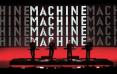
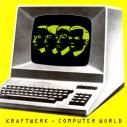
I've been lucky enough to see these guys at the Brixton Academy in South London and at the State Theater in Detroit. They began tapping into the coming global internet revolution in the latter 1970s, in some mystical aural space between their world hit single "Autobahn" (1974) and Computer World (1981), an album that provides the ideal soundtrack for today's intricately woven electronic culture. Even if you've never listened to an entire Kraftwerk album, you've probably heard them sampled in some mutated form via advertisements, at dance clubs, on soundtracks, or in airports and malls. Their music has effectively spread like a William S. Burroughs word virus, or sound virus.

The Germans are not known best for comedy, but they do generate campy and droll statements about modern urban life -- and life on the outer fringes. Think Wim Wenders, Werner Herzog -- and Kraftwerk. These guys appreciate the wonders and horrors of the world, and they collectively project edgy humorous images and sounds about it from a native Germanic perspective. That can only mean one thing -- it's a little dark.

I loved Kraftwerk from the beginning, especially Computer World and their later Robots remixes. At the Brixton Academy on July 20, 1991, they had an uber-cool multi-media show with projected images, words, phrases and colors, set to the pulsating electonic sounds of the band and their numerous machines -- including their robots. Brixton itself was (and is) known for its arts, ethnic mix, and street actions as epitomized in the Clash's "Guns of Brixton." It helped being shown around the area by London architect Jaqui Allen, a lovely volunteer guide. But I digress -- as is my wont. On June 11, 1998, I caught them at the State Theater, where they again played last year (sadly, I was out of town at the time). It was an almost identical show, and it was wonderful! Today Kraftwerk is as crisp and catchy as ever -- they remind us, too, of the early milieu of personal computing. If you have high speed access with whistles and bells, check out their retro website at www.kraftwerk.com

It's fun to compare it with Detroit's own White Stripes, Tesla coils and all: www.whitestripes.com

Let's not forget that Detroit is a worldwide magnet for techno and electronica music, and Kraftwerk plays here even on very limited North American tours (eight cities, if memory serves, in 1998).

I will revisit both bands at some point; this is merely a brief introduction in a hurried moment.

Music -- nonstop . . . . .