Showing posts with label Writing Prompts. Show all posts

Friday, September 21, 2018

Sally Rooney: 'Normal People' (2018)

Sally Rooney, Normal People (London: Faber & Faber, 2018). Rooney's second novel is even better than her first. 

Again, no dialogic quotation marks. Again, simple character names: Marianne; Denise (Marianne's oddball mother); Alan (Marianne's violent, weirdo brother); Connell Waldron; Lorraine (Connell's mother); Rachel Moran; Eric; Rob; Helen; Gareth; Joanna; Colleen; Niall; Elaine; Peggy; Jamie; Lukas; Yvonne, and others. The most playful name in Normal People must surely be Sadie Darcy-O'Shea's.

The nature of Marianne and Connell's interconnecting relationships to themselves and others provides the main dynamic of the novel, which is again mostly, but not always, set in Ireland, particularly in Dublin and in County Sligo, with interludes "outside Trieste" (page 157) and in Sweden. 
Marianne and Connell: "as if they were acting out an argument in which both sides were equally compelling, and they had chosen their positions more or less at random, only in order to have the discussion out." (page 174)

There are many simple sentences that stick to mind. Such as: "The cherries glow dimly on the trees." (page 179)

There are plenty of arguments, varying in their intensity. 
Helen: "Why do you have to act so weird around her?"
Connell: "How I act with her is my normal personality . . . Maybe I'm just a weird person." (page 214)

Marianne responds to a Facebook feed in her mind: "What did these messages, these advertisements of loss, actually mean to anyone? What was the appropriate etiquette when they appeared on the timeline: to 'like' them supportively? To scroll past in search of something better?" (page 226) Indeed, what is the aim of social media on a daily basis, in the service of communicating with others?

And finally: "Who were you? she thinks, now that there's no one left to answer the question . . . Her mother and brother are at work all day and Marianne has nothing to do but sit in the garden watching insects wriggle through soil." (page 227)

But plenty of stuff does happen, well beyond watching insects. Rooney gets at it all quite well. 

Today's Rune: Signals.  

Wednesday, August 01, 2018

Chapel Hill Daze: Pictures of Another Gone World: Internationalist Books

It's like the book title, All That Is Solid Melts Into Air. Elegiac America. Chapel Hill Daze. Since I first scampered around Franklin Street as a kid till now, a lot of melting. 

Life must go on,
And the dead be forgotten;
Life must go on,
Though good men die;
Anne, eat your breakfast;
Dan, take your medicine;
Life must go on;
I forget just why.


~ from Edna St. Vincent Millay's "Lament" (1921)
Internationalist Books is gone! It had, believe it or not, four locations before vanishing into the ether of Saṃsāra. Perhaps it'll cycle through again. The four locations were:
Chapel Hill. 108 Henderson Street (upstairs, above Henderson Street Bar & Grill; aka Linda's Bar & Grill; now Imbibe), by the Continental Café/Hector's (now gone) and across the street from the US Post Office (still there). It was tiny. (Notice in Daily Tar Heel, February 3, 1982). Call 942-REDS. Early 1982 (late 1981)-1984.
Chapel Hill. 408 West Rosemary Street, 1984-1991+. Part of a spacious former house. This allowed plenty of room for meeting, reading, discussing, organizing. I worked at this location as a volunteer. The house is still standing and serves as Mama Dip's Kitchen, which used to be at a nearby location (405 West Rosemary).  

Chapel Hill. 405 West Franklin Street, circa 1995-2014. I took the photo at top on November 24, 2012.  

Carrboro. 101 Lloyd Street, 2014-September 2016. Final stand.
International Books founder Bob Sheldon (April 17, 1950--February 22, 1991) was murdered during the opening phase of the Gulf War, which he opposed. The case remains unsolved. Originally from Colorado, he graduated from Temple University, Philadelphia, and worked as a nurse at UNC, as well as being an organizer and book store founder. He is buried in Colorado Springs (see "Find A Grave"). 

I am really happy to see that his papers are held at the David M. Rubenstein Rare Book & Manuscript Library, Duke University. Here's a link to the Guide to the Bob Sheldon Papers, 1968-1991.  

Today's Rune: Possessions. 

Monday, May 21, 2018

'Fahrenheit 451' (2018)

Ramin Bahrani's 2018 adaptation of the 1953 Ray Bradbury novel Fahrenheit 451 on HBO stars Michael B. Jordan as Montag, Michael Shannon as Beatty, and Sofia Boutella as Clarisse.  There's enough action in the novel to make a mini-series; it's harder to pull off in a 101-minute movie. I like the new version, however. It's updated to include recognizable social media and contemporary variations on book burning. In this version, too, the carriers of books and oral traditions are "eels" - derogatory slang for "illegals." Some technology critics seem to hate all of this new stuff, but they also seemed to have missed the boat, the train and the book. When the US is led by a man who does not read, the nation is already half in the bag of dodoville. It's a worldwide trend -- backward. In light of today's socially retarded emotional fascism, one cannot afford to be too subtle. 

In the opening sequence of Fahrenheit 451, there are images of burning books and visual art and, at one point, a picture of Frederick Douglass (circa 1818-1895).

Fact number one: in the first month of taking office, the current American president said this: "Frederick Douglass is an example of somebody who’s done an amazing job and is getting recognized more and more, I notice." (Multiple sources. Here's oneDavid A. Graham, "Donald Trump's Narrative of the Life of Frederick Douglass," The Atlantic, February 1, 2017). Fact number 2: Douglass was born a slave and died long before Trump's birth,  but as he (Douglass, not Trump) learned to read, the possibilities of freedom became more palpable, and eventually he escaped to freedom.

Some folks didn't like the carrier bird in this version of Fahrenheit 451. I thought it was totally cool. Incidentally, I also just saw Jim Jarmusch's Ghost Dog: The Way of the Samurai (1999), in which books also play a big part -- as do carrier pigeons, which were also important during the Great War of 1914-1918, of which this year is the centenary of its last year. 
Finally, the flames. I had an English teacher who had my class read Max Frisch's Biedermann und die Brandstifter / The Firebugs, a play that was first published in 1953 -- the same year as Ray Bradbury's original Fahrenheit 451. In The Firebugs, arsonists are stand-ins for totalitarian brutes who talk their way into people's homes, only to torch them in the end. She --- Joan Boyd -- also had us read Aldous Huxley's Brave New World (1932). Ann Barlow, another inspiring English teacher, strongly encouraged outside reading, including in my case several novels by Ray Bradbury. Such wonderful English teachers would be classified as "eels" in the new movie, which is like a blend of The Firebugs, George Orwell's Nineteen Eighty-four (1949), Brave New World, Margaret Atwood's The Handmaid's Tale (1985) and Fahrenheit 451. Dig it or douse it -- your choice. 

Today's Rune: Breakthrough.

Friday, May 26, 2017

Anne Trubek, 'The History and Uncertain Future of Handwriting' (Part III)

Xerox Print Ad, 1976: Brother Dominic and the 9200.
Anne Trubek, The History and Uncertain Future of Handwriting. New York: Bloomsbury, 2016.

Next we come to Chapter 4: "HUMAN XEROX MACHINES." In which Trubek describes monastic scribes and the process of copying ancient and newer texts.

A touch of weirdness here. "We are not sure exactly when silent reading developed, but . . . Saint Augustine [354-430 A.D.] described being shocked to find his friend, Ambrose [circa 340-397 A.D.], reading without saying the words out loud. The move from spoken to silent reading, like so much in this history, moved from being primarily oral to being more text based . . . Once silent reading became the norm, the scriptoria went quiet. The Church started using silence as a form of devotion and discipline, and to this day many monasteries require absolute silence." (page 42).  

Whoah. This is hard to believe, that people functioned like talking audio books when they read. Assuming that people must have been thinking silent thoughts as well as talking aloud, surely there were also people who could do the same with reading. Intriguing, though. Perhaps they whispered or muttered insensibly, sounding like babblers to anyone nearby to throw them off when they were reading the medieval version of Lady Chatterley's Lover.  
Silent thinking and reading are essential to personal autonomy and freedom. This is why "truth serum" and "lie detectors" are so useful to dictators and spy agencies. If you can safeguard your thoughts and dreams, you can remain free, at least in your mind.

Chapter 5: "THE POLITICS OF SCRIPT." Here we see the eventual addition of lower case words, for as Trubek points out: "The Romans wrote only in capitals." (page 47).

After various different types of scripts were developed, tried, discarded or modified, sometimes revived for artistic flourish (as is true still in the 21st century), scripts moved in our direction. The printing press would accelerate this process through greater standardization.

"Medieval scripts carry cultural meaning: Uncial was designed to distinguish Christianity from Rome, whereas humanist script self-consciously referred back to . . . that same Rome. To most of us [now], humanist is easier to read . . . because it is more familiar,  not because it is intrinsically more legible." (page 58).

Today's Rune: Growth. 

Friday, May 19, 2017

Anne Trubek, 'The History and Uncertain Future of Handwriting' (Part II)

Anne Trubek, The History and Uncertain Future of Handwriting. New York: Bloomsbury, 2016.

Trubek next takes up the Greeks and Romans. Socrates was a proponent of the spoken word, positing that the written word was the lazy one's out. However, the written word creates inherent safeguards by recording ideas and statements for posterity, not dependent on the oral tradition to keep them moving on to following generations. President Donald J. Trump is no Socrates, but he, too, prefers the spoken word, or the short Twitter burst, over extended, sophisticated written thought. This is not a compliment. 

On the other hand, there's no reason to prefer one mode of communication over the other, especially when "recording angels" such as digital or tape recorders can capture spoken communication, including gestures and interjections. 

Trubek's main argument seems to be that change is inevitable -- get used to it. 

Whereas Socrates' spoken argument depends on intense social interaction in the flesh, written argument does not. Indeed, Trubek agrees on this point: in "oral cultures . . . to think deeply and complexly requires one to talk to someone else." (page 24). Again, I believe that we can do both. I do enjoy interacting with someone else via the spoken word, but I enjoy equally interacting with someone else, or in reflection, in solitude, via the written word.

Trubek next proceeds through the development of alphabets; the dearth of Greek written records due to the fragility of the materials upon which they wrote -- unless copied for posterity by those with access to them; and the Roman shaping of letters that we use (at least the capital letters) in English (and in many other languages) today. (page 29). 

What's particularly astonishing about this fact is that, if you come across a Roman monument from 2000 years ago, you can read and understand it rather easily, especially if you have a Latin dictionary handy. 

Trubek takes a look at the remains of graffiti excavated at Pompeii and in Smyrna (modern Izmir, Turkey) as well as ink-on-wood writings in England (pages 30-31). "The Romans were also more interested in writing down their histories, rather than orally transmitting them like the Greeks." (page 33). And: "We owe much of what we know about Roman events to scribes." (page 34). In my capacity as historian and chronicler, I approve of this message. We also need to be able to access and share this stuff, which is where full-scale transcription and digitization comes in.

The Romans began turning out books, even among the greater populace. More than 2000 years ago, "bookstores had been established in Rome and other cities such as Carthage, Lyon, and Brindisi, selling both new and used books. The first [known] X-rated and pulp books, as well as fine literary works, were published. And the wealthy started collecting the new technology into libraries." (pages 35-36).

Next: the so-called Middle Ages, or in Big Donnie's phrasing, "the Medieval Times."  

Today's Rune: Gateway

Monday, May 15, 2017

Anne Trubek, 'The History and Uncertain Future of Handwriting' (Part I)

Anne Trubek, The History and Uncertain Future of Handwriting. New York: Bloomsbury, 2016. 

I. Trubek seems ambivalent about the loss of the ability to write, pointing out that for most of human existence, no one could write; that even from the time of the first written historical records, most people still could neither read nor write; and that, indeed, people in vast numbers didn’t learn how to read and write until the late nineteenth and twentieth centuries, a mere blip in the long record.

I disagree, however, with this seeming ambivalence. To me, it’s important to keep some sort of redundancy, a manual analog back-up system. As recent events illustrate, people in the contemporary world are at the mercy of a fragile interconnected electronic envelope subjected to electricity failures and cyber-attacks.

Keeping the knowledge and skill of writing is a practical back-up. Having hand-cranked word processors might be another option – and there’s always the manual typewriter, though such "writing machines" still need ink, ribbons and maintenance. Finally, we need to maintain archives and special collections, much as seed vaults are maintained in case of global catastrophe, at least to retain representative samples.

To me, cursive lettering is a key component in freedom, providing a certain measure of self-autonomy. If you include reading with writing, Frederick Douglass knew this. Upon reflection, anyone must understand why both reading and writing are important. 

President Donald Trump provides a cautionary tale as to why we don’t merely want to tweet or text our way through life, while never once, apparently, reading a book, not even the ones that were, based on his shambolic ramblings, ghost-written on his behalf.

II. Trubek’s contemplation of the written word initially takes the reader from the Sumerian system of cuneiform through Egyptian scripts, and of the latter, not just hieroglyphs but hieratic and demotic scripts, too.

Before cuneiform, there was proto-writing, such as: “Cave paintings, tally sticks, and memory boards” (page 4).  By most accounts, cuneiform – wedge writing on clay tablets, originated somewhere between 3,000 and 3,500 B.C. (5,000 to 5,500 years ago). As other empires and civilizations displaced or absorbed Sumer’s literary heritage, cuneiform ceased to be used or even understood. Only in the nineteenth century was the code cracked again for modern times (pages 6-7), translatable into currently used languages.

Because they it was baked into hard, hand-held tablets, cuneiform is well-preserved (unlike, say, most email or electronic texts of this century).

Cuneiform was utilized for administrative purposes, record-keeping and so on, but eventually came to be used for other purposes.

One of the most interesting aspects of Sumer described by Trubek was the use of personal seals: “All Sumerians, even the illiterate [which was most of the population], carried seals: small, cylindrical pieces of stone (not clay) upon which were carved, intaglio-style [think engraving], raised words and images. Seals had holes through them” for wearing like necklaces, and they performed the same duty as the modern signature or autograph (pages 10-11).
If you'd like to try your hand at creating a monogram in cuneiform, the Penn Museum (University of Pennsylvania Museum of archaeology and Anthropology) has a translation tool via this link. That's mine pictured above. "Joe Sumer," as Professor Jack Sasson used to joke back in Chapel Hill.  

In any case, cuneiform helped spawn fifteen languages (page 11).

At the same time or just after Sumer began developing cuneiform, Egyptian civilization took to writing also, and kept at it for a long time: “hieroglyphics . . . was in use for three and a half millennia, much longer than the Roman alphabet has survived thus far” (page 14). Papyrus was the main writing surface, though elaborate inscriptions were also made on walls and monuments.

In Egypt, writing served the top of the social pyramid, and so what we can read of it now is derived only from the top, the ultra-elites (page 21). As an aside, archaeology helps close the gap in understanding, but even in death the richest tend to have gotten the obelisks and poshest burial sites. 

The ancient Egyptians were so weird that, unlike the Sumerians, their writing did not fire up new languages elsewhere (page 14).

Thanks to the Penn Museum, you can turn tour name into hieroglyphs. "Write like an Egyptian" here.
 
[To be continued].  

Today's Rune: Partnership. 

Monday, May 08, 2017

Mystic Chords of Memory: Teachers

I. Back then there was a marvelous history teacher named Ruth Cunningham Bishop. First we knew her as Ms. Cunningham, then as Dr. Bishop. She was always inspiring us to learn by employing a playful sense of things. I took as many classes with her as I could, learning a lot about the British Empire, World War I, China and “Contemporary Issues.”

Dr. Bishop was studying, it seems, British India and colonialism. She had lived in India and had many tales to relate. It’s because of her willingness to share some of her personal thoughts with us that her imparted wisdom stuck with me. More on these in a future post, no doubt.

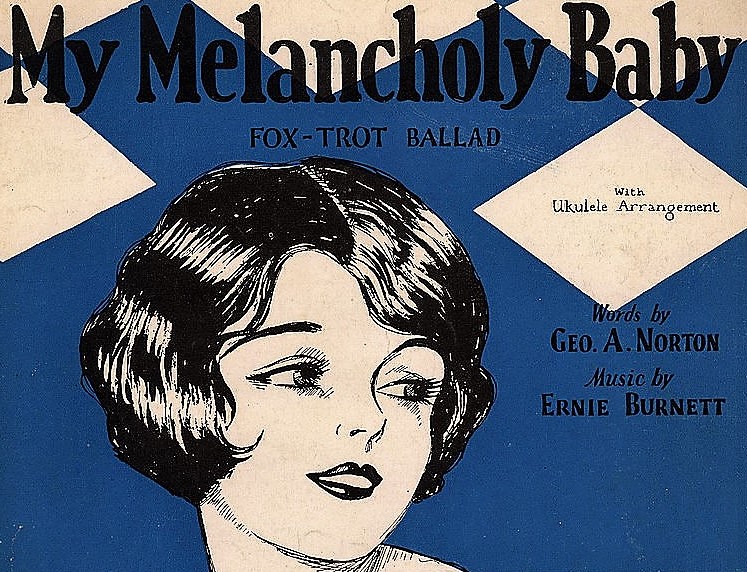
As far as history and culture goes, Dr. Bishop explained the Indian origin of the word “thug” – “deceiver” in Hindi. These were organized crime groups that operated for centuries, from the 1200s well into the 1800s. Some were Muslims and some Hindu followers of the Goddess Kali, a whirlwind deity of chaos, destruction and, oddly, motherhood. Thugs enjoyed infiltrating and waylaying merchants and travelers with stealth and surprise. Dr. Bishop would occasionally sing a little ditty about Kali, based on a song composed in 1912 but sung by many vocalists ever since: “My Melancholy Baby.” A play on words ("My Melon-Kali Baby"), a way to get us to pay attention and to remember. Obviously this method worked, at least for me.
Of the crisis leading up to World War One, Dr. Bishop composed and sang a variation on the “Oscar Meyer Wiener song:”

I wish I were in Bosnia-Herzegovina,
That is where I truly wish to be
‘Cause if I controlled that Bosnia-Herzegovina
Everyone would be in love with me

(Sounds a lot like Vladimir Putin today, eh?)

Later, in her Chinese history class, when she came to the communist revolution, she had us learn all about “Mousey Tongue” – Mao-tse-tung, aka Mao Zedong (1893-1976). Which reminds me that Beijing used to be called, in the West, Peking. 

It’s no surprise in retrospect that Dr. Bishop came to operate a cabaret in Chapel Hill. We drove by there once, but weren’t old enough to be able to get in. The mystery of it remains intact.
II. Another teacher of a different sort (figuratively, not literally a teacher) was Mely. I asked her out. She was a year older than I was, a significant stretch for a teenager who hadn't even had a driver's license for long. It was agreed that I'd pick her up at her house, where she lived with her parents. I had to borrow my parents' Jeep Wagoneer for the outing. It was a rather comical date. 

Mely (Melisandre, an unusual name -- at least before Game of Thrones) lived in Duke Park, which was not very far from where I lived with my family on Gregson Street in Trinity Park, as these "districts" of Durham were called. Duke Park was even called North Durham, but when I look at a map now, they're only about a mile and a half apart. Still, Duke Park felt like an alien place to me, hidden in wooded, hilly terrain and slightly menacing. I didn't know the territory.

When I got to her house, Mely opened the door, but there, too, were her parents. Her father, Ed, had a gruff, scary presence. He was a big deal, a White House correspondent who had covered Nixon, and he'd been a pilot in World War II in the Asia Pacific, surviving terrible things. Luckily Betty, a literary critic and general columnist at the Durham Morning Herald (where Ed also worked), was nicer. Thanks to Ed, though, I was glad to get the hell out of there as fast as I could.

Mely suggested we go to a dive bar downtown off West Main, across Albemarle Street from the Ivy Room and the Cosmo Room. Soon we were chatting it up when an old African American man came by and began singing the Nat King Cole version of "Mona Lisa:"

"So like the lady with the mystic smile . . . 
Many dreams have been brought to your doorstep
They just lie there and they die there . . ."

After this eerie little ditty, he left. The rest of the evening must remain shrouded in quietude, though for no particular reason. Maybe I've been watching too many classic Japanese films lately. 

That dive bar space is still there, but now it's called James Joyce Irish Pub. Passing strange, if you ask me.

Fast-forward eight or nine years. I finished college over in Chapel Hill and worked for a small publishing company that was eventually snapped up by a bigger one. Thanks to this turn of events, I applied for a job as library clerk at Perkins Library in Durham, at Duke University. And surprisingly, I was hired.

The very next person hired in the same capacity as a library clerk, in a different department, in the same library was -- perhaps you guessed it -- Mely. We officially begin working there on the very same day. 

That, my friends, is far more than passing strange. Kismet, synchronicity, what? 

I liked library work so much that I went back to Chapel Hill to get an MSLS, wrapping it up in a couple years with an internship at Duke, where I did preservation work on League of Nations documents that culminated in a display about the Great War and its aftermath. I can thank Dr. Bishop again for the head start on this kind of thing.

I'd worked about three years at Perkins, coming out as a library assistant and then a professional librarian. 

When I headed for London for another library internship and then Philadelphia for another graduate degree (surprise, in history), Mely, who had also been promoted to library assistant, was still at Perkins Library. But, for the final kicker, last I heard from former co-workers was that she also eventually moved out of state and then became a professional librarian herself! 

As Paul Simon put it in a 1986 song, "These are the days of miracle and wonder." They really are, pretty much always. Indeed, as the late great Chuck Berry phrased it back in 1964, "'C'est la vie,' say the old folks, 'it goes to show you never can tell.'"

Today's Rune: Strength. 

Tuesday, April 18, 2017

The Electronic Envelope

In working at a library with people whose ages range across a span of sixty plus years and whose experiences derive from multiple cultural and socio-economic backgrounds and geographical locations, it's clear that we utilize, to varying degrees, layers of technology, some ancient, some new, some borrowed, some blue. Yet we all are, as much or more than anyone in the greater global society, living within the aura of an electronic envelope, as Marshall McLuhan prophetically observed in the 1960s and 1970s. 

It's also clear, from direct observation, that many, perhaps most people, shuffling or stumbling around as they stare into flickering mobile devices virtually everywhere they go and regardless of what else they may be hoping to achieve (indeed, if they are hoping to achieve anything at all), take their present state of consciousness for granted. That is, they are used to it -- rather than fresh to this provisional and incomplete state of their reality, nor are they refreshed by their techno-social links and life-perceptions.


The Electronic Envelope: we are all utilizing some kind of technology, but with different expectations and proficiencies and to wildly and widely varying outlooks.


Some adults still write letters, send cards, email (& doesn't it sound more beautiful in French? Courrier électronique, or courriel?). They make voice phone calls, text. Others just post on social media like Twitter, Facebook, Instagram, &c. Click "Like" buttons and emoji icons to express our feelings or lack thereof. 


Some even speak with other people in a three dimensional sense, though if you go to an American post office, the chances are greater that you'll be speaking with a postal worker than a fellow customer. 

For purchasing stuff, you can go online, or use an app, or use a magic card, or use a mobile device, or draw cash from a so-called Automatic Teller Machine (ATM), or interact with a human teller, or negotiate, bid and barter. And I know about all of the above because I engage in all of the above. How about you? 


Marshall McLuhan pointed out that it's good for one's sanity -- and autonomy as a person and human being -- to remain vividly aware of the electronic envelope that surrounds us. This is partly what he meant with his various quips, such as "The Medium is the Message." This is how we perceive, or filter, or translate, social life itself. Which means there are also other ways, so let's not confine ourselves, or box ourselves in, from other means of perception. Seems like a good idea, eh? Oy!


The Electronic Envelope. Some things are quaint, obsolete, art objects, or no longer even in operation -- if so, just barely. Of the first three categories, consider the typewriter, the vinyl record, the fountain pen. Of the fourth type, consider the 8-track, Beta videotapes, telegrams, facsimiles (fax machines) and beepers.

I recently asked student workers about voice recognition services. They were aware of these and laid out the following. Are you?


Amazon: Alexa (via Echo)
Apple: Siri (via iPhone, iPad, iPod, &c.)
Windows: Cortana
Google: Google assistant / Google Home
The Internet of Things

Different workers have different preferences and some don't use any at all. 

I also asked about dictation (speech recognition) systems: you dictate or speak and your device "types" or keys out the words into a text document that you can then edit and refine. I remember using a Dictaphone system in the 1990s, for a temp job: this involved a tiny cassette recording of a boss's voice, played back with foot pedals while listening with headphones and word processing my interpretation. I also remember trying an early version of Dragon speech recognition software to mixed results. 

Google Docs has a function if you have a microphone built in your device, or attached. Google Cloud Speech API (application program interface)
Dragon -- multiple versions
Voice Finger (is this a good image?)
Tazti 
E-Speak  

Do you work with or have you tried any of the above? Does any of this "spark joy?" (As Marie Kondo aka KonMari might ask).

When I was working with international documents at Duke University's Perkins Library in the Public Documents and Maps Department, there were a variety of machine translation systems coming out. Now, Google Translate is highly useful for basic translation. But these have a long way to go as far as nuance and slang, &c. Hardly the Universal Translator envisioned on the original Star Trek fifty years ago. 

Do you utilize translation systems?  Why or why not?

Any further thoughts about the Electronic Envelope?

Looking Back but also: Onward!

Today's Rune: Harvest. 


Saturday, April 15, 2017

Mystic Chords of Memory: Scholey Pitcher and Yoko Akiba

They never knew each other, but they were connected. Scholey Pitcher was a publisher at Algonquin Books of Chapel Hill; Yoko Akiba was a wizard with maps, a librarian, who worked in the Public Documents and Maps Department at Duke University's Perkins Library. For a few years in my twenties, I worked at both places and came to know them both.

When I knew him, Scholey (whose muted first name was Charles) was often smoking one of his beloved tobacco pipes and talking in a courtly manner. He was from Charleston, South Carolina, had been a stock broker. I remember one of his stories about World War II. He was an R.O.T.C. (Reserve Officer's Training School) cadet at The Citadel in Charleston at the time of Pearl Harbor, just shy of age eighteen. With the US hurled into the war, The Citadel accelerated graduation, turning out second lieutenants for military service. As a neophyte lieutenant, Scholey was quickly trained and sent to the War in the Pacific. He vividly remembered being crammed into an amphibious assault vehicle heading for the shoreline, under fire from Japanese defenders. The images and feelings had stuck with him like it was yesterday. If I remember right (and it's quite possible that I am mis-remembering this detail of his story), Scholey was with a company of Marines and the battle he described was Tarawa, November 1943, when he was just shy of age twenty. 

Not only was Yoko Akiba a master of the maps, she was also edgy and often cracked me up with her quips. Two of her favorites: "Never tell" and "I'm sick of their faces." The first meant she was going to make a pithy or catty observation, which she herself would proceed to repeat along and down the line, selectively. The second statement was usually aimed at any dull-minded or overly bureaucratic person that annoyed her sense of fairness. She was very much about social fairness and had been a socialist in Japan. Yoko was just shy of six years old at the time of Pearl Harbor, and nine and a half years old when the atomic bombs were dropped on Hiroshima and Nagasaki. She remembered them well, and the widespread firebombings beforehand. Late in the war, she and hundreds of thousands of other children were evacuated to the countryside. If I remember right, Akiba was placed in an area near Hiroshima. As a little kid, she had to learn to quickly identify incoming American planes, high-flying bombers and low-flying fighters: B-29s, Wildcats, Hellcats, P-38s, P-51 Mustangs and others as they bombed, strafed, scouted or escorted.  

Scholey Pitcher and Yoko Akiba both experienced the nightmare hell of the War in the Pacific. As adults, both were really cool people who carried a certain sadness with them, masked in part by their playful sense of humor. Scholey died 1998 at the age of seventy-four. Yoko died early in 2004 just shy of age sixty-nine. 

I will always think of Scholey smoking a fine pipe and of Yoko carefully arranging her beautiful maps.  Before she died, Yoko went on to work at the Library of Congress, her field of dreams, which is where she still roams in mine. 

Today's Rune: Wholeness. 

Sunday, April 09, 2017

Mystic Chords of Memory


"The mystic chords of memory, stretching from every battle-field, and patriot grave, to every living heart and hearthstone, all over this broad land, will yet swell the chorus of the Union, when again touched, as surely they will be, by the better angels of our nature." ~ US President Abraham Lincoln, First Inaugural Address, March 4, 1861. Full text here.

Memory, like dreaming, is often highly emotionally charged. There's the Proustian memory trigger -- a deep memory surfaces due to a scent, a sound, a person who resembles someone from the past (or future, if it's a premonition); or the memory reminder, like a photograph, journal entry, memory-laden discussion, written communication or voice mail. Often just a person's name or thinking about a certain time or place will conjure up a memory, or a slew of them. 

Memories often conflict or prove paradoxical. I recently finished Ian Gibson's Federico García Lorca: A Life (New York: Pantheon Books, 1989) and what was made very clear in it is that different people remembered Lorca differently, even from the same event, based partly on how well they knew him, how they felt about him, how much time had elapsed, and what they wanted to remember about him. 

So I thought I'd post a sampling of remembered people, times and places. If the context of a situation is not viscerally recalled, the details seem vaguer. Let's give it a try, shall we?

When I was a teenager, I met Ariana Bracalente at an amusement park in Virginia -- not randomly but through Marc Pinotti, a mutual friend. She was a little older than I was, an exciting development at the time. She was smart, astute and interesting; her mother was a nurse and they were Catholic. We were close for some time, and wrote lots of letters. The last time I saw her was at a football game, also in Virginia, and she was taking pictures with, if I remember correctly, a Nikon with zoom lens. Ah, youth!

In my early twenties, I met a handful of much older German fellows at Normandy, in France. They were celebrating their "alive day." On June 6-7, 1944, then draftees in the Wehrmacht, they rather wisely surrendered to Canadian assault forces as fast as they could and, obviously, survived the war. With some college friends from Chapel Hill, we shared bottles of wine and were all singing by the end of the night. Though we only saw them over a period of two days, they made a lasting impression. Three names stick with me: Willi Wiederstein from near Düsseldorf, Karl and Helmut. Luckily, I'm still excellent friends with one of the American college students who also experienced this exchange firsthand.

When I was living in Philadelphia, while a graduate student at Temple University, I came to know a number of intelligent and fun people from Vietnam, China, India, Germany, Russia, Canada, England, France, Spain, Italy and Thailand, among other places. One of the many, Nga Mai, an edgy (and rather striking in appearance) entrepreneur and restaurateur, hired me occasionally to cover her Diva Café, right across the way from my apartment at 1225 Spruce Street; sometimes we'd play chess and talk about Hannah Arendt or Camille Paglia, who was teaching nearby at the University of the Arts. Nga and her two sisters had come to the USA with their Catholic mother, starting in Omaha, Nebraska; their father remained in Vietnam after the Americans departed. We stayed in touch for a while after I left the city, after she closed Diva and opened up a couple of new places over by Rittenhouse Square. At Diva, she would explain to people how to remember conceptualizing and spelling her first name: "like National Golf Association." (Which in turn reminds me of Stuart Basefsky, a librarian mentor from Duke University, now at Cornell University's School of Industry and Labor Relations, who would say his last name to newcomers and explain, "like Base and Sky with an F in the middle." Like I sometimes say, when people ask, "Erik with a k.")

Also in Philadelphia, I unexpectedly came to know Lu Ping from the People's Republic of China in a history class. She was an English teacher when back in China. Her stories about her father, who was very old by then, and his experiences during the Long March were remarkable. Only later did I realize that her name could be better understood in reverse, as Ping Lu.

When I moved to Detroit, there were additional new waves of people to meet. Like mustard seeds, some took hold and some didn't. I remember early on, upon the first occasion of meeting David J. Thompson, an English instructor then and a wandering poet and photographer now. This is primarily because of the specific context: I was seated at his flimsy card table, slowly sinking into wet clay, enclosed within a Japanese-style courtyard designed in the 1950s by Minoru Yamasaki. Thompson had on the table a 1995 book, which I asked about: Dennis Covington's Salvation on Sand Mountain, a fascinating memoir about snake-handlers and old time religion in the American South. (Side memory: for some reason Thompson hated Abraham Lincoln). The last time I saw him was at Steve's Back Room, a Middle Eastern Restaurant in Saint Clair Shores. By this time, several years after the first introductions, we both were working on laptops at separate tables, and I was moving to Texas; outside, there was snow on the ground.  

Also in metro Detroit, there was another English instructor (among many) on another occasion -- a regular bar night for artists and educators -- that I recall, from a couple years later. In this case, it was the unusual name that stuck: Carroll Louis Goossen, Jr. I wondered why whoever was in charge of given names in the Goossen clan flipped the name from a literary salute to Lewis Carroll, author of Through the Looking Glass, to such an awful appendage? This to me was as strange as the Lu Ping/Ping Lu flip or Johnny Cash's "A Boy Named Sue." Then again, the "real" name of Lewis Carroll was actually Charles Lutwidge Dodgson. 

The last time I saw Cal was probably at Macomb Community College, where for a while I taught Writing, English, Poetry and the (International) Novel as an adjunct -- (I was working full time as a librarian elsewhere). 

For now, I'll end with a relevant snippet about people's names from Lewis Carroll's Through the Looking-Glass, and What Alice Found There (1871), Chapter Six:

'"My name is Alice, but — "
"It's a stupid name enough!" Humpty Dumpty interrupted impatiently. "What does it mean?"
"Must a name mean something?" Alice asked doubtfully.
"Of course it must," Humpty Dumpty said with a short laugh: "my name means the shape I am — and a good handsome shape it is, too. With a name like yours, you might be any shape, almost."' Indeed.

Dear reader, how do you remember people and their names? 

Today's Rune: Strength.

Thursday, April 06, 2017

Instructive Comments from my High School Teachers

These are instructive comments from several of my high school teachers – an annotated sampling. I serendipitously found them while looking for something else in the archives.

Biology: Mrs. Hardaker. “Erik did a very respectable job on his exam. It was a happy note on which to end the year.” A nicely diplomatic turn of phrase. Though Biology was interesting, I hated doing the work.

German: Frau Stern. “He will need to spend more time during the summer in serious study in preparation for German II. Erik seems to recognize and comprehend grammatical concepts, but rarely applies himself.” Guilty as charged. See Biology. I thought it was cool she was from Hungary.

US History: Mr. Shuster. “Erik has perception and insight. It’s his decision to push himself and go the ‘extra mile’ to excel.”  Final report: “He has a keen insight into historical issues, consistently well-prepared and interested.” Nickname: Fast Eddy. He taught like a blunderbuss firing into the woods. 

English: Mrs. Barlow. “He has considerable potential in English studies. His narrative writing, in particular shows creative ability.” I recall reading a lot of Ray Bradbury for extra reading in this class, in addition to 19th century classics.

Geometry: Mrs. Shuster. “Erik has exerted sound effort during class all semester and has performed quite consistently. Quiet in class, he is interested in doing well and has a thoughtful facility for Geometry.” Mrs. Shuster was a very kind person. Just as I had in church as a little kid, I spent a lot of time drawing pictures and zoning out.

Film: Mr. Solie. “I had the feeling that much of what Erik turned in was done on the run [correct]. Shining through, though, was a good deal of natural ability.” This guy was a real character.

Speech: Mr. Singdahlsen. “I have appreciated getting to know Erik, and I am pleased with most of his work. He has given some very good presentations and benefited from work in an area that probably is not high on his ‘druthers’ list.”  Here he was not quite right: I found the class fascinating, especially exercises in which we had to expound on a topic with little time for preparation. This learned skill has come in handy over the years. Mr. Sing was fussy. He reminded me of Richard Dreyfus. 

American Legal System: Mr. Shuster. “Erik showed great industry and interest throughout the course. I was impressed by his keen insight into contemporary legal issues. I deeply appreciate his active interest in class.” This course provided a basis for continuing interest in, and understanding of, the complexities of legal issues and the great fights over public policy -- like today.

Southern Writers: Mrs. Vick (from Mississippi, with accent). “Erik has met the challenge of the course, and I am proud of him. He is well prepared in English.” Mrs. Vick was quite eccentric. More to write about her at some point.

Pre-Calculus: Mrs. Pritchett. Sad to say, of all the teachers listed here, I remember absolutely nothing about her (not even what she looked like) or the class, except for zoning out and, no doubt, drawing. “Erik has the ability to do much better in mathematics if he would consistently work. He understands mathematical concepts rather easily” but also lets them go rather more easily. 

American Studies: Mr. Conrad. “Erik at times contributed much to the class, at other times sat back and did very little. Erik is a potentially excellent student in history. His background is most impressive and he understands the processes in historiography. He will have no trouble in doing very well.” Usually when I was sitting back and doing very little, I was doing my own writing, &c., and still tuned in.  

Economics: Mrs. Wallace (also football coach). “Erik maintained an active level of interest in the course content throughout the semester. His written work tends to be correct in observations. Erik should be commended for awareness of issues and [extra] reading to expand on course content.” A dry subject, still useful, though.

Art: Ms. Singdahlsen. “Erik worked hard in an art class full of girls! They must have inspired him.”  Haha.

I thank all my high school teachers, even the mean ones. It's noble but grinding work. Most were actually pretty cool. They were also mostly on target. Do any of your high school teachers come to mind?