Showing posts with label Detroit. Show all posts

Tuesday, April 11, 2017

Jim Jarmusch: 'Gimme Danger' (2016)

I remember being at a mid-1990s house party for teachers and artists in Newport News, Virginia. It was during my first full-time gig as a librarian and I was serving informally as dj. With the idea of livening things up a little, I put on a vinyl copy of The Stooges’ Funhouse and cued up “Loose” and “TV Eye,” turning up the volume.

In the middle of this grand sonic gesture, a history instructor -- who was deaf in one ear -- turned his working ear into the nearest blasting speaker. Within the first minute, he was jumping back with amazement: “Oh my God! That’s the greatest thing I EVER heard in my WHOLE LIFE!!!!!” He was floored.

Though not everyone would have agreed at the time, this was a perfect response. 

And now, after the induction of The Stooges into the Rock & Roll Hall of Fame in 2010, after the deaths of several of the members of the band, out comes Gimme Danger (2016), “a film by Jim Jarmusch,” “story of the stooges,” Gimme Danger: La historia de The Stooges, Gimme Danger. История Игги и The Stooges, a highly entertaining documentary featuring Iggy Pop, the various (then-)surviving band members, and Michigan.

Some notes are in order. “There goes Iggy into the crowd.” 

Outside of Ann Arbor, he was living in a trailer with his parents (his father was a high school English teacher).

With parental support, he practiced on his drum kit for hours on end. “I was so lucky to live close to my parents.”

He picked up performance ideas from The Howdy Doody Show, Clarabell the Clown (played at one time by Captain Kangaroo), and Soupy Sales (who often had highly influential musicians perform live – including Billie Holiday and Miles Davis).

Soupy would invite fans to write letters, but asked that they keep them to twenty-five words or less each. This impressed Iggy (“real” name Jim Osterberg, Jr. -- born April 21, 1947). When he wrote or co-wrote Stooges songs, he kept them to twenty-five words or less. “I didn’t feel I was Bob Dylan.”

He was also impressed by the industrial sounds at Ford’s River Rouge plant, which he first visited on a school field trip. “I liked the mega-clang.” 
Iggy played drums and did various things, worked in a record store, attended the University of Michigan for a semester. Headed to Chicago for additional hands-on learning in the mid-1960s. “I saw a glimpse of a deeper life,” he notes on film, but also: “I realized I was not black.”

Back in Michigan, Iggy taught Scott Asheton how to pound out the drums. Some of the band members were sons of World War II vets and had that in common. The Asheton brothers took off for an adventure in London and immersed themselves into the Marquee Club until they ran out of money.

After the 1967 riots in Detroit, Iggy decided to move into the city. “I’m going to prepare a house where we can live” as “true communists.” He had very little idea of what he was doing, but somehow it worked (eventually). In Detroit, they gestated.

“Michigan was a key crossroads between San Francisco and New York.” The members of the band tried various altered states and listened to Harry Partch records that highlighted the sounds and noises of various handmade, found or modified instruments.

They became The Psychedelic Stooges, had a gig at the Grand Ballroom featuring Iggy playing a vacuum cleaner. They exhibited the energy and antics of “chimps and baboons.”

Iggy: “In the Asheton brothers I found primitive man.”
The MC5, Fred Sonic Smith and all, took them in. “We joined their circus in many ways.”

Iggy preferred not to become overtly political in the way John Sinclair wanted. He did somersaults and wiggled around as a protest.

The MC5 said to Elektra Records scouts, “Check out our little brother band.” Danny Fields loved them, first hearing their mesmerizing sounds coming from the University of Michigan Student Union. Both bands signed with Elktra on September 22, 1968. The Psychedelic Stooges became “The Stooges plain and simple.”

The droning simplicity of The Velvet Underground thrilled Iggy. John Cale came to help them record their first album, followed by Nico: “Morticia and Gomez.” 

Jac Holzman (who also worked with The Doors) was there and helped make it happen. There weren’t enough songs for an album to begin with, so Iggy and the rest of the band went to the Hotel Chelsea and hurriedly came up with additional songs – twenty-five worlds or less.

Skipping forward a little, The Stooges are sent to Los Angeles to record 1970. Iggy, being interviewed, notes that much of the “California sound” that came out in the 1970s was manufactured under the guidance of record executives. “It still smells,” he notes, true to his Michigan-style phrasing. “Cultural treason” is what it was.

For 1970, Iggy brings in Steve Mackay to lay down some saxophone. He had in mind Miles Davis and James Brown. “Play like Maceo Parker on acid!” Big aural space is there.

Iggy walks by a pet store and notices a beautiful dog collar. He buys it and adds it to his persona.

The Stooges play the Whiskey a Go Go and blow the mellow minds of Californians. “Theatre of the moment.” The band plays deadpan and still in Bill Wyman style while Iggy prances around, dives into the crowd and acts like James Brown and Mick Jagger on speed. Inspired by the Egyptian pharaohs, he performs shirtless.

I could go on, but why?  You can dig it for yourself! Gimme Danger. Raw Power. 

“All we cared about was what we liked!” 

Iggy gets the final say: “I just wanna be.” Amen, brother.

Today's Rune: Wholeness. 


Sunday, April 09, 2017

Mystic Chords of Memory


"The mystic chords of memory, stretching from every battle-field, and patriot grave, to every living heart and hearthstone, all over this broad land, will yet swell the chorus of the Union, when again touched, as surely they will be, by the better angels of our nature." ~ US President Abraham Lincoln, First Inaugural Address, March 4, 1861. Full text here.

Memory, like dreaming, is often highly emotionally charged. There's the Proustian memory trigger -- a deep memory surfaces due to a scent, a sound, a person who resembles someone from the past (or future, if it's a premonition); or the memory reminder, like a photograph, journal entry, memory-laden discussion, written communication or voice mail. Often just a person's name or thinking about a certain time or place will conjure up a memory, or a slew of them. 

Memories often conflict or prove paradoxical. I recently finished Ian Gibson's Federico García Lorca: A Life (New York: Pantheon Books, 1989) and what was made very clear in it is that different people remembered Lorca differently, even from the same event, based partly on how well they knew him, how they felt about him, how much time had elapsed, and what they wanted to remember about him. 

So I thought I'd post a sampling of remembered people, times and places. If the context of a situation is not viscerally recalled, the details seem vaguer. Let's give it a try, shall we?

When I was a teenager, I met Ariana Bracalente at an amusement park in Virginia -- not randomly but through Marc Pinotti, a mutual friend. She was a little older than I was, an exciting development at the time. She was smart, astute and interesting; her mother was a nurse and they were Catholic. We were close for some time, and wrote lots of letters. The last time I saw her was at a football game, also in Virginia, and she was taking pictures with, if I remember correctly, a Nikon with zoom lens. Ah, youth!

In my early twenties, I met a handful of much older German fellows at Normandy, in France. They were celebrating their "alive day." On June 6-7, 1944, then draftees in the Wehrmacht, they rather wisely surrendered to Canadian assault forces as fast as they could and, obviously, survived the war. With some college friends from Chapel Hill, we shared bottles of wine and were all singing by the end of the night. Though we only saw them over a period of two days, they made a lasting impression. Three names stick with me: Willi Wiederstein from near Düsseldorf, Karl and Helmut. Luckily, I'm still excellent friends with one of the American college students who also experienced this exchange firsthand.

When I was living in Philadelphia, while a graduate student at Temple University, I came to know a number of intelligent and fun people from Vietnam, China, India, Germany, Russia, Canada, England, France, Spain, Italy and Thailand, among other places. One of the many, Nga Mai, an edgy (and rather striking in appearance) entrepreneur and restaurateur, hired me occasionally to cover her Diva Café, right across the way from my apartment at 1225 Spruce Street; sometimes we'd play chess and talk about Hannah Arendt or Camille Paglia, who was teaching nearby at the University of the Arts. Nga and her two sisters had come to the USA with their Catholic mother, starting in Omaha, Nebraska; their father remained in Vietnam after the Americans departed. We stayed in touch for a while after I left the city, after she closed Diva and opened up a couple of new places over by Rittenhouse Square. At Diva, she would explain to people how to remember conceptualizing and spelling her first name: "like National Golf Association." (Which in turn reminds me of Stuart Basefsky, a librarian mentor from Duke University, now at Cornell University's School of Industry and Labor Relations, who would say his last name to newcomers and explain, "like Base and Sky with an F in the middle." Like I sometimes say, when people ask, "Erik with a k.")

Also in Philadelphia, I unexpectedly came to know Lu Ping from the People's Republic of China in a history class. She was an English teacher when back in China. Her stories about her father, who was very old by then, and his experiences during the Long March were remarkable. Only later did I realize that her name could be better understood in reverse, as Ping Lu.

When I moved to Detroit, there were additional new waves of people to meet. Like mustard seeds, some took hold and some didn't. I remember early on, upon the first occasion of meeting David J. Thompson, an English instructor then and a wandering poet and photographer now. This is primarily because of the specific context: I was seated at his flimsy card table, slowly sinking into wet clay, enclosed within a Japanese-style courtyard designed in the 1950s by Minoru Yamasaki. Thompson had on the table a 1995 book, which I asked about: Dennis Covington's Salvation on Sand Mountain, a fascinating memoir about snake-handlers and old time religion in the American South. (Side memory: for some reason Thompson hated Abraham Lincoln). The last time I saw him was at Steve's Back Room, a Middle Eastern Restaurant in Saint Clair Shores. By this time, several years after the first introductions, we both were working on laptops at separate tables, and I was moving to Texas; outside, there was snow on the ground.  

Also in metro Detroit, there was another English instructor (among many) on another occasion -- a regular bar night for artists and educators -- that I recall, from a couple years later. In this case, it was the unusual name that stuck: Carroll Louis Goossen, Jr. I wondered why whoever was in charge of given names in the Goossen clan flipped the name from a literary salute to Lewis Carroll, author of Through the Looking Glass, to such an awful appendage? This to me was as strange as the Lu Ping/Ping Lu flip or Johnny Cash's "A Boy Named Sue." Then again, the "real" name of Lewis Carroll was actually Charles Lutwidge Dodgson. 

The last time I saw Cal was probably at Macomb Community College, where for a while I taught Writing, English, Poetry and the (International) Novel as an adjunct -- (I was working full time as a librarian elsewhere). 

For now, I'll end with a relevant snippet about people's names from Lewis Carroll's Through the Looking-Glass, and What Alice Found There (1871), Chapter Six:

'"My name is Alice, but — "
"It's a stupid name enough!" Humpty Dumpty interrupted impatiently. "What does it mean?"
"Must a name mean something?" Alice asked doubtfully.
"Of course it must," Humpty Dumpty said with a short laugh: "my name means the shape I am — and a good handsome shape it is, too. With a name like yours, you might be any shape, almost."' Indeed.

Dear reader, how do you remember people and their names? 

Today's Rune: Strength.

Tuesday, February 28, 2017

Café retrouvé: Patti Smith's 'M Train' (2015)

Patti Smith, M Train. New York: Alfred A. Knopf, 2015.
A writer's life: Patti Smith's 
Peregrine
Pilgrimage 
Coffee
Dreams
Memory
Air 
Movement 
Stillness
Ink
Rain
Artifact
Time Regained/Le Temps retrouvé

El café veracruzano fue pionero para tener una denominación de origen en México

Inamorato, mother, son. "I made my coffee in her pot and sat and wrote at a card table in the kitchen by the screen door. A photograph of Albert Camus hung next to the light switch . . . My son, seeing him every day, got the idea that Camus was an uncle who lived far away . . . "(pages [71-72]). 

A quarter-mile from the canal house, coffee at the 7-11. The one at 25000 Jefferson Avenue, or the one at 23019 near the Kroger at Nine Mile, both in St. Clair Shores, Michigan? 

Confusingly, Patti Smith mentions the St. Clair River, but I think of it more as Lake St. Clair.  

I remember early morning runs, when it was cold outside, to pick up coffee at both of these 7-11 stores. And, when it was warmer out, an abandoned fish-and-tackle shop just off Jefferson.

"To me it looked like Tangier, though I had never been there. I sat on the ground in the corner surrounded by low white walls, shelving real time, free to rove the smooth bridge connecting past and present. My Morocco. I followed whatever train I wanted" (page [72]).

I remember all the people I met or knew around there. And social spaces. Steve's Back Room. Fishbones. Golden Chopsticks. Andiamo's. Pat O'Brien's. The public library and to the north, the Blue Goose. To the west, Shores Inn. Cedar Garden. The US Post Office. Hallmark's. El Charro. Grecian Table. The Bowling Alley and Linda's attached. Tim Horton. A connection with Van Morrison's father. Ice on the lake.

Snap! Ding the bell. You don't need to go home, but you can't stay here forever. 

My favorite coffee for some time, Peet's out of San Francisco, celebrates fifty years, or fifty-one this year, of making coffee. There's something about their blend and roasting process that makes me love the taste of their French, House and Major Dickason's Blend in particular.  

The best single coffee I ever tasted was in Italy -- espresso. The worst and weakest, in Pan Handle Texas and in Oklahoma. 

When I was growing up, my parents made coffee often, let's not forget.  On special occasions, a big percolator was set up to keep it flowing. 

Haven't missed a cup of coffee for more than a day since I was seventeen. Something to look forward to every morning, sort of like a little daily miracle of life, resumed. 

Today's Rune: Defense. Veracruz coffee: see El Universal Veracruz (9/9/2011), link here.

Friday, October 21, 2016

Interview with Jodi Dale, Co-Author of 'Love is the Drug: A Mother and Son Memoir' (2016)

Jodi Dale & Dane Jacobs, Love is the Drug: A Mother and Son Memoir (2016). The softcover verison, which costs $19.99, with free shipping, can be ordered at jodidale69@gmail.com. An electronic version can be purchased at createspace.com. A Kindle edition is available at Amazon.com.

Absolutely riveting book -- wonderful, very frank and absorbing. What follows is an interview on the subject with Jodi Dale.

Q: Can you tell us about the book?

A: Love is the Drug: A Mother and Son Memoir is an account of my son's spiral into depression and then the drug use that eventually took his life. We began the story as a joint effort before he passed but only got four chapters done together. At the advice of my therapist, I finished the book two years after his death. It has proved to be both cathartic and healing for me as well as a way to honor my son.

Q. Has the writing of this book, and interacting with people about it, changed your outlook? 

A: The writing of this book has been such a positive experience for me. Remembering my son and all the love we shared is now captured in a story as well as my heart. 

Since publishing the book, I have done two television interviews, two radio interviews, and have spoken at numerous events and rehabs. People have been extremely receptive to hearing and learning about addiction -- which has turned into a national epidemic -- as well as the frustration of dealing with the mental health treatment options. 

I have found great comfort speaking with addicts as well as their families. The statement that "everybody knows somebody" has proved to be true over and over. There is strength and comfort in numbers. 

I have since been appointed to the board of advisors of Families Against Narcotics, an organization committed to raising awareness for this epidemic. There is much satisfaction in carrying out our original message of helping just one person in their struggle.

Q. What next?

A: I have no other future plans than to keep up with my book readings and stay in contact with the friends I've made. My story seems to be like a pebble that was dropped into a calm pond and the ripples it has spread are keeping me very busy. I will honor and love my son's memory forever -- that's now my job!

See also: Jameson Cook, "Late son helps mother describe lost battle with addiction," Macomb Daily News (May 31, 2016) here.

Today's Rune: Gateway. 

Friday, January 15, 2016

Vladimir Mayakovsky: 'My Discovery of America' (1926)

In the words of Mickey Newberry, "I just dropped in to see what condition my condition was in" (1967): a periodic delving into times gone by. Drop in anywhere and look around: what's different? What's the same? 

For today's time travel experience, let's consider Vladimir Mayakovsky's My Discovery of America, first published in Russian in 1926 (English translation by Neil Cornwell, 2005). Mayakovsky (1893-1930) was a lively Soviet Futurist poet at the time of his 1925 shoestring excursion to Cuba, Mexico and the United States. He traveled mostly by ship and rail (whereas today, one would more likely make the same journey by jet and car). Being a Futurist, he was particularly observant about technology, its impact and possibility. Being a Soviet, he was attuned to class warfare, conditions, and attitudes. A few snippets will give some of his flavor.

He notes of the three classes of passengers aboard the steamship Espagne: "The first class puke up wherever they like; the second -- down on the third class; and the third -- over themselves" (page 6). A vestige of this sentiment can be found  today aboard airplanes, usually divided among but two classes of passengers.

In wandering around the US from poetry reading to poetry reading, Mayakkovsky in 1925 picks up on a segment of American rhetoric that he finds humorous: "There isn't a country that spits out as much moralistic, lofty, idealistic, sanctimonious rubbish as the United States does" (page 68). Comments made by Ted Cruz last night -- in 2016 -- remind us that such hayseed rhetoric still persists.

He sees Havana, Mexico City, parts of Texas, Detroit, St. Louis and Chicago, but his descriptions of Manhattan are the most detailed. This part still rings true, beyond Mayakovsky's astonishment of the widespread use of electric traffic lights (a new development for most of the world in 1925):

During the afternoon work commute in Manhattan, "you can see thousands of cars, racing in six or eight lanes in either direction . . . Every two minutes, the green signal lights up on the traffic lights, so as to let through those tearing out from the side streets . . . Fifty minutes is needed at this time of day for a journey that in the morning would take a quarter of an hour, and pedestrians have to stand and wait . . . deprived of any hope of immediate crossing . . . (page 51). 

There's much more, but there's a taste of it. Traffic hasn't changed a mite in the way it manifests, ninety years later. Mayakovsky is dead, however (suicide at age 36); the Soviet Union came and went. Now we have Putin's Russia, Obama's USA and the internet. Lose some, win some. The human condition remains about the same, I suppose, only with a lot more people scampering around, some livelier than others.   

Today's Rune: Signals. 

Monday, January 11, 2016

David Bowie, Where Art Thou?


David Bowie, Where Art Thou? [Originally posted in 2006 -- ten years ago!]

David Bowie (1/8/1947-) is one cool dude. I've been lucky enough to have seen him in various venues over the years, but the last time was by far the best -- at the relatively small Detroit State Theater on September 21, 1997. He was in perfect pitch and riding the catchy Earthling album with its techno overtones ("I'm Afraid of Americans" is hilariously cool). He spryly moved around the stage, sometimes barefoot, seeming both very earthly and very much a Cosmonaut at the same time.

What's especially heartening about Bowie is that, yes, he can do the "I'm a millionaire pop star" thing as well as anyone, but he's chosen -- much like Prince -- to stick to his own guns over the long march. He remains true to form, and very much in touch with technology and its cross-genre artistic possibilities. I adore his music and like many of his movie appearances (must see again The Man Who Fell to Earth for one trippy example, an ultimately sad 1976 tale of a fallen alien stuck on Earth while his home planet slowly dies), but have my favorites.

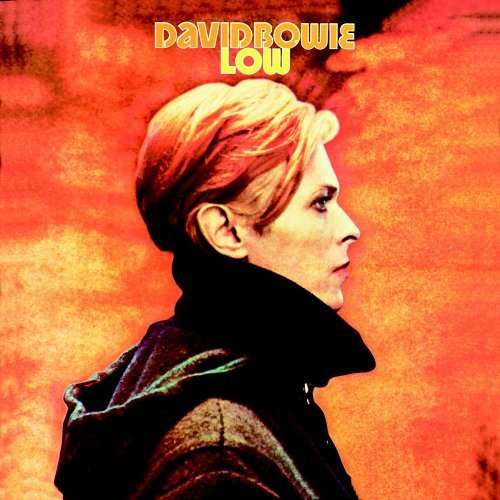
It's hard to beat the dazzling concept album, The Rise and Fall of Ziggy Stardust and the Spiders from Mars (1972), which was so at odds with the waning hippy ideals of the time, so perfectly attuned to undercurrents of global social changes and the explosion of punk and New Wave on the horizon. Then there's the electric shocker Aladdin Sane (1973), featuring "Panic in Detroit" and a sonic romp through the Rolling Stones' "Let's Spend the Night Together," among other treats. Ramble on through the eerie Diamond Dogs (1974) to the groovy plastic pop of Young Americans (1975), the lyrical and occasionally overarching Station to Station (1976), and the revolutionary "Berlin trilogy," Low (1977), "Heroes" (1977), and Lodger (1979). Bowie had already done some fine work with Lou Reed and Iggy Pop to everyone's benefit, as well. Next, there's another wild and sometimes campy romp via Scary Monsters (and Super Creeps), followed by another bid for mainstream pop stardom in Let's Dance (1983). Throw in always entertaining and sometimes bizarre videos, and presto, this period would have been enough successful output for any "normal" artist's entire career.

Bowie continued, though he slowed down the pace a bit. Here's where he and Prince again moved on parallel lines, though Bowie never took the drastic step of calling himself "The Artist Formerly Known as David Bowie."

During his Reality Tour in 2004, he suffered chest pains and underwent a sudden angioplasty, and has been understandably taking it relatively easy since then. Based in New York City, he continues working; his recent comings and goings can be found on his buzzing website, complete with alien-tinged motifs, at: www.davidbowie.com Check out the BowieNet for a little adventure in cyberworld.

Viva David Bowie! May the man who shares Elvis' birthday rise again.  

[RIP David Bowie, 1947-2016]

Sunday, January 03, 2016

Once in a Great City: A Detroit Story (2015)

David Maraniss, Once in a Great City: A Detroit Story (Simon & Schuster, 2015). Highly readable book focusing on Detroit as microcosm from 1962 to 1964. Interesting angles include Detroit's enthusiastic bid for the 1968 Summer Olympics, development of the Ford Mustang and Detroit's role at the 1964-1965 New York World's Fair. Plenty of thought and space is devoted to race relations, economics, civil rights, music, architecture and dreams of a more holistic society.  
On May 1, 1992, Rodney King (1965-2012) asked during the '92 LA Riots, "Can we all get along? Can we get along? Can we stop making it, making it horrible for the older people and the kids?" Short answer then, before and since: "No." Easier to factionalize and fight or take flight than to harmonize and build cooperatively and peacefully. The dream lives on, though. At the bottom of Pandora's jar one thing remains: hope. 

Once in a Great City: A Detroit Story (2015) includes lots of big personalities, diverse people ranging from JFK to MLK, LBJ to Malcolm X, Lee Iacocca to the Fords, Walter Reuther and the Gordy family, C.L. and Aretha Franklin, Little Stevie Wonder, Jaramogi Abebe Agyeman, Jerry Cavanaugh, George Romney, Alex Karras, and so on.

Above all that is now lost, I would have loved to have experienced the Flame Show Bar -- but there is still Baker's Keyboard Lounge, thank God. 

Today's Rune: Warrior. 

Thursday, December 31, 2015

The Week of Three Thursdays


I came across several Ford dealer booklets today, and hereby present two scanned covers from the bunch. Here: Ford Falcon '61: "The World's Most Successful New Car" (complete with racing Snoopy). Robert Strange McNamara (1916-2009), whose heavy hand would shortly be felt in Vietnam, had his fingers on the Falcon first. Some elements of the Falcon went into the Mustang, which hit the big time in 1964. 
The Falcon helped Ford recover from the disaster that was the Edsel. Here: "1960 EDSEL: new ~ nifty ~ thrifty." Fewer than 3,000 of the 1960 model were actually rolled off the assembly line.

Farewell, 2015!

Today's Rune: Breakthrough. 

Tuesday, September 29, 2015

Chimes at Midnight: Kraftwerk Late Show, Austin, Texas

It was weird listening this very morning to outdoor wind chimes dingling and tintinnabuluming as a result of a light air-breeze, sounding alternately like a bit of music echoing off a Jean Michel Jarre theme (Ryan's Daughter) or various phantom samples from a Kraftwerk track ("Computer Love," "Spacelab," etcetera).  

Indeed, life and art are often working together, hand in hand, through each other, in time, beyond space and by way of tingling memory responses triggered by music or comparable stimuli . . . 
I can write quite a lot about Kraftwerk's evening performance at Bass Concert Hall in Austin, Texas, this past Friday (September 25, 2015 A. D.), but it mostly comes down to transcending time -- funneling time and feeling and memory -- regaining two other Kraftwerk performances -- Brixton 1991 and Detroit 1998 -- heightened consciousness of our (via Marshall McLuhan) "electronic envelope," keen awareness of "the extensions of man" or humanness, our evolving nature as man-machine, human-machine -- total immersion, total realization . . . total immersion through pure art. 

I can now refer you to an excellent review of the daytime show by Wes Eichenwald here. He gets at the gist of things, giving me no reason to try to reinvent the electronic wheel for this particular post. 
Kraftwerk's music in Austin, with dazzling "retro future" interaction that included multi-lingual text (German, English, Russian, French, Spanish, Japanese . . .), numbers and Gestaltic iconography, was played more or less in this order:

 "Numbers;" "Computer World;" "Home Computer" and "It's More Fun to Compute;" "Computer Love;" "Pocket Calculator;" "The Man Machine;" "Spacelab;" "The Model;" "Neon Lights;" "Autobahn;" "Airwaves" . . . "Geiger Counter + Radioactivity;" "Ohm Sweet Ohm;" "Electric Café;" "Tour de France;" "Trans Europe Express" . . . (first encore) "The Robots;" (second encore) "Aerodynamik;" "Boom Boom Tschak" + "Techno Pop" + "Musique Non Stop" plus individual bows and a dandy Auf Wiedersehen.  

Today's Rune: The Mystery Rune. 

Monday, September 28, 2015

Kraftwerk 2015: Austin. Meine erste Reaktion.

Road trip to Austin, Texas to catch the Kraftwerk 3-D concert on Friday, September 25, 2015, at the Bass Concert Hall off 23rd Street, 10:30 p.m. until well past midnight.

Brilliant, wonderful show and I wish I could see them again in Detroit or Philadelphia! 

Kraftwerk comes from the Mount Olympus of electronic music. One must pull out all the stops to see them. Orphic electronica!

Kraftwerk's remaining venues in the USA for this year are all coming up in October:

October 2nd: Philadelphia
October 3rd: Boston
October 5th: Detroit
Then Minneapolis and Kansas City.

In November, Kraftwerk is off to France, Monaco, and other European hot spots. Pictured above is a scanned copy of a packet for 3D glasses given out at the Austin late show. 

More on Kraftwerk coming down the tracks.

Today's Rune: Breakthrough. 

Tuesday, September 15, 2015

From Moscow to Detroit and Back Again: Gabe Polsky's 'Red Army' (2014)

Red Army, Gabe Poslky's 2104 documentary, hands us a heady cocktail of strong hockey suffused with bittersweet history. Man, it's chock full of pizzaz and a lot of RED. 

(Note: the great German director Werner Herzog is listed as one of the producers.) 

From this action-packed yet thoughtful film, viewers will catch a pretty good glimpse at the arc of international sports (specifically ice hockey) and dueling propaganda machines within the context of the Cold War, ranging from the 1950s to the end of the Soviet Union -- and then spilling into the 21st century. There are dramatic twists and turns, especially toward the end. Believe me, это дикая поездка.  
Red Army features two of the elite Red Army hockey team's biggest coaches, Anatoli Tarasov (1918-1995) and Viktor Tikhonov (1930-2014).  The latter comes off as a ruthless bastard, with Tarasov as the more favorably critiqued. The cagey Tarasov is shown combining disciplines, studying hockey tactics, chess strategy, the Bolshoi Ballet's precision and the energy of boogie woogie. Brilliant.   
The Red Army dudes end up playing in the NHL for a while, and five of the top guys help the Detroit Red Wings seize the Stanley cup in the late 1990s, which is when I move to Detroit and get to see them play. 

What goes around comes around -- but I won't give away the ending here or now. Who knows? Just maybe you might check it out.

Today's Rune: Breakthrough.  

Monday, September 07, 2015

Diego Rivera and Frida Kahlo in Detroit

Diego Rivera and Frida Kahlo in Detroit (Detroit Institute of Arts, 2015) is packed with good stuff. I love it! The Detroit Industry murals, check, along with other Detroit works by both artists, plus from during their San Francisco stay -- (their place of work there was located at 716 Montgomery Street); New York City; and, first and last, Mexico. Their Detroit stay ran from April 1932 to March 1933, though in September of 1932, Frida hurried off to Coyoacán, Mexico, to be with her dying mother; she returned late in October. While in Detroit, Diego focused on his large-scale murals; Frida completed several important smaller-scale works of her own.   
One of the stellar works created by Frida Kahlo while in Detroit in 1932 is shown here: Autorretrato en la frontera entre México y los Estados Unidos / Self-Portrait on the Border of Mexico and The United States. Between pages 93 and 96 of Diego Rivera and Frida Kahlo in Detroit, there is an almost full-size repro (the actual dimensions are given as 12.5" x 13.75" / 31.8 x 34.9  cm.). 
 
Also included in Diego Rivera and Frida Kahlo are several telegrams and letters from the period. One from Frida to Guillermo Kahlo, her father (who was German-born) in Mexico, is dated November 21, 1930, when she was living in San Francisco. In it she describes how happy she is to have received a letter from him. "The only thing I didn't like is that you told me that you're just as quick-tempered as always, but since I'm the same way, I understand you very well and I know that it's very hard to control yourself; anyway, try your best at least for mama, who is so good to you . . ."  (page 124). What a character. And what a treasure, their art, for Mexico, Detroit, San Francisco and the world. 

Happy Labor Day in the USA! 

Today's Rune: Breakthrough. 

Wednesday, May 20, 2015

Albert King: "A Big Legged Woman Gonna Carry Me to My Grave"

Albert King (1923-1992), like Wilson Pickett, hit the big time with Stax Records in Memphis. Both musicians, backed by Booker T. & The MG's, took off in the mid-1960s -- Pickett with "In the Midnight Hour" in 1965, King in 1966 with "Laundromat Blues." King's knockout signature song came in 1967 with "Born Under a Bad Sign:"

"If it wasn't for bad luck, I wouldn't have no luck at all."
King was a big guy and a biting, singing guitar player -- like the just passed B. B. King (1925-2015). 

From this 1999 Rhino Records anthology -- The Very Best of Albert King (Blues Masters series), I particularly like:

"Born Under a Bad Sign"
"Cold Feet"
and "Cadillac Assembly Line" 

Thank you, Albert King (and B.B. King, while giving thanks), thanks also to Rhino Records for this anthology. And now, adieu, adieu -- this CD now off to someone new.

Today's Rune: The Mystery Rune. 

Thursday, May 14, 2015

Wilson Pickett: "In the Midnight Hour"

The KonMari method of "tidying" frees up shelf space. Too, it inspires joyful reunions with half-forgotten CDs like this Wilson Pickett (1941-2006) anthology.  

The dapper, raspy-voiced Pickett came into his own with the release of "In the Midnight Hour." This track "entered the R & B chart on May 26, 1965, at number thirty-five," then "climbed to number one and spent nearly three months on the chart. . ." - Robert Gordon, Respect Yourself: Stax Records and the Soul Explosion (New York: Bloomsbury, 2013), page 107. That was all it took to hit the big time.
Coming to Memphis for the "In the Midnight Hour" recording session, Alabama-born Detroiter Wilson Pickett stayed at the Lorraine Hotel (pictured above in a 2014 photo). Here he and guitarist Steve Cropper of Booker T. & the MG's put together the basics for "In the Midnight Hour." The rest was worked out in the Stax studio.

"'[T]hey built the record organically -- not deductively. I'd see the MG's come to work in the morning, hang up their coats, gather up their axes, and start playing music. Maybe it was some chord changes, maybe it was a lick, maybe it was a song, but they started playing, they started building it. I said, My God, this is fantastic'" - Jerry Wexler, quoted in  Robert Gordon, Respect Yourself: Stax Records and the Soul Explosion (New York: Bloomsbury, 2013), page 107.

In this 1993 Wilson Pickett CD anthology, several strong tracks follow the big opener. I particularly like "634-5789 (Soulsville, U.S.A.)," "Land of 1000 Dances," "Mustang Sally," "Funky Broadway" and "She's Lookin' Good."


All right, look a-here! 
When you wear your wigs, baby, you wear your dresses tight 
You wear your 44, baby, when you step out late at night 
You're lookin' good . . .

Now that I've listened to this fun CD a few more times, pondered its contents, written about it and expressed gratitude  -- I can give it away. Yes!

Today's Rune: Wholeness. 

Wednesday, January 28, 2015

Bill Morris: Motor City Burning (2014)

Bill Morris' Motor City Burning, a 320-page novel, (2014) immerses readers in the taut milieu of 1968 Detroit. Chronologically, it generally follows the contours of the Detroit Tigers' season from opening day -- delayed because of the assassination of Martin Luther King, Jr., in Memphis -- to the Tigers' final victory in the World's Series against the St. Louis Cardinals. If one looks at a 1968 calendar, that covers from April to October. The baseball season is part of the novel's structural backdrop; the effects of the Detroit Riot during the "Summer of Love" (1967) are also prominent in the unfolding of its noirish plot. Morris focuses on two dudes -- Frank Doyle, a Detroit detective, and Willie Bledsoe, a disillusioned civil rights activist from Alabama. Willie and his brother, a veteran sniper back from the US-Vietnam War (evidently suffering from PTSD), were in Detroit together during the '67 riot; they are somehow both connected to an unsolved homicide. Much drama ensues.

Interesting details peppered throughout the novel are worth the whole shebang. Along the way, one catches the '68 Detroit vibe, race-tinged interactions, class differences and structural changes in the city and suburbs. And then there's the just cracking gender code in the age of Mad Men. 

The only hokey thing about Motor City Burning: the two main female characters, one involved with detective Doyle and the other with Bledsoe. They are fantasy figures, the kind you might expect in a James Bond tale -- only not as lethal. There's a third woman who is a spitting image of Mrs. Robinson, which may be an inside joke since The Graduate was playing in American theaters in 1968. 

Motor City Burning is much better at showing male interactions within the Detroit police department and among people facing them on home turf and in business establishments (including blind pigs and other underground facilities). The "big four" police attack squads are something right out of the harrowing FX crime series, The Shield; their activities and other dodgy practices and belief systems go a long way in shedding light on racial and class tensions in Detroit and elsewhere in the USA, then and now. 

Today's Rune: Strength.