Showing posts with label Lives of the Saints. Show all posts

Wednesday, November 16, 2016

'Thérèse: The Story of Saint Thérèse of Lisieux' (2004)

Thérèse: The Story of Saint Thérèse of Lisieux (2004): directed by Leonardo Defilippis. I am hoping to see the critically acclaimed 1986 French language film directed by Alain Cavalier that's also called Thérèse, but in the meantime, I enjoyed this English language biopic that seems to have come in mostly under the radar.
Thérèse is a sweet, straightforward movie. The most interesting thing to me is seeing how Marie Françoise-Thérèse Martin (1873-1897) -- Saint Thérèse of Lisieux, The Little Flower -- made her way within the Martin family system, and within the Barefoot Carmelites order of nuns. Her parents were serious Catholics. They had nine children, four of whom died in infancy or at a very young age. Thérèse's mother died when she was four years old. All four of her remaining siblings became nuns. Thérèse herself died of consumption / tuberculosis at the age of twenty-four. From the perspective of the Twenty-first century, the whole arc of the story is astonishing to me. I really like this movie version.

Today's Rune:  Wholeness. 

Wednesday, June 01, 2016

Divina Commedia: Inferno

Next up is Wallace Fowlie's A Reading of Dante's Inferno (Chicago: The University of Chicago Press, 1981). It's fun to read The Inferno without any guide, but Fowlie's work makes things much easier to decipher even after the fact. 
Each chapter has a "Principal Signs and Symbols" section. Here's an important tidbit from Canto 2: "Three images of help: in the order of their appearance in the poem, Beatrice, Lucia, and Mary; in the order of their help to Dante, Mary, Lucia, and Beatrice (Fowlie, page 29).  
Saint Lucia, aka Saint Lucy. She can be found just about anywhere, starting in Europe from Italy to Sweden and Spain. She's not just for Catholics anymore.  
Saint Lucia in a work dating close to Dante's time (Dante lived from about 1265 to 1321 A.D.)  In painting, a Little Red Riding Hood phase?

One can read Fowlie's book in a jiffy. As for Little Red Riding Hood, this tale may trace back 2,000 years or so. For more about its origins and spread, here's a link.

Today's Rune: The Mystery Rune. 

Tuesday, November 03, 2015

New Orleans: The Old Ursuline Convent

When visiting New Orleans, I pay at least one visit to the Old Ursuline Convent, the oldest sections of which date to the 1750s, and even before then by way of some of its interior artifacts. The main buildings have survived city fires, floods and war. The Ursuline nuns eventually moved to other locations in the area, but these convent buildings and grounds still remain under the auspices of the Catholic Church and now serve in the specific role of Catholic Cultural Heritage Center. 
This is the vantage point from the front (formerly the back, until about 1825) entrance to the Old Ursuline Convent. The little building pictured in the middle here is a sort of gateway to the grounds, accessible at the 1112 Chartres Street entrance; there's a cute little gift shop inside. You can just barely see the peak of the front roof of the Beauregard-Keyes House that's on the other side of Chartres Street. 
Inside of Saint Mary's church, a mid-1840s addition to the Old Ursuline Convent.
One of the mysteries to be found inside the Old Ursuline Convent. Note young Jesus rotating what looks like a bowling ball that's painted light blue and decorated with gold stars. What's He up to here?
Saints inside Saint Mary's Church include Saint Lucy, with supernatural eyes on a platter. She is patron saint of writers, salespeople and the blind, among other things.  
Lush vegetation and oranges, or orange-like fruits, grow inside the interior courtyard of the Old Ursuline Convent. Pictured here is a similar scene across the street, in the Beauregard-Keyes House garden.

Today's Rune: Fertility. 

Wednesday, October 14, 2015

Lisboa / Lisbon: Alfama 2015

Alfama district, Lisbon, Portugal -- white buildings, tiled rooftops, bright blue water of the Rio Tejo. This area has been continuously inhabited in "modern times" for more than 2500 years.  
Lisbon during a frightening time: the Second Crusade and the Great Siege of 1147 A.D. -- 868 years later, it still resonates. In this 1917 picture by Roque Gameiro from Quadros da História de Portugal, the Moorish defenses are situated on the heights, where all the other pictures featured in this post emanate from. The Crusaders broke their surrender guarantee to the defenders as soon as the gates were opened. Shudder at the thought of what followed.  
Close-up of Saint Lucy tiled on an outer wall of the Igreja de Santa Luzia e São Brás, Lisboa, of the Order of Malta. Besides her halo, notice her extra pair of eyes displayed on a plate in her left hand. 

Lucy = Light, a sight seen round the world, as far north as Sweden, as far-flung as Dallas, Texas and St. Clair Shores, Michigan, over in the Philippines, yonder in Manhattan -- maybe even on Mars at this point. Santa Lucia is a mystery without end. 
Another tiled scene, here a close-up depiction of the 1147 A.D. fighting between Moorish defenders and attacking Crusaders. 
Igreja de Santa Luzia e São Brás in the year 2015 A.D., in the month of June (Junho in Portuguese). A more peaceful vibe these days. 

Today's Rune: Wholeness. 

Sunday, September 20, 2015

Charles Gramlich: 'The Adventures of an Arkansawyer' (2014)

Charles Gramlich has done a wonderful thing: combined his earlier Days of Beer: The Memoirs of a Beer Drinkin' Man, originally in ebook format (Razored Zen Press, 2011), with a new, bigger section, "Adventures of an Arkansawyer," which is twice as long as the first part, in the form of a traditionally printed codex book entitled The Adventures of an Arkansawyer (Razored Zen Press, 2014). As much as I enjoyed Days of Beer as an ebook, I very much enjoyed it again as part of a larger, printed book. So, I'd say, why not purchase both and see what you think?  If you haven't already, that is . . . (More details of how to acquire a copy here).   

My initial response to Days of Beer can be found in another post.  In this one, I'll focus on the new material. The setting is laid out clearly: the Gramlich family farm in Arkansas, " a few miles south of the Arkansas River . . . The closest actual town was Charleston, Arkansas," with "a population of around 1,400 when I was growing up in the 1960s and 70s. The closest city was Fort Smith . . ." (page 63).


Now, in the new section, Charles focuses more on the family and farming milieu than on beer-drinking adventures. He does so in a warm and wry way, loving toward his family, through vignettes -- many of them comical and some more serious. These can be read both as stand-alone pieces, and as part of the larger tapestry. A reader unfamiliar with family farming will learn things about the kind of work it entails, and indeed, this thread also serves as a valuable reminder that many or most people on earth, until the Industrial Revolution, were farmers, probably working in somewhat similar ways. But there is also a time element at work here. 

The Adventures of an Arkansawyer, beyond the farming element, says much about American life in general during the period after the Second World War and before the complete communications revolution brought on by the internet, digitization and wireless mobile devices by the beginning of the 21st century. In that, it is a testimony to American social and limited technological life from the 1960s to the 1980s -- and not just in rural areas far away from the sea coasts. 

We also catch glimpses of why and how Charles became a writer. A big element in his development came through his avid reading, which was given a lot of extra fuel thanks to his sister Dolores, once she began working at a nearby library and could provide him access to an expanding trove of reading material. 

Charles, even as a child, had a vivid imagination and colorful (even visionary) dream life. There are probably several factors that worked together to propel this inner life. 
Closeup of stained glass, St. Mary's of the Valley, Hot Springs, Arkansas, by EDF, 2015
For one thing, outside of school, Charles was isolated from others around his age. He couldn't just bop down a sidewalk or street to hang out with a friend or friends his age, as in a cityscape or suburb. 

Secondly, the Gramlich family was Catholic and Charles was given a Catholic education. "My Catholic grade school," he writes, "had a small library of maybe a hundred and fifty volumes, mostly about saints. I read all of those" (page 179). I guarantee you that this process alone would have fueled Charles' imagination. Beyond that, in 1960, only two percent of the population of Arkansas was Catholic (even though Catholicism in Arkansas dates back to 1541), so the Gramlich family was distinctive in their religious culture. 

Third, Charles has anosmia (see page 74), and cannot detect or discern scents or odors. This is one of the five or six senses, right? Charles anosmia has led him to clever strategies of getting around this, which reminds me a lot of the wisdom of Huck Finn. Do you remember when Huck forgets his made-up name, George Jackson, and tricks Buck into spelling it out for him? (cf. Mark Twain, Adventures of Huckleberry Finn, 1884-1885, chapter 17). Charles may be the very (re)incarnation of Huck Finn -- who knows?

And really, truly finally for now, a salute to Charles Gramlich for his fine, fun and evocative memoir, The Adventures of an Arkansawyer.

p.s. Charles is now an Experimental Social Psychology Professor at Xavier University of Louisiana in New Orleans. How he got there is touched upon toward the end of the book. As you can imagine, that's an interesting story in its own right. 

Today's Rune: Fertility. 

Wednesday, September 02, 2015

Andrew Dalby's 'Bacchus: A Biography' (2003)

While still slowly going through a hefty book on Mary and her many manifestations, I finished two nifty books by Andrew Dalby, one on Venus / Aphrodite here and here, and one on Bacchus / Dionysos / Dionysus: Bacchus: A Biography (The J. Paul Getty Museum, 2004). There's intertwining of content in all three. An important shared element is wine.  
Bacchus / Dionysos / Dionysus has a rich life story throughout the Mediterranean regions that is depicted widely in art and text. Dalby shows how the Macedonians took this mythology with them through the Middle East and all the way to India, breathing new wine into old wineskin, as it were. 
The origins of Bacchus / Dionysos / Dionysus proceed backward from the present through artists, poets, philosophers, dramatists and various other types of writers, through the Romans and Greeks to at least 3200 years ago -- probably further back than that. 
What is the origin of Bacchus / Dionysos / Dionysus? As Dalby succinctly puts it: "You can try to find the original story, but there is no original story." (Bacchus: A Biography, p. 146). That's daunting, haunting, mysterious -- and cool. 
The mythology of Bacchus / Dionysos / Dionysus was well-known to early Christians, and to observant later Christians, too.  One of the more interesting connections is through "The Marriage of Cana" in the Bible (Book of John 2: lines 1-11). This scene is discussed in the Mary book, too, because Mary inspires the action. When the wedding party runs out of wine, Mary makes note of it, and Jesus performs the miracle of turning water into wine.

Which makes me wonder how some later Christian sects could ever justify their rejection of wine or any other spirits in their formal gatherings or even at home. Jesus didn't turn wine into water, he turned water into wine. But these eccentric sects reject drinking completely. For instance, the Mormons (Church of Jesus Christ of Latter-day Saints); Methodists (traditionally); Southern Baptists; "Dunkers" (at least the Dunker from Maryland I once knew); Seventh-day Adventists (Ben Carson is a member, and Mitt Romney is a Mormon); certain Evangelicals; and so on. 

Islam is against wine and spirits in principle, although Sufis and various artist and mystic types have demonstrated different interpretations that allow and celebrate it. 

Finally, Jains and Sikhs shun wine and all spirits. 

Personally, I can't become too excited about any religion or sect that shuns wine or its alternatives, nor would I want to join them -- any of them.  

And so, back to Bacchus / Dionysos / Dionysus: a salute, with wine, is in the offing. 

Today's Rune: Joy.      

Tuesday, September 01, 2015

Margarethe von Trotta: 'Vision - Aus dem Leben der Hildegard von Bingen' (2009)

Margarethe von Trotta's Vision - Aus dem Leben der Hildegard von Bingen (2009) gives us a pretty good idea of what life was life in a cloister in the Middle Ages. It also brings into view the very interesting life's arc of Hildegard von Bingen (1098-1179).
Vision also brings in Brother Volmar, Hildegard's fellow Benedictine buddy and scribe. 
Hildegard von Bingen was just sainted in 2012 -- some 833 years after her death. She has also been designated a Doctor of the Catholic Church. 

By way of comparison, Hildegard was like a mix of Sor Juana Inés de la Cruz, Benjamin Franklin and Thomas Jefferson. She was a Renaissance Woman well before the Renaissance. Botany, music, art, writing, and leading a social cohort -- she did it all. 

Meanwhile, the USA has yet to elect its first woman president. 
Vision: nuns with books in the woods. 
Vision: nuns on horseback. Hildegard was very aware of the greater world of and before her time. At one point in Vision, she laments that she has only 400 manuscripts in her library, whereas the Caliph of Córdoba had access to 400,000 volumes. "Can you imagine?" she askes Brother Volmar. She could and she did. The Feast Day of Saint Hildegard? September 17.

Today's Rune: Journey.   

Wednesday, March 18, 2015

Saint Synchronicity


"I was just thinking about you," you say, answering the phone. Happens often. In the words of poet Léon-Paul Fargue, "It's only natural," though it often feels tingly and supernatural.

Yesterday, Saint Patrick's Day, I had three distinct shimmers of synchronicity, time-shift experiences that seem to go beyond routine cognition.

Behind the first curtain. Just before lunch at Yogi's -- ordering a customized concoction I refer to as a "Greco-Mexican" omelette -- the strong image of a Mardi Gras face came to mind. Yes, it was Saint Patrick's Day, but it was definitely Mardi Gras green tinged with other festive colors that I saw in my mind's eye.

Imagine my surprise when fifteen minutes later, I came across the above (here courtesy of a mobile phone camera) image. Tingle. Precognition? Memory? Time flip? Gestalt or field perception? A combo of some or all? 
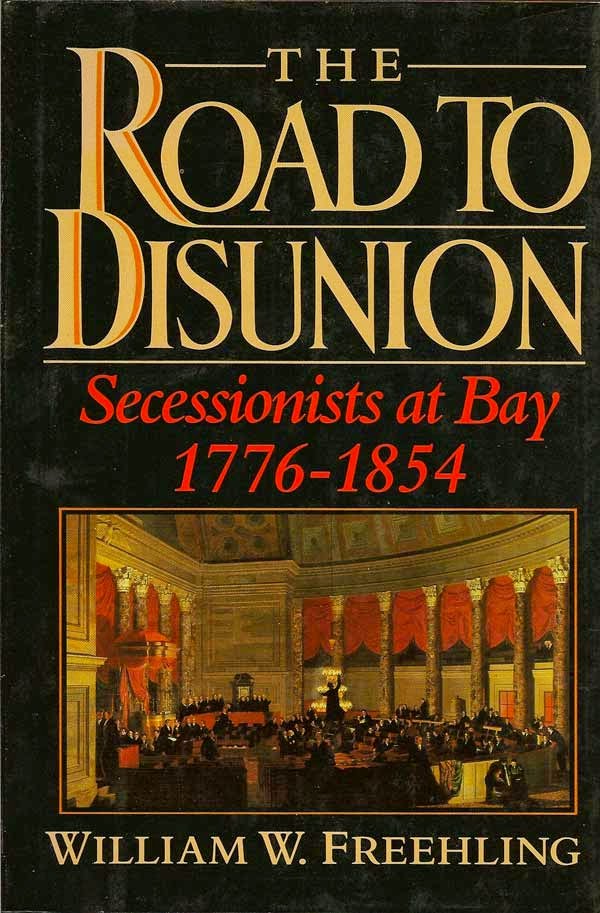
Behind the second curtain. Just hours later, the image of a specific book came to mind -- this book: William W. Freehling's Road to Disunion, Volume I: Secessionists at Bay 1776-1854 (1991).  I actually scanned my office bookshelves to see if I still had it from graduate school. No sign or trace except in the mind's eye.

Imagine my surprise when, not fifteen minutes later on a different floor of the same library, I see a professor type carrying the exact same book title with the same cover that I had "seen" internally.  I asked him about it -- a part time instructor whom I had never previously met or even seen before. I told him of the coincidence. He probably thought I was a bit touched. 

Third curtain. A short while later, I was speaking with a peer about a long-term student who had transferred to another college in January. Within five minutes, that same student strode into the library.     

Finale. What's the point? Nothing in particular. But I wanted to point out how these things happen often, even when we blow them off, or chalk them up to "coincidence" -- whatever that is.

Today's Rune: The Mystery Rune. 

Wednesday, December 03, 2014

The Differences

"Art is educating, provocative, and enlightening even when first not understood . . . creative confusion stimulates curiosity and growth, leading to trust and tolerance. . . . It was not until I realized that it is the celebration of the differences between things that I became an artist who could see." ~ Robert Rauschenberg (1984)
Rauschenberg: Collecting and Connecting. Nasher Museum of Art at Duke University, November 28, 2014. Link here. Runs through January 11, 2015. Click, click, click . . .
Mesmerized at the Greek Festival, Saint Demetrios Greek Orthodox Church, Fort Worth, Texas, November 9, 2014. 

Everything we need to "see" is all around us. 

Today's Rune: Signals. 

Sunday, August 31, 2014

Behold a Pale Horse: Take I

Now that fifty years have passed since it was first lost in the shuffle of the Cold War, let's consider Fred Zinnemann's Behold a Pale Horse (1964).

It's in black and white.

It's based on a novel that is in turn based on historical events.

Zinnemann (1907-1997) is better known by the arc of his entire movie career, with films such as High Noon (1952), From Here to Eternity (1953), A Man for All Seasons (1966) and The Day of the Jackal (1973).  

Anthony Quinn plays Captain Viñolas -- "the villain" -- but with Zorba the Greek (1964) in the pipeline, he seems to enjoy the part with his usual gusto. Gregory Peck, fresh off his role as the strong, saintly Atticus Finch in To Kill A Mockingbird (1962), here plays a much more ambiguous "anti-hero," a Spanish anarchist named Artíguez. Omar Sharif plays the youngest of the trio, Padre Francisco-- sandwiched between his epic roles in Lawrence of Arabia (1962) and Dr. Zhivago (1965).   
Behold a Pale Horse is even-handed and raises several questions about morality and ethics on all sides, but was banned outright in Spain by the regime of Generalissimo Francisco Franco (1892-1975), el Caudillo de la Guerra de Liberación contra el Comunismo y sus Cómplices. Since the governments of Spain and the USA had signed the Pact of Madrid in 1953, Franco had enough leverage to throw cultural roadblocks against Behold a Pale Horse, even in North America. And so it has largely been forgotten. Fifty years later -- no longer! Lest we forget, the First Amendment is #1 for a reason.

Today's Rune: Separation (Reversed). 

Thursday, April 17, 2014

Pilgrimage to Memphis: Buildings and Food

Sun Studio (1950). Recording artists have included Ike Turner, Howlin' Wolf, Elvis Presley, Johnny Cash, B. B. King, Jerry Lee Lewis and so on. 
The Eugene Magevny house (1836) at 198 Adams Avenue, one of the oldest surviving buildings in Memphis. Magevny was Catholic, born in Ireland. Memphis has had a Catholic presence since the beginning. Saint Peter's is to the left. 

The Dominican Order has served continuously at St. Peter since 1846. . .  Construction of the present church began in 1852 around the intact older original sanctuary [dating to 1842-1843] and was completed in 1855. Once built, parts of the original church were dismantled and carried out the doors, piece by piece.  

For more information, here's a link. 

Elsewhere in Memphis, there's a structure that dates back to 1832 -- the Hunt-Phelan House at 533 Beale Street.
Peabody Hotel (1925). Main lobby. Ducks were there, cavorting in the center fountain.
Kress Building (1927).  S. H. Kress & Co. 5-10-25 Cent Store. Around the USA, many such impressive Kress buildings have been sensibly preserved and "repurposed." 
Beale Street at night. Here, fashion statements have devolved into slovenly casual. That's off-the-rack global capitalism at work. Support your local tailors! Compare with the natty attire worn in a 1968 protest march here. 

Today's Rune: Fertility. 

Friday, October 04, 2013

The Way of Saint Francis Redux


I've always liked the traditions of Saint Francis of Assisi. Not only did he --Giovanni Francesco di Bernardone, who lived between circa 1181 and 1226 A.D. -- develop a peaceful and open worldview, but it turns out his appreciation of the environment and its animal denizens may be as scientifically valid as it is valid philosophically, poetically, ethically and spiritually.

Have you seen or read about the breakthrough studies of birds and rats in recent years? The bird studies (of crows and pigeons) indicate facial recognition -- these birds seem to be able to detect familiar human faces and can determine between friendly and hostile based on earlier interactions, while rats empathize with other rats, helping them escape miniature prison cells and generally lending a paw to those in need.

Not that strange, really, but certainly cool to think about. I can attest that birds in Texas seem "happy" (and relieved) every time I fill up a bird bath during the ongoing drought, for instance. They are watching from nearby trees and bushes, no question. There's little doubt they'd have been very happy to see Saint Francis coming around -- something anyone can emulate at least to some degree even now.  

Saint Francis reminds me of the Buddha in his consistently kindly actions. And now we can enjoy Pope Francis I as he performs wonders of his own. 

Today's Rune: Fertility.   

Monday, September 09, 2013

Tar Heel Nation 1: John Coltrane

For the rollout of "Tar Heel Nation" -- a specific new dimension for this website that will suddenly appear out of nowhere or perhaps periodically find its way through here for no apparent reason -- I've chosen one of my favorite musicians of all time in jazz, blues or any other style: John Coltrane (1926-1967). 

Though born in Hamlet, North Carolina (scene of a terrible industrial plant fire in more recent years), John actually grew up in High Point, a city only about fifteen miles away from the bigger city of Greensboro. (High Point's population remained under 40,000 when John lived there, but now has more than 100,000).

"High Point . . . I spent 17 years there -- I went to all the schools, you know, grade school, elementary school and high school . . . My interest in jazz was started in high school. . . My family liked church music, so there was no jazz in the house . . . I didn't hear much jazz until I was 15. . ." (Coltrane on Coltrane, pages 61-62).
Much of his family was associated with the African Methodist Episcopal Church. In High Point, John's "mother played piano and sang, and his father [a tailor] played violin and ukulele . . . The repertoire Coltrane learned during this time included traditional black sacred music . . . popular music . . . and European concert music, primarily through records and radio . . . But it was black saxophonists that pulled his ear . . . (Brown, John Coltrane, pages 4-5). 

Next stop: Philadelphia and the destiny of sainthood (literally, at least in the African Orthodox Church) -- but that's for another time and another place.


For more on John Coltrane's North Carolina roots, here's a link  to the High Point Museum. Attention to his legacy has been on the upswing. There's now a statue honoring him in High Point. And let's not forget the John Coltrane International Jazz and Blues Festival, linked here.    

Leonard L. Brown, ed., John Coltrane & Black America's Quest for Freedom: Spirituality and the Music (New York: Oxford University Press, 2010).

Chris DeVito, ed., Coltrane on Coltrane: The John Coltrane Interviews (Chicago: Chicago Review Press, 2010). 

Today's Rune: Opening.   

Thursday, August 08, 2013

The Feast of the Fourteen Holy Helpers

Today is the Feast Day of the Fourteen Holy Helpers. Sometimes, by adding Mary, they're called the Fifteen Holy Helpers. Aside from Mary and in other languages, there are naming variations for the Fourteen Holy Helpers such as:  I Santi Ausiliatori, Los catorce auxiliadores, Les saints auxiliaires, Die vierzehn Nothelfer, and so on.
Because as a cluster they go back to the Black Death times of the mid-1300s, the Fourteen Holy Helpers have more back alley street cred than all the comic book superheroes of the past hundred years combined. They, too, have powers, and the faithful may call upon the Holy Helpers all, singly or in pairs for intercession and on an as-needed basis -- and do. Why? Because the Holy Helpers are can-do saints. If one is scared of being struck by lightning, for instance, call upon Saint Barbara to "save me from the spark! [aka bolt!]"  Saint Vitus will help protect you from lightning, too. If you need a little help fleeing from devils, evoke Saint Margaret of Antioch. To turn away temptation whilst resting awhile on the deathbed, seek strength by asking help from that "terror of Hell," Saint Cyriacus. Saint Denis will assist with combating possessions diaboliques / demonic possessions. Finally, let's not forget to seek guidance from 
Saint Vitus or perhaps Saint Giles pour une bonne confession / for a good confession. No matter what happens, are you ready?

Today's Rune: The Mystery Rune.      

Thursday, August 01, 2013

Santa Bárbara / Sainte Barbara / Saint Barbara: Red Lightning

Not too long ago, I received a Catholic prayer card featuring Saint Barbara. For those who may wonder, Catholic prayer cards are sort of like baseball trading cards, usually featuring a colorful picture on the front and on the back, maybe a little information about the saint or other holy figure, plus a short prayer. This is one of the fun things about being Catholic -- carrying around prayer cards.  

Saint Barbara is, among other things, the patron saint of artillery. Yes, indeed. Usually her attire includes quite a bolt of red, bright red, but in this Rosselli depiction, Saint Barbara has more blue, green and brown, with a castle in one hand and a quill in the other. She looks like a saint you wouldn't want to irritate. Notice what she's standing on. . .
 
Here in Jan van Eyck's depiction, Saint Barbara holds a seriously dramatic quill or its equivalent in one hand and a book in the other. A cathedral goes up behind her, workers laboring diligently to make it happen.


In the image printed on my Saint Barbara prayer card, she wears a gold crown and red robe; in her left hand there's a palm leaf (or quill) and she sports a sharp sword, too. In her right hand, she holds up a golden chalice. And in the background, there's a castle-church-village complex.

Move to the Americas, and you might see double duty for Santa Bárbara via Santería. Emanating outward from the Caribbean region, she serves as a stand-in or avatar of Ṣàngó /Changó / Shango / Xango.  In most iconography, Chango and Saint Barbara share a red color-energy, as well as a strong association with the production of lightning, storms, thunder and fire. Though of a different outward gender, this makes perfect sense for both the patron saint of artillery and Ṣàngó. 

Finally, I've always understood Saint Barbara to offer extra protection against jealous, chattering enemies; plus she looks over architects, miners and prisoners, among others. Feast Day (not officially sanctioned by the Roman Catholic Church): December 4.      
  
Today's Rune: Wholeness.