Showing posts with label Coltrane. Show all posts

Wednesday, September 12, 2018

John Coltrane, 'Both Directions at Once: The Lost Album' (1963, 2018)

Anyone even remotely a fan of John Coltrane and/or jazz will dig Both Directions at Once: The Lost Album, tracks recorded in Englewood Cliffs, New Jersey, on March 6, 1963, and just recently released. 

On the jacket of my double CD version of the release, there's an apt quip about it made by Sonny Rollins: "This is like finding a new room in the Great Pyramid." (Original in all caps)

This was recorded in the same studio -- Rudy Van Gelder's -- that Coltrane used to record A Love Supreme on December 9, 1964.

The main players (The John Coltrane Quartet) are the same on both recordings, too: Trane on sax; McCoy Tyner on piano; Jimmy Garrison on bass; Elvin Jones on drums. 
Track listing on CD1 and CD2, from "UNTITLED ORIGINAL 11383 (TAKE 1)" to "ONE UP, ONE DOWN (TAKE 6)." Some will sound more familiar than others.
I've listened to this about a dozen times so far, and will give it another hundred spins before my next birthday, no doubt. 

Today's Rune: Possessions. 

Wednesday, October 25, 2017

'A Love Supreme: The Story of John Coltrane's Signature Album' (2002)

In the last post, we considered the merits of Russell Martin's Picasso's War: The Destruction of Guernica, and the Masterpiece That Changed the World. New York: Dutton, 2002.  In this one, let's consider the similarly structured A Love Supreme: The Story of John Coltrane's Signature Album by Ashley Kahn (New York: Viking, 2002). 

Kahn's study provides the backstory, big and little, of A Love Supreme (1965) -- John Coltrane's life, the jazz scene specifically and the greater scene in general; how the album came to be recorded on December 9, 1964 with experimental follow-up on the next night; its release and immediate impact; Coltrane's career until his death in 1967; and the album's enduring, long-term impact, including re-release in CD format and beyond. A wonderful read.
Over the years, I've acquired multiple copies of A Love Supreme. Here, images of the verso of two of my CD copies.
From Coltrane's liner notes, quoted on page 123: '"Words, sounds, speech, men, memory, thoughts, fears and emotions -- time -- all related . . . all made from one."'

The impact of Trane and A Love Supreme is far-reaching, especially among musicians, writers and other artists. 

Carlos Santana: '"The first time I heard A Love Supreme, it really was an assault. It could've been from Mars as far as I was concerned, or another galaxy . . . It was like trying to tell a monkey about spirituality or computers, you know . . .'" (page xviii). 

Ravi Shankar: "'I have been so moved by this record . . . It's beautiful . . .'" (page xxiii).

Patti Smith in high school: "'. . . Coltrane spoke to my soul and my developing intellect.'" (page 73).

Branford Marsalis: "'You know Led Zeppelin's 'Whole Lotta Love?' . . . That's the bass line in the first section of A Love Supreme . . .'" (page 99)

Rick James: "'Most of the white boys I was hanging out with in Toronto in 1965 were down with Coltrane . . . Joni Mitchell, Gordon Lightfoot, Neil Young. That's one of the good things about the musical experience there . . . everybody had A Love Supreme.'" (page 160).

Patti Smith (again): "'I can't say why it's so popular, but perhaps it fulfills people's need for prayer . . . A Love Supreme has a feeling of moral authority in the most humble and spiritual way.'" (page 212).  

"Four decades on, A Love Supreme continues to be felt and to matter . . . [i]n sound, spirit, and name, its arc of influence and inspiration remains unbroken and, like the transitory elements that helped create it, poignantly unrepeatable." (page 213).

An added bonus for me is that A Love Supreme was recorded on December 9 -- my birthday!

Today's Rune: Initiation. 

Wednesday, May 31, 2017

'Chasing Trane: The John Coltrane Documentary' (2016)

Made a pilgrimage to the Texas Theatre in Oak Cliff to see John Scheinfeld's Chasing Trane: The John Coltrane Documentary (2016). I wanted to see and hear Coltrane on the big screen. Well worth the extra effort.

The film is partly about the man and the musician, whose 1965 album A Love Supreme usually makes it into the top five jazz recordings of all time (that is, since electronic recordings began in earnest around the time of World War I). The film is also about Coltrane's impact on various people and their evolving ways of perceiving the world, plus more specifically his influence on musicians of various genres.
From the first time I listened to a John Coltrane recording, in my mid-teens, I've been hooked. Even now, I've got a framed album cover of Giant Steps in my work office and a framed cover of Blue Train at home. I've got three copies of A Love Supreme. I also dig Alice Coltrane, who continued down his mystical path after John's death in 1967 at the age of forty.

The most interesting surprise to me about Chasing Trane is a side trip to Japan, during Coltrane's last extended tour, and his visit to the Nagasaki atomic bombing memorial, and the enthusiastic Japanese response. 
The Texas Theatre is where Lee Harvey Oswald was nabbed on November 22, 1963, shortly after 1:40 p.m. A strange feeling to be seeing a John Coltrane documentary in this place on John Fitzgerald Kennedy's 100th birthday. But fitting, because Trane's music provides a portal to places far beyond our typical experience of space and time. 

Today's Music: Flow.  

Tuesday, September 30, 2014

John Coltrane -- Offering: Live at Temple University

Pleased to have gotten this two-disc set right off the bat: John Coltrane, Offering: Live at Temple University -- November 11, 1966, Philadelphia, Pennsylvania, USA (Verve, 2014).

Coltrane fans will recognize the Coltrane sound in an instant -- seriously, in less than one second. And from beginning to end, it's one wild ride. 

Disc one is frenetic and demanding and disc two starts that way, too, until "Offering" and "My Favorite Things" -- tracks that calm down long enough for even newcomers to catch what feels like a more patterned and coherent flow of beatific music. 

Overall, Offering makes an otherworldly impression -- really out there at times, like intergalactic -- some strange numinous frequency.   
Apparently Allen Ginsberg was floating around the main campus of Temple University on the same evening as the Coltrane performance. I would imagine that he would have attended if he knew about it -- and maybe he did. More will be revealed. Can you dig?  

Today's Rune: The Mystery Rune. 

Monday, September 09, 2013

Tar Heel Nation 1: John Coltrane

For the rollout of "Tar Heel Nation" -- a specific new dimension for this website that will suddenly appear out of nowhere or perhaps periodically find its way through here for no apparent reason -- I've chosen one of my favorite musicians of all time in jazz, blues or any other style: John Coltrane (1926-1967). 

Though born in Hamlet, North Carolina (scene of a terrible industrial plant fire in more recent years), John actually grew up in High Point, a city only about fifteen miles away from the bigger city of Greensboro. (High Point's population remained under 40,000 when John lived there, but now has more than 100,000).

"High Point . . . I spent 17 years there -- I went to all the schools, you know, grade school, elementary school and high school . . . My interest in jazz was started in high school. . . My family liked church music, so there was no jazz in the house . . . I didn't hear much jazz until I was 15. . ." (Coltrane on Coltrane, pages 61-62).
Much of his family was associated with the African Methodist Episcopal Church. In High Point, John's "mother played piano and sang, and his father [a tailor] played violin and ukulele . . . The repertoire Coltrane learned during this time included traditional black sacred music . . . popular music . . . and European concert music, primarily through records and radio . . . But it was black saxophonists that pulled his ear . . . (Brown, John Coltrane, pages 4-5). 

Next stop: Philadelphia and the destiny of sainthood (literally, at least in the African Orthodox Church) -- but that's for another time and another place.


For more on John Coltrane's North Carolina roots, here's a link  to the High Point Museum. Attention to his legacy has been on the upswing. There's now a statue honoring him in High Point. And let's not forget the John Coltrane International Jazz and Blues Festival, linked here.    

Leonard L. Brown, ed., John Coltrane & Black America's Quest for Freedom: Spirituality and the Music (New York: Oxford University Press, 2010).

Chris DeVito, ed., Coltrane on Coltrane: The John Coltrane Interviews (Chicago: Chicago Review Press, 2010). 

Today's Rune: Opening.   

Tuesday, January 29, 2013

Rapture of the Deep


Music can quickly induce the rapture of the deep, that feeling caused by an altered state while diving way down below the surface of an ocean or a deep sea. All the more rapturous when such music is drawn out, as on Van Morrison's Saint Dominic's Preview (1972). Wow. Such an altered state can be evoked purely from listening away from "the madding crowd." I get this from Van Morrison, John and Alice Coltrane, from the Rolling Stones' Exile on Main St. (1972), Led Zeppelin's Physical Graffiti (1975) -- and many others.

On the manifest production side, writing does this for me, researching, delving, musing, doing anything I'm "really into."  

How about you?

Today's Rune: Wholeness. 

Friday, December 02, 2011

The Poetics of Space


Gaston Bachelard's La poétique de l'espace (1958) / The Poetics of Space (1964, 1994, translated by Maria Jolas). Here's a book that probably cannot be fully absorbed but rather acts as a touchstone into other ways of perceiving. For me, it's a textual equivalent corresponding to the Rolling Stones' Exile on Main St (1972), Led Zeppelin's Physical Graffiti (1975) and John Coltrane's A Love Supreme (1964-1965). Perpetually mindblowing and otherworldly, yet grounded in this world.

Bachelard roams through architecture small and large via the scrim of poetry, fiction, daydreams, memories, dreams, light, shadow, color, sound and touch, scent and imagination. Our abode, if we are lucky enough to dwell in one, "shelters day-dreaming, the house protects the dreamer, the house allows one to dream in peace." "Imagination augments the values of reality."

The English version I picked up in Philadelphia was published by Beacon Press, "under the auspices of the Unitarian Universalist Association of Congregations."

Bachelard's poetics dovetail nicely with feng shui ("wind-water"), another way of considering the harmonics of space.

Do you have favorite nooks and crannies?

Today's Rune: Wholeness.  

Tuesday, October 18, 2011

John Coltrane: A Love Supreme


If you were curious about jazz and had no idea where to go, I'd suggest John Coltrane and Alice Coltrane, for sure. But: this is deep inner-worldly (and other-worldly) stuff, not fluff. Fair warning.

I found myself digging A Love Supreme (1965) from the very first listen, under the age of 21. But jazz can also be an aquired adult taste after a period of open-eared open-minded immersion, too. Works either way.


An added bonus for me: A Love Supreme was recorded on my birthday, December 9, in 1964.

Today's Rune: Joy.  

Friday, March 18, 2011

John Coltrane: My Favorite Things


John Coltrane (Quintet), My Favorite Things -- recorded in 1960, released in 1961. Trane on a roll -- a third fiftieth anniversary celebration this year. Hard to follow, hard to beat, but he could and he would and he did.


Clip from Stockholm of the title track live.


Today's Rune: Wholeness.

Thursday, March 17, 2011

John Coltrane: Song of the Underground Railroad


Fiftieth anniversary of the John Coltrane Quintet's Africa/Brass, a beautiful record album.

Also reading Patti Smith's Early Work, 1979-1979 (1994) after finding a first printing, first edition. Here's a snippet from "to the reader" (p. x):

In art and dream may you proceed with abandon.
In life may you proceed with balance and stealth.


Today's St. Patrick's Day Rune: Warrior.

Wednesday, March 16, 2011

John Coltrane: India


Musical interlude: John Coltrane and company's "India" -- recorded fifty years ago this coming November. 

Today's Rune: The Self.  

Tuesday, March 15, 2011

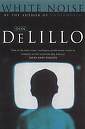
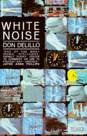
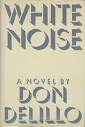
White Noise: The Airborne Toxic Event Revisited


A fitting time to reanimate this one, originally posted on October 6, 2006:

Would you be shocked if you found yourself dragged out of your home and sent to an evacuation center in the dead of night? After 9/11, probably not. Still . . .

Very early this morning in Apex, North Carolina (not far from Raleigh, the state capital), some 17,000 residents were evacuated in the wake of explosions and toxic fires at the humorously named Environmental Quality Company, whose headquarters are based in Wayne, Michigan. The fiery cloud release includes chlorine gas, the type used in trench warfare during World War One, and other agents that cause respiratory distress and, potentially, death.


This horror show immediately reminded me of one of the most perceptive novels of the past fifty or so years that I have read – Don DeLillo’s White Noise (1985), especially its Airborne Toxic Event. DeLillo finished this brilliant satirical work after the Union Carbide disaster in Bhopal, India, which by now has caused the deaths of perhaps 15,000 people (12/3/1984). The following year came the Chernobyl nuclear disaster (4/26/1986).


This is the third major plant fire fiasco in North Carolina in the past fifteen years that I can recall. In Hamlet, John Coltrane’s little hometown, a grease fire (it was a large vat, apparently) at the chicken-nugget plant owned by Imperial Foods led to the immediate death of 25 workers – the emergency exits had thoughtfully been chained shut by management to “prevent theft of chickens” (9/3/1991). At West Pharmaceutical Plant in Kinston, an explosion killed at least four outright and injured another 37 (1/29/2003).

One thing we can count on: there will be plenty more Airborne Toxic Events to come, and not just potentially above Iran and North Korea.

As for White Noise, there are rumblings this year that Barry Sonnenfield is going to produce a movie version. It’ll be just like real life, only more so. [Hasn't happened.  Instead we've gotten additional doses of real life. Just like fiction -- only more so].


Today's Rune: Wholeness.

Do svidaniya!

Sunday, May 30, 2010

Giant Steps


On the road today, to the native land of John Coltrane. Giant Steps (1960): better than Humpty Dumpty in the Gulf of Mexico, certainly.  Hope y'all have a great weekend, everything being equal!

Today's Rune: Partnership.

Tuesday, February 16, 2010

The Adventures of John Lee Hooker


A good overview of my favorite bluesman -- Boogie Man: The Adventures of John Lee Hooker in the American Twentieth Century (2000, 2002) by Charles Shaar Murray. Lots of details about his Detroit years, and about Detroit in those years. One of the places he lived was on Pennsylvania, just off Mack Avenue. And let's not forget Hastings Street, now site of an Amtrak crossing, oft-stolen street signs and large abandoned buildings -- what little is left of it.  

The book might have been compressed somewhat, cut by fifty pages or so, but I've kept it over the years.

My favorite jazz player is John Coltrane, originally from Hamlet, North Carolina, but also well associated with Philadelphia. How about you -- any favorites in either genre or from either city?

Today's Rune: Partnership.

Thursday, December 17, 2009

Physical Graffiti


My sister Linda amassed a goldmine of records throughout the 1970s; digging into it one day I came upon Physical Graffiti, Led Zeppelin's double album released in 1975. Like the Stones' Exile on Main Street (1972), it keeps on giving decades later. I can listen to this one for hours on end, like a nice bit of Miles Davis or John Coltrane (also first got into via Linda's eclectic vinyl stacks). Thank you, Linda -- again!


Today's Rune: Protection.

Tuesday, May 26, 2009

Pilgrimage: London & Paris


Some iconography from travels in London and Paris. Here, the Battersea Power Station, some will recognize from the Beatles, Pink Floyd, James Bond or general cultural osmosis. I used to cross the Thames here between Clapham and Chelsea, volunteering for a while to be a guide at the Carlyle House, much as I did later at the John Coltrane House in Philadelphia. In the USA, Thomas Carlyle is not as well known as he once was. But he made a lot of pithy contributions to the study of history and literature. He's the guy who called economics "the Dismal Science," for example, and he studied cultural change via fashion and biography. He coined the phrase, "Captains of Industry" (1843). "The true University of these days is a Collection of Books," he quipped in 1840. Or, in 1834-1835: "Man is a tool-using animal . . . Without tools he is nothing, with tools he is all." "History a distillation of rumor" (1837). In 1840: "One life -- a little gleam of time between two Eternities." Cool multi-story house, too, with an enclosed garden in the back.


Jim Morrison's grave mentioned in earlier posts, Père Lachaise cemetery. Seen it three times: once with a complete bust, once with nose chipped off, and once with no bust at all. But always with graffiti on neighboring graves.


Connecting tunnel, tube station, London. What I've loved about the London Underground is the mix of subways or metros, some a hundred years old and some much newer. Catacombs of mystery, multiple labyrinths. The Kinks, the Jam, the Clash, and more.


Earls Court SW5 London, where I stayed among a bunch of rowdy Australians. Home of the Troubadour, where Jimi Hendrix, Bob Dylan, Elvis Costello ("I Don't Want to Go to Chelsea") and others have played at one time or another.

Today's Rune: Growth.

Friday, April 03, 2009

Psychotic Reactions & Carburetor Dung


On another day marred by a random rampaging shooter, I'd rather celebrate music, and a good book about music: on pop, underground, and the Detroit scene.

I keep only a small handful of books about music because music usually better speaks for itself, and thanks to the wonders of computers and the internet, most of one's music library can now be stored in a very small physical space, indeed. One old school book on music I've held onto for more than twenty years is Lester Bangs' Psychotic Reactions and Carburetor Dung (1987), edited by Greil Marcus. Why? As the cover suggests, it is: "THE WORK OF A LEGENDARY CRITIC: ROCK'N'ROLL AS LITERATURE AND LITERATURE AS ROCK'N'ROLL."

This is the book of a believer; its essays cover the period between 1971 and 1981, with exciting takes on artists ranging from Iggy Pop and David Bowie to John Coltrane, Kraftwerk and The Clash. And because I dig these very same artists, I keep the book. More recently, I picked up a Creem (CREEM) anthology that's a nifty time capsule of the 70s and 80s. For a time, Lester Bangs (1948-1982) edited Creem and lived in Detroit; many of the essays in Psychotic Reactions were first published as Creem articles. Can you dig?

Today's Rune: Strength.

Saturday, November 01, 2008

Hope on a Tightrope


We're so close now to Election Day, what a breathtaking marathon . . .

This evening, picked up a copy of the latest work by Cornel West, Hope on a Tightrope: Words & Wisdom (SmileyBooks, November 2008 -- as in the always cool Tavis Smiley). A wonderful book'o'the times, and a keeper for the follow-through of this election and beyond, steeped in history and culture. I knew it was out there, but it was hard to find -- placed in "Psychology" for some reason. When I got home, figured I'd start it for now and finish it later, but once I began reading, couldn't put it down until reaching the end, page 237. Highly recommended, and it would make a nifty gift book. Includes a CD that I'm aiming to listen to tomorrow. The shape (about the size of a DVD case) and layout are nice touches, as well -- a variety of fonts and points, photos and chapters, a glossary of key terms and a coda: "The Books and Music That Made Me." John Coltrane is there (yeahdawg!). "I believe music is deeper than philosophy," West notes, and I couldn't agree more. But there's also plenty of philosophy, and deep-felt Christianity, too, in Hope on a Tightrope.


In all, I vote for Cornel West's wit and wisdom about 90% of the time.

About Barack Obama, there's much remarked obliquely and some directly. It's hard not to agree with this summation: "Obama's brilliance, charisma and organizational genius have been a grand catalyst for hope. The verdict is not yet in whether he can maintain his hope on a tightrope." Hoping for hope, let's hope he -- and we -- can . . .

Today's Rune: The Mystery Rune.

Friday, October 31, 2008

Hard Times Revisited


Farewell, Studs Terkel (5/18/1912-10/31/2008). I'm familiar with three of his books, all great reads, still very relevant:

Giants of Jazz (1957; 2006 revised edition). John Coltrane, Charlie Parker, Dizzie Gillespie, Billie Holiday, Duke Ellington, et al.

Hard Times: An Oral History of the Great Depression (1970+). If this one might seem eerily appropriate in today's world, that's because it is.

Working: People Talk About What They Do All Day and How They Feel About What They Do (1974+). I doubt the publishers will add a slim new chapter on Joe the Plumber anytime soon, but the first edition does cover a broad spectrum of people, and includes a pithy section featuring one of my favorite living character actors, Rip Torn.


Louis Studs Terkel, RIP. And GObama!

Today's Rune: Signals.

Saturday, May 24, 2008

A Love Supreme: the Philadelphia-Detroit Summit


I love Philadelphia, Detroit and jazz, so am pleased to plug "A Love Supreme: the Philly/Detroit Summit," aka The 29th Detroit International Jazz Festival over Labor Day Weekend (8/29-9/1/2008).

John Coltrane, orginally from North Carolina, lived for a while in Philadelphia and played in Detroit at places like Baker's Keyboard Lounge and the Blue Bird Inn.


While still going through old papers and shredding most of them, I came across my first (1992) address in Philadelphia: 1225 Spruce Street, Apt. 6, right across the street from the Café Diva at 12th and Spruce, where I worked part time for a gracious and elegant soul, Nga Mai (born in Vietnam during the US-Vietnam War).


Big sports evening in Motown, so I'm soon off to raise hell for Detroit. Hats off to my pal Joe McGeary in Philadelphia, and to my other Philly pals from back in the day.

Today's Rune: Partnership.