Showing posts with label Costa-Gavras. Show all posts

Sunday, November 17, 2013

Alain Resnais: La guerre est finie (1966)

To artists and historians, at least, the Spanish Civil War remains endlessly fascinating and inspiring. Alain Resnais' La guerre est finie (1966), crisply shot in black and white, deals with the shadow war that continued after the Mussolini and Hitler-supported Franco forces overthrew the fragile democratically elected republic in 1939. 

The Spanish Civil War (1936-1939) was a key testing ground and prototype for the Second World War and did not really end until after the death of Generalissimo Francisco Franco (1892-1975). Even now in Spain, the period of rule by Franco and his Falange Española de las Juntas de Ofensiva Nacional Sindicalista / Spanish Phalanx of the Assemblies of the National Syndicalist Offensive remains highly controversial and socially unresolved. Then again, in the USA, the American Civil War 150 years after its height is not fully absorbed, either. Perhaps neither ever will be.
La guerre est finie stars such international luminaries as Yves Montand, Geneviève Bujold and Ingrid Thulin. Yves Montand has the same kind of laconic strength of presence as Sean Connery and Clint Eastwood in the mid-1960s, but his historically grounded character can't perform the same type of near-miraculous decisive victories that their more archetypal James Bond or Man with No Name characters can.  For him, there is no particular saving of the day. Instead, the shadow war must go on through decades of exile.
La guerre est finie makes a perfect companion film for Costa-Gavras' 1969 masterpiece film Z. Not only do both have the continuity of Yves Montand in the starring role, but they also both have the cohesive and intelligent, intense and witty screenwriting of Jorge Semprún (1923-2011) to unite them. 

 Today's Rune: Possessions. 

Monday, August 27, 2012

Shirin Neshat: Women Without Men, Take II


Shirin Neshat's Women Without Men (2009) reminds me in a good way of the work of several other favorite filmmakers, including Luis Buñuel, Costa-Gavras, Deepa Mehta and Gillo Pontecorvo. Intentionally or not, it seems as if Women Without Men is paying homage to, having a dialogue with and picking up from where these others left off in past films, while adding additional concerns.  

 This scene could be captioned Men Without Women. Here, uniformed men with guns chase men in white shirts with knives and a flag. "What immortal hand or eye / Could frame thy fearful symmetry?" It's a scene very reminscent of something from a Costa-Gavras or Pontecorvo film, with detailed emphasis on composition and contrast. Comparative examples: La battaglia di Algeri / The Battle of Algiers (1966), Z (1969), Queimada / Burn! (1969) and Missing (1982).      


Here, Faezeh (Pegah Ferydoni) walks alone down a deserted road, a scene that's repeated in variations during the course of the movie. Anyone familiar with Luis Buñuel's 1972 Academy Award-winning surrealist masterpiece Le charme discret de la bourgeoisie / The Discrete Charm of the Bourgeoisie would recognize very similar imagery in that film. But there is a key difference, and the clue is in the titles: Shirin Neshat's Women Without Men emphasizes women and gender roles while Buñuel's is emphasizing socio-economic class. Also, Buñuel employs humor and satire whereas Neshat employs forlorn beauty and stark tragedy. The sensual feel of Neshat's film is more akin to Deepa Mehta's Fire (1996) Earth (1998) and Water (2005).  

Today's Rune: Initiation.           

Monday, April 09, 2012

Et Dieu . . . créa la femme


Roger Vadim's Et Dieu . . . créa la femme (1956) / And God Created Woman (1957) features Brigitte Bardot (in her twenties, playing a teenager), Curd (aka Curt) Jürgens, Jean-Louis Trintignant (the Examining Magistrate in Costa-Gavras' 1968 masterwork, Z) and Christian Marquand. Basically, the three major male characters are driven wild by Juliette Hardy, who tries to figure out her best arc given the circumstances.  


Juliette is an orphan in Vadim's film, which evokes the main character (also an orphan) in Luis Buñuel's Susana: Carne y demonio (1950/51) / The Devil and the Flesh (1953). Looking at the Buñuel film previously, I asked: "What better way to shine a light on the status quo than seeing it come under attack and subversion?" Noting also: "Susana (Rosita Quintana) brings the challenge and it's soon evident that 'all that seems solid melts into air.' Her mere presence drives Jesús, Alberto and Don Guadalupe crazy with desire. Much drama -- and hilarity -- ensues. The status quo is upended."

The names are different, but the dynamic is nearly identical -- with one twist. In Et Dieu . . . créa la femme, the Jürgens character (Éric Carradine) wants to buy out the other two men's seaside lot in order to build a casino, and they are resistant. Therefore, in this story there's a double challenge to the status quo: one from Juliette and the other from Éric. Only this much is certain: nothing will ever be quite the same, regardless of the outcome.  


Today's Rune: Gateway.

Tuesday, August 30, 2011

The Film That Changed My Life


Robert K. Elder, ed., The Film That Changed My Life: 30 Directors On Their Epiphanies in the Dark (Chicago Review Press, 2011). I remember a book similar to this one from many years ago, being delighted that one of my favorites from an early age, Costa-Gavras' Z (1969) was a movie that had changed someone else's life besides mine. And here's another delight: filmmaker Alex Gibney championing another one of my favorites, Luis Buñuel's El ángel exterminador / The Exterminating Angel (1962), which I've shown to Latin American Studies classes with great enthusiasm.

Elder sagely notes in the introduction: "Movies are not just movies, they are mirrors of ourselves, our society, and our dreams -- even if we're not quite ready for them. They make us laugh, cry, ponder our humanity, and escape from it entirely. . . And, for a few, movies make them want to go out and make more movies" (page vii).  Or, I might add, they inspire us to see more, write more, draw more, photograph more, discuss more, learn more, paint more, look for more, do more. 


How about you? Is there a film that changed your life? A book? Some other work of art or construction that moved you into another sphere?

Today's Rune: Movement.


Saturday, February 26, 2011

Costa-Gavras: Amen. / Der Stellvertreter


Costa-Gavras' Amen. / Der Stellvertreter (2002), based on Rolf Hochhuth's 1963 play Der Stellvertreter: Ein christliches Trauerspiel / The Deputy, a Christian tragedy / The Representative, delves into human responsibility and complicity in modern society, in this case during the Nazi period in Europe. In a sense, everyone in it is trapped in an ongoing life-crisis, forced to make primal existential decisions. Those finding themselves at the decision-point are not only an SS officer involved in perpetrating the Holocaust but also a Jesuit priest, Protestant and Catholic leaders, members of neutral powers and policymakers in the United States and Britain. It is grim and thought-provoking. In 2011, one must also wonder how Twitter and Facebook would have changed the socio-political dynamics of the 1930s and 1940s. 

Costa-Gavras seems to be suggesting that we know so very little about anything, even things we thought we did. Here, that which is called "World War II" or "The Second World War" or "The Great Patriotic War:" When did it begin? Where? How? Why? Did it end?  What was it about? Who suffered? Who didn't? Who gained? Who became rich because of it? How many countries in Europe managed to remain neutral, and how? The answer to the latter question, so far as I know, comprises a list of predominantly Protestant, Catholic and Islamic nations: Vatican City, Irish Free State, Spain, Portugal, Andorra, Liechtenstein, Switzerland, Sweden and, until 1945, Turkey. In Amen., Costa-Gavras inspires us to think about these things and learn more, a laudable goal. 

Today's Rune: Partnership.  

Friday, November 19, 2010

When The Beats Go Marching In


The Beats are alive and well thanks to a slew of new releases. One example: Yony Leyser's William S. Burroughs: A Man Within (2010). I love Burroughs' work and persona -- though a little of his writing at one time can go a long way, I could listen to him speak for a great while longer. Like Gore Vidal's, his delivery is often damned near perfect. It's always seemed to me that Burroughs will be perceived as a primary 20th century literary figure, ahead of his time. I Compare him to the now well-recieved visual artists of the late nineteenth and early twentieth century who were belittled or virtually ignored in their own time. It's worth noting that artists like Patti Smith and Iggy Pop have always advocated for Burroughs.


Rob Epstein and Jeffrey Friedman's Howl (2010) looks to be good, too. Like most librarians and writers and artists, I've always held free speech as a cornerstone and seen obscenity trials and book bannings/burnings a pernicious joke, the end of freedom. 

Along the same lines as Allen Ginsberg, consider the cases of James Joyce, Henry Miller, Robert Mapplethorpe, Andy Warhol, and suppressed voices like Costa-Gavras (try finding even in 2010 a copy of his films État de Siège / State of Siege or Hannah K., in the USA).


Today's Rune: Wholeness.

Thursday, October 14, 2010

Z


In Praise of Z . . .
Z words & names = Dada!

I. Names: People & Places

Zapata
Zapatista
Zoroaster (Zarathustra)
Zorastrian
Zachary
Zagreb
Zhukov
Zaire
Zorro
Zorba

Zeppo
Zdanek
Zimbabwe
Zambezi
Zambia
Zapotec

Zimbra
Zanzibar
Zulus
Zuni
Zealand
Zsa-Zsa

Zappa
Zucconi
Ziegler

Zabriskie Point (Michelangelo Antonioni)
Zelig (Woody Allen)
Zimmerman (Bob Dylan)
Zhou En-lai

II. And the Best of the Rest.

Zero

Zed
Zealot
Zen
Zebra
Zephyr
Zany

Zip
Zap
Zipper

Zapper
ZIP Code

Zone
Zippity Doo Dah
Zenith

Zest
Ziploc®
Zoloft
Zaftig
Zeppelin
Zippo
Zinc
Zirconium

Zine
Zoom
Zombie

Ziegfeld Follies
Zygote
Zimermann Telegram
Zinger
Zoo

Zoot Suit
Zeppole

Zucchini
Ziti
Zymurgy
Zonked
Z

Bazooka
Kazoo


Today's Rune: Joy.  "Life is trouble. Only death is not. To be alive is to undo your belt and look for trouble!" (Anthony Quinn, Zorba the Greek, 1964).  

Tuesday, October 12, 2010

James R. Tomlinson: Adopted Behaviors


Adopted Behaviors: Flash Memoir, Short Stories & Flash Fiction by James R. Tomlinson. [Detroit]: Motor City Burning Press, 2010.

FLASH MEMOIR
“The Trigger Man & His Accomplice”
“A Creative Nonfiction Escape”
“This One’s for the Birds”

SHORT STORIES
“Adopted Behaviors”
“Bread & Water Revival”
“Thumbprints, Deadlines”
“Jail Bait”
“Floss”

FLASH FICTION
“The Sober Truth about Tyler & Zachary on Bickerstaff Street”
“Animus”
“Pitch”
“Still Life in Detroit”
“If You’d Only Pay Attention”

Jim Tomlinson intones many of the selections included here with a wry -- and sly -- voice, reminding me of William S. Burroughs (especially Junky). There’s almost always an intentionally displaced sense of time and space as in Costa-Gavras films like Z and Missing.*

“Jail Bait” reminds me in part of Howlin’ Wolf’s “Commit a Crime,” but inverting Coumadin for Red Devil Lye -- and reversing the intent of the woman from loathing to affection.

Tomlinson’s choices for names are interesting. Is it synchronicity or coding? I don’t know. But take the first line in this story:

“Joshua Liddy swallows rat poison and rushes out the door to beat the high school bus to the corner of Samsa and Conner” – to peep at a young musician he calls Greta (like Hansel and Gretel?) 

Liddy makes me think of G. Gordon Liddy; Samsa, of Gregor Samsa from Franz Kafka’s Die Verwandlung / The Metamorphosis. So far as I can tell looking at a Detroit street map, there’s a Connor but not a Samsa; I have no idea where "Jolene and Lareby“ might be, either. Then there’s the character named Rizzo – bringing to mind Rizzo the Ratso from Midnight Cowboy. Rizzo likes vermiculite:

"Vermiculite," he repeats, "helps the plants to grow. I told you that. . ."  

It’s fun to get caught in the mesh, looking for new clues, absorbing the tales entirely and also deconstructing them.

From "Thumbprints, Deadlines,“ here’s a deftly detailed  working class scene – it would seem as truthful an observation of neighbors in my Pennsylvania hometown during the 1960s as for the narrator in Hazel Park, Michigan: 

My childhood home two blocks away, a bluish-grey bungalow with a fatigued yellow porch and rusted-metal awning. From that porch, I last saw my father standing in the front yard, sporting a hunter’s orange cap and matching rain slicker; a sot with a balled-up fist clutching mother by her frizzy blond hair while she swung her cast-iron frying pan, not in defense, but as a tool of her emotion. You turned down overtime, didn’t you?

To quote JR: "Adopted Behaviors is . . . related in some way to the human condition and/or prison experience." Also note: "He teaches convicted felons for the Michigan Department of Corrections." 

Though the examples given above are from the longer pieces, I like JR's flash memoirs and flash fiction even more. They are pithy, too.

It’s good to see Motor City Burning Press revving up. Before you can say John Lee Hooker, more productions, I suspect, will be wooshing down the road.

http://motorcityburningpress.blogspot.com/2010/07/mcbp-debut-adopted-behaviors.html

*Free associating, these things surface after re-reading Adopted Behaviors: Deadpan agency. Culpability. Accomplices – complicities – implications -- accomplishments. Everything is part of the dynamic. PoV remains actually involved while seemingly detached. Shared ownership of what happens, part of the mix. Complexity.
 
Today's Rune: Harvest.

Saturday, April 10, 2010

Guerrilla Cinema: The Spook Who Sat by the Door


Ivan Dixon's The Spook Who Sat by the Door (1973), based on co-screenwriter Sam Greenlee's 1960s novel, merges forces with a handful of other subversive films like Gillo Pontecorvo's  The Battle of Algiers / La battaglia di Algeri (1966) and Burn / Queimada (1969), Costa Gavras' Z (1969) and State of Siege / État de Siège (1972), Emile de Antonio's In the Year of the Pig (1969) and David Fincher's 1999 excellent adaptation of Chuck Palahniuk's short novel Fight Club: all intense, thoughtful and relevant cultural expressions. As befits subversive films, they are mostly low budget but high in the make-you-think-and respond zone.

With a jazz fusion soundtrack by Herbie Hancock and beautifully controlled performance by Lawrence Cook, The Spook Who Sat by the Door envisions a Chicago-based black (and mostly male) uprising in the top ten urban areas of the USA. Despite an abrupt ending and production values reminiscent of early 1970s TV action series, it's an important film, well-worth seeing.

Today's Rune: Fertility.

Sunday, August 23, 2009

From Z to A and Back Again


Man, that was a dream come true -- seeing Costa-Gavras' Z on the big screen with a sizable and responsive audience. Loved it! Hope all are well. More soon . . .


Today's Rune: Separation (Reversed). And Happy Birthday to SAB!

Saturday, August 22, 2009

Costa-Gavras' Z on the Big Screen


Thanks to Rialto Pictures, Costa-Gavras' über cool 1969 film Z has been touring around the USA, and I'm going to see it -- in Austin, Texas. Tonight! Here's a link: http://www.rialtopictures.com/z.html

Z is showing tonight at the Paramount Theatre, 713 Congress Avenue, in Austin, same place where a few years ago, I saw a big screen showing of Dr. Strangelove, or: How I Learned to Stop Worrying and Love the Bomb (1964).

Thanks much to San Antonio Bill and GG for hosting . . .


Today's Rune: Flow.

Tuesday, March 31, 2009

The Company Formerly Known as Blackwater


The company formerly known as Blackwater International is now, I kid you not, called Xe (pronounced like Z, the great Costa-Gavras film featuring the Greek paramilitary organization, CROC -- Christian Royalist Organization against Communism). Blackwater resembled CROC and was heavily bankrolled by US tax payers; it was used to supplement the US military, to provide security and logistical support for the occupation of Iraq (the Iraqi government has since kicked it out, due to a number of controversial "incidents"), among other sites chosen for its operations by the Bush-Cheney administration. There was a direct connection between Blackwater's ideological affinities, its actions, its contacts and its contracts. Blackwater formed the core of Condaleeza Rice and the State Department's paramilitary security team in Iraq, a sort of Freikorps, American style.

Erik D. Prince, Chairman and CEO of Blackwater International and Xe, an über-conservative Christian promoter, has given $1,000 or more in contributions to such guardians of the Right as Jesse Helms, Pat Buchanan, Rick Santorum, G.W. Bush, Tom DeLay and Oliver North. I won't even go into the many Michigan connections at this juncture. It's all part of the public record, there to see for anyone willing to do a little basic research on the internet.


Here's a timely snippet from Bill Sizemore's recent article, "Xe returns to training roots after 'implosion in the swamp'" (Norfolk/Hampton Roads Virginia-Pilot, March 15, 2009):

Blackwater founder Erik Prince announced earlier this month that he was stepping down as chief executive and bringing in a new leadership team.

Other than Prince, who will remain as chairman but is stepping away from daily oversight of the company, all of the top-level executives who steered Blackwater through its tempestuous first decade are gone.

Link to article: http://hamptonroads.com/2009/03/xe-returns-roots-after-implosion-swamp


As the Obama Administration re-orients American foreign policy, it's moving away from such propaganda rhetoric that surrounded "The War on Terror" and Bush-Cheney-Rice's over-reliance on paramilitary or private security groups like Blackwater. I'd love to see a renaming of "Homeland Security" as well. In any case, so far, so good.

Today's Rune: Fertility.

Thursday, December 27, 2007

Savagery, Thy Name Is Human


Another voice of moderation was extinguished today. As to the specific details, more will be revealed but initially, it has the eerie feel of the riveting political film by Costa Gavras from the 1960s, Z.

Benazir Bhutto, former prime minister and prominent opposition leader in the scheduled 2008 Pakistan national election, is dead by violent means. RIP. From the Vatican: "It is difficult to see any glimmer of hope, peace, reconciliation in this country [Pakistan]" (source: Reuters, "World outraged, fearful over Bhutto assassination," 12/27/2007).


Given today's events, now is a reasonable time to mention Iris Chang (1968-2004), The Rape of Nanking: The Forgotten Holocaust of World War II (1997) and Nanking, the 2007 documentary film inspired by Chang's work. The events described in both began in 1937, same year as the ferocious aerial bombing of Guernica, Spain, by European fascists, but on a much larger scale (hundreds of thousands vs. hundreds killed or wounded). In Nanking / Nanjing, the Japanese military savaged the Chinese inhabitants from late 1937 to early 1938.

Neutral observers in Nanjing helped create a Safety Zone in an effort to protect and save thousands of civilians from the mayhem. Japanese soldiers aimed to kill all men close to military age, and raped tens of thousands of women. More information can be found at the official documentary film site at http://Nankingthefilm.com

Lou Reed contributed two songs, "Gravity" and "Safety Zone." For more, see also Lou's excellent website at www.loureed.com

Observant and sensitive souls like Philip K. Dick and Iris Chang may respond to such history by saying their bit and self-destructing, or like Voltaire and Costa Gavras, locating those who bear witness, and remembering, while still somehow finding joy in life. The pen may not be mightier than the sword at the time, but it will not let such history be "disappeared" from the annals of the human race.

Today's Rune: Wholeness.

Monday, November 19, 2007

Costa Gavras: Missing


I recently saw Missing for only the second time since it came out in 1982. First time, I was an undergraduate at UNC and thought it decent, if not as great as Z. This time, I was riveted not so much by the fact-based front story as I was by the chilling backdrop -- the 1973 coup d'état in Chile, the martial law and the rounding up of dissidents at gunpoint. Costa-Gavras knows how to create atmosphere: every time a burst of gunfire went off in the background, I felt jumpy.

In Missing, it's clear that Nixonian agents are abetting the overthrow of socialist president Salvadore Allende by General Augusto Pinochet. What makes it so pertinent now, of course, is Abu Ghraib, the Bush-Cheney government, the crackdown in Burma and martial law in Pakistan. And, we begin to see why Latin Americans are so willing to look for a new way forward.

In any case, Jack Lemmon and Sissy Spacek carry the acting; menacing curfew and street scenes do the rest.


Birthday: Bollywood star Sushmita Sen (b. 1975).


Birthday: Sandrine Holt (b. 1972). Superb in Black Robe (1991). See her also in Loving Jezebel (1999).

Today's Rune: Growth.

Sunday, April 15, 2007

The Ides of April

I can never say enough good things about both versions of Z -- either Vassilis Vassilikos' 1966 novel or Costa-Gavras' film adaption, released in 1969. The combination of intrigue, assassination, coverup, investigation and crackdown all set within an exciting and clearly articulated social, economic and political milieu permanantly shaped the tone for my worldview. If they're not the greatest such works of all time, they've certainly had the deepest influence on me. What more can you ask from two paired masterworks? I keep two English translation copies of the novel and one copy of the DVD (French with various subtitles, including English) in my small personal library -- because they never fail to buoy my spirits.

From the back cover of the Bantam Books 1969 paperback edition:

Needle-sharp and harsh as a documentary, Z is based on an actual murder -- the political assasination of a celebrated Greek patriot and pacifist -- and the subsequent investigation by a . . . young [government] attorney who followed the trail of responsibility and guilt to the highest levels of a ruthless military regime. Vassilis Vassilikos has dared to expose the story of a political murder and corruption in a novel charged with anger, passion, and mounting suspense.

Quoting the New York Times Book Review: Shattering validity, exciting reading . . . This haunting semi-documentary . . . racing in and among what seems to be half the population of Salonika [Greece], is exhilaratingly wide-ranging and cinematic in the best sense of the word . . . Vassilikos's gifts are dazzling.

Flashed on the screen during Z, the movie:

Concurrently, the military banned long hair on males; mini-skirts; Sophocles; Tolstoy; Euripides; smashing glasses after drinking toasts; labor strikes; Aristophanes; Ionesco; Sartre; Albee; Pinter; freedom of the press; sociology; Beckett; Dostoyevsky; modern music; popular music; the new mathematics; and the letter "Z", which in ancient Greek means "He is alive!"


Today's Rune: Partnership.

Birthdays: Leonardo da Vinci, Émile Durkheim, Bessie Smith, Elizabeth Montgomery, Claudia Cardinale, Dave Edmunds.

Andio sas!

Thursday, March 08, 2007

La Môme / La Vie en rose


In La Môme (2007), Marion Cotillard stars as the great French singer Édith Piaf (Édith Giovanna Gassion, Paris, 12/19/1915-10/11/1963). The film, directed by Olivier Dahan, is set for wide release in the USA in June 2007. It is making waves in Europe already. Viewers especially love Cotillard's performance.


Piaf's story is a wild one. Coming from a dodgy background during the Great War, she was a waif in childhood with some kind of blindness and deafness and various psychosomatic ailments that were reportedly cured or reversed thanks to the miraculous powers left on Earth by Saint Thérèse de Lisieux.

Then, in her teens, she had Marcelle, a daughter, who died of meningitis.

Here was already a person ready to sing the blues, and in fact, her unique singing voice helped make her an artistic and commercial success.


Louis Leplée (Gérard Depardieu in the movie) was her first real starmaker and was the one responsible for giving her moniker -- La Môme Piaf / The Sparrow Kid, in the mid-1930s. Leplée was mysteriously murdered (in shady times like today), and Piaf's fame grew. Soon she became friends with leading artists of her day. When World War Two rolled around, she became friends with Yves Montand (later star of Costa Gavras' Z and countless other compelling international movies).

After the war she became a truly international star, went on world tour, and fell in love with boxer Marcel Cerdan, who died in a plane crash in 1949. In 1951, she herself was in a car crash that led to morphine addiction during her recovery. She died in 1963 at 47.

Piaf's most famous songs include "La vie en rose" (1945) and "Non, je ne regrette rien" (1960). Given their parallel life stories, it's not without reason she's been compared to American torch singer Billie Holiday (b. Eleanora Fagan, 4/7/1915-7/17/1959) in importance, adoration, and tragedy.


Today's Rune: Partnership.

Bon voyage!

Friday, November 17, 2006

Ségolène Royal


Yesterday in France, Ségolène Royal (b. September 22, 1953, Dakar, Senegal) won the Socialist Party nomination for the 2007 presidential election. I hope she wins the election.

Ever since seeing Costa Gavras' Z (1969) on the small screen, I've had a great fondness for Socialists. I tend to romanticize them as cosmopolitan, suave, chic, and usually correct in their views. The public library, community colleges, the eight hour work day, health care -- they're all socialist concepts.

If there's a negative, it's that Socialists tend to be too rational, to expect too much from other people. In a sense, Socialists are to politics what Unitarians are to religion. Since most people prefer irrationality in their daily lives, this can result in a dangerous emotional chasm between visionaries and myopics.

Ségolène Royal is exactly what my romanticized version of a Socialist should be, though. In Z, there's Yves Montand, and Royal is even better. She supports all sorts of social protections. She is a seasoned veteran of government and politics. She is an attractive woman, which is a practical bonus and no more sexist an observation than to observe that Bill Clinton and JFK attracted women voters because of their looks and charm.

Royal and fellow Socialist François Hollande have four children and a pacte civil de solidarité (PACS, or civil union) together, which is unconventionally cool in its own right, and provides another pragmatic alternative to marriage.

"In terms of socialism, I think there is a lot to be learned from Scandinavia and from some of the work, very good work that people have done in Europe." Bernie Sanders, Senator Elect from Vermont, USA.

Given the major socio-political changes in process, the next two years will be particularly interesting times for people living in France, Britain, the USA -- and everywhere else.

Today's Rune: Signals.

Bon voyage!

Monday, July 10, 2006


The Gospel According to Penelope Spheeris

From The Decline of Western Civilization (1981) to The Gospel According to Janis (2008?), Greek American film director Penelope Spheeris (New Orleans, 12/2/1945-) has paid a great deal of attention to the hard-edged American music scene and its surrounding popular culture. Along the way, she's paid the bills by making pop movies like Wayne's World (1992), The Beverly Hillbillies (1993), and The Kid and I (2005).

Spheeris' background is unconventional. Her father ran a traveling carnival and was killed when she was seven; subsequently, Penelope had to become a sort of chief of staff for her working mother, overseeing three younger siblings. Eventually, she studied psychology and film in college, and came under the aegis of Roger Corman (1926-), "the West Coast Andy Warhol" and king of B movies. He quietly produced her first major film, The Decline of Western Civilization. She also directed Suburbia (1984) and continued from there. Sadly, the same year, her brother Jimmie Spheeris, a musician with three albums to his name, was killed in a motorcycle accident.

Penelope Spheeris happens to be a cousin of director Costa Gavras (1933-) and has one child, Annalee Spheeris, who has a cameo appearance in The Beverly Hillbillies.


Pink (Alecia Moore, 1979-) as Janis Joplin? Stay tuned!

Thursday, May 25, 2006


The Vandals Took the Handles

How much was Edie Sedgwick (1943-1971) involved with Andy Warhol, Bob Dylan, Bob Neuwirth, or anyone else, and just how much impact did she really have on fellow artists and celebrities? While I thoroughly enjoyed Jean Stein's Edie: American Girl edited with George Plimpton (N.Y.: Knopf, 1982; reissued by Grove Press), it leaves a number of mysteries like these either partially or completely unsolved. The lack of an index doesn't help, but Stein herself clearly appreciated the difficulties of taking a comprehensive look at Edie's life and times. In the Afterword, she notes: "a close friend of Edie Sedgwick pointed out that Edie kept us all in different compartments. He warned me that learning about her other friends would take ten years. He was right." Given the renewed interested in the Warhol 60s and intervening years, it seems time for another attempt at a Sedgwick biography. Like the mystery of Jimmy Hoffa, it's something that may require veterans of the times -- especially eye witnesses -- to either step forward and tell their version, or for us to wait until they're gone and for someone else to be able to tell the full story a la Johnny Cash and June Carter in Walk the Line.

This is also the fundemental challenge for George Hickenlooper and his fictionalized Sedgwick biopic Factory Girl, which is tentatively set for release in September 2006 and stars Sienna Miller as Edie. Because I like what I've seen of Hickenlooper's work so far, I'm keeping an open mind about this project -- unlike Lou Reed, who's already dismissed it. Here's what he reportedly said: "I read that script. It's one of the most disgusting, foul things I've seen -- by any illiterate retard -- in a long time." Don't sugarcoat it, Lou!

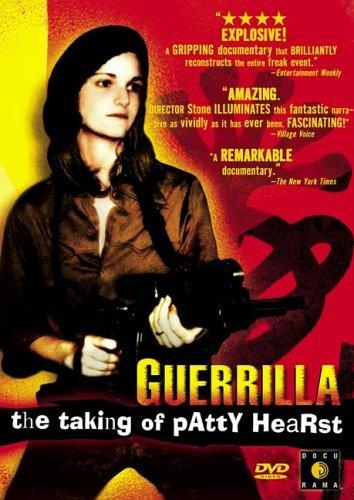
I'll tell you what is worth seeing on DVD -- Robert Stone's Guerilla: The Taking of Patty Hearst (2004). It's fascinating, and sets the creation of the Symbionese Liberation Army in the context of its times. I thought it telling that several of the people who created this group were strongly influenced by Costa-Gavras' incendiary Latin American movie State of Siege (1972), which involves the kidnapping of a CIA agent (played by Yves Montand) by revolutionaries. You may recall that the Hearst case carried extra interest because of the way she eventually came to side with her captors. Was this classic brainwashing, the Stockholm Effect, or pure ideological "enlightenment"? Luckily, Patty Hearst was a resilient person, and has, since her release, become involved with other sorts of show biz, actively associating with filmmaker John Waters, for instance. Bill Clinton pardoned her the day before G.W. Bush moved into the White House. Everything's in the timing. State of Siege was not only sporadically banned in the U.S.A. and other countries at the time of its release, but perhaps more eerily, it is simply not available anymore. Not sure why, since incidents like this happen daily in Iraq and elsewhere nowadays. Like so many other classics, I'd like to see it made available in digital format. And by the way, the elusive Bob Neuwirth -- the guy who supposedly sped Edie into a drug-fueled decline -- has his own website that seems to have died on the virtual vine and is now sitting on the internet, ca. 2002: http://www.bobneuwirth.com/


Ciao!

Thursday, February 23, 2006


Movies That Melt Into Consciousness

I'm not a subscriber to the practice of ranking books or movies in terms of personal, global or artistic "importance." I'm not sure why people are so mesmerized by top five, ten, twenty, or top one hundred lists -- aren't there already more than enough of them in publishing, sports, finance, and everywhere else? Even so, when asked recently what my "favorite ten movies" were, I had to laugh. And then think. A flurry of titles popped to mind, names of movies that have melted in some way into my consciousness -- though ranking them still seems silly. Where would I place films first seen in early childhood like The Wizard of Oz, Gone With the Wind, and even Goldfinger? And how can I seriously rank things as diverse as Affliction, The Last Picture Show, Dr. Strangelove, Stardust Memories, The Good Girl, The Thin Man, Z, Gold Diggers of 1933 (soon to be released on DVD), Aguirre: the Wrath of God, Apocalypse Now!, or Boys Don't Cry, a film I can't forget but that I'm not sure I ever want to see again? Instead, I'll write a few things about movies that have stayed with me, with only one entry at a time. Movies are, after all, like music and other art forms, also good reasons to live, aren't they? Many thanks to the person who asked me the question and got me to thinking.

I first saw Z on tv when I was a kid in the very early 1970s. For some reason it was showing on a local station in Durham, North Carolina (where I then lived with my immediate family), maybe because it had won two Academy Awards even though it was an international film. For whatever reason, I lucked into it and loved it from beginning to end! The galloping pace, the conflict in every scene, the exotic music, the biting satire and camp (I'd also caught onto the Batman tv series for similar reasons) thrilled me -- and surprisingly, still does.

Tuesday night, I watched this film (directed by Constantin Costa-Gavras in 1968 and released in early 1969) yet again after several viewings over the years, and it "resonates" as loud and clear as ever. The ensemble acting blends well with the story line, the soundtrack, and the cinematography so that the whole is more important than any one element. The only thing I find unintentionally comical now is Irene Papas -- she is SO melodramatic as Helen, in an over the top way similar to her performances in Zorba the Greek and in (as Helen of Troy, naturally) The Trojan Women.

The plot centers around an "incident" at an anti-status quo political rally: events leading up to this incident, the incident itself, an investigation with flashbacks, and eventual fallout, with a blistering ending that rolls with the end credits. It's brilliant. And based on real events described in the now out-of-print novel of the same name by Greek author Vassilis Vassilikos originally published in 1966 (English language edition in 1968).

Z shows people and groups in conflict. Maybe because the U.S. was still ensnarled in the Vietnam War when I first saw this as a kid, with a military draft still in effect that ensured the engaged interest of youth in global events and political processes, I became enamored of the moderate socialists in the film (the good-looking, well-dressed heroes) and saw the people in right wing factions as figures of fun -- or acting out of class conciousness and economic desperation. But another part sticks with me, too, as the U.S. Government has bogged itself (and the rest of us) down in Iraq, in yet another elective war every bit as foolhardy and potentially as destructive as our "intervention" in Vietnam: that moderates can be contained or brushed aside by hardliners (of any ideology) who can and will spread death and mayhem and intimidation, censoring as they go. Z, like a good comedian, cuts to the quick and -- thirty plus years after first seeing it -- leaves me entertained but unsettled and thinking and as suspicious of "authority" as ever. Stubbornness also plays a key role in the story -- two maverick witnesses and "the Magistrate" (played to perfection by Jean-Louis Trintignant) drive the second half of the movie. Lastly, the news media has a role that feels contemporary. . . . .