Thursday, November 08, 2018
John Binder: 'UFORIA' (1981, 1985)
Wednesday, August 22, 2018
Vladimir Menshov: 'Moscow Does Not Believe in Tears' (1980)
It's 1958. Antonina, living in a Moscow worker's dorm with her friends Katerina and Lyudmila/Liudmilla, soon marries Nikolai and moves with him to the country. We next follow the antics of the other two through thick and thin.
Part 2 jumps ahead twenty years, to near the end of the 1970s. We drop in on the three comrades and see where they're at, following them into a new cycle.
A marvelous gem of a movie, providing insight into Russian cultural norms and the state of the Soviet Union at two points in its history. One cannot help but compare and contrast gender, socio-economic class, manners and outlook with other societies then and now. Both fascinating and entertaining.
A presidential note from 1985:
Wednesday, August 08, 2018
Chapel Hill Daze: Pictures of Another Gone World: West Franklin Street, 1968-2018
Of the "south" side of West Franklin, I've previously discussed University Square in another post. Next was Hardee's at 213 West Franklin (now there's a Panera at that address); Union Bus Station at 311 (the Franklin Hotel is now at that address) and the Chapel Hill Weekly newspaper at 501.
I certainly remember the Hardee's and the newspaper building, having eaten at the former and worked immediately next to the latter (at Algonquin Books of Chapel Hill).
The bus station building I remember vaguely. Having been completed in 1946, it soon thereafter became part of the history of the civil rights movement:
"On April 9, 1947, eight African American and eight white members of CORE (known as the Freedom Riders) set out from Washington, D.C. on Greyhound and Trailways buses; on April 12, both buses arrived in Chapel Hill. As the buses departed Chapel Hill for Greensboro on April 13, four of the riders were arrested. The commotion aboard the buses drew a large crowd of spectators, including several white taxi drivers.
The men were taken to the police station, with a fifty dollar bond placed on each man. As white rider James Peck got off the bus to pay their bonds, a taxi driver struck him in the head.
In May 1947, those members who had been arrested went on trial and were sentenced. The riders unsuccessfully appealed their sentences. On March 21, 1949, they surrendered at the courthouse in Hillsborough and were sent to segregated chain gangs."
The bus station's food service desegregated in the early 1960s, under pressure. Source: "Trailways Bus Station," Open Orange. Website link here.
Of the "north" side of West Franklin, an earlier post covered the first block off from Columbia Street, heading toward Carrboro. If you crossed Church Street going in the same direction in 1968, there was a Belk-Leggett department store at 206 West Franklin, Fowler's meats at 306, Carolina Grill at 312, Village Pharmacy at 318 and The Cavern at 452 1/2.
The Bookshop (pictured above) came into being in 1985 at 400 West Franklin, a merger of Keith Martin Bookshop and Bookends (both Chapel Hill book shops). I remember all three of them, having bought books at each. The Bookshop closed in the summer of 2017, having lasted close to thirty-two years in that location.
Belk-Leggett was gone from its 206 location by the time I came to Chapel Hill. Fowler's was still at 306 for a while and then folded. There was one in Durham, too.
I loved the Carolina Grill -- you could eat like a king on the budget of a college student. Which may be why they eventually had to close. I remember flat steaks there, excellent meat and potatoes type staples, probably requisitioned from next-door Fowler's. It was sort of like a large hall with tables, for some reason making me think of a Bavarian beer hall in memory.
Village Pharmacy, 318 West Franklin, "Home of the Big O." This place was around for a while but must have eventually died on the vine. Browsing issues of the Daily Tar Heel, I came across an advertisement for Village Pharmacy from the September 28, 1949 issue: "Opposite Bus Station - Phone F-3966." In "land line" telephone exchanges of the twentieth century, "F" might be named Flanders, Fleetwood, Factory, etcetera. In any case, when I was working at Algonquin Books, I'd occasionally walk to Village Pharmacy for its soda fountain features. They served fresh lemonade, orangeade, milkshakes and grill food. No longer.
The Cave is a long-standing underground bar and music venue. Because I have detailed location notes from college journals dating to the 1980s, I'll devote more time to The Cave in a later post. It nearly folded after fifty years (1968-2018), but was saved by Melissa Swingle and Autumn Spencer in the summer of 2018 -- thank God! Here's a link to their website. Dig it!
Invaluable resource to cross-check memories, places: OCCUPANTS AND STRUCTURES OF FRANKLIN STREET, CHAPEL HILL, NORTH CAROLINA AT 5-YEAR INTERVALS, 1793-1998, by Bernard Lee Bryant, Jr. Chapel Hill Historical Society, printed out by J.D. Eyre in 1999. Link here.
Today's Rune: Partnership.
Tuesday, April 03, 2018
'Wild Wild Country" (2018): One Wild Nutty Ride
Wild Wild Country: the Eyes of Texas are Upon You. Or more accurately, the Eyes of Oregon and India are Upon Each Other. "You can't make this shite up."
For all these years I've had this snapshot of a restaurant sign in Copenhagen, Denmark, loving its name: "Zorba the Buddha." Not until I saw Wild Wild Country did I realize that this was part of the Rajneesh movement -- even though it clearly reads just below the name: "RAJNEESH RESTAURANT." Location in 1983: Strøget, Frederiksberggade 15, København 1459. Suggesting once again that everything is connected to everything else in the grand scheme of things.
Today's Rune: Breakthrough.
Thursday, January 04, 2018
Svetlana Alexievich: 'The Unwomanly Face of War: An Oral History of Women in World War II'
"'Dense forests, continuous wire fences with rotted stakes, overgrown minefields. Flowerbeds gone to seed. There were always mines hiding there; the Germans loved flowerbeds. Once there were people digging potatoes in a field, and next to them we were digging mines . . ." (page 222)
After a contingent of Soviet sailors hit a minefield, many were killed. But Olga Vasilevna refused to terrorize German POWS. "I hadn't forgotten, I hadn't forgotten a thing. But I couldn't hit a prisoner, if only because he was already defenseless. Everybody decided that for himself, and it was important." (page 151)
"'If you ask what color war is, I’ll tell you – the color of earth. For a sapper . . . The black, yellow, clayey color of earth . . . Two months later I wasn’t killed, I was wounded. My first wound was light. And I stopped thinking about death . . .’” (page 213)
A lieutenant, commander of a sapper-miner platoon: “We’d spend the whole day watching everything attentively and drawing up a map of the observed front line and marking the places where changes in the surface of the terrain appeared, If we saw bumps on the ground or lumps of soil, dirty snow, trampled grass or dew smeared on the grass, that was what we were after . . . our goal . . . It was clear that German sappers had placed mines there . . . It was necessary to find out . . . [w]hat sort of mines they had put there: antitroop, antitank, or surprise mines. We marked the enemy’s firing points . . . We felt the ground inch by inch. Made corridors in the mine fields. All the work was done by crawling . . .” (page 217)
In addition to serving as pilots, snipers and partisan fighters, Soviet woman also served as doctors, nurses, drivers, mechanics and in many other capacities. Survivors retained memories of harrowing, brutal events that never quite went away. Alexievich has ensured that these people and what they lived through will not be forgotten. Wars will continue, though, remembered or not -- that fact, it seems, nothing can change.
Today's Rune: Signals.
Wednesday, July 05, 2017
Volker Schlöndorff's Adaptation of 'The Handmaid's Tale' (1990)
Volker Schlöndorff focuses consistently on such themes as explored in The Handmaid's Tale. His Der junge Törless / Young Törless (1966) is concerned with how social psychology works as a psychic battleground between mass contagion and individual choice. His other movies, all exacting, include Die verlorene Ehre der Katharina Blum / The Lost Honour of Katharina Blum (1975), Der Fangschuß / Coup de grâce (1976), Die Blechtrommel / The Tin Drum (1979), Un amour de Swann / Swann in Love (1984) and Diplomatie / Diplomacy (2014).
Schlöndorff takes a few liberties with The Handmaid's Tale (1990), but the gist remains. Fascism or plain old authoritarianism, patriarchy melded with pseudo-religious ideology, cults of macho personality -- gang's all here. In 2017, one can see variants of the same in Islamic State, Saudi Arabia, Boko Haram, Orthodox Conservative Christianity and Judaism, Putin, Duterte, Trump, Erdoğan, and so on -- enemies all to cosmopolitan egalitarianism, equality and diversity, and thereby enemies all to my own sensibilities.
Today's Rune: Fertility.
Saturday, November 30, 2013
Jean-Marc Vallée: Dallas Buyers Club
Today's Rune: Defense.
Friday, March 08, 2013
David France: How to Survive a Plague (Part I)
If, as Frederick Douglass put it in 1857, "power concedes nothing without a demand," David France's How to Survive a Plague (2012) shows an immediate demand -- faster, more effective response to the AIDS crisis, more resources for effective treatment -- via well-organized groups ACT UP (AIDS Coalition to Unleash Power) and its 1991 spinoff TAG (Treatment Action Group). Much of this compelling documentary covers the late 1980s and first half of the 1990s. In it, one will see not only the rank and file of ACT UP and TAG and their allies, but also buffoonish conservative enemies like North Carolina Senator Jesse Helms, and let's not forget the mixed response of Pat Buchanan on Firing Line. Also: see George H. W. Bush, Bill Clinton and Charlie Rose, among many others, drawn into the maelstrom.
How to Survive a Plague is moving, fast-paced and exhilarating all at once. Fantastic!
Today's Rune: Signals.
Monday, January 14, 2013
Brazil Redux

Brazil (1985), directed by Terry Gilliam (b. November 22, 1940), screenplay by Gilliam, Tom Stoppard, and Charles McKeown, provides a dark, satirical glimpse into now. It shows an unnerving vision of the WW2 Zeitgeist melded into a slightly futuristic present. The results are comical, scary, and odd, which is exactly what one might expect from Gilliam, former Monty Python cartoonist.
Retro meets near future: we see translucent flat screen computers hooked up to manual typewriter keyboards and weird tubing. Ducts and tubes are everywhere, in fact, a testament to our dependency on technology, much of it strange and unreliable. From Nazi Germany, we have the Ministry of Information, men with Hitler-like mustaches, men wearing Fedoras and trench coats or monocles, storm troopers, secret police, pneumonic tubes, Lugers, and 9mm Schmeisser submachine guns. There are propaganda elements tweaked from wartime Britain (“We’re all in this together”), as well.
From now, we have the internet, online banking, cosmetic plastic surgery and its attendant disasters, ubiquitous but always interrupted, malfunctioning, or failing technology, electricity outages, an inept but sinister government and corporate “bureaucrazy” that rarely accepts blame for its many mistakes, and a shadowy terrorist/freedom fighter conflict with bombs going off randomly. Those who populate this world are mad as hatters, for the most part, almost as if they are under mass hypnosis, with occasional flashes of clarity. Set during the Christmas season, gifts and body image are the rage. Jim Broadbent does a subtle good job as a deranged plastic surgeon exploiting women who are as anxious about their looks as anyone living in contemporary America.
The terror campaign is ignored by “regular people” as much as possible. Few people question the bizarre status quo. The government’s campaign against terror includes surprise shock assault tactics -- battering doors in, blasting through ceilings and swooping in to round up people for torture, covering them with frightening sacks exactly like images from Abu Ghraib and Gitmo. The thirteen-year terror war is off-handedly dismissed as “beginner’s luck.”
Brazil is a work of weird genius! The only thing I don’t like is the character Jill Layton as played by Kim Greist. Jonathan Pryce is serviceable as Sam Lowry, an everyman/nobody; Robert De Niro has an odd role as rogue repairman and apparent terrorist/freedom fighter. Katherine Helmond is good as image-obsessed Ida Lowry (Sam’s mother). Michael Palin is perfect as a compartmentalized family man, Dad, and government torturer. Ian Holme and Bob Hoskins are good, too, in lesser roles.
The Criterion Collection includes a lot of extras. The version I saw at the theater has been slightly expanded for the primary DVD, called the ultimate cut. Also included are the notoriously recut for TV “love conquers all” version, documentaries on the making of and battle over Brazil's "final" cut and release, and commentary.
Brazil includes elements of: 1984, Brave New World, You Only Live Twice, The Lathe of Heaven, Blade Runner, The Secret Life of Walter Mitty, The Myth of Icarus, The Myth of Sisyphus, Batman, Kafka, Dada, Surrealism, and a whole lot more.
Redux note: This is a slightly condensed version of a post originally published in 2006.
Today's rune: Flow.
Monday, November 26, 2012
Chapel Hill, North Carolina: West Franklin Street 3
Among other places, I ducked into Internationalist Books at 405 West [Benjamin] Franklin Street over Thanksgiving Break. This Chapel Hill cultural institution was founded by Bob Sheldon in the early 1980s, orginally over on Henderson Street above the then-location of Linda's Bar. Hector's, a Greek (and Trojan) hangout, was next door.
Bob moved into a bigger space at 408 West Rosemary Street, behind (north of) Franklin, about a year later. That's the one I worked at while still an undergraduate student at UNC. Bob also graciously permitted the Internationalist to be utilized as a meeting and yakking place and staging point for ad hoc protest groups, such as the one I joined to march and occupy Republican Congressman Bill Cobey's office with in 1985.
Now, in 2012 at the latest incarnation of Internationalist Books, I bought some artwork and chatted to a new worker about more recent goings on, and about Bob.
To the right on the fringe of the picture above is the front of a record store, another still thriving Chapel Hill tradition.
On the top shelf of this scanned image from inside Internationalist Books is a photo of founder Bob Sheldon, who was killed on February 21, 1991. The 1992 song "Chapel Hill" by Sonic Youth is loosely based on his death.
A salute to Bob and the Internationalist Books community!
Today's Rune: Journey.
Saturday, October 06, 2012
Edgardo Cozarinsky’s Jean Cocteau: Autoportrait d'un inconnu / Autobiography of an Unknown
Edgardo Cozarinsky’s Jean Cocteau: Autoportrait d'un inconnu / Autobiography of an Unknown (1983, 1984, 1985) is packed with sharp observations about arcs and artists, movers and shakers, social networks and human foibles. Loved it, in bits and pieces. The main focus is Jean Cocteau (1889-1963), or rather the world from Cocteau's perspective. There are stories and recollections about his running buddies of various times and places. There's Pablo Picasso (1881-1973) and Gertrude Stein (1874-1946), for instance. Cocteau refers not to Picasso's "Blue" or "Classical-Surrealist" period but rather to when Picasso had hair on his head vs. his bald period. A more personal angle, that is.
Cocteau waxes enthusiastically about the life and times of the Ballets Russes (Russian Ballets) and all the crazily attendant energies connecting various artists and musicians to it, including folks like Sergei Diaghilev (1873-1929) and Vaslav Nijinsky (ca. 1889-1950). Let's not forget Igor Stravinsky (1882-1971). The funny thing is, all of these people were considered at least somewhat controversial in the first part of the twentieth century.
Throughout much of the documenary Cocteau warmly personalizes things. When recalling Erik Satie (1866-1925) and Claude Debussy (1862-1918), he remembers how these two dudes expressly hated fellow musician Joseph-Maurice Ravel (1875-1937), and how Satie, to rile up Debussy, sang Ravel's praises. It worked -- Dubussy went into a rage about how horrible Ravel was to music and life.
Argentinian director Edgardo Cozarinsky (born 1939) is (as of 2012) -- as Cocteau was for most of his life -- a multi-genre artist in his own right. In this documentary he lets Cocteau do his thing, ranging from walking to talking and writing or drawing while listening to Charlie Parker (1920-1955), one of his jazz muses. I liked it.
Today's Rune: Signals.
Friday, June 08, 2012
SLC Punk!
James Merendino's SLC Punk! (1999) evokes certain music-based subcultures of 1985 in the US and UK, but more specifically in Salt Lake City. It centers around Stevo, Heroin Bob (who doesn't actually do heroin) and various aquaintances. The soundtrack, including songs that are not included in the "official" soundtrack, is a good one, and includes three well-placed songs from The Stooges (1969), plus individual tracks by Roxy Music, Blondie, Velvet Underground, and other thematically connected bands.
The narrative technique is sort of an out-of-time remembrance in which the main character (in this case Stevo) tells the story in retrospect, but also by commenting on action seemingly as it occurs -- sort of like in Woody Allen's Annie Hall (1977) and Martin Scorsese's Goodfellas (1990). Considering it was shot on a very modest budget, SLC Punk! has some neatly executed scenes, and it breathes life back into the mid-1980s.
Today's Rune: The Mystery Rune.
Wednesday, February 22, 2012
The Iran-Contra Scandal
"I went down to the demonstration /
to get my fair share of abuse . . ."
And this is why: the Reagan Administration. Its support for the Contras and similar death squad entities in Latin America.
Iran-Contra.
What was that again? Israel-US-Iran-Iraq-Nicaragua involved in a bizarre, intricate scheme that came down to trading weapons to Iran for cash and a trickle of hostage releases in Lebanon; the cash was to be rerouted to the Contras secretly as a way to get around US legal restrictions against sending weapons to either Contras or Iranians. It was so brazenly stupid that even now, looking back, I'd be amazed except for continued blunders and stupidity, such as how an American officer -- after US forces have spent more than ten years in Afghanistan -- could be so dense as to burn Korans and basically hand a political victory over to the Taliban by inciting serious unrest throughout the region. And we wonder why the Afghan Army being trained by the West for an entire decade is either A) not ever going to be up to the task we "assigned" them; or B) prefering not to, like an army of Bartleby the Scriveners? Or that three out of four Republican presidential candidates (excepting only Ron Paul) in this year's national nominating process have already loudly announced their intention of participating in or even gleefully starting an Israel/US-Iran war? Good God, folks! How else can we define collective madness?
"What a piece of work is a man, how noble in reason, how
infinite in faculties, in form and moving how express and
admirable, in action how like an angel, in apprehension how like
a god!"
Today's Rune: Wholeness.
Tuesday, March 15, 2011
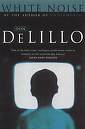
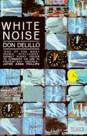
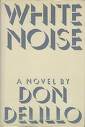
White Noise: The Airborne Toxic Event Revisited
A fitting time to reanimate this one, originally posted on October 6, 2006:
Would you be shocked if you found yourself dragged out of your home and sent to an evacuation center in the dead of night? After 9/11, probably not. Still . . .
Very early this morning in Apex, North Carolina (not far from Raleigh, the state capital), some 17,000 residents were evacuated in the wake of explosions and toxic fires at the humorously named Environmental Quality Company, whose headquarters are based in Wayne, Michigan. The fiery cloud release includes chlorine gas, the type used in trench warfare during World War One, and other agents that cause respiratory distress and, potentially, death.

This horror show immediately reminded me of one of the most perceptive novels of the past fifty or so years that I have read – Don DeLillo’s White Noise (1985), especially its Airborne Toxic Event. DeLillo finished this brilliant satirical work after the Union Carbide disaster in Bhopal, India, which by now has caused the deaths of perhaps 15,000 people (12/3/1984). The following year came the Chernobyl nuclear disaster (4/26/1986).

This is the third major plant fire fiasco in North Carolina in the past fifteen years that I can recall. In Hamlet, John Coltrane’s little hometown, a grease fire (it was a large vat, apparently) at the chicken-nugget plant owned by Imperial Foods led to the immediate death of 25 workers – the emergency exits had thoughtfully been chained shut by management to “prevent theft of chickens” (9/3/1991). At West Pharmaceutical Plant in Kinston, an explosion killed at least four outright and injured another 37 (1/29/2003).
One thing we can count on: there will be plenty more Airborne Toxic Events to come, and not just potentially above Iran and North Korea.
As for White Noise, there are rumblings this year that Barry Sonnenfield is going to produce a movie version. It’ll be just like real life, only more so. [Hasn't happened. Instead we've gotten additional doses of real life. Just like fiction -- only more so].

Today's Rune: Wholeness.
Do svidaniya!
Sunday, June 13, 2010
The West Indies/Caribbean
The West Indies/Caribbean region, a microcosm of global rivalry glimpsed through archaeological layers, modern diversity and cultural syncretism, supports a population that barely exceeds Canada's. It is in between, sort of part of North America and sort of not; partly Latin America and partly not.
A big thanks to Jim Hampton for suggesting this region. I have been to Puerto Rico and several of the islands, barely skimming the surface but catching some understanding of historical context and global economics.
Places to go, see, stay? Of course, I do wish to explore Cuba. And a return to Martinique, home of Angelique Bouchard Collins, is in order. But just about anywhere in the Caribbean holds a certain fascination, including Puerto Rico.
Really interesting stuff relating strongly to the Caribbean: Sidney W. Mintz, Sweetness and Power: The Place of Sugar in Modern History (1985, 1986+).
Today's Rune: Initiation.
Friday, April 16, 2010
The Airborne Toxic Event
Meanwhile, back in Europa . . . already the 25th anniversary of Don DeLillo's White Noise and its "Airborne Toxic Event" (the Bhopal disaster transpired in 1984); next year, the same anniversary for Chernobyl and my ill-fated honeymoon trip to Europe. DeLillo was exactly right on target, and still is. No need for a movie version -- we have the reality versions rolling out on a regular basis.

Below: The Illuminoids' Remix of "Gimme Shelter."
Today's Rune: Joy.
Saturday, February 06, 2010
The Revolution, Digitized
A worthwhile experience: PBS' Frontline: Digital Nation: Life On The Virtual Frontier (2010), directed and produced by Rachel Dretzin and walked through by Douglas Rushkoff. It's a sort of episodic adventure into the here and now of cyber reality, hopping like think bubbles from information overload to kids to classrooms to South Korean game addicts to avatar realities to drone pilots to Post Traumatic Stress Syndrome treatment and so on. The last thirty minutes are worth the virtual price of admission. The disconnect between drone pilots and their killing machines (via Hellfire Missiles and the like) and physical realities thousands of miles away is truly creepy. Much like Terry Gilliam's prophetic film Brazil (1985), or Phlip K. Dick in general.
If curious, here's a link to the website and documentary:
http://www.pbs.org/wgbh/pages/frontline/digitalnation/view/
From my own experience, teenagers seem more distracted because they actually are -- there are so many more outlets. They cut corners in every way possible -- because they can. But they, and those now in their twenties and even thirties, are avid multitaskers. The question is, are they also capable of deep thought? Is the ability to contemplate compromised by digital multitasking? Is it addictive behavior to such an extent that a whole new reality is being experienced? Is this the biggest shift in conciousness and new literacies since the printing press? I think, yes it is.
Today's Rune: Journey.
Sunday, January 31, 2010
Gregory Bateson: What is the Optimal Balance?
Gregory Bateson, Mind and Nature: A Necessary Unity (1979), p. 59:
Desired substances, things, patterns, or sequences of experience that are in some sense 'good' for the organism -- items of diet, conditions of life, temperature, entertainment, sex, and so forth -- are never such that more of the something is always better than less of the something. Rather, for all objects and experiences, there is a quantity that has optimal value. Above that quantity, the variable becomes toxic. To fall below that level is to be deprived.
Food, shelter, clothing. In Haiti, millions of people are deprived and in need. But in many American households, too much quantity of food, shelter, and clothing may lead to toxicity: hoarding, for instance, and its paralyzing impact.
Too hot, one wilts; too cold, one freezes. What is the optimal balance? Varies specifically with each person or other living being, but there is always a threshold in either direction.
Too much money or too much too fast? Check out the lotto winners and what happens with them over time. Check out Amy Winehouse, Elvis, Michael Jackson, Tiger Woods, Bernie Madoff: whatever the optimal balance was for them, clearly they did not find it.

Top: Piet Mondrian, Composition II in Red, Blue, and Yellow (1930), an example of optimal balance, perhaps. Black and white image is a scanned post card picked up during travels in the 1980s: Chez Mondrian, Paris, 1926, by Hungarian-born André Kertész (1894-1985). Again, optimal balance? A Western example of what Buddhists style as the Middle Path or Way. More is more up to a point, and then it becomes less; after that threshold "und minder ist oft mehr / and less is often more" (Christoph Martin Wieland, 1774) in terms of quantity vs. quality, the law of diminishing returns and the law of overdosing. Is this true?
Today's Rune: Wholeness.
Friday, October 02, 2009
World's Fair

A few chapters are narrated by Edgar's mother, an aunt, and his older brother Donald, all as if told to Edgar, who was a young boy in the 1930s. For the most part, Edgar's childhood is described in a way that melds his contemporary boyhood consciousness with an older Edgar's reconstructions. This hybrid method works very effectively.
I really like World's Fair. It reminds me of my family's trip to the 1964/1965 World's Fair, located on the same grounds as the 1939/1940 version.
The most recent American World's Fair was the 1984 Louisiana World Exposition in New Orleans. The earliest possible return to the States would be in mid-2017, but given today's selection of Rio de Janeiro, Brazil, as host city for the 2016 Summer Olympics, I wouldn't hold my breath. Expo 2010 will be in Shanghai, China.
For anyone under thirty or so, you'll either have to travel far or wait a good long while for the experience; meantime, I recommend Doctorow's novel.
A perfect companion novel to World's Fair is Philip Roth's The Plot Against America (2004); although it imagines Charles Lindbergh as having been elected president in 1940, it, too, is packed with autobiographical family details comparable to Doctorow's.
Today's Rune: Fertility.
Tuesday, September 29, 2009
That Obscure Object of Desire: Surrealism That Works

Luis Buñuel's last film, That Obscure Object of Desire / Cet obscur objet du désir / Ese oscuro objeto del deseo (1977), does something interesting: two actors (Ángela Molina and Carole Bouquet) play the same character -- the elusive Conchita -- driving Mathieu (played by majestic Spanish actor Fernando Rey) batty. All characters play their roles unblinkingly, making the viewer have to readjust to each version of Conchita, a somewhat disorienting experience. It works.
I can't think of many other examples of this bizarre technique in film. David Lynch comes to mind (usually involving a character whose consciousness splits or fragments due to trauma). Also, Woody Allen has one actor play the same person in two seemingly parallel universes (one comic, one tragic) in Melinda & Melinda (2005); both Melindas are played by Radha Rani Amber Indigo Anunda Mitchell, but all other characters are different. Allen also interweaves two universes in Deconstructing Harry (1997), one based on "reality" and another based on a novelist's "fictional reality," that closely parallel each other.
In That Obscure Object of Desire, Buñuel (1900-1983) throws in a major background element: terrorists in the streets, intermittently bombing and shooting. This element brings to mind Terry Gilliam's Brazil (1985), another interesting surrealistic film.
For devotees of Sex & the City, there's the added bonus in That Obscure Object of Desire of seeing Carole Bouquet, ex-wife of "the Russian" in the last season's Paris section (2004), in a major role.
Today's Rune: Partnership.