Showing posts with label 1975. Show all posts

Thursday, July 05, 2018

Michael Schultz: 'Cooley High' (1975)

Cooley High (1975). Directed by Michael Schultz, who also directed Car Wash (1976), covered here last month. Here's a link. 

The setting for Cooley High is Chicago in the year 1964. A fairly low-budget film, it was a hit in the mid-1970s, an exciting time for cultural offerings. Scripted by Eric Monte, who also worked on What's Happening!! (which shifted the Cooley High setting to Los Angeles). 

Main actors include Glynn Turman as Preach, Lawrence Hilton-Jacobs as Cochise, Cynthia Davis as Brenda and Garret Morris as Mr. Mason, a teacher-mentor who looks out for them. Hilton-Jacobs was also in Welcome Back, Kotter, a 1970s series that co-starred John Travolta. 
Preach shows the initially dubious Brenda that they have a shared interest in poetry. He's got a sort of Thelonius Monk-Dizzy Gillespie-Spike Lee kind of look with those glasses and, when roaming around, his cap. 

Cooley High isn't all fun and games. There's a sense of mortality hovering in the background, with a couple of poignant drinking salutes to the dead -- a custom with which I am quite familiar.

Cooley High is also nicely enriched with a Motown-powered soundtrack.

Today's Rune: Partnership.    

Friday, December 18, 2015

The Lost Honor of Katharina Blum (1975)

Volker Schlöndorff and Margarethe von Trotta's Die verlorene Ehre der Katharina Blum / The Lost Honour of Katharina Blum (1975), spotlights the main character, Katharina Blum, in a way that underscores the exuberance of mid-70s feminism. 
Found chart courtesy of the internet. 
Combine global male resistance to independent women with fear and panic over security and terrorism, and voila, you've got a film ready-made for the 21st century. 
The movie is based on Heinrich Böll's darkly satirical 1974 novel, Die verlorene Ehre der Katharina Blum oder: Wie Gewalt entstehen und wohin sie führen kann /  The Lost Honour of Katharina Blum, or: How Violence Develops and Where it can Lead. 
The almost absurdly intrusive surveillance and media system depicted in the film might seem beyond belief were it not for a series of similarly themed dystopian science fiction works -- and actual historical developments still being played out. 
Angela Winkler is key to the success of The Lost Honor of Katharina Blum. As she would later do playing "the eel-eating woman" in Volker Schlöndorff's Academy Award winning The Tin Drum (1979), she delivers here with total commitment.

Today's Rune: Breakthrough.  


Monday, May 26, 2014

The Spanish Civil War

'The Spanish Civil War of 1936-39 was a class war, and a culture war. Competing visions of Spanish identity were superimposed on a bitter struggle over material resources, as the defenders of property, religion and tradition took up arms against a Republican government committed to social reform, devolution and secularisation . . .'

And so begins Frances Lannon's masterful, even-handed volume in the Essential Histories series: The Spanish Civil War, 1936-1939 (Osprey, 2002), page [7].


When the majority of people in any nation, region or even village fail to find and hold some kind of acceptable common ground, there is always a tendency and danger that they'll instead fissure and then harden into monstrous, sharp-edged and pitiless warring factions, separated by a No Man's Land filled with spitting hatred and exploding land mines. 

If the "centre [center] cannot hold" (as W. B. Yeats phrased it in his 1919 poem, "The Second Coming"), beware, for 

'Mere anarchy is loosed upon the world,
The blood-dimmed tide is loosed, and everywhere
The ceremony of innocence is drowned;
The best lack all conviction, while the worst
Are full of passionate
intensity.'

Which brings us back to Frances Lannon's The Spanish Civil War, 1936-39: 

'It would . . . be difficult to exaggerate the significance of the civil war . . . Winning . . . was the precondition for shaping the future of Spain, and losing it meant political, economic, cultural and even physical exclusion from that process . . .' page [7].

More details in a future post, I suspect, but until then, the end: 

'Postwar Spain would be Franco's Spain . . . The postwar repression removed tens of thousands of opponents of the new regime by execution, and more by imprisonment. Others fled into exile. The dictatorship was determined to make the peace a continuation of the war by other means. . .' [Ibid.]  

Thirty-nine years after Franco's rise in 1936 came his death in 1975. Thirty-nine years after Franco's death in 1975 came . . . the year 2014.  

Today's Rune: Flow. 

Wednesday, June 26, 2013

Jean-Pierre Melville: Les enfants terribles (Take II)

Again while trying to absorb Jean-Pierre Melville (and Jean Cocteau's) Les enfants terribles (1950), live events keep rolling in. Today's big Supreme Court rulings in the USA were victories for the legitmacy of gay marriages, including recognition of federal benefits. This is a touchstone issue around the world and will certainly circulate in due time around the other states here. Overall, these rulings and similar developments represent a big shift since a time-marking event as recent as the 2004 presidential election, when so-and-so's pastor told people not to vote for John Kerry because he wouldn't stifle gay rights. A Pyrrhic victory for social conservatives, it turns out. One of many such in hindsight, I suspect.  
Michigan Daily, October 15, 1975
In any case, Les enfants terribles is a peculiar movie (based on the equally peculiar Cocteau novel), definitely memorable in part because it's so weird and different from more "typical" fare. It does remind me of a few other works, but of each in a different way. It utilizes classical music akin to how Stanley Kubrick later did in completing A Clockwork Orange (1971), for instance. It has social relationships in the same emotional realm as found in Flannery O'Connor's Wise Blood (1952) -- which is cool, because she may have seen the film at the time; certainly, given her interest in French literature, she would have been aware of the 1929 Cocteau novel. And there's a thematic connection taken up by Bernardo Bertolucci (Last Tango in Paris, Little Buddha) in The Dreamers (2003), a film also set in Paris, only updated to revolutionary year 1968. All in all for these comparisons and on its own merits, it's worth an extended look.
   
The image here reminds me off the top of my head of Ingmar Bergman's Det sjunde inseglet / The Seventh Seal (1957), Roman Polanski's Rosemary's Baby (1968) and Clint Eastwood's Midnight in the Garden of Good and Evil (1997). What do you think?

Today's Rune: The Mystery Rune.


Saturday, March 23, 2013

Michelangelo Antonioni: The Passenger (Take II)


Antonioni's The Passenger (1975) is an odd sort of road movie that takes its main character (played by Jack Nicholson) on a journey dicated largely by a dead man's day planner. Why does he do it? Having assumed another's identitity, why does he insist on walking in the other man's shoes? Therein lies one mystery.

The ambience that permeates The Passenger feels like fate, like myth, like an inevitable time and place and outcome. What we see are detailed (and often beautiful) shots of people and buildings, vehicles, landscapes and skies set in, around and above North Africa, London, Germany and Spain.

The Passenger sticks with me like the memory of some strong dream; somewhere down the line it eventually conjured up in my comparative memory what could be seen as a companion film: Wim Wenders' Der Amerikanische Freund / The American Friend (1977), starring Dennis Hopper and Bruno Ganz. Both delve into identity and coincidence, fate and the big picture, and there be Germans.

Today's Rune: The Mystery Rune.        

Friday, March 22, 2013

Michelangelo Antonioni: The Passenger (Take I)


Another absorbing (and strange) film by Antonioni is The Passenger (1975), starring Jack Nicholson and Maria Schneider. In English and in color. Locations are as wide-ranging as in a Bond film, starting with Francophone Chad, the African nation just south of Libya. It's largely about identity, or social contructs if you prefer. And, preconceived notions of what makes people tick. The setup if this: Locke (Nicholson) is a BBC reporter covering Africa; he's made friends out in the field (at a desert inn, to be specific) with Roberston, a man with a heart condition, secret arms dealer by trade. When Locke finds Roberston dead of "natural causes," his immediate instinct is to switch identities. And then off he goes back into the world, leaving his wife in London a "widow." Much happens as a result of this decision.

Usually in movies, such identity swaps are played for laughs, but a similar dramatic switch forms the backdrop for Don Draper (Jon Hamm) in the AMC series Mad Men. 


Today's Rune: Possessions.  

Tuesday, January 29, 2013

Rapture of the Deep


Music can quickly induce the rapture of the deep, that feeling caused by an altered state while diving way down below the surface of an ocean or a deep sea. All the more rapturous when such music is drawn out, as on Van Morrison's Saint Dominic's Preview (1972). Wow. Such an altered state can be evoked purely from listening away from "the madding crowd." I get this from Van Morrison, John and Alice Coltrane, from the Rolling Stones' Exile on Main St. (1972), Led Zeppelin's Physical Graffiti (1975) -- and many others.

On the manifest production side, writing does this for me, researching, delving, musing, doing anything I'm "really into."  

How about you?

Today's Rune: Wholeness. 

Tuesday, November 20, 2012

The First and Last Casualties


Coverage of wars and poverty, of competing ideas and political conflict is all over the map.  Attention Deficit Disorder and entropy on one hand, pre-existing ideological prejudices and Obsessive Compulsive Disorder on the other.  Avoidance on the one hand, oversaturation on the other.

Some of the most memorable wartime investigative journalism can be epitomized by the work of Seymour Hersch, who has, during his career, written a number of penetrating stories for United Press International (UPI), the Associated Press (AP), The New York Times, The New Yorker, and more. Prime examples: exposing the My Lai Massacre (1968). Investigating the context of what led to the shooting down of Korean Air Lines Flight 007 (1983). Digging into the false pretenses and cynical manipulation of public perceptions by the Bush-Cheney Administation that led to the Iraq War (2003-2011). Delving into the ghoulish facts of the Abu Ghraib POW scandal. And so forth. This is not to say that Hersch is always completely accurate in his reporting, but rather that he's done more good investigative work relating to war and abuse of power than most. Under the banner of the First Amendment, we need more people doing this kind of work.

Today's Rune: Flow.

Thursday, October 18, 2012

Göran Olsson: The Black Power Mixtape 1967-1975


Göran Olsson's The Black Power Mixtape 1967-1975 brings to light exciting and empathetic archival footage of the movement from a Swedish perspective. I loved it. There's the backdrop of the US-Vietnam War, riots, upheaval and assassination, the Black Panthers and Attica Prison uprising, with contemporary commentators. More to say about it, with more details -- soon. Anyone interested in human/civil rights and/or the 1960s and 1970s would probably dig this for any number of reasons. I sure did.  

Today's Rune: Initiation.  

Wednesday, August 01, 2012

Lina Wertmüller: Pasqualino Settebellezze / Seven Beauties


Lina Wertmüller's Seven Beauties (1975) brims over with frenetic and dazzling energy. It presents the years of Mussolini and Hitler and the Holocaust with a crisp originality. Not coincidentally, Wertmüller was the first female director to ever receive a nomination for an Academy Award for Best Director. (Kathryn Bigelow was the first woman to actually win Best Director, and that in 2009 for The Hurt Locker -- more than three decades after Seven Beauties).

What's the story arc? First we see a stunning montage of archival footage from the Second World War synchronized with a strange sing-song punctuated with "Oh yeah's." Then, a blending of flashbacks and chronological jumps that are done with remarkable deftness. We follow the main character (Pasqualino Seven Beauties), an absurd popinjay and petty player, on a rollercoaster ride of personal decisions mixed with grand luck or fate, good and bad, played out. We see him having deserted from Stalingrad* and fleeing for his life, but also in an insane asylum and a concentration camp. Will he survive, and what will become of his mother and sisters whether he does or not? Horrifying situations enlivened by dark humor.

*Not widely known in the West, the Italian 8th Army lost about 21,000 killed at Stalingrad; perhaps 45,000 escaped alive from the great Soviet strategic trap.

Today's Rune: Defense.    

Tuesday, June 19, 2012

Bad Company, or: It's 1975, Okay?


Here's a time capsule from 1975, a scanned paper artifact. Sponsored by then-album-oriented rock (AOR) radio station WQDR (QuaDraphonic Rock) 94.7 out of Raleigh, North Carolina, It's designed to whip up excitement for concerts in central Tar Heel Land and vicinity. 

So, it's the spring of 1975 and who's making the rounds? 

The headliner for this flyer is Bad Company with "special guest" Maggie Bell at Greensboro Coliseum. "Tickets $5 at the Coliseum Box Office and area Record Bars." Bad Company was riding high: Bad Company, their first album, had just come out the year before, and the '75 tour was mounted to support Straight Shooter, their new album.

Others on tour: The Ozark Mountain Daredevils, Elvin Bishop, "Emmy Lou" (Emmylou) Harris,  Rufus, "The Parlaiments" [sic] (aka Parliament) and Funkedelic, Gladys Knight & the Pips, Miles Davis, The O'Jays, America, Ian Hunter and Mick Ronson, Wet Willie, The Charlie Daniels Band, Golden Earring and Robin Trower, Blue Oyster Cult and Foghat.

The Williamsburg Bluegrass Festival would feature Lester Flatt, The Osborne Brothers, Doc & Merle Watson, "and a host of others."*

AND IN THE FUTURE . . . . .

Lynyrd Skynyrd hits the road for a major tour this spring . . . ["Sweet Home Alabama" had just debuted the year before]. . . Still no firm date on THE ROLLING STONES in July somewhere in the Carolinas. We'll keep you posted . . . CHICAGO . . . BEACH BOYS . . . THE BBC STORY OF ROCK . . . THE HOUR OF NEW MUSIC . . . The major rockfest from FANTASY PARK begins at 6pm on May 2 on WQDR and runs the entire weekend. Join us! . . . . . see you with BAD COMPANY in Greensboro May 14th . . . . . we hope to have buses again too . . . . .

A couple of years later, Lynyrd Skynyrd's plane crashed. As for WQDR, in 1984 "We Quit Doing Rock" -- it changed over to Country.

*Merle Watson was killed in a tractor accident in 1985; Doc Watson died in May 2012 -- less than a month ago.

Today's Rune: Signals.

Friday, April 20, 2012

Woody Allen: Annie Hall in Draft Form, Take One


On the way to San Antonio, I had the great delight of stopping in at the Harry Ransom Center at the University of Texas at Austin. My original intention was to examine some casual photographs revolving around American poet Anne Sexton (1928-1974) and Nigerian writer Amos Tutuola (1920-1997), but I became so absorbed in reading an entire untitled script for what evolved into Woody Allen and Marshall Brickman's shooting script for Annie Hall (1977) that I'll have to save the first two treats for a return visit.

First, the Harry Ransom Center has a beautiful interior that showcases a lot of interesting things around its spaces, items ranging from a photograph of Turkish horse cavalry in the snow by David Douglas Duncan to a manual typewriter employed by novelist John Fowles. I looked around while a courteous member of the staff retrieved a box from the Woody Allen collection acquired in 2005. (For more on its Scope and Contents, here's a link: http://research.hrc.utexas.edu/fasearch/allen.woody.film.html)

Once the items were delivered for pickup, I devoted my time to reading and taking notes and, much of the time I'll admit, quietly laughing in response to the dialogue. Officially, I was exploring "UNTITLED FILM SCRIPT" dated April 15, 1976. It includes 120 typescript pages with two appended scenes, white and light Carolina blue sheets of paper bound in red leather. Fascinating. It would appear as if certain pages were updated and inserted. And there are some fun inconsistencies. At times, Alvy's (the Woody Allen character) friend Rob (played by Tony Roberts in the completed film) is named Rob, and at other points, Roberts. Usually, Rob/Roberts calls Alvy by a nickname (Max, as in the movie), but at least at one point (page 53), Alvy refers to Rob as Max. This is just a small taste -- there's a whole lot more to underscore about the creative process. Once I sort through my notes, I'll post a bit more on my findings.

In thanks to the staff of the Harry Ransom Center; also in appreciation of Woody Allen and Marshall Birckman; and, of course, for the joy of Annie Hall. 

Today's Rune: Partnership.           

Monday, March 19, 2012

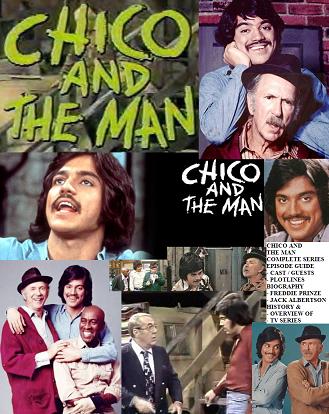
The 1970s: Chico and the Man/All That Glitters


So by the early-to-mid 1970s, there were all these mass-culture TV shows exploring socio-economic class, race, ethnicity, and gender. In the wake of the US-Vietnam War and the upheavals of the 1960s, this was a pensive time, with a mix of experimentation and philosophizing. Could people get along beyond the confines of their culturally driven self-identities?

Two shows I caught but didn't watch religiously: Chico and the Man (1974-1978), starring Freddie Prinze (1954-1977) and Jack Albertson (1907-1981); and All That Glitters (1977).  The first was a spiritual cousin to All in the Family, Sanford and Son, and early Sesame Street (1969-present), only with a young Latino dude building a connection with an older dispeptic Anglo in East L.A., supplemented by various other antics. By about fifteen years, it prefigured the Rodney King plea, "Can't we all just get along?"  All That Glitters was a soap opera-ish romp that inverted maintstream gender roles, so that it was a Woman's Woman's Woman's World. In other words, a mix of science fiction, fantasy and satire. The idea was to point out how generally patriarchal and one-sided the accepted status quo was up to that time -- the "double standard."

What's the legacy today? Apparently Rick Santorum, Newt Gingrich and Mitt Romney -- among others who might have been aware of these series -- missed the boat, the train, the car and the plane. Apparently they've rejected all of it. On the other hand, Clint Eastwood brought a sort of updated version of these 70s cultural awakenings back to market in 2008, with Gran Torino. And thanks to the 2008 election in the USA, Barack Obama is president and Hillary Clinton, Secretary of State. Where there's a will, there's a way; where there's no will, no way.

Today's Rune: Signals.      

Wednesday, October 26, 2011

Mike Leigh: Nuts in May


What's remarkable about Mike Leigh is how he can do so much with so little. His Nuts in May (1976), mixing two main and three secondary characters in an English campground (in Dorset), manages to cleverly produce themes more saliently found in, say, Lord of the Flies or The Sopranos. It's mostly about how people relate, or fail to, when fate dictates they must in order to avoid some level of catastrophe.

First we see how fussy and control freaky Keith and Candice Marie (the main characters) are even left to their own devices. Then we see them thrown for one loop after another by the others, even while occasionally making efforts to socialize and compromise. Given their rigidity, just about everything drives them batshit. One might say literally, but that wouldn't make any sense, now, would it?

After seeing this, I made sure to round up a lunch of bangers and mash the next day. It certainly triggered fond memories of hiking around England.

Today's Rune: Initiation.    

Tuesday, September 13, 2011

The Most Beautiful Thing in America


I. The most beautiful thing in Tokyo is McDonald's. -– Andy Warhol, “Beauty,” The Philosophy of Andy Warhol: (From A to B and Back Again), 1975.

II. Venus Flytraps ring the city.

Venus Flytraps ring the city
Set to catch commuters:
38 Subways
31 Jack in the Box drive-throughs 
30 Sonic Drive-Ins
28 7-Elevens
26 McDonald’s
25 Whataburgers
23 Starbucks
22 Domino’s
17 Taco Bells and
17 Pizza Huts
16 Braum’s
14 Wendy’s
12 KFCs
11 Waffle Houses
10 Burger Kings
8 Denny’s and
8 IHOPs and
8 Long John Silver’s
7 Taco Cabanas and
7 Mexican Inns and
7 Taco Casas
3 Cheddar’s Casual Cafes and
2 Captain D’s.

Yes, Venus Flytraps ring the city
Set to catch commuters.

III. "The M stands for McDonald's, but the rounded m represents mummy's mammaries, according [to] the design consultant and psychologist Louis Cheskin. In the [1960s] McDonald's was prepared to abandon this logo, but Cheskin successfully urged the company to maintain this branding with its Freudian symbolism of a pair of nourishing breasts."  -- "Fast Food Factory: Attracting the Customers," BBC World Service Specials.

IV. In every city and in every town, an outpost. How about in your neck of the woods?

Today's Rune: The Self.  

Monday, August 16, 2010

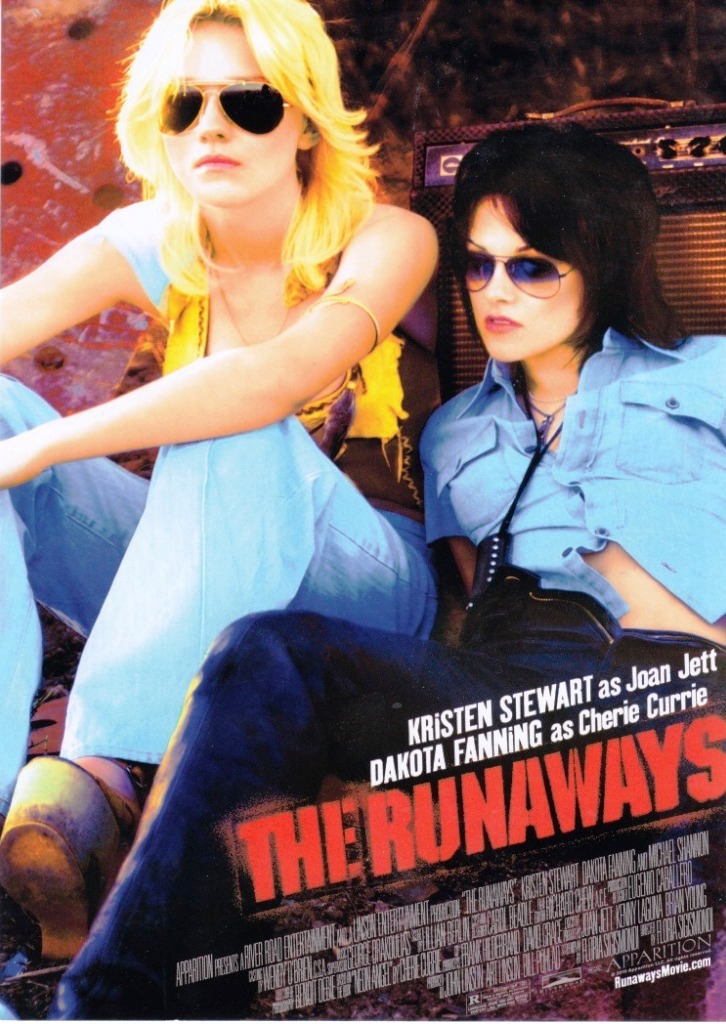
Floria Sigismondi: The Runaways


Floria Sigismondi's The Runaways (2010) makes for an ideal companion film in a double feature showing with Chus Gutiérrez's El Calentito (2005). I've thoroughly enjoyed both movies, both about all-women bands, the one set in the mid-to-late 1970s in the USA and Japan, the other set in Spain in the very early 80s.

The story line for The Runaways, based on Cherie Currie's Neon Angel: A Memoir of a Runaway (2010) and fleshed out by Sigismondi, follows the formation of The Runaways, Currie's various conflicts (family dysfunction and guilt, substance challenges, psychological and emotional issues), producer Kim Fowley's machinations, and Joan Jett's tenacious strength.  The whole cast is memorable, including Riley Keough (Elvis and Priscilla's grandaughter, Lisa Marie's daughter) as Marie Currie, Cherie Currie's twin sister. Dakota Fanning is glittery as Cherie, Michael Shannon nails the eccentric Fowley down, and Kristen Stewart is so good channeling Joan Jett I am still amazed, having seen Jett rock out in Charlotte around 1981. 

The soundtrack is hip and effective and includes a salute to Detroit via Iggy and the Stooges, the MC5 and Suzi Quatro.  Let's not forget David Bowie. the actual Runaways and Joan Jett and the Blackhearts.  If you dig the 1970s milieu at all, you will have a real cool time checking out The Runaways.


Florida Sigismondi (b. ca. September-October 1965), the strikingly visual director pictured here, seems to have more than a dash of Joan Jett's sensibility and drive herself.

Today's Rune: Strength.

Sunday, April 04, 2010

Both Ends Burning


Roxy Music -- "Both Ends Burning." Viva Roxy Music!

I'll be back to visiting blogs soon -- catching up at work, giving an exam tomorrow, all that fill-in-the-blank essay short answer jazz.

Happy Easter, dear readers!

Today's Rune: Strength.

Tuesday, March 16, 2010

The Runaways: Coming March 19


By the time I got to the early free screening of The Runaways, it was already booked to capacity. In fact, for a 7:30 p.m. showing, people had already camped out by Noon. The above image is of a movie card a security guard let me take at the perimeter. Instead, ended up seeing An Education, which is excellent. More on that soon, as well as The Runaways, which I now aim to see at the weekend.  Looks really good.

Today's Rune:  Joy.

Thursday, December 17, 2009

Physical Graffiti


My sister Linda amassed a goldmine of records throughout the 1970s; digging into it one day I came upon Physical Graffiti, Led Zeppelin's double album released in 1975. Like the Stones' Exile on Main Street (1972), it keeps on giving decades later. I can listen to this one for hours on end, like a nice bit of Miles Davis or John Coltrane (also first got into via Linda's eclectic vinyl stacks). Thank you, Linda -- again!


Today's Rune: Protection.

Wednesday, November 04, 2009

Sesame Street at Forty

Sesame Street turned forty today, and my younger brother Jamie will turn the same age at the end of this year. These two things are connected in memory because anytime I watched Sesame Street, it was usually while babysitting Jamie, or watching him briefly while the adults did other things. I approved of Sesame Street, and The Electric Company, though I (at the time) mocked poor harmless Fred Rogers and Mister Rodgers' Neighborhood, which seemed infantile by comparison. (When I'd been Jamie's age, I sometimes watched Batman, The Twilight Zone, Captain Kangaroo, Dark Shadows, Milton Berle, Star Trek -- a real eclectic grab bag).

Anyway, Big Bird always freaked me out, his gangly size and weird voice. The Count, Cookie Monster and Oscar were the ones I liked best. The people seemed cool, the great urban mix that even now seems ahead of its time. A big hit for PBS and a legacy of good things put in motion by The Great Society, even during the Vietnam War.


The Electric Company (1971+) was stranger than Sesame Street, a little more on the surreal side; among its early regulars were Bill Cosby (who earlier had done I Spy; afterwards, Fat Albert & the Cosby Kids) and Morgan Freeman.

In the tradition of older sibling taking younger to see scary movies, where Vickie, my oldest sister, took me to see The Omega Man and Deliverance, I later took Jamie to see Apocalypse Now! and Wise Blood. By that time, we'd run far far away from Big Bird.

Today's Rune: Defense.