Showing posts with label Ingmar Bergman. Show all posts

Tuesday, May 01, 2018

Ingmar Bergman: 'Nattvardsgästerna' / 'Winter Light' (1963)

Ingmar Bergman's stark 1963 black and white film Nattvardsgästerna [The Communicants] / Winter Light focuses on faith, belief, lack or loss of faith and non-belief. It serves as a test for the nuclear age: for believers and non-believers alike. What do you, can you believe in?

"Although our intellect always longs for clarity and certainty, our nature often finds uncertainty fascinating." ~ Carl von Clausewitz, On War (1832).

"Everything in war is simple, but the simplest thing is difficult." ~ Ditto.

In Winter Light, everything is simple, but the simplest things are difficult.

Main characters: Tomas Ericsson (Gunnar Björnstrand), pastor of two (or more) contemporary (early 1960s) rural Swedish churches. Märta Lundberg (Ingrid Thulin), substitute teacher, atheist and sometimes paramour of pastor Tomas.  Jonas Persson (Max von Sydow), a spiritually lost fisherman distraught about the possibility of nuclear destruction to the point of suicidal urges. Karin Persson (Gunnel Lindblom), his wife and mother of two young children. Fredrik Blom (Olof Thurnberg), cynical, comical and boozy organist. Algot Frövik (Allan Edwall), sexton, serious thinker and believer, previously disabled in a work accident, foil to Fredrik.  
Winter Light is memorably shot in black and white. Cinematographer, Sven Nykvist. 
Fears that seem as pointed in the 21st century as they were during the Cuban Missile Crisis more than fifty years ago keep Winter Light fresh and to the point: ". . . and that it's only a matter of time before China has atom bombs." Change "China" to fill-in-the-blank. Change "atom bombs" to fill-in-the-blank. Voila! More fear pictures. When the pastor suggests that God is a Spider and we're caught in Its Web and wriggling till Death, one cannot help but shiver. 

The funniest line in the whole movie is delivered by Märta Lundberg, the atheistic substitute teacher: "Another Sunday in the vale of tears." That's Winter Light in a nutshell. I would suggest this only to those with strong heart and mind.

Today's Rune: Partnership.

Wednesday, June 26, 2013

Jean-Pierre Melville: Les enfants terribles (Take II)

Again while trying to absorb Jean-Pierre Melville (and Jean Cocteau's) Les enfants terribles (1950), live events keep rolling in. Today's big Supreme Court rulings in the USA were victories for the legitmacy of gay marriages, including recognition of federal benefits. This is a touchstone issue around the world and will certainly circulate in due time around the other states here. Overall, these rulings and similar developments represent a big shift since a time-marking event as recent as the 2004 presidential election, when so-and-so's pastor told people not to vote for John Kerry because he wouldn't stifle gay rights. A Pyrrhic victory for social conservatives, it turns out. One of many such in hindsight, I suspect.  
Michigan Daily, October 15, 1975
In any case, Les enfants terribles is a peculiar movie (based on the equally peculiar Cocteau novel), definitely memorable in part because it's so weird and different from more "typical" fare. It does remind me of a few other works, but of each in a different way. It utilizes classical music akin to how Stanley Kubrick later did in completing A Clockwork Orange (1971), for instance. It has social relationships in the same emotional realm as found in Flannery O'Connor's Wise Blood (1952) -- which is cool, because she may have seen the film at the time; certainly, given her interest in French literature, she would have been aware of the 1929 Cocteau novel. And there's a thematic connection taken up by Bernardo Bertolucci (Last Tango in Paris, Little Buddha) in The Dreamers (2003), a film also set in Paris, only updated to revolutionary year 1968. All in all for these comparisons and on its own merits, it's worth an extended look.
   
The image here reminds me off the top of my head of Ingmar Bergman's Det sjunde inseglet / The Seventh Seal (1957), Roman Polanski's Rosemary's Baby (1968) and Clint Eastwood's Midnight in the Garden of Good and Evil (1997). What do you think?

Today's Rune: The Mystery Rune.


Saturday, December 15, 2012

Fort Worth vs. Ingmar Bergman


Fifty years ago, the City of Fort Worth had the dubious distinction of blocking the showing of Ingmar Bergman's Academy Award-winning film Jungfrukällan / The Virgin Spring (1960) at the Capri Theatre, a long-since demolished venue that showcased independent world-class films and inspired, among others, Fort Worth musician T-Bone Burnett (by his own reckoning) to widen his horizons in life-changing ways.   

In JANUS FILMS, INC. v. CITY OF FORT WORTH 354 S. W. 2d 597 (1962), this act of censorship by the "Board of Censors" of Fort Worth was justified in part by the following statement:

The ordinance [Fort Worth Ordinance No. 2475] provides that no permit shall issue for the exhibition of motion pictures (or other forms of entertainment) which are, in the opinion of the Board of Censors, indecent or injurious to the morals of the citizens of Fort Worth, or which would tend to promote or encourage indecency, immorality, or racial or sectional prejudice, or juvenile delinquency.

If this ruling had stood, in 2012 it could have still been called upon to justify blocking the screening of Steven Spielberg's Lincoln (2012) or Quentin Tarantino's Django Unchained (2012). As it is, well -- I'll get to that.  
 

Presumably, the supposed justification for suppressing an Ingmar Bergman film was nullified by the US Supreme Court in Jacobellis v. Ohio, 378 U.S. 184 (1964).


Meanwhile, Fort Worth no longer has any daily venue for the screening of independent or international films. There is only the Magnolia at the Modern (Art Museum), which shows films only on weekends (usually), and the Lone Star Film Festival, which has been held once every year since 2007. For a city of its size (a little bigger than Detroit proper), Fort Worth is in serious need of a permanent "alternative" theater.  If we're lucky here, the planned Citizen Theater on Magnolia Avenue may bring succor by sometime in 2013 or so.  

Today's Rune: Movement.     


Thursday, December 06, 2012

Ingmar Bergman: Through a Glass Darkly


Ingmar Bergman's Såsom i en spegel / Through a Glass Darkly (1961) revolves around a mere four characters in a short timespan (twnety-four hours or so). It's not exactly a Thanksgiving gathering, but all of these chracters are family. There's David, the emotionally paralysed father, a writer who has spent most of his time avoiding the rest of them. There are his two children, teenager Minus (Lars Passgård), a student and aspiring playwright, and Karin (Harriet Andersson), an adult recently released from a mental institution where she's been treated for schizophrenia and subjected to electro-shock therapy. Finally, there's Karin's husband, Martin, apparently a professor, or perhaps a doctor who also teaches (it was unclear to me from the sparse dialogue, but he carries a medical kit and mentions dealing with his students). Martin is played by Max von Sydow and David by Gunnar Björnstrand. Not incidentally, in Bergman's Det sjunde inseglet / The Seventh Seal (1957), the former portrays a crusader knight and the latter, his squire.

Cool movie, beautifully shot in black and white on Fårö, an elemental Baltic Sea island.

Karin slips in and out of "two worlds" -- the mundane (pragmatic) and mystical-disordered (schizophrenic).  The way everyone relates to each other seems very true, and Harriet Andersson is superb in flipping the switch on Karin's state of mind, so to speak. 

I've known two schizophrenics, both very smart people. One, in North Carolina for a while, was a physicist and the other, in London, a landscape architect. Both of them would go off into mystical musings while seeming to retain an awareness that they were, or sounded, quite strange compared to those around them. I still remember some of the eerie things they would say. Tasked with conveying messages to both (years apart) and seeing to it that neither did self-harm or lurched into trouble, I also experienced other wild fluctuations in their behavior firsthand. As far as electroshock, it elicits memory loss to varying degrees, from what I've seen.

Bergman's influence extends to the Rolling Stones


Today's Rune: Gateway.          

Tuesday, December 04, 2012

The Swedish Connection: Ingmar Bergman's 'Cries and Whispers'


I. Ingmar Bergman's Viskningar och rop / Cries and Whispers (1972) is heavy, dense, intense, and color-saturated, punctuated with ambient sounds emanating from people, objects and spaces at an alternatingly beautiful and claustrophobic estate in late Victorian Sweden.

The Criterion Collection website renders a succinct overview:

Legendary director Ingmar Bergman creates a testament to the strength of the soul—and a film of absolute power. Karin and Maria come to the aid of their dying sister, Agnes, but jealousy, manipulation, and selfishness come before empathy. Agnes, tortured by cancer, transcends the pettiness of her sisters’ concerns to remember moments of being—moments that Bergman, with the help of Academy Award–winning cinematographer Sven Nykvist, translates into pictures of staggering beauty and unfathomable horror.

Source: http://www.criterion.com/films/237-cries-and-whispers 

II. In addition to its emotional freight, Cries and Whispers provides a glimpse at socio-economic class before the Great War, particularly through the eyes of domestic servant Anna (Kari Sylwan). The males in this film do not come off well at all, but then, neither do most of the females, either. Anna, though, is the most centered of them all, even though her economic status is dependent on the whims of her employers. She has suffered the loss of a child and can be dismissed from her difficult service job on a moment's notice.


III.  For me, Anna's perspective evokes Anna Victoria "Tora" Ringberg (1890-1966), my great grandmother, who travelled aboard the SS Baltic, White Star Line, from Liverpool, arriving at New York City on April 18, 1909, when she was eighteen years old. By 1910, she was a domestic servant at the Wilford-Hitchcock household in Branford, New Haven, Connecticut; and by 1914, she'd made her way to the Chicago area, where she married Alexander Drougge (1889-1966), my great grandfather. They resided for at least part of the time in Ludington, Michigan, because Alexander worked as a moulder and steel worker there during the Great War, and then for the next fifty years in Kenosha, Wisconsin. 

Today's Rune: Journey.       

Friday, December 23, 2011

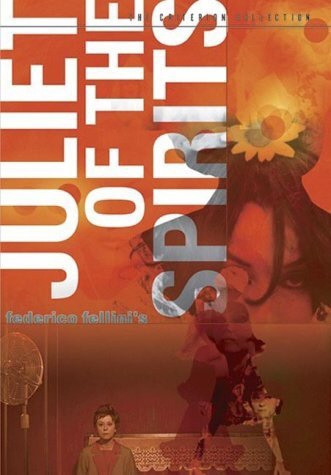
Fellini: Giulietta degli Spiriti


Giulietta Masina married Frederico Fellini near the end of the Second World War and remained in that interesting social compact (unconventionally) for fifty years, at which point Fellini died; Masina died five months later. Giulietta degli Spiriti/Juliet of the Spirits (1965) takes an indirect look at their relationship near its halfway point, or so it would seem. As one character states in the movie: "The interpretation is up to you. What can we say?"

Masina plays Giulietta/Juliet, a mostly self-contained middle-aged woman with a strong Catholic background; when confronted with her husband's infidelity, she falls through a metaphorical rabbit hole. This is Fellini's first color movie, and all its heightened effects work together to radiate a world of the spirits. Colors are wild and vivid; sounds echo; the camera moves and all is in motion. The sharp images, incandescent hues and frequent use of shadow create a dreamy, sometimes hallucinatory feel for Giulietta's derangement of the senses. The characters are, well,
Felliniesque . . . Diane Arbus in color. It's a luxurious and unrushed ride.

What I see immediately after viewing Juliet of the Spirits are a series of artistic "hyperlinks" to other movies: back through time to The Wizard of Oz and Fritz Lang; over the rainbow to Ingmar Bergman's The Seventh Seal; and coming our way through such visually stunning films made between 1965 and 1986 as Rosemary's Baby, Barbarella, The Exorcist, Aguirre: The Wrath of God, Carrie, The Shining, Stardust Memories, and Blue Velvet; and even closer, to the great HBO series of recent years. Interesting company, indeed; with, however, almost no violence at all in Juliet of the Spirits. The music at times reminds me of Woody Allen, for sure; the Italian dialogue is beautiful to listen to, even while keeping up with the subtitles.

To me, the coolest thing in the movie is the furiously fluttering artificial fire that surrounds Juliet as she is being (pretend) burned to death in her childhood school play rendition of a Catholic martyr, a striking image that visits her from time to time.

Today's Rune: Harvest.

Thursday, December 15, 2011

Ingmar Bergman: Persona


Ingmar Bergman's Persona (1966) takes you through a funhouse mirror of person-to-person interaction. Where does one end and the other begin? How many layers of personality and personae are we made of?

In Persona, Elisabet (Liv Ullmann) and Alma (Bibi Andersson) become alternately intertwined and unspooled through a maddening but effective technique: the half-talking cure. One talks and talks and the other remains virtually silent, responding with looks and mostly non-verbal gestures and movements. The result, combined with sections of fast cuts, semi-subliminal images and bursts of wild music and set against a backdrop of changing light and ambience, stuns and makes you wonder.  


Personae shift and shimmer depending on circumstance. A lot of times this has to do with audience. For instance, I'm not going to use profanities in front of undergraduate (or younger) students, whereas in much freer (and therefore very limited) circumstances I swear like a sailor -- and enjoy it.

Life is theatre: keep stage and audience in mind wherever possible. Life is a movie: there are things like flexibility, lighting, presentation and various effects to consider. Choices. Options. Actions. Let's roll it. Alma: "To change oneself. My trouble is laziness." To change yourself, it helps to know yourself; sometimes it's easier to know someone else's contours better than your own. Consider photos and mirror images vs. our interior mutterings and self-conceptions -- there's usually a disconnect there somewhere, or a no-connect, which is probably why it's so exciting when we do connect, or reconnect, or make entirely new connections, with other people as well as with ourselves. 

Today's Rune: Harvest.

Saturday, April 02, 2011

Aleksandr Askoldov: Commissar: Take Two


I'd like to try to place Commissar in some kind of context. Aleksandr Askoldov directed only this one film -- for which he was banned from making any other -- but his cinematographer, Valeri Ginzburg, had already worked on movie productions since the 1950s; he continued to do so into the 1990s.

The look and feel of Commissar (remembering that it's in black and white) reminds me in a very good way of works by a number of other great filmmakers and their production teams. For example, Fernando de Fuentes' Mexican Revolution tales; Ingmar Bergman and Federico Fellini (intense, sometimes surreally-tinged studies of families and people in various tense situations interacting with each other); and Sergio Leone via integration of music, sound effects and action. The story itself has a similar framework as Philippe de Broca's Le Roi de Cœur (1966) with protaganist hiding inside a town or city in between lines, leading the audience to question the sanity of mass humanity. King of Hearts is set in World War One, immediately preceding the Russian Civil War period in which Commissar is set. Whether it influenced Askoldov directly is hard to say: such feelings and worldviews among artists seem to have been part of the convulsive 1960s Zeitgeist, time ghost or spirit of the times -- even before the era's 1968 global crescendo and regardless of country or dialect.   

Today's Rune: Harvest.


Monday, May 24, 2010

We Will Meet a Tall Dark Stranger


Woody Allen has two movies in the pipeline. You Will Meet a Tall Dark Stranger is set for widescreen release this fall, and Midnight in Paris is in process for next year. A strong cast will enrich both of them. Allen continues to inspire big gun actors, which speaks strongly of his international standing. In Stranger, Josh Brolin plays a floundering novelist, but why take my word for it? There's a detailed press kit available via the official website here: http://www.sonyclassics.com/youwillmeetatalldarkstranger/


And at least as of now, Oscar winner Marion Cotillard is set for a role in Midnight in Paris. As far as I'm concerned, she and Penélope Cruz have supplanted Angelina Jolie as the preeminent working movie stars of our time, mostly because of their professional choices and performances. 

Today's Rune: Strength.   Above: Ingmar Bergman's The Seventh Seal / Det sjunde inseglet (1957).  Antonius Block (Max von Sydow) plays chess with Death  (Bengt Ekerot).

Wednesday, December 03, 2008

Who Knows What Tomorrow Might Bring?


The other day, I was listening to "Editions of You" -- one of the coolest Roxy Music songs, going all the way back to 1973 -- when the lyrics jumped out and seemed perfectly apt for today. A snippet goes this way:

So love, leave me, do what you will
Who knows what tomorrow might bring?
Learn from your mistakes is my only advice
And stay cool is still the main rule
Don't play yourself for a fool
Too much cheesecake too soon
Old money's better than new
No mention in the latest
Tribune
And don't let this happen to you . . .


Whatever happens to the Big Three American automakers,
1) it's been a long time coming;
2) it's sad;
3) it'll be weird whatever happens next;
4) maybe there'll be some cool, durable gas sippers that'll break on through to the other side.

I love my sporty two-door 1997 Pontiac Sunfire GT economy wheels (similar to the one above, only in black). I bought my Sunfire used from former co-worker and buddy Trent Vanegas for a great deal at just under 100,000 miles just around 9/11/2001. It now has about 200,000 miles, the AC is long busted and the driver-side window is stuck about an inch down from the top, it's got a dent and the trunk won't open from the outside (but it's still accessible from the back rumble seat). Main thing is, it still runs. Even new, it would have been affordable when credit was readily available. My next car, when it happens, will also be an American car, used. Why, I don't know for sure. Seems like the right thing to do is all, still living in the USA and all.


In other matters, got to see Ingmar Bergan's last major movie, Fanny & Alexander, for the second time since it came out in 1982. Really like it much more than back then -- I'm older if not wiser, and I kind of like the slow pace. Plus, I'm a sucker for existentialism and things Swedish now more than ever.


And let's not forget surrealism, which these days seems more like realism. Here's Catherine Deneuve in Belle de jour, the classic 1967 Luis Buñuel flick. This scene could be called "thinking outside of the box." Oh, ha ha ha.

Today's Rune: Fertility.

Tuesday, July 31, 2007

Ten Thousand Swedes


Sometimes to mix things up in a class -- History or English, doesn't matter -- I'll break out Ingmar Bergman's The Seventh Seal. It usually makes for a surprising hit, especially with angst-ridden students. The idea of plague, meaningless, existential absurdity, deranged flagellants, sudden death, mysterious appearances of the Virgin Mary and the Grim Reaper playing chess appeal to the young. It's actually harder to show Bergman's scary vision to older audiences, for whom death seems all too familiar. I'll tell you another thing: finely made Swedish films tend to blow American minds, if precisely delivered with an element of surprise. In the original Swedish with English subtitles, of course.


Rosario Dawson is a memorable actress, depending on which persona she adopts. I like her in Shattered Glass (2003) in particular, playing an ambitious Forbes Digital internet journalist. Steve Zahn is also in top form as her co-worker. This film is better than a stolid lecture on plagiarism any day.

Today's Rune: Strength.

Birthdays: John Ericsson, George Thomas, Sebastian Spering Kresge, Jean Philippe Arthur Dubuffet, Ahmet Ertegün, Don Murray, Geraldine Chaplin, Bob Welch, Wesley Snipes, Emilia Fox.

Hej då!

Monday, July 30, 2007

Love in the Middle of a Firefight


If I had to label myself politically, "libertarian socialist" would be more accurate than "liberal." I support libraries and freedom of speech, civil liberties and so on. I particularly enjoy Gloria Steinem type characters and all sorts of troublemakers. I am usually attracted to the idea of subverting the status quo when change is needed, but also like preserving some of the better aspects of the past.


It's Thorstein Veblen's birthday: do you know where your credit cards are today? He wrote compellingly but in an odd style, coming up with things like "conspicuous consumption" and "the leisure class." George Carlin put consumerism this way: "They try to make you buy shit you don't need with money you don't have." Something like that.


It's also Marine Major General Smedley Butler's birthday. From his experiences during and after the Great War, he began to analyze war profiteering and published a small but insightful work, War is a Racket (1935). The full text is accessible via the internet. It's a scathing precursor to the idea of the military-industrial complex.

Today's Rune: Harvest.

Birthdays: Emily Jane Brontë (aka Ellis Bell), Thorstein Veblen, Henry Ford (Detroit), Smedley Butler (“The Fighting Quaker”), Berniece Baker Miracle, Yee Keung Victor Wong, Peter Bogdanovich, Eleanor Smeal (Duke University), Arnold Schwarzenegger, Anita Hill, Kate Bush, Laurence Fishburne, Cherie Priest.

Ingmar Bergman, RIP.

Saturday, July 14, 2007

Suffragette City


It's almost time for the 2008 election. Should women keep the right to vote? Should anyone in the 18-20 bracket be able to vote? If there's really a Hundred Years War underway, should everyone between the ages of 18 and 25 be drafted into universal military service?

Birthday musings a la Emmeline Pankhurst, Woody Guthrie and Jerry Rubin.


Friday the 13th turned out to be a good day for showing a visiting friend around Detroit. We lucked into the Motown Museum while avoiding a traffic jam on I-94. I've been there several times, but yesterday learned a lot of new stuff about Studio A -- and the surrounding buildings. The day's adventure ended at Baker's Keyboard Lounge and smokefree jazz. They don't make a big deal at Baker's about not smoking inside (i.e. subtly clear), but now that I've quit, such indoor policies make it a lot easier to stay clean.

Today's Rune: Harvest.

Birthdays: Emmeline Pankhurst, Gustav Klimt, Irving Stone, Isaac Bashevis Singer, Northrop Frye, Woody Guthrie, Gerald R. Ford, Jr. (b. Leslie Lynch King, Jr.), Ingmar Bergman, Harry Dean Stanton, John Chancellor, Nancy Olson, Rosey Grier, Jerry Rubin.

Thursday, May 18, 2006


The Swedes Are Coming,
The Swedes Are Coming!

Since I'm a quarter Swedish, I can start with the old saying, "One thousand Swedes crept through the weeds pursued by a lone Norwegian." Nothing like a little Nordic humor to get the ball rolling. The Norwegians can call the Swedes whatever they like, but they are most certainly not a stupid people -- not only have they managed to stay clear of major warfare (while less fortunate nations like Norway fell to the Nazis and Quislings) for nearly two centuries long after their bad ass Viking days, but they have given the world such treasures as diverse and wonderful as the Nobel Peace Prize, Ingmar Bergman, Abba, and the all-purpose interior design mega-store IKEA. And guess what? IKEA is coming to Metro Detroit, finally compensating for the area's lack of a decent light rail system to hold it together. We're becoming bi-coastal, and not just third coastal! Woo-hoo! Grand opening at IKEA Canton, Michigan is slated for June 7, 2006. The address is: 41640 Ford Road in Canton, ZIP code 48187. And the IKEA website:
www.ikea.com

I'm not exactly planning to fill my 1928 apartment with stuff just for the sake of having a ton of it a la Jack the Narrator in Fight Club, but IKEA really is a groovy place to get relatively inexpensive Euro-style furnishings; plus you can get Swedish coffee, lingonberries, and Swedish meatballs worthy of my grandmother Alexandra Drougge. Am I kidding? Yes and no. If you need something quickly and on a budget, this is an excellent place to find it. I am always looking, for instance, for little circle rugs -- bright red or flat black, perhaps -- and have not been able to find such things, leaving me to spare wood floors. My place is not exactly Spartan or worthy of St. Francis of Assisi in its modesty, but neither would Tyler Durden be likely to mock me as an "IKEA boy." Still, who couldn't use a little extra pizzaz from time to time? IKEA saved my ass a few times when I lived in Philadelphia as a graduate student, and frankly, I miss the experience, which is quite un-American (in a good way, of course).


Until now, the nearest IKEA stores have been the ones located outside of Chicago, Pittsburgh, and Toronto, though my favorite will always be the one at Plymouth Meeting outside of Philly. IKEA items are fun to exchange when you move, too -- I had lots of fun with two female French graduate students who sold me some stuff for very cheap. What could be more internationally-tinged? C'est oh!

Some of the odd kinds of items IKEA specializes in are worthy of additional posts. But for the curious who wonder things like "what does TDK stand for?," IKEA in full derives from the first two letters of the Swedish founder's name (Ingvar Kamprad) plus the first letters of his his boyhood home (Elmtaryd Agunnaryd). Isn't that something? Better than NORAD and SAC, I suppose. So, let's pull out the Abba and zip on over come June, just in time for the new hurricane season.


IKEA, IKEA, IKEA!

Thursday, May 11, 2006


Max von Sydow's Arc

Max von Sydow (4/10/1929-) of Lund, Sweden, has appeared in well over 100 films; now living in Paris at 77 years of age, he still acts from time to time. His half-ascetic, half-regal demeanor seems to emanate from a disciplined and didactic childhood upbringing by his parents, one a university professor and the other a baroness-teacher. Besides Swedish, Max picked up German and English from an early age, and made his first film in 1949. His lean and hungry look combined with a distinctive sonorous vocal delivery made him a natural for director Ingmar Bergman (7/14/1918-). Since 1955, they’ve collaborated on numerous plays and movies, including the highly influential films The Seventh Seal (1957) and Wild Strawberries (1957).

If I had to pick a handful of telling von Sydow performances, I’d choose The Seventh Seal (1957, a prodigious year all around), The Exorcist (1973), Three Days of the Condor (1975), Hannah and Her Sisters (1986), Pelle the Conqueror (1987), and Zentropa/Europa (1991). In these highly entertaining and quite diverse movies, he convincingly plays, in order, a disillusioned knight in plague times; an exorcist-priest; a professional assassin; an aging professor-critic; an illiterate immigrant; and a God-like narrator.

Von Sydow’s work with Ingmar Bergman especially impressed and influenced Woody Allen; hence his role in Hannah and Her Sisters. He has also played all sorts of other characters ranging from Jesus to Ming from Mong, but essentially he is a most fine and commanding actor who does Sweden and Europa proud.

I love the film Zentropa (Europa), especially von Sydow’s narration, which keeps the whole plot well spun. Here’s a sample of what he says in English from that lesser known but very interesting work set during post-Second World War Germany, with ex-Nazi Werewolves trying to sabotage and comandeer American reconstruction efforts:

In the morning, the sleeper has found rest on the bottom of the river. The force of the stream has opened the door and is leading you on. Above your body, people are still alive. Follow the river as days go by. Head for the ocean that mirrors the sky. You want to wake up to free yourself of the image of Europa. But it is not possible.

In his personal life, Max married actor Kerstin Olim in 1951 and together they had sons named Claes and Henrik. They divorced 45 years later – that’s either very depressing or refreshing, depending on who you ask. In any case, Max the Lad then married French documentary filmmaker Catherine Berlet in 1997; as of last reports, they are still married and based in Paris.

Max von Sydow, magnifique!